Home > Blog > What Is the Flow Rate? Velocity vs Flow
What Is the Flow Rate? Velocity vs Flow
What Is the Flow Rate? Is the flow rate the same as Flow?
When we choose a flowmeter, we often know the fluid parameters of the pipeline. Including flow range, pressure, pipe diameter, etc. Flow rates and flow ranges are different. Flow is divided into volume flow and mass flow. So what is the relationship and difference between them? Let’s take a look.
What is Flow Rate?
Flow rate refers to the velocity of fluid flow.
When the actual fluid flows in the pipe, due to the internal friction of the fluid itself and the friction between the fluid and the pipe wall, the flow velocity of the fluid particle is different in each place of the pipe. That is, the flow velocity along the pipe wall is the lowest, and the flow velocity in the center of the pipe is the lowest. Highest.
Usually, when calculating the flow velocity in engineering, the average flow velocity is used.
Gases and liquids are collectively referred to as fluids. Velocity is the distance flowed per unit of time, usually represented by the symbol v, and the unit is m/s.
The amount of fluid flowing through the effective cross-sectional area of the pipe in unit time is called flow. The flow rate is expressed by the volume of the fluid flowing through it, which is called volume flow. The flow rate is expressed by the mass of the fluid flowing through it, which is called mass flow.
Generally used volume flow.
The volumetric flow rate is equal to the cross-sectional average velocity multiplied by the cross-sectional area (the area corresponding to the inner diameter of the water pipe outlet). Expressed by the formula, that is, Qv=VxA The unit of Qv is m³/s The unit of V is m/s The unit of A is square meters. It should be noted that the velocity here is the average velocity of the section.
The mass flow is equal to the density of the fluid times the volumetric flow rate. Qm=pQv The unit of Qm is kg/s The unit of p is kg/m³
Volume Flow vs Mass Flow
In the general industry, flow is divided into volume flow and mass flow. They are as follows: Volume flow (Qv): The flow rate changes with pressure and temperature. Mass flow (Qm): The flow rate will not change due to pressure and temperature.
The two have the following relationship: Qm=pQv
where p is the density of the fluid.
Common units of volume flow are m³/s, m³/h, m³/d, L/s, L/min, etc.
The units of mass flow are: kg/s, kg/min, kg/h, g/s, g/min.
There are two types of mass flow measurement: direct measurement and indirect calculation using parameters.
Direct Mass Flow Measurement
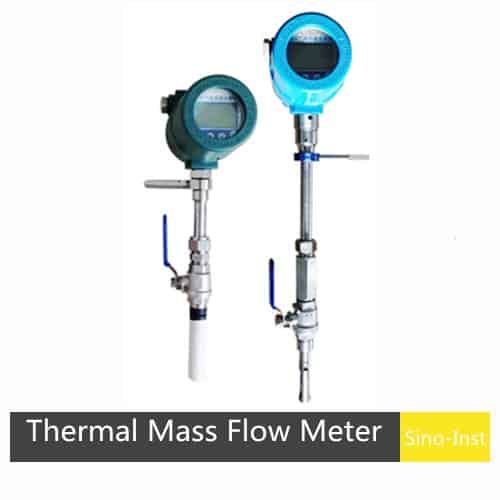
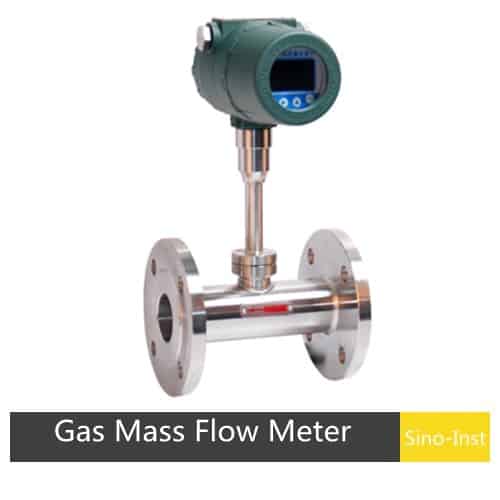
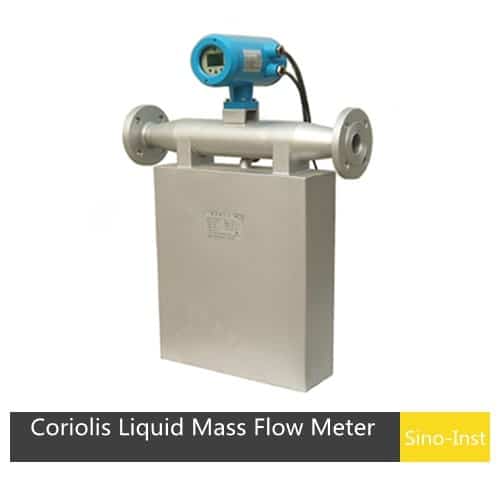
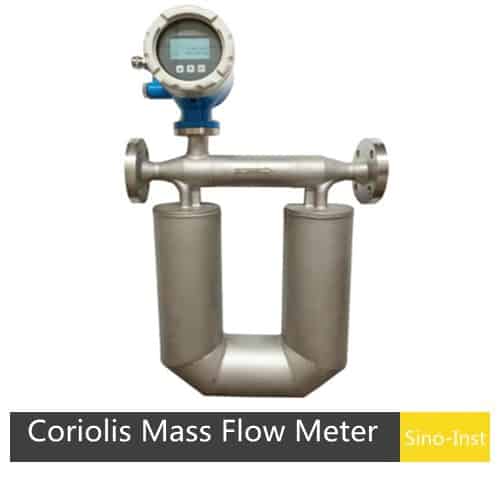
Direct mass flow measurement directly measures and reads the mass flow rate without requiring temperature, pressure, or density compensation. Examples include our Coriolis mass flow meter and thermal mass flow meter. The Coriolis mass flow meter utilizes the Coriolis effect, directly measuring the fluid’s mass flow rate by measuring the torsion of the fluid in a vibrating tube. The thermal mass flow meter directly measures the gas mass flow rate by detecting the heat exchange relationship between the fluid and a heat source.
Indirect Mass Flow Measurement
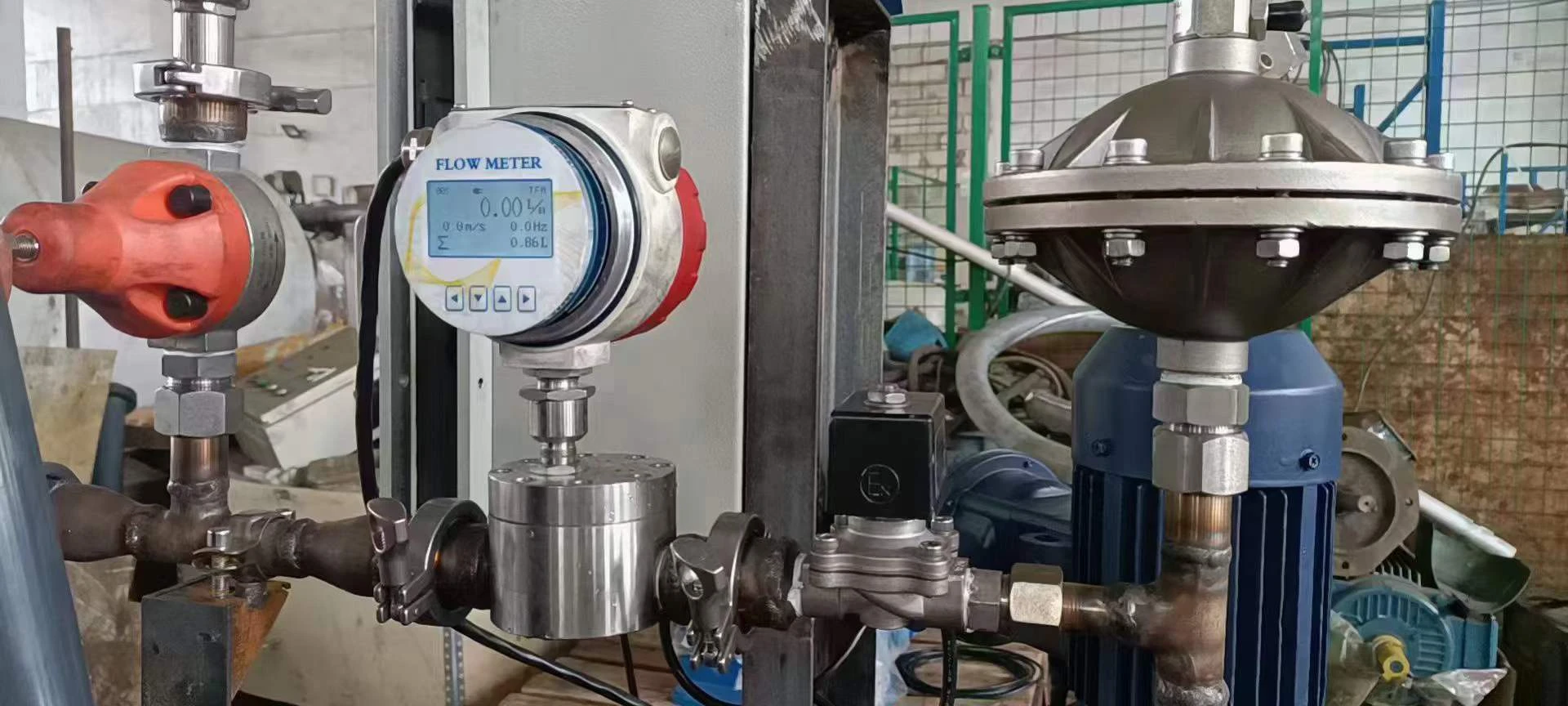
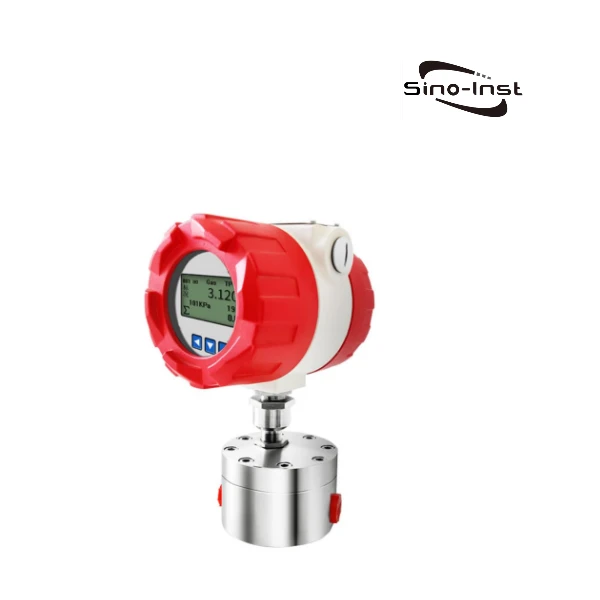
In some operating conditions, mass flow rate is not directly measured but calculated using parameters such as volumetric flow meter and density. The density of a medium generally changes with temperature and pressure, so density or temperature and pressure measurements are needed as supplementary data for calculation. For example, our GF gear flow meter can typically display instantaneous volumetric flow rate and cumulative volumetric flow rate; inputting a density value will display the mass flow rate.
Indirect mass flow meter measurements rely on the accurate measurement of density and volumetric flow rate. Therefore, in most cases, the accuracy of indirect mass flow rate measurements is not as high as that of direct mass flow rate measurements.
Featured volume flow meters
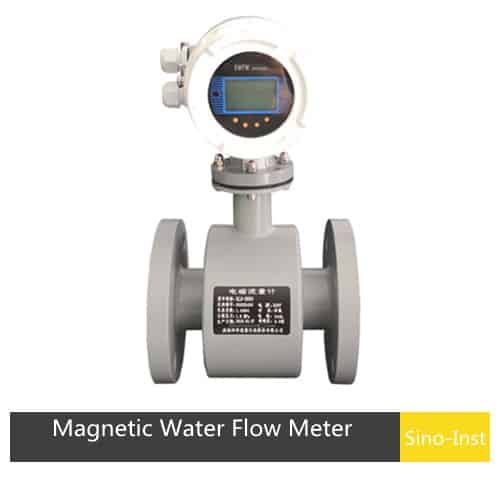
SI-3103 Magnetic Water Flow Meter
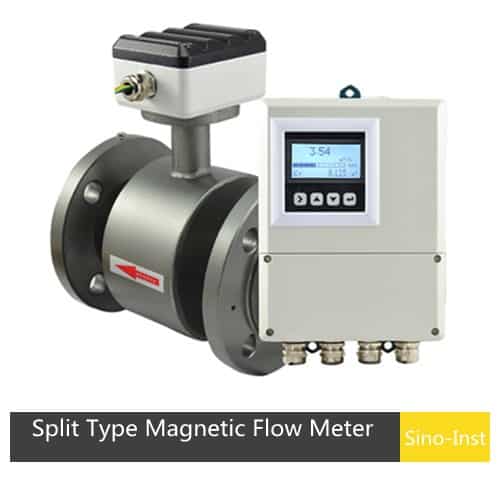
SI-3104 Split Type Magnetic Flow Meter
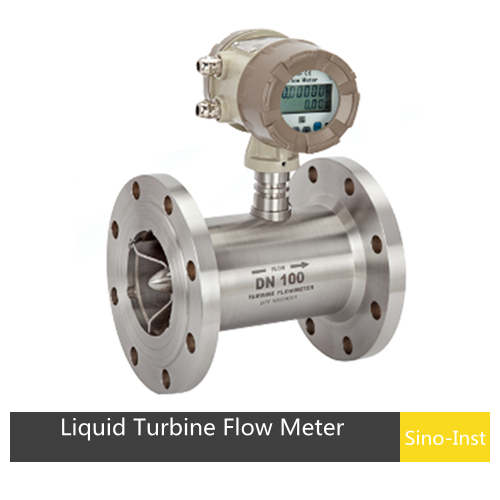
SI-3202 Liquid Turbine Flow Meter
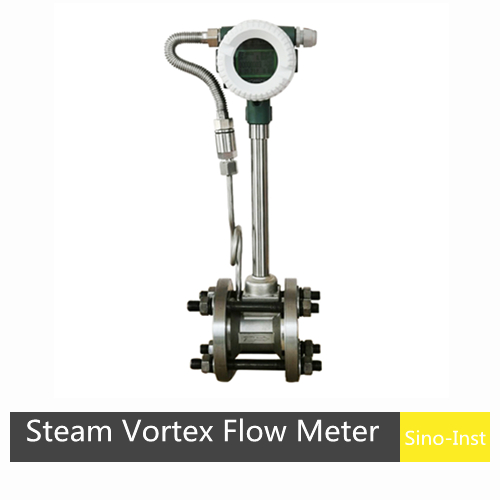
SI-3303 Steam Vortex Flow Meter
GF Series Gear Flow Meter
Featured Mass flow meters
SI-3501 Thermal Mass Flow Meter
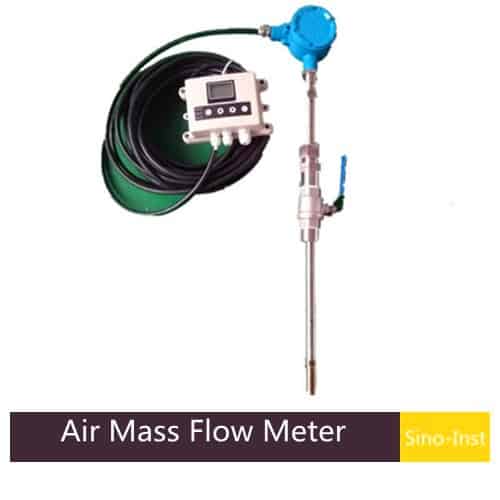
SI-3502 Air Mass Flow Meter
SI-3503 Gas Mass Flow Meter
SI-3504 Coriolis Liquid Mass Flow Meter
SI-3505 Coriolis Mass Flow Meter
11 Types of Flow Measurement Methods
There are 11 types of flow meters commonly used to measure flow and flow rate. These include:
Measuring flow in large pipes with insertion type flow meters. If you need to measure the fluid flow of a larger pipe diameter, you are most likely to choose an insertion type flow meter. But what insertion type flow meter should you use? The market has insertion electromagnetic flowmeter, insertion vortex flowmeter, insertion ultrasonic flowmeter, insertion ultrasonic flowmeter and so on. Next, let us compare various insertion type flow meters. Hope to help you choose the right insertion type flow meter! When should you use Insertion type flow meters? Benefits 1. Lower Cost on Large Pipes Insertion flow meters cost…
Correct installation of Magnetic flowmeter can ensure accurate flow rate measurement. Are you ready to install an electromagnetic flowmeter? Then this electromagnetic flowmeter installation instructions are exactly what you need. The magnetic flowmeter installation instructions here apply to magnetic flowmeters supplied by Sino-Inst. Made in China. If you have any questions about the measurement and installation of electromagnetic flow meters, please feel free to contact us. A Magnetic flow meter, also called electromagnetic flow meter, mag flow meter, or magmeters. A magnetic flow meter is a volumetric flow meter that works with principle of magnetic technology. Magnetic flow meters do not…
Orifice plate flowmeter installation requirements and precautions Orifice plate is a standard throttling device with the most specifications. It is the simplest and most adaptable product among throttling devices. It is widely used in various fluids, especially gas flow measurement. What’s an orifice plate? The orifice plate only refers to the key part of the throttling device-the throttling piece. Because it is a metal plate with holes, it is named after it. After a long time, the entire throttling device is also commonly referred to as the orifice plate, and the differential pressure flowmeter is also commonly referred to as…
Ultrasonic water flow meter is an ultrasonic flowmeter for measuring various water flow rates. CONTACT US Ultrasonic flow meters are based on the speed at which ultrasonic waves are transmitted by a flowing medium. A flowmeter developed by the sum of the average velocity of the measured medium. And the vector of sound waves moving in a stationary medium. Ultrasonic flow meters are non-intrusive flow meters. Ultrasonic water flow meters use sound vibrations to measure liquid flow rates. There are two types of ultrasonic flow meters, Doppler and transit time. Ultrasonic meters are ideal for wastewater treatment or any conductive…
Slurry and sludge flow measurement is complex and challenging. Accurately measuring slurry flow can improve efficiency and reduce costs in industries such as wastewater treatment, water conservancy projects, river dredging, and oil well cementing. Slurry flow meters measure the volumetric flow of sludge and slurries in pipelines. Examples include cement slurry, mud, pulp, various acid, alkali, and saline solutions, as well as food slurries. Sino-Inst offers a variety of custom flowmeters for effective flow monitoring. What is slurry? Slurry is a fluid composed of water mixed with other impurities, typically soil, particles, or even oil. Depending on the mixture, slurry…
High Pressure Liquid and Gas Flow Measurement Solutions. High pressure flow meters are suitable for measuring fluid flow under high pressure pipeline conditions. Are you looking for flowmeters for high pressure fluids? For example, for hydraulic testing. Sino-Inst provides ideal solutions for challenging high pressure processes. High pressure water, high pressure air, chemical injection systems, and many other applications. Sino-Inst provides high pressure flow meters that can withstand pressures up to 10,000 psi (70MPa) and provide a variety of different flow ranges. Common types of high pressure flow meters include: high pressure orifice flow meters, high pressure turbine flow meters,…
Cooling water flow meters are used to monitor cooling water flow. They are commonly used in cooling towers, circulation systems, pipes, tanks, and pumps. They are crucial for industries such as power plants and pumping stations. Sino-Inst’s cooling water flow meters can be configured with a local digital display showing flow velocity, instantaneous flow, and accumulated flow. Flow signals can also be output via pulse, 4-20mA, RS485, HART, and other signals, enabling you to efficiently monitor and manage your cooling water system. Features of Cooling Water Cold water flows through production equipment that needs to be cooled to make it…
Nitrogen flow meters are industrial digital flow meters used to measure the volumetric or mass flow of nitrogen. Nitrogen (N2) typically flows in either gaseous or liquid form. Here, we discuss the flow measurement and control of industrial gaseous and liquid nitrogen. Installing a nitrogen flow meter and controller will improve your plant’s production efficiency. Nitrogen flow meters can measure and control instantaneous flow, totalized flow, and more. You can even use nitrogen flow meters to detect nitrogen leaks. Featured Solutions for Nitrogen Flow Industrial Liquid Nitrogen Flow Meters Liquid Nitrogen Flow Meter is a Cryogenic Flow Meter. Nitrogen (N2), which is…
Industrial Nitrogen Gas Flow Measure Solutions Industrial nitrogen flow meters are digital flow meters used to measure nitrogen (N2). Nitrogen is an inert gas widely used across various industries. It is required in many processes in the chemical and pharmaceutical industries. In many places, nitrogen, like compressed air, is centrally supplied. Tanks filled with liquid nitrogen ensure a continuous supply and deliver expanded nitrogen to the piping system. Users then extract the required amount of nitrogen from the piping system. Our nitrogen flow meters are easy to use, affordable, and feature-rich. For industrial-grade N2 (nitrogen) flow measurement, thermal mass flow…
Industrial Liquid Nitrogen Flow Measurement Solution – Cryogenic Flow Measurement Design. Liquid nitrogen flow meters are a type of cryogenic flow meter specifically designed to measure the flow rate of liquefied nitrogen at extremely low temperatures (-196°C; -320°F; 77 K). Of course, similar cryogenic liquefied media can also be measured, such as LNG, LOX, LAR, and LH2. Accurate flow measurement of cryogenic fluids can optimize process flows, improve overall efficiency, and save costs. For liquid nitrogen flow measurement, Sino-Inst offers turbine flow meters, mass flow meters, gear flow meters, and target flow meters. When measuring liquid nitrogen flow, please ensure…
Cryogenic Flow Meter can be used to monitor the flow rate of cryogenic fluids. Liquid oxygen, liquid hydrogen, liquid nitrogen, liquid argon, liquid ammonia, and liquefied gas (LNG) are Common industrial cryogenic fluids. To handle fluid temperatures down to 328°F (-200°C), Sino-Inst manufactures high quality Cryogenic Flow Meters. Turbine flowmeter is the most widely used cryogenic flow meter. Coriolis Mass, Gear and DP Flow Meters are also good choice for cryogenic fluids. Please feel free to contact Sino-Inst for Free Technical Support. Featured Cryogenic Flow Meters At Sino-Inst, we possess a variety of technologies for monitoring the flow rate of…
If you need to purchase a flow meter for home or drinking water, we recommend considering three points first: pipe diameter, flow range, and water quality. Based on our years of experience in water flow measurement, we recommend: For clean drinking water pipes of 1/2 inch to 2 inches, battery-powered ultrasonic flow meters are usually the best choice; for building water supply, municipal, or industrial circulating water of DN50 to DN600, electromagnetic flow meters are the only sensible choice; turbine flow meters still have a price advantage for low-flow residential sub-metering, but maintenance costs are higher; for larger pipe diameters,…
Sino-Inst is a Professional flowmeter manufacturer and supplier.
About 30% of these are magnetic flow meters, and others are turbine, vortex, ultrasonic, and mass flow meters. Differential pressure flow meters are most widely used.
A wide variety of flow meter options are available to you, such as free samples, paid samples.
Sino-Inst’s flow meters service for industrial applications, like: Cooling water, industrial gas, corrosives and brine, chemical processing, mining, Wastewater, energy, electronics, laboratories, medical, and many other industries.
Sino-Inst sells through a mature distribution network, that reaches all 50 states and 30 countries worldwide.
Flow meter products are most popular in Domestic Market, Southeast Asia, Europe,and America.
Zhang Wei, possesses 20 years of experience as an automation instrumentation engineer, specializing in the research, design, installation, commissioning, and maintenance of automation instruments.
Face to various instrument communication protocols (such as Modbus, Profibus, etc.), with solid hardware circuit design and software programming skills (proficient in C language and PLC programming). Has extensive project experience; projects he has led and participated in have all achieved outstanding results, improving product accuracy, reducing costs, and increasing production efficiency.
Possesses excellent communication and coordination skills and a strong team spirit, enabling him to quickly respond to customer needs and provide high-quality automation instrumentation solutions.