Home > Blog > Introduction to Wastewater Flow Meters Types & Selection Guide
Introduction to Wastewater Flow Meters Types & Selection Guide
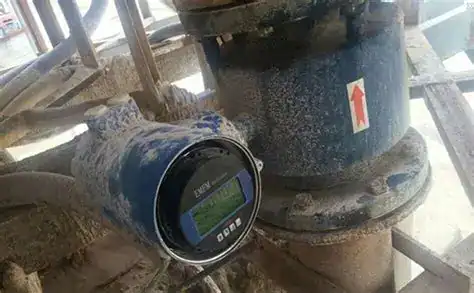
We all know that electromagnetic flow meters are the first choice for wastewater flow measurement! Indeed, electromagnetic flow meters have unique measurement advantages, such as corrosion-resistant linings and intelligent data monitoring and output. Therefore, we often see electromagnetic flow meters in water treatment plants, domestic sewage pipelines, and various other wastewater systems.
However, wastewater flow monitoring is a complex task. It involves measuring in humid or underground environments, in pipes that cannot be altered, and in open channels or partially filled pipes. Here, we’ll take a detailed look at all types of wastewater flow meters based on different operating conditions, and then provide you with guidance on selecting the right wastewater flow meter.
Wastewater, simply put, is water that has become dirty and unusable after industrial production or daily use. Classified by source, it is mainly divided into two categories: domestic wastewater and industrial wastewater.
Compared to domestic sewage, monitoring the flow rate of industrial wastewater is more difficult and crucial. Industrial wastewater is diverse, highly concentrated, and varies greatly in composition. Besides visible impurities, it often contains harmful substances such as heavy metals, organic solvents, and salts. Common industrial wastewater can be roughly categorized into the following 5 types:
Organic Wastewater
A typical example is brewery wastewater. This type of wastewater mainly comes from food processing (brewing, sugar refining, slaughtering), papermaking, and traditional Chinese medicine extraction industries. It has a high organic content and is prone to odor and spoilage.
Heavy Metal-Containing Wastewater
Contains heavy metal ions such as copper, nickel, chromium, cadmium, and lead. These are highly toxic, difficult to degrade naturally, and easily accumulate in the environment. For example, in electroplating plants, the concentration of hexavalent chromium in their chromium-containing wastewater can reach as high as 50 mg/L. Hexavalent chromium is extremely toxic, and direct discharge would cause irreversible pollution to surrounding soil and groundwater.
High-Salinity Wastewater
The salt content (calculated as sodium chloride) usually exceeds 3%, and some chemical wastewater even exceeds 10%. Excessive salt content forces microbial cells to dehydrate and rupture through osmotic pressure stress, directly causing conventional biological treatment processes to fail. This type of wastewater mainly comes from industries such as chlor-alkali chemical industry, pesticide synthesis, antibiotic production, textile printing and dyeing, and seawater desalination.
Recalcitrant Toxic Wastewater
Contains stubborn toxic substances such as phenols, cyanides, polycyclic aromatic hydrocarbons, and halogenated organic compounds, which are difficult to decompose using conventional methods. Major sources include pesticide production, fine chemicals (such as dye synthesis and phenol production), and the coking industry.
High Suspended Solids/High Color Wastewater
This type of wastewater is mostly not highly toxic, but suspended particles easily clog pipes and filtration equipment, while the deep color severely affects the appearance and ecological function of the water body. It is commonly found in industries such as mining, stone cutting, printing and dyeing, and papermaking.
The simplest purpose of understanding wastewater is to facilitate the confirmation of flow meter material compatibility. Okay, next let’s look at the types of wastewater pipes.
Open Channel vs. Full Pipe vs. Partially Full Pipe
Okay, now that you know what kind of wastewater you want to measure, you also need to know where you want to take the measurement. I’ve simply divided the measurement conditions into three categories:
Open Channel
This is a wastewater discharge channel similar to a ditch, without any pipes. Examples include urban water supply diversion channels, sewage treatment plant inlets and outlets, and industrial wastewater discharge outlets.
It could be an artificial channel, a natural river, or a municipal stormwater drainage network. Its flow rate depends on the product of “flow velocity (v)” and “flow area (A)” (Q=v×A).
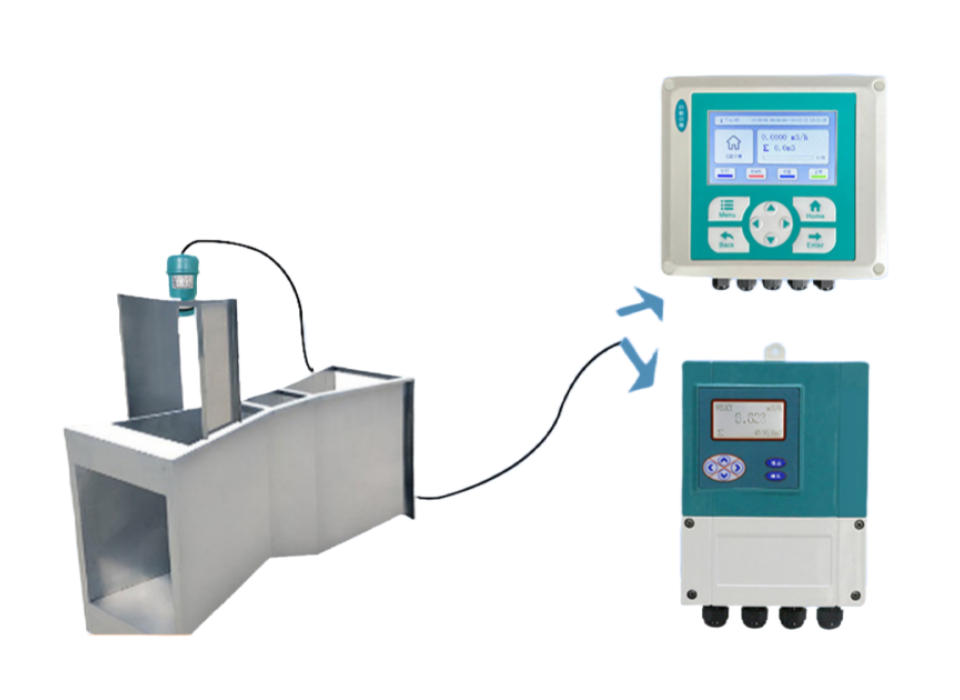
In this case, the shape of the open channel at the measurement point needs to be regular. It can be a constructed regular river channel or an artificially installed Parshall flume.
Open channel pipes can be selected from: ultrasonic open channel flow meters, radar flow meters, Doppler open channel flow meters, etc.
Conventional Full Pipe
Conventional pipes, such as DN25 or DN200, and the pipe is completely filled with wastewater. While pipes may be made of different materials, such as PVDF/PP plastic pipes, carbon steel pipes, and stainless steel pipes, flow meter selection can be divided into two categories: contact and non-contact.
Contact flow meters require the flow meter sensor to be in contact with the wastewater. This is typically achieved by cutting or creating a hole in the pipe and installing the flow meter as part of the pipeline. The most common example is the electromagnetic flow meter. Of course, for some special operating conditions, turbine flow meters or vortex flow meters can also be selected.
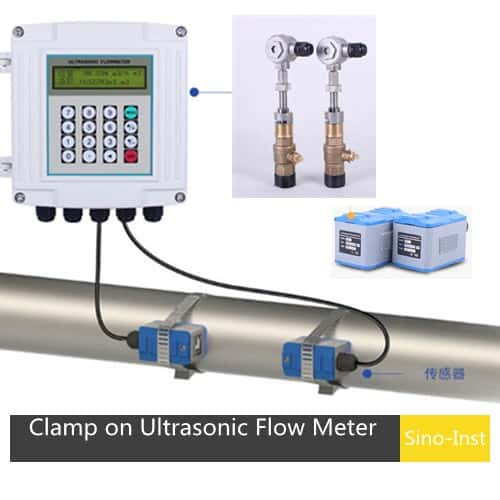
Non-contact flow meters do not have direct contact with the wastewater and do not require modification of the pipe. The most common example is the clamp-on ultrasonic flow meter.
Partially Full Pipe
The conventional flow meters mentioned above, such as electromagnetic flow meters, require the liquid medium in the measured pipe to completely fill the pipe for measurement. However, often the wastewater does not completely fill the pipe. For example, a DN100 pipe may only contain half the volume of wastewater. In such cases, a dedicated partially full pipe flow meter is required.
6 Wastewater Flow Meters Types
Okay, having discussed wastewater types and pipe types, next we’ll summarize the types of wastewater flow meters.
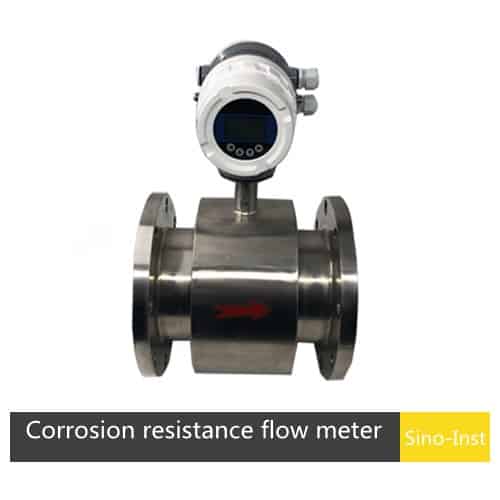
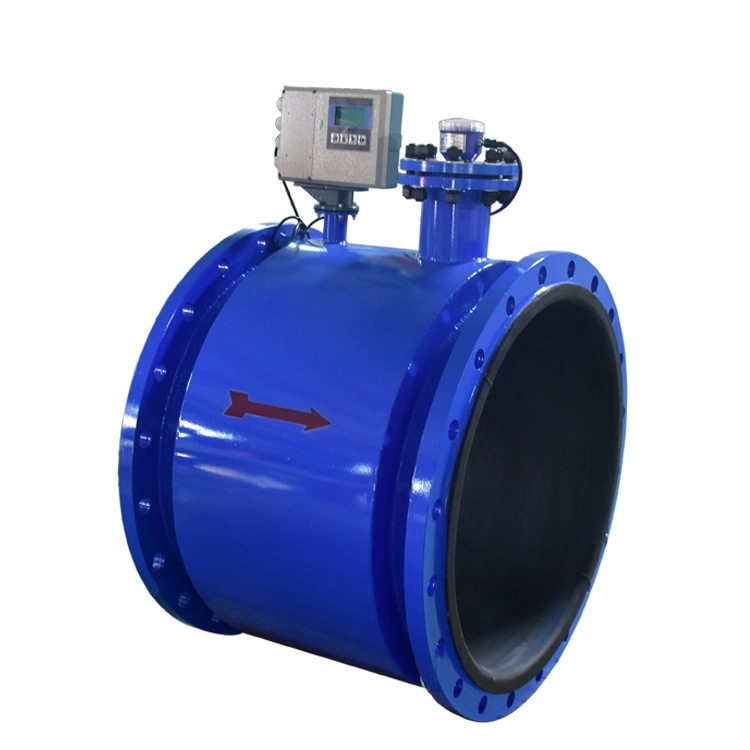
Electromagnetic Flow Meters
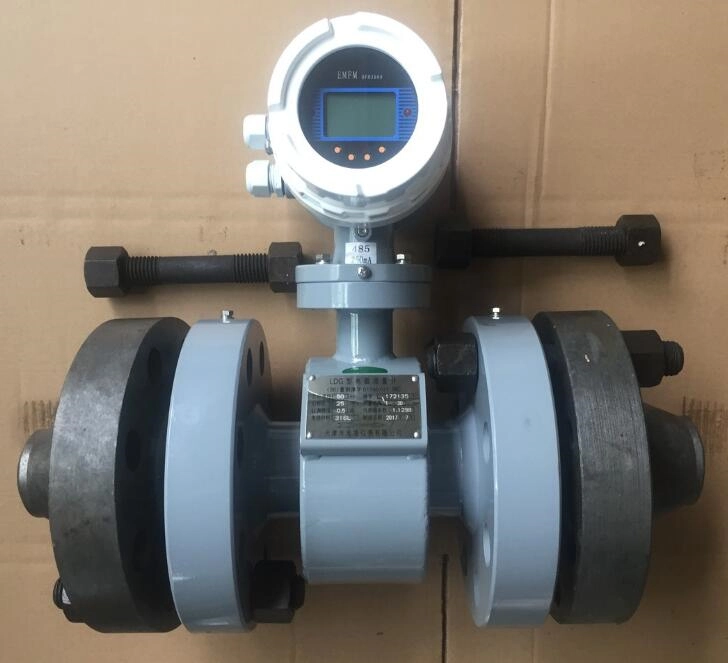
Electromagnetic flow meters are the most widely used wastewater flow meters. They can measure the flow rate of various conductive wastewaters. They have unique advantages:
Measurement is unaffected even if the wastewater contains a large amount of impurities or is corrosive.
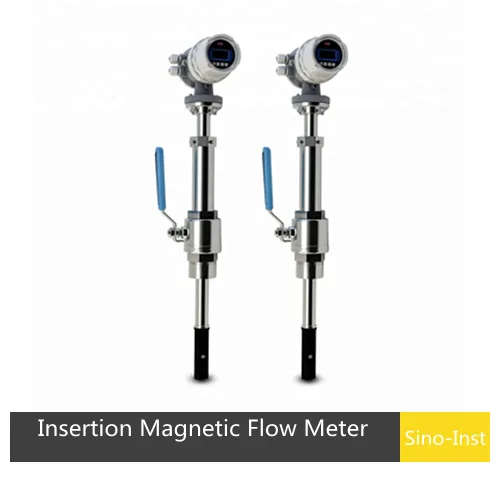
Pipes of various sizes from DN2 to DN3000 can be customized with in-line or insertion electromagnetic flow meters to meet measurement needs.
Neoprene, polyurethane, PTFE (F4), and F46 lining options are available, suitable for temperatures ranging from -20℃ to 150℃, but not for corrosive substances.
No moving parts and no flow obstruction for minimal pressure loss.
Bidirectional measurement for conductive liquids, sewage, and slurry.
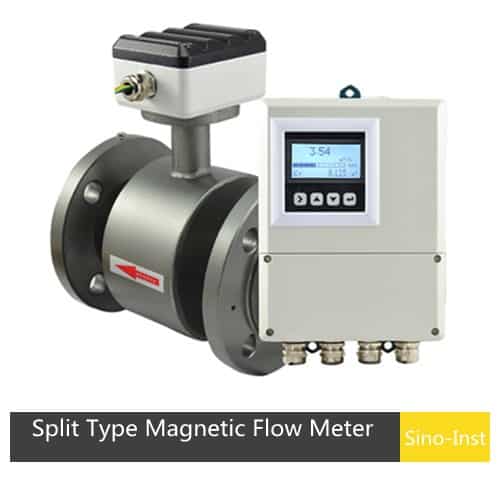
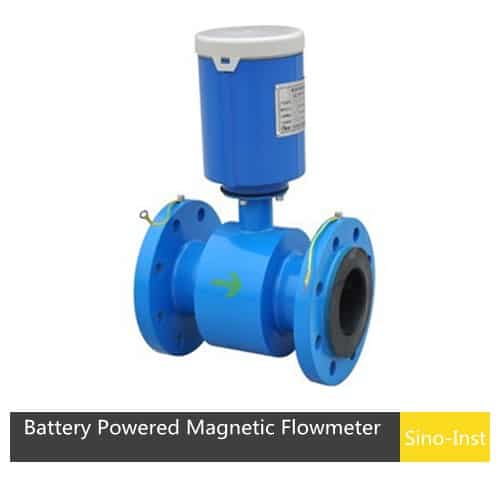
Integral, split, and battery-powered structures are available.
On-site display of instantaneous flow rate, percentage, flow velocity, forward and reverse cumulative flow, and total cumulative flow.
High-pressure models are available: 6MPa, 15MPa, 25MPa, and even 42MPa.
In short, if you can determine that your pipeline is always full and the conductivity of the measured wastewater is >= 5 uS/cm, then an electromagnetic flow meter should be the first choice.
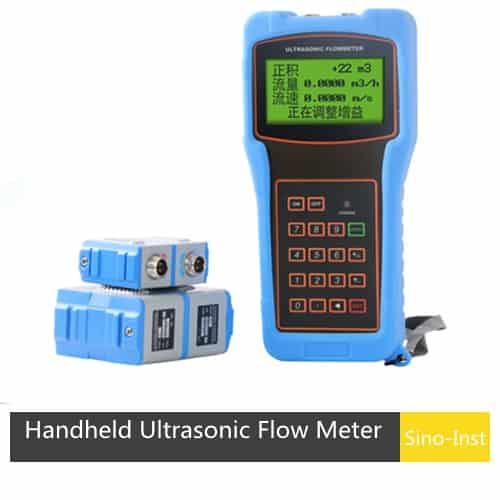
The biggest advantage of ultrasonic flow meters is that they can be made non-contact. This means that users can perform measurements without modifying the pipeline.
In principle, Ultrasonic Wastewater Flow Meters include time-of-flight ultrasonic flow meters and Doppler ultrasonic flow meters. The difference lies in their measurement range: time-of-flight ultrasonic flow meters can only measure clean, single-component liquids and do not allow for the presence of particles or air bubbles in the wastewater. Doppler flow meters, on the other hand, allow for less than 15% impurities in the measured wastewater. Therefore, Doppler ultrasonic flow meters have a wider range of applications but are also more expensive.
Ultrasonic wastewater flow meters also offer many advantages:
Wide measurement range: suitable sensors can be selected for DN15~DN6000 pipes.
For large-diameter pipes, choosing clamp-on sensors can save on measurement costs.
Various main unit types are available, including wall-mounted, handheld, portable, and modular models.
Clamp-on sensors ensure that measurements are unaffected by temperature and pressure changes within the pipe.
Therefore, the prerequisites for choosing an ultrasonic wastewater flow meter are:
You can confirm the cleanliness of the wastewater being measured or the proportion of impurities present.
The measured pipe cannot be cut off or have openings. Therefore, you might consider an ultrasonic wastewater flow meter, which offers more convenient measurement.
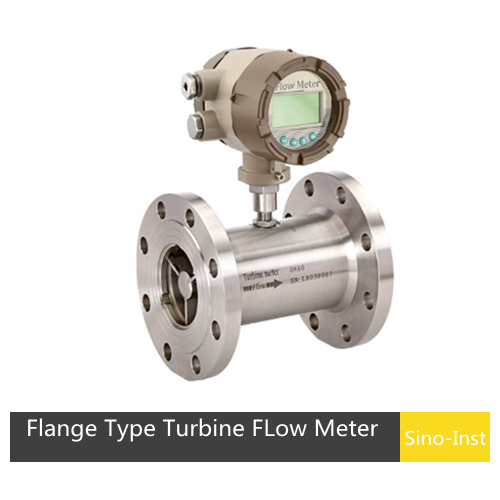
Turbine flow meters have an internal rotor, so they are not recommended for wastewater containing particulate impurities. However, for other clean wastewater, as long as the materials are compatible, a turbine flow meter can be used for measurement. Sometimes, turbine flow meters are also more cost-effective.
Of course, turbine flow meters also have their own advantages:
They can be made of stainless steel or PP, which can withstand the corrosion of wastewater.
Turbine flow meters can withstand extreme temperatures from -200℃ to +180℃.
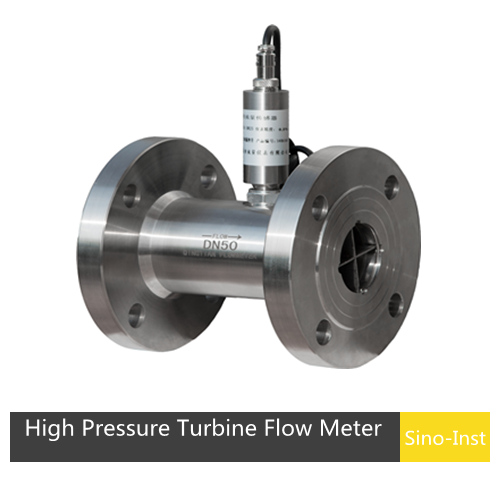
Turbine flow meters can be customized in high-pressure models, which are more cost-effective. For example, 25MPa, 40MPa.
They can measure non-conductive wastewater.
In other words, if the wastewater being measured has no conductivity and an electromagnetic flow meter cannot be chosen, then you can consider a turbine flow meter. Alternatively, under other extreme conditions such as low temperature, high temperature, or high pressure, a turbine flow meter can also be considered for measuring wastewater.
Vortex Flow Meter
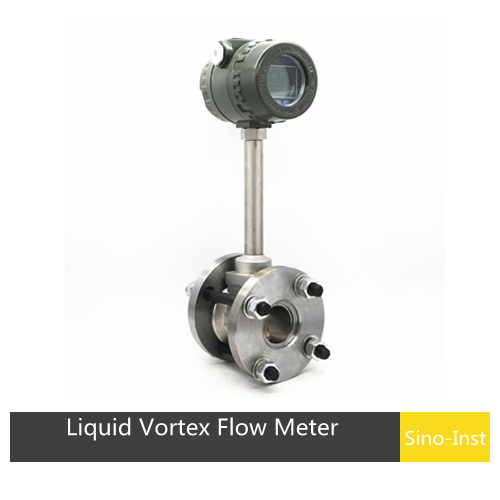
Compared to turbine flow meters, vortex flow meters allow for the presence of particulate impurities in the wastewater being measured. Compared to electromagnetic flow meters, vortex flow meters allow for wastewater with zero conductivity.
Therefore, vortex flow meters hold a place in wastewater measurement.
For wastewater with high flow velocities, vortex flow meters offer a wider measurement range.
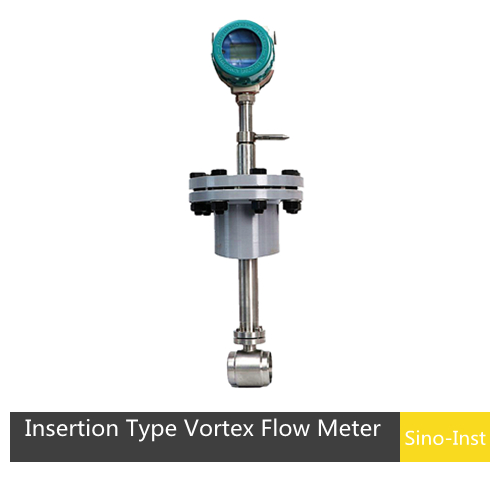
For large-diameter pipes, insertion-type vortex flow meters can be manufactured, reducing measurement costs.
For corrosive wastewater, PTFE-lined vortex flow meters can also be customized.
Therefore, vortex flow meters can be considered when wastewater has high flow velocities, contains particulate impurities, has zero conductivity, or has a large pipe diameter.
Open Channel Wastewater Flow Meter
For measuring open channel flow, radar flow meters can be installed for rivers or large canals.
For smaller open channels, Parshall flume flow meters can be installed in conjunction with ultrasonic open channel flow meters to measure wastewater flow.
Ultrasonic open channel flow meters utilize echo technology to measure the liquid level in a flow channel (weir), and then calculate the flow rate using an internal microprocessor. Because it’s a non-contact measurement, it can be used in harsh environments. The ultrasonic sensor, under microcomputer control, emits and receives ultrasonic waves, and then calculates the liquid flow rate using a flow calculation formula.
It offers good stability, reliable operation, and strong anti-interference capabilities.
Includes a wall-mounted main unit, a 4-meter liquid distance sensor, and standard accessories.
Features include a 4-20mA transmitter output, relay high and low level alarm control outputs, RS485 communication output, and various variable outputs for intelligent system control.
Electromagnetic Partially Filled Pipe Flow Meters consist of a velocity sensor, a water level sensor, and a flow display. They continuously measure the flow velocity and liquid level of fluid in a pipeline. Users simply input the inner diameter of a circular pipe or the width of a square pipe, and the non-full-pipe flow meter automatically calculates the flow rate within the pipe and displays the instantaneous flow rate, velocity, and cumulative flow rate.
Especially suitable for metering applications in municipal rainwater, wastewater, sewage discharge, and irrigation water pipelines.
It can achieve bidirectional flow measurement (forward and reverse);
The sensor can operate continuously in harsh environments and with high-quality sewage;
It offers high flow measurement accuracy and is unaffected by downstream or tributary congestion or blockage;
The straight pipe section required for measurement must be 10 times the pipe diameter;
The backlit LCD display ensures clear data readings even in bright light or at night;
The non-full-pipe flow meter features comprehensive display and output functions, showing instantaneous flow rate, velocity, and cumulative flow, and includes computer communication interfaces (232, 485, optional).
How to Select Wastewater Flow Meters?
Based on the above analysis, selecting the right wastewater flow meter requires a thorough understanding of the operating conditions and the type of flow meter. In short, it can be broken down into the following steps:
Determine the installation location: open channel, full tank, or partial pipe?
Determine the properties of the wastewater being measured, including temperature, pressure, liquid level, corrosiveness, and conductivity.
Determine if the pipe can be cut or drilled.
Determine if the installation location is underground or above ground. Are there any space limitations?
Determine if there is a power supply available on site.
Determine the required output signal.
Consider the budget.
Based on these parameters, you can generally select a suitable wastewater flow meter. If you are still unsure which model to choose, please contact our sales engineers for assistance.
Sanitary flow meters are flow measurement instruments specifically designed for industries with high hygiene requirements, such as food and pharmaceuticals. They feature excellent cleanability and resistance to contamination. Sino-Inst supplies a range of sanitary flow meters, including electromagnetic, Coriolis, turbine,…
Positive displacement flow meters(PD Meter) are versatile and cost-effective. They can be used to measure clean, corrosive fluids and gases. When you need a high-precision flow meter at a reasonable price, a positive displacement flow meter is often the best…
Accurate measurement of flare gas flow presents a significant challenge in industrial process control. This is primarily due to the extreme variability of flare gas flow rates, the unpredictability of gas composition, and harsh operating environments. Thermal mass flow meters…
Why Natural Gas Flow Measurement is Pivotal? Natural gas is a vital energy source, providing electricity to industries, homes, and businesses worldwide. High-precision natural gas flow measurement is essential for ensuring fair trade, accurate trade measurement, and safe and efficient…
Heating oil flow meters are devices that measure the flow rate of heating oil through a pipeline. Ensuring accurate monitoring and control of fuel consumption. They are essential in various industries. Including manufacturing, energy, and transportation, where heating oil is…
Measuring the flow of media at extreme temperatures in industrial processes has always been a challenging task, whether it’s high-temperature gas, high-temperature liquid, or extremely low-temperature liquid. Conventional flow meters may experience reduced accuracy or even damage when exposed to…
Sino-Inst is a Professional flowmeter manufacturer and supplier. Sino-Inst offers over 100 flow meter products. About 30% of these are magnetic flow meters, and others are turbine, vortex, ultrasonic, and mass flow meters. Differential pressure flow meters are most widely used. A wide variety of flow meter options are available to you, such as free samples, paid samples.
Sino-Inst’s flow meters service for industrial applications, like: Cooling water, industrial gas, corrosives and brine, chemical processing, mining, Wastewater, energy, electronics, laboratories, medical, and many other industries. Sino-Instrument sells through a mature distribution network,that reaches all 50 states and 30 countries worldwide. Flow meter products are most popular in Domestic Market, Southeast Asia, Europe,and America.
Zhang Wei, possesses 20 years of experience as an automation instrumentation engineer, specializing in the research, design, installation, commissioning, and maintenance of automation instruments.
Face to various instrument communication protocols (such as Modbus, Profibus, etc.), with solid hardware circuit design and software programming skills (proficient in C language and PLC programming). Has extensive project experience; projects he has led and participated in have all achieved outstanding results, improving product accuracy, reducing costs, and increasing production efficiency.
Possesses excellent communication and coordination skills and a strong team spirit, enabling him to quickly respond to customer needs and provide high-quality automation instrumentation solutions.
Want to see more of our engineering guides in Google Search? Add Sino-Inst as a preferred source.