Home > Applications > Industrial Oil Flow Meter: Types, Selection by Viscosity & Prices
Industrial Oil Flow Meter: Types, Selection by Viscosity & Prices
Choosing an oil flow meter comes down to matching your oil’s viscosity to the right technology. Sino-Inst offers digital and mechanical oil flow meters for inline oil flow measurement. Different flow sensors can meet the different measurement needs of customers.
Industrial oil flow meters are a class of flow meters specifically designed to measure the mass or volumetric flow rate of oily media. Reliable and accurate oil flow measurement is crucial for industrial oil and gas systems, such as kerosene, natural gas, liquefied natural gas, crude oil, vegetable oil, diesel, and fuel oil. Of course, it is also indispensable for trade metering.
Unlike water-based media measurement, oil fluids often have special parameters such as high viscosity, high pressure, or high temperature. And it must be explosion-proof.
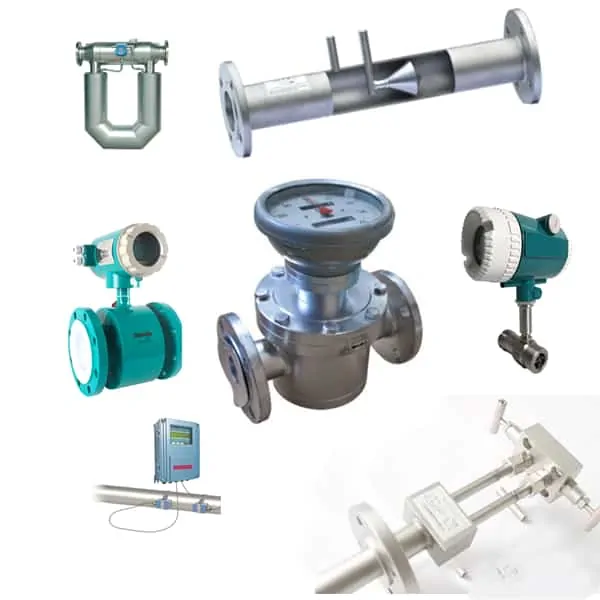
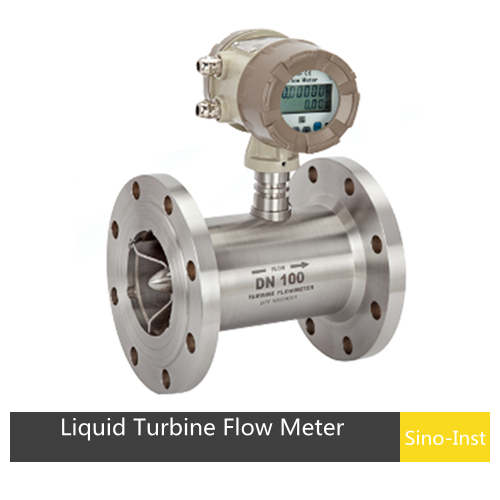
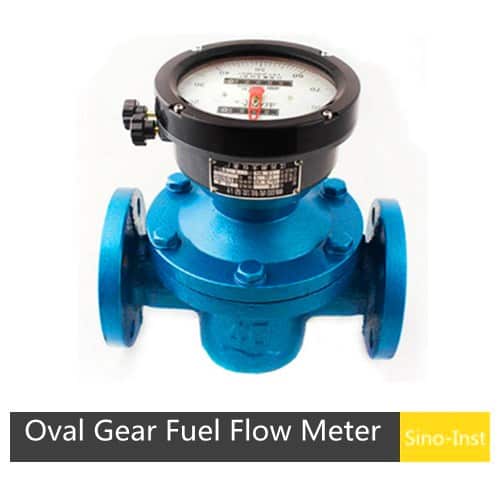
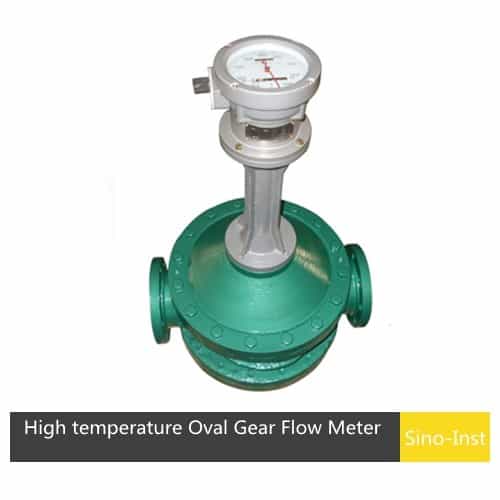
Sino-Inst supplies the following common oil flow meters:
How Does an Oil Flow Meter Work? (Top 5 Technologies)
There are five main technologies used for industrial oil flow measurement. The primary criterion for selection is not brand or price, but the working viscosity of the oil. The table below directly compares the key performance parameters of the five technologies with the applicable oils, using viscosity as the first selection criterion.
Bearing wear; viscosity-sensitive; not for heavy oils
Coriolis Mass
Fluid-induced Coriolis force on vibrating tube measures mass flow directly
±0.1 to ±0.2% (mass); ±0.5% (volume)
Any viscosity (independent)
Custody transfer, crude oil, multi-product lines, high-accuracy any oil
DN1 – DN250
−240 to +400°C
None required ✓
$2,800 – $15,000+
High cost; limited large-pipe options; vibration-sensitive
Ultrasonic (Transit-time)
Measures transit-time difference of ultrasonic signals across flow
±0.5 to ±1% (inline)
< 100 (best < 50)
Large crude pipelines, fuel terminals, retrofit on existing pipes
DN15 – DN5000+
−40 to +200°C
10D / 5D
$800 – $10,000
Degrades with air bubbles / particles; clamp-on less accurate
Vortex
Frequency of Kármán vortices shed behind a bluff body
±0.75 to ±1.5%
< 10
Light fuel oil, diesel (also steam & gas)
DN15 – DN300
−40 to +400°C
15D up / 5D down (stringent)
$800 – $4,000
Needs Re > 10,000; not for viscous or low-flow; high pressure drop
Positive Displacement (Gear/Oval/Rotary) — for high-viscosity oils
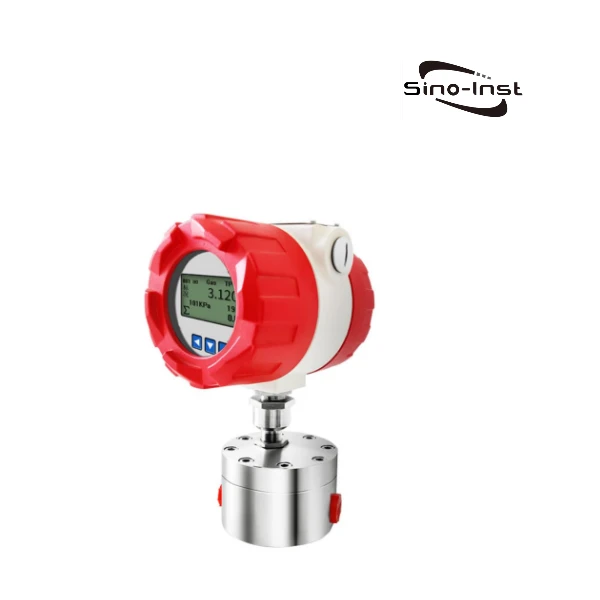
Positive Displacement Flow Meters are the industry-standard choice for heavy oil, lubricating oil, and hydraulic oil applications. Their principle is independent of Reynolds number, and they can operate with viscosities ranging from 1 cP (diesel) to 1,000,000 cP (asphalt), a core advantage that distinguishes them from all other technologies.
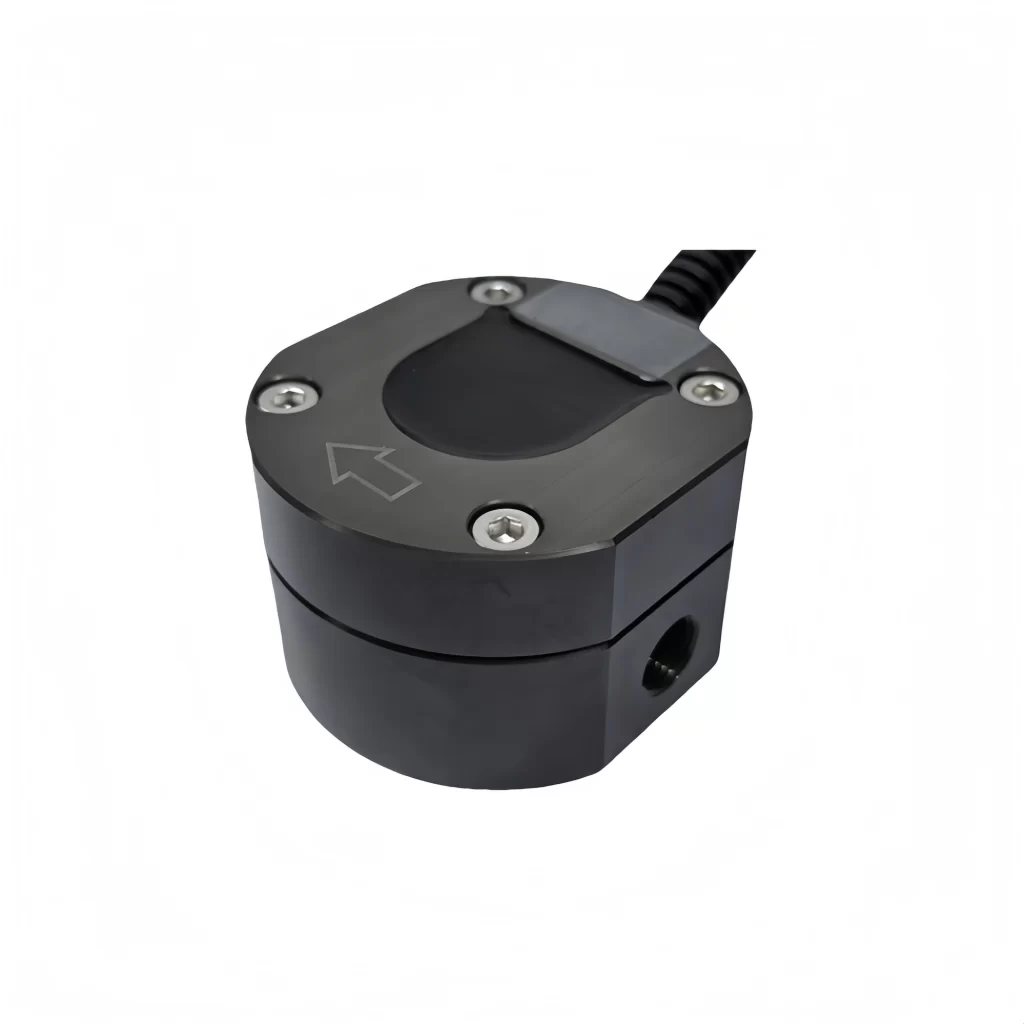
Oval Gear Meters are the most common subtype, offering accuracy up to ±0.2% of reading and requiring no straight pipe sections before or after. They are available in cast iron, cast steel, stainless steel, and other materials depending on the measured medium. Custom-made 280℃ high-temperature models are also available.
Disadvantages: Mechanical wear is present, requiring periodic calibration; particulate matter in the oil accelerates gear wear, necessitating the use of a filter.
Turbine Flow Meter — for clean, low-viscosity fuels
Turbine flow meters offer the best cost-performance ratio for “clean, low-viscosity hydrocarbon” applications such as diesel, gasoline, kerosene, and light fuel oil. Prices start at just $300, with accuracy up to ±0.25% and fast response. A key prerequisite is stable and low viscosity. Once the viscosity exceeds 30 cP or fluctuates significantly, bearing wear will accelerate significantly, leading to a decrease in accuracy. A 10D upstream straight pipe section is a strict requirement, making them unsuitable when on-site piping layout is limited.
Coriolis Mass — for high-accuracy & temperature compensation
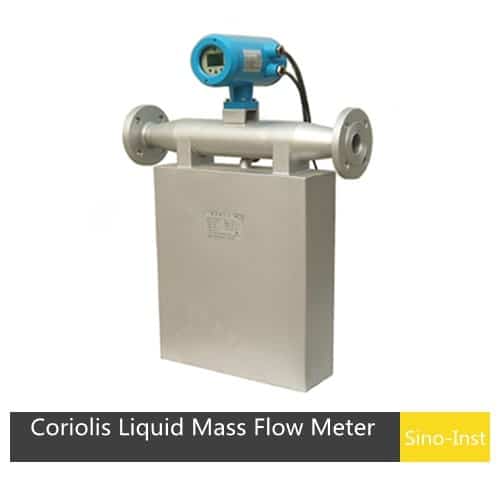
Regardless of Viscosity. Coriolis mass flow meters are the “ceiling” choice for oil metering. They measure mass directly, not volume, and are therefore unaffected by viscosity, density, and temperature fluctuations, achieving an accuracy of ±0.1% of mass flow.
Coriolis is the go-to choice for custody transfers, crude oil metering, and multi-product pipeline switching scenarios. The trade-off is price: starting at $3,000 for DN50, and often exceeding $15,000 for DN150 and above. Furthermore, the selection of large-diameter pipes is limited (most manufacturers only go up to DN250), and ultrasonic flow meters are typically used for ultra-large diameter applications.
Ultrasonic — for large pipes & non-intrusive
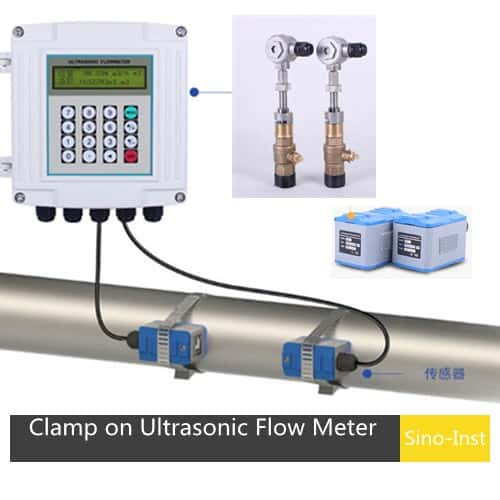
Ultrasonic flow meters are almost the only viable option for large-diameter pipelines (DN300~DN6000) — volumetric and Coriolis flow meters are either unusable or prohibitively expensive at this size. Ultrasonic flow meters are used for clean, single-phase loading and unloading of diesel, gasoline, etc. Clamp-on type is non-invasive and suitable for retrofit projects.
Note: The presence of air bubbles and solid particles in the oil will significantly reduce signal quality, and the time-of-transmission method is sensitive to the gas phase.
Vortex — for light oils & steam
Vortex flow meters offer a price and accuracy between turbine and Coriolis flow meters, primarily used for multi-functional measurement of light fuels, steam, and gases. When used for oils, there are two hard constraints: viscosity must be low (<10 cP) and Reynolds number > 10,000 (i.e., flow rate cannot be too low). Its straight pipe section requirements are even stricter than those for turbines—15D upstream, which is often unacceptable in on-site retrofit projects. It is not recommended for use with heavy oil, lubricating oil, or crude oil.
Viscosity-to-Technology Selection Chart
Simply put, if you already know what type of oil you want to measure, you can refer to the statistical table below to select the appropriate flow meter.
Based on our experience, diesel flow measurement can be directly selected from turbine flow meters and oval gear flow meters. As long as the flow range is suitable, and the installation straight pipe section requirements are met, a suitable fuel oil flow meter can be chosen from either.
Lube Oil Flow Meter
For measuring Lube Oil, you can choose either an oval gear flow meter or a GF series gear flow meter. The GF gear flow meter is more suitable for measuring small flow rates and hoses.
Heavy Oil / HFO Flow Meter
For heavy oils with high viscosity, an oval gear flow meter is the preferred choice. However, if high measurement accuracy is required, or if direct measurement of mass flow rate is needed, a Coriolis mass flow meter can also be selected.
Crude Oil Flow Meter
Similar to heavy oil flow meters, the majority of flow meters used are positive displacement flow meters. Depending on the actual pipe diameter, flow rate, pressure, temperature, and other parameters, a suitable flow meter can be selected from different types such as oval gear, three-rotor, and spiral rotor.
Heating Oil Flow Meter
Heating oils require high temperatures, so a high-temperature type can be selected from the oval gear flow meter options. Mechanical displays support a maximum temperature of 280℃, while intelligent electronic displays support temperatures up to 150℃.
Diesel Oil Flow Meter
Diesel fuel and gasoline fuel are similar. You can consider turbine flow meters first, as they are more affordable. If there are specific requirements regarding installation and accuracy, then consider other types of oil flow meters.
For verifying diesel or gasoline deliveries during truck tanker unloading at a gas station, a portable fuel flow meter for truck tanker unloading meters the delivered volume and temperature against the dispatch note.
Hydraulic Oil Flow Meter
Hydraulic oil is suitable for low flow rates and high pressures. You can choose our professional EFH03 Digital Flow Meter for Hydraulic Oil, or the GF series gear flow meter.
Oil Flow Measuring Station — Skid-Mounted Metering Packages
An oil flow measuring station is a skid-mounted, factory-assembled metering package that combines a primary flow meter, strainer, air eliminator, block valves, pressure and temperature transmitters, and a flow computer into a single ready-to-install unit. Engineering contractors and plant operators specify skid systems — rather than piecing components together on-site — to guarantee API MPMS compliance, cut commissioning time from weeks to days, and eliminate straight-pipe-run errors that plague field-fabricated installations.
Typical Components Inside an Oil Metering Skid:
Primary flow meter — Coriolis, oval gear, turbine, or ultrasonic, selected by oil viscosity and accuracy class
Duplex basket strainer with differential pressure gauge
Air/vapor eliminator (mandatory for custody transfer per API MPMS 6.1)
Block, bypass, and sampling valves
Pressure and RTD temperature transmitters for volume correction to standard conditions
Flow computer with ticket printing, Modbus/HART/4-20 mA output
Prover connection for on-site master-meter or small-volume proving
Carbon steel or stainless steel frame with certified lifting lugs and hydrostatic test record
Typical Applications:
LACT units for oilfield crude custody transfer
Refinery and terminal loading/unloading (truck, rail, marine bunker)
Tank farm transfer and allocation metering
Pipeline batch interface detection
Lube oil blending and packaging lines
Sino-Inst builds oil flow measuring stations from DN25 to DN400, with Coriolis, oval gear, or turbine primaries. Standard packages ship pre-wired, factory-calibrated, hydrostatic-tested, and delivered with OIML R117 / API MPMS Chapter 6 documentation. Prover loops, redundant stream runs, and ATEX / IECEx hazardous-area certification are available on request.
How to Choose the Right Oil Flow Meter — 5-Step Guide
In short, we can select the right flow meter in 5 steps.
When purchasing an oil flow meter, the supplier will invariably mention whether it’s a mechanical or electronic type. Simply put, you need to confirm whether a power source is available at the measurement site. For example, 24VDC or 200VAC. A power supply is necessary to configure an intelligent oil flow meter and enable it to output signals such as 4-20mA.
Flow meter calibration is the process of comparing the pre-set scale or metering of a flow meter to a standard scale of measurement. And adjusting its metering to conform to the standard. Calibration is an essential aspect of instrumentation in a broad range of industries that require high-accuracy measurements with a negligible percentage of error. E.g. in Oil & Gas, Petrochemical, and manufacturing.
Generally, there are two types of flowmeter calibration: online calibration and offline calibration. On-line calibration does not need to remove the flow meter to achieve the calibration under the online flow state. This method is not very accurate, but calibration can probably be performed with an ultrasonic flow meter.
The other is off-line calibration. This method has high accuracy, but the flowmeter must be removed for calibration by the manufacturer, or brought to the metrology institute for calibration.
Flow meters are calibrated by comparing and adjusting their metering to correspond with a predefined standard. Flow meter manufacturers typically calibrate their products in-house after production or send them to an independent calibration facility for adjustment.
FAQ
No. Electromagnetic can’t work, you can use a turbine.
Coriolis mass flow meters are the most accurate option for oil measurement, with standard accuracy of ±0.1% of mass flow reading and premium models reaching ±0.05%.
They measure mass directly through the Coriolis effect on a vibrating tube, so density changes from temperature swings don’t affect them — a major advantage for oils with varying thermal conditions. For viscous oils specifically, oval gear positive displacement meters are a close second at ±0.1 to ±0.2% of volumetric reading and cost roughly one-third of Coriolis.
Custody transfer applications in refineries and pipelines almost universally specify Coriolis under API MPMS Chapter 5.6.
Viscosity affects each flow meter technology differently, which is why technology selection must start with the oil’s operating viscosity.
Turbine meters lose accuracy rapidly above 30 cP as bearing drag slows the rotor, producing a negative reading bias.
Vortex meters fail below a Reynolds number of about 10,000 — high viscosity pushes the flow out of the turbulent regime and destabilizes vortex shedding.
Ultrasonic transit-time meters suffer signal attenuation as viscosity increases.
Positive displacement meters are nearly viscosity-independent up to 1,000,000 cP, and Coriolis mass meters are completely unaffected because they measure mass, not velocity.
For high-viscosity oils above 50 cP — including lube oil, hydraulic oil, heavy fuel oil (HFO), and asphalt — oval gear positive displacement meters are the industry default. Their measurement principle relies on trapped fluid volume rather than fluid velocity, so viscosity actually improves chamber sealing and measurement stability.
For viscosities above 1,000 cP, specify a heat-traced PD meter to keep the oil pumpable and prevent solidification. When custody-transfer accuracy (±0.1%) is required on top of high viscosity — typical for crude oil allocation — use a Coriolis mass meter, which handles any viscosity without performance loss. Avoid turbine, vortex, and standard ultrasonic meters for anything over 30-50 cP.
Calibration frequency depends on the application’s accuracy class and regulatory requirements. Custody transfer and fiscal metering require annual calibration per API MPMS Chapter 4 and OIML R117, typically performed with an on-site prover.
Industrial process monitoring (non-fiscal) can extend to every 24 to 36 months if the meter shows stable readings. Recalibrate immediately after any mechanical maintenance, pipe modification, flow range change, or if daily flow variance drifts more than 1% from the baseline. Positive displacement and turbine meters typically drift faster than Coriolis due to mechanical wear, and should be checked more frequently in abrasive or contaminated oil service.
Crude oil is unrefined oil extracted directly from the ground. Crude oil contains hydrocarbon fluids, water and various impurities. Unprocessed crude oil is mainly traded as a commodity. In oil production and trade measurement, it is important to choose a…
At the core, a ‘Digital Fuel Flow Meter’ is a device used to measure the amount of fuel flowing through a system. It provides valuable data on fuel consumption rates, which can be used to analyze efficiency, monitor fuel costs,…
A rotameter, also known as a variable area flow meter, is widely used to measure the flow rate of various gases, especially in situations where no power supply is available. Whether measuring air, oxygen, nitrogen, carbon dioxide (CO2), or other…
There are more than a dozen categories and hundreds of models of flow meters on the market, all claiming to have unique measurement advantages. So how do you choose the flow meter that meets your needs? Simply put, start with…
Solvent flow meters: This term may sound complex, but they are crucial tools in many industries. The chemical industry, in particular, requires precise solvent addition. In this guide, we’ll delve deeper into the meaning and importance of these devices. Sino-Inst’s…
Sulfuric acid is a vital industrial raw material used in the manufacture of fertilizers, pharmaceuticals, pigments, detergents, and batteries. It is widely used in industries such as petroleum purification, metal smelting, and dye production. In the production and transportation of…
Zhang Wei, possesses 20 years of experience as an automation instrumentation engineer, specializing in the research, design, installation, commissioning, and maintenance of automation instruments.
Face to various instrument communication protocols (such as Modbus, Profibus, etc.), with solid hardware circuit design and software programming skills (proficient in C language and PLC programming). Has extensive project experience; projects he has led and participated in have all achieved outstanding results, improving product accuracy, reducing costs, and increasing production efficiency.
Possesses excellent communication and coordination skills and a strong team spirit, enabling him to quickly respond to customer needs and provide high-quality automation instrumentation solutions.
Want to see more of our engineering guides in Google Search? Add Sino-Inst as a preferred source.