Home > Blog > Tank Level Measurement with Pressure Transmitters/DP Transmitters
Tank Level Measurement with Pressure Transmitters/DP Transmitters
Pressure transmitters and differential pressure transmitters can be used to measure the level of liquids such as water or fuel in vented or sealed tanks. And in many special working conditions, it has advantages that other liquid level transmitters cannot match. For example, the measurement of viscous, high-temperature, corrosive liquids or gases in vacuum tanks.
Tank Level Measurement is realized using a pressure transmitter or a differential pressure transmitter, both of which apply the static pressure principle of liquids.
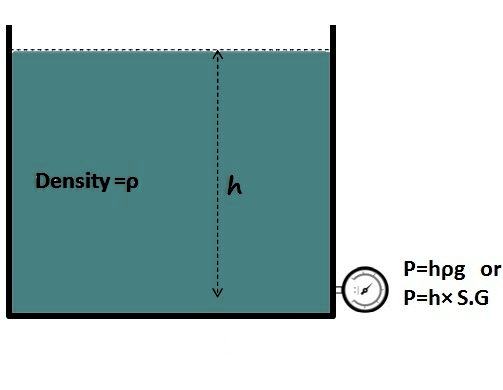
The static pressure at a certain point in the liquid is proportional to the distance from the point to the liquid surface, that is: P = ρgh.
Among them: P-the pressure (pressure) of the measured point, ρ-medium density, g-gravitational acceleration, h-height from the measured point to the liquid surface.
For the determined measured medium ρ, g is a constant, so the change in the position of the measured point to the liquid surface is only related to the measured P pressure (pressure).
When measuring liquid level in an open container, a pressure transmitter is all you need.
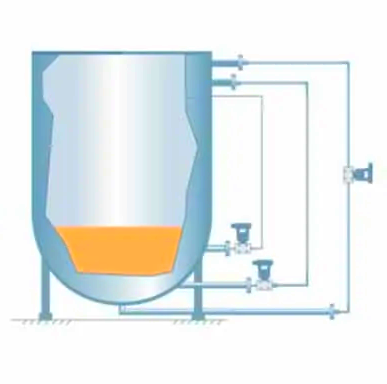
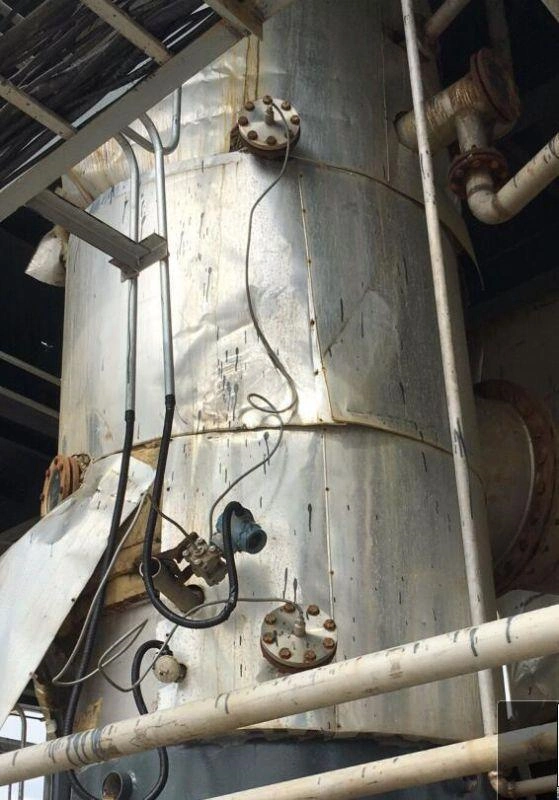
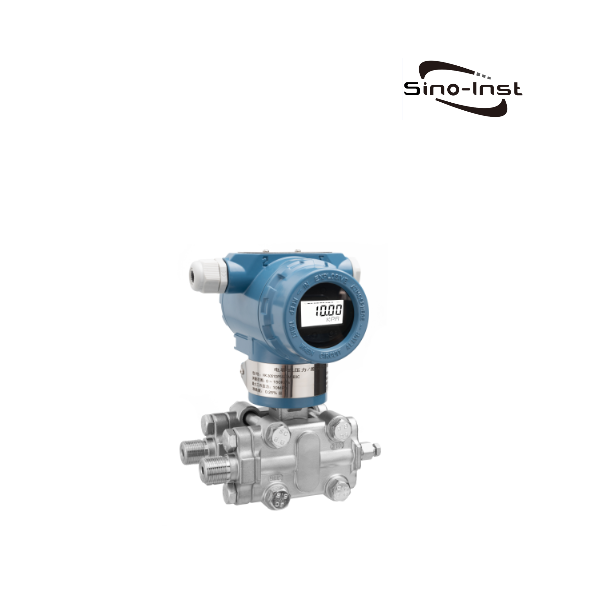
When measuring the liquid level of a closed pressure vessel, you can consider using two pressure or one differential pressure transmitter, that is, one for lower limit measurement and one for upper limit measurement. Their output signals are subtracted to measure the liquid level. When the liquid level and pressure in the container remain unchanged, it can also be used to measure the density of the medium.
For differential pressure transmitters,
Let △P be the differential pressure signal received by the transmitter, P0 be the internal pressure of the container, P+ be the positive pressure side pressure of the transmitter, P- be the negative pressure side pressure of the transmitter; ρ be the density of the liquid in the container; g is the acceleration of gravity; h1 is the height from the process zero point to the pressure port on the upper part of the container; h2 is the process liquid level of the container; h is the height from the transmitter to the zero point of the process liquid level.
Then there are: P+=P0+ρgh1+ρgh P-=P0+ρgh2+ρgh △P=P+-P-=ρgh1-ρgh2
When the liquid level changes from h2=0 to h2=h1, the differential pressure measured by the differential pressure transmitter changes from a large value to ΔP=0. By setting the transmitter, the output current changes from 4mA to 20mA.
Open tank level measurement means the tank is open to the atmosphere. Any change in atmospheric pressure will affect the process fluid pressure inside the tank.
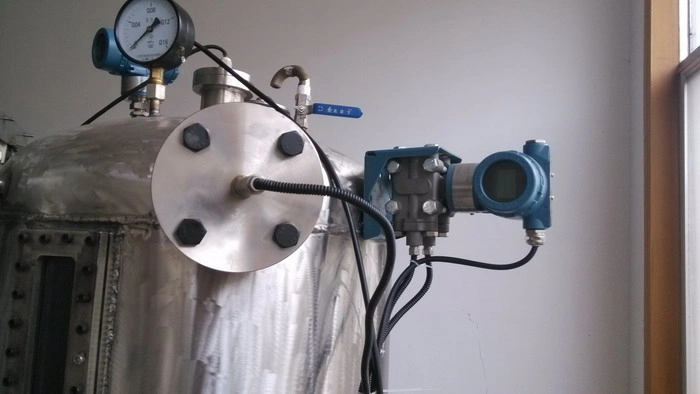
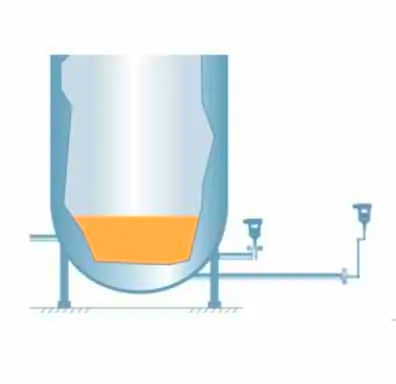
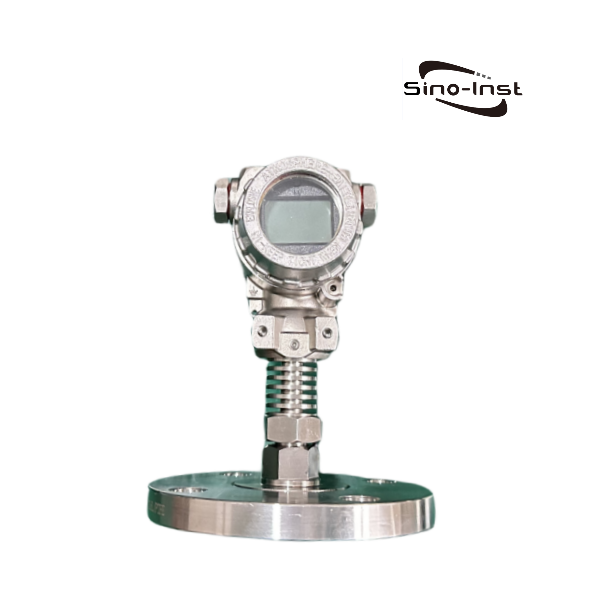
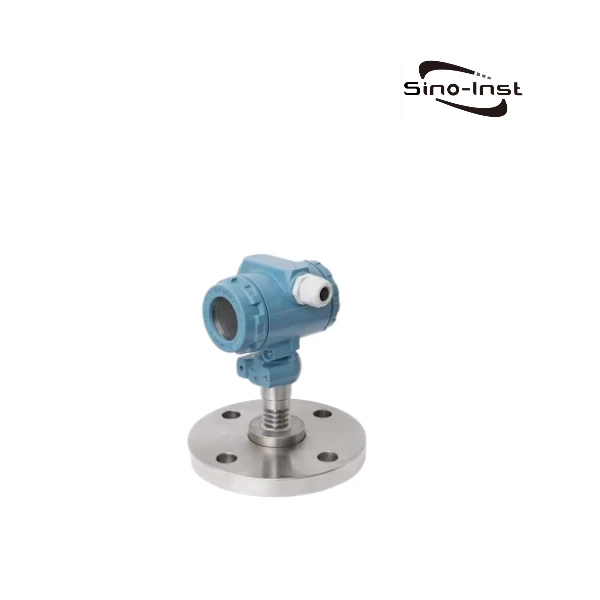
Use a pressure transmitter to measure the liquid level of vented/open tanks. Generally, the pressure transmitter is installed lower in the tank or connected to the pressure at the bottom of the tank. The transmitter can be equipped with a flange or a pressure pipe.
Of course, if the medium conditions permit, such as water measurement, then it may be cheaper to use a simple submersible level transmitter.
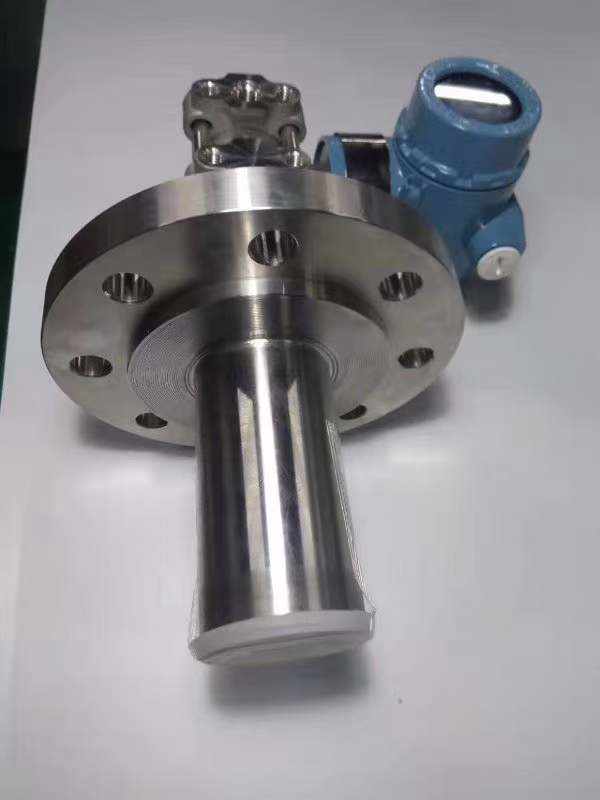
Single flange liquid level transmitter survey mode: For viscous liquids or coagulable liquids, an isolation diaphragm should be added at the entrance of the pressure guiding pipe, and silicone oil should be filled in the pressure guiding pipe to transmit pressure with the help of silicone oil.
Sealed Tank Level Measurement
For closed vessels, because the interior is isolated from the atmosphere, the pressure within the tank may change from positive pressure to a vacuum when the process fluid fills or empties the tank. This change in tank pressure will directly affect the measured level unless compensated for. This is done by connecting the low side pipe of the differential pressure transmitter to the top of the tank. Therefore, when measuring the liquid level of a closed tank, a differential pressure transmitter must be used.
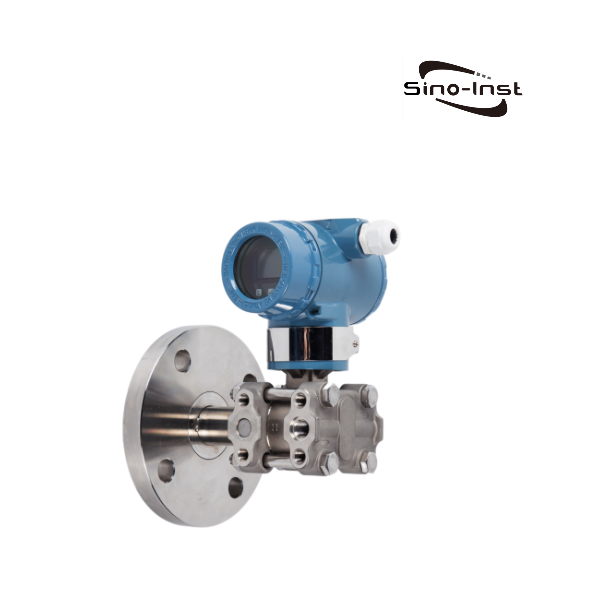
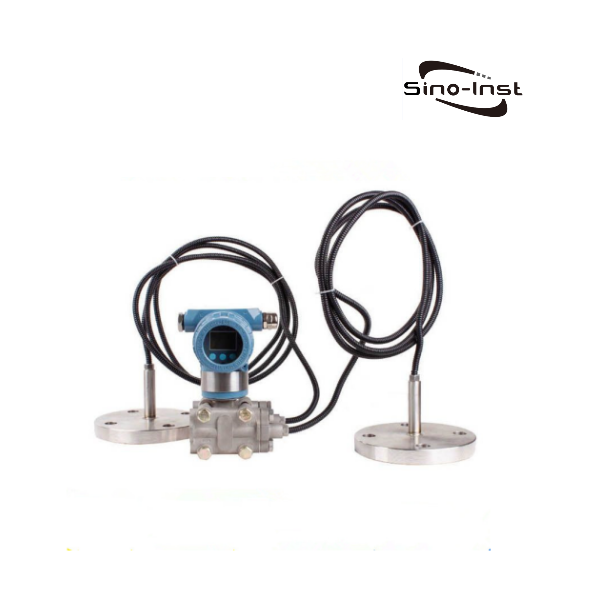
The media in chemical production often encounter problems such as impurities, crystallized particles or agglomeration, which can easily block the connecting pipeline. In this case, a flange-type differential pressure transmitter can be used. The closed system composed of a membrane box, a capillary tube, and measuring chamber is filled with silicone oil, which serves as a pressure transmission medium to prevent the measured medium from entering the capillary tube and transmitter to avoid clogging.
Example of calculation
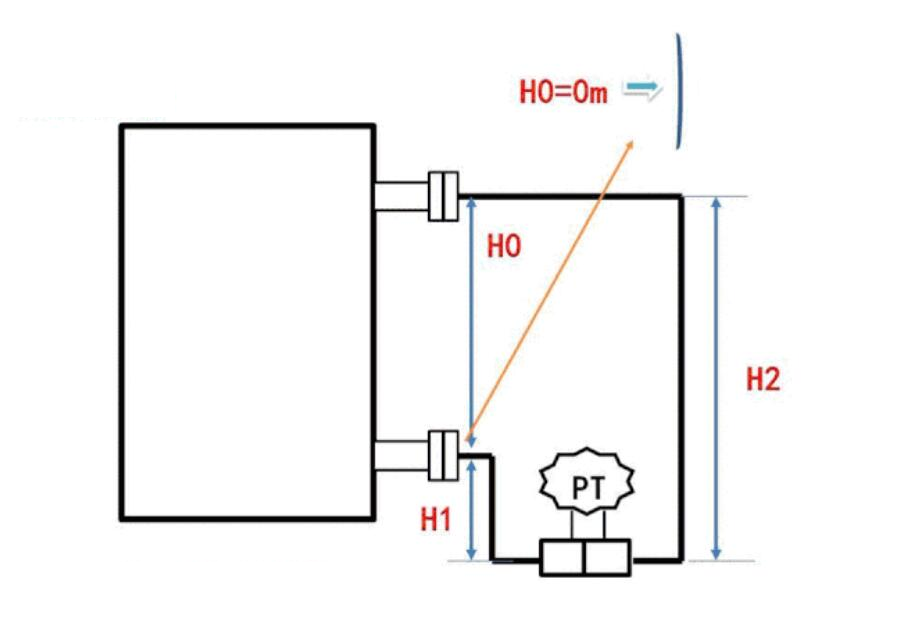
Assume that ρ medium is the medium density = 1.5, ρ0 is the silicone oil density = 0.93, H0 is the medium mass range 0-5m, H1 = 1m, H2 = 6m. The double flange level gauge is installed below the horizontal line of the lower end flange of the closed vessel. Let’s calculate the measuring range of the differential pressure transmitter.
Measuring range: ΔP=ρ×g×H0=1.5×9.8×5=73.5KPa
High-pressure side empty liquid level pressure: P(+)=ρ0×g×H1=0.93×9.8×1=9.114KPa
Low-pressure side empty liquid level pressure: P(-)=ρ0×g×H2=0.93×9.8×6=54.684KPa
Pressure difference when the liquid level is empty: ΔP= P(+)-P(-)=9.114-54.684=-45.57KPa
Pressure difference when full liquid level: ΔP=empty liquid level pressure difference ΔP+range value ΔP=-45.57+73.5=27.93KPa
Therefore, the measuring range of the differential pressure transmitter is: -45.57 to 27.93KPa
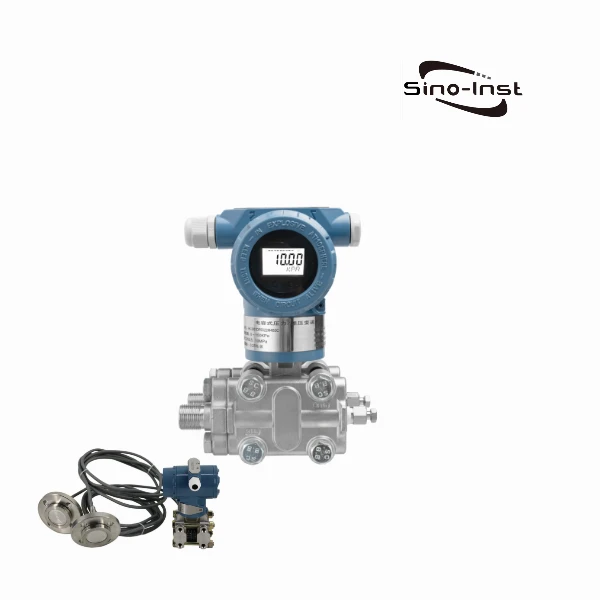
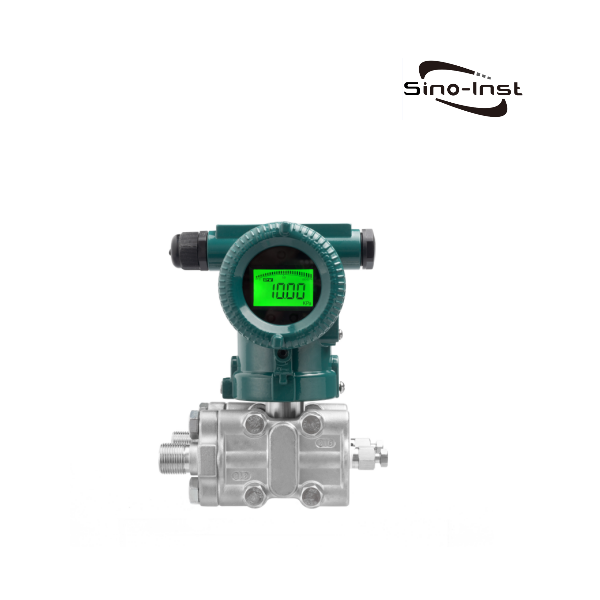
Featured Pressure Transmitters/DP Transmitters for Tank Level Measurement
When measuring liquid levels in a tank using a pressure transmitter or differential pressure transmitter, it is generally necessary to select accessories such as a sealing diaphragm and a capillary tube. You can learn more about this further:
Of course, different measurement media and tank parameters will have an impact on the selection of the transmitter. Including diaphragm material, specifications, thickness, filling liquid type, capillary length, and inner diameter, etc. Various factors should be considered comprehensively when selecting.
The External Ultrasonic Level Meter enables truly non-contact measurement of liquid levels in closed containers. The ultrasonic sensor (probe) is installed just below (bottom) the outer wall of the container being tested. There is no need to drill holes in the container being tested. It is easy to install and does not affect production. The … Read more
In industries such as chemical engineering, metallurgy, pharmaceuticals, electroplating, and sulfuric acid storage and transportation, sulfuric acid, as a basic raw material, is extremely corrosive. 98% concentrated sulfuric acid is viscous, fuming, and easily releases volatile acid mist. Under certain operating conditions, it is also accompanied by complex conditions such as high temperature and crystallization. … Read more
Diesel sensors can be used to measure the liquid level of diesel in storage tanks and convert it into standard electrical signals or switching signals. It can be used to build a diesel storage tank liquid level monitoring system. Sino-Inst supplies float, ultrasonic, radar and other various diesel level sensors. Supports customization of measuring range, … Read more
What are Capacitive Liquid Level Sensors? The capacitive oil level sensor is a liquid level sensor based on the radio frequency capacitance measurement principle. It can be installed in various occasions to accurately measure the oil level of gasoline, diesel, hydraulic oil and other weakly corrosive liquids. The length can be customized according to customer … Read more
When using liquid nitrogen tanks, it’s crucial to constantly monitor the liquid nitrogen level inside. Replenishing the tank as needed ensures the sample remains at a constant -196°C, preserving its activity. Generally, replenishment is necessary when the level drops below one-third. Insufficient liquid nitrogen will prevent complete coverage of the sample, causing the internal temperature … Read more
What is Liquid Level Controller? Liquid level controller refers to the control of high and low liquid levels through mechanical or electronic methods. Can control solenoid valves, water pumps, etc. Used to monitor fluid levels and ensure fluids remain at set levels. This enables semi-automatic or full automation of tank liquid level monitoring and control. … Read more
Measuring the liquid nitrogen pressure and temperature places high demands on the sensor. The temperature of liquid nitrogen can reach as low as -196°C, which requires the temperature transmitter, pressure transmitter, and flow meter to work normally at -198°C. Sino-Inst’s low-temperature pressure transmitters can effectively meet the pressure measurement of liquid nitrogen pipelines and liquid … Read more
In many Tank Level Measurement working conditions, we will first use the liquid level transmitter. For example, an ultrasonic level meter, a radar level meter, etc. Pressure transmitters and differential pressure transmitters also have incomparable advantages. If you need to perform Tank Level Measurement and have related purchasing needs, please feel free to contact our sales engineers!
Zhang Wei, possesses 20 years of experience as an automation instrumentation engineer, specializing in the research, design, installation, commissioning, and maintenance of automation instruments.
Face to various instrument communication protocols (such as Modbus, Profibus, etc.), with solid hardware circuit design and software programming skills (proficient in C language and PLC programming). Has extensive project experience; projects he has led and participated in have all achieved outstanding results, improving product accuracy, reducing costs, and increasing production efficiency.
Possesses excellent communication and coordination skills and a strong team spirit, enabling him to quickly respond to customer needs and provide high-quality automation instrumentation solutions.