

How to calibrate a pressure transmitter? How often?
Calibrate a pressure transmitter is an important step in ensuring its accurate and reliable measurements. It is normal for the…

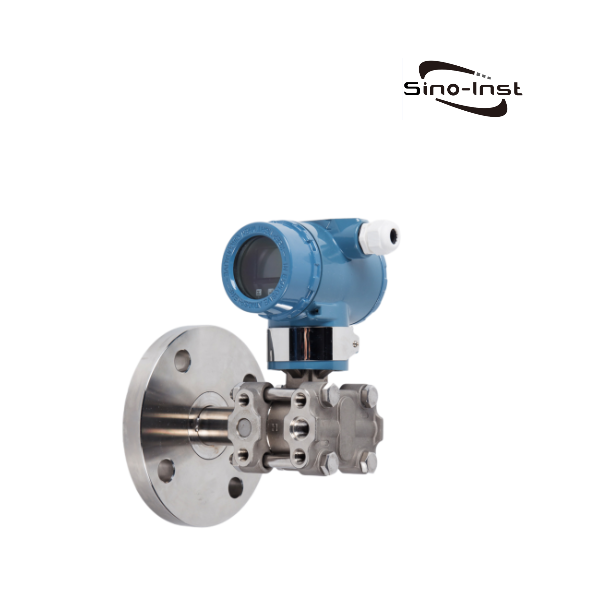
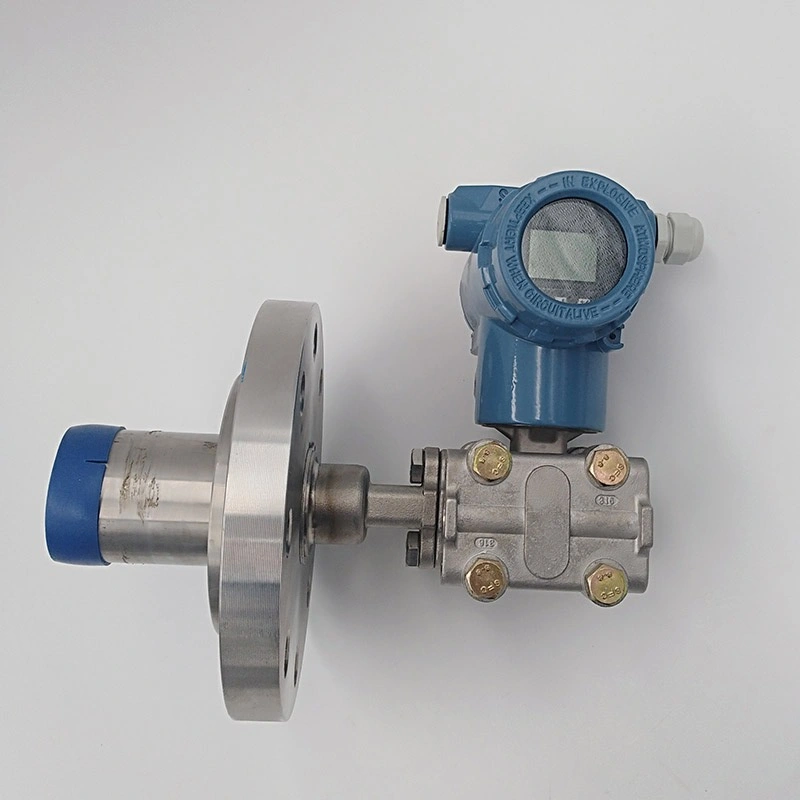
Pressure level transmitters designed to ensure accurate measurement of liquid levels in a variety of tank environments. The Rosemount 3051L Level Transmitter manufactured by Emerson has become the ideal instrument for open or closed tank applications. Our SI-3151LT Pressure Level Transmitter was built using this as a prototype.
Features a flange-mounted diaphragm designed to easily handle varying hydrostatic pressures and temperature changes. Whether used in vessels or open tanks, our pressure level transmitters deliver unmatched reliability.
The single flange liquid level gauge is an extension and development of pressure transmitter technology. According to the principle that the pressure generated by liquids with different specific gravity at different heights is linearly related, it realizes the volume, liquid height, Accurate measurement and transfer of weight.
| Measuring range | 4.0Kpa-10.0MPa |
| Turndown ratio | 50:01:00 |
| Power supply | 10.5V~45V d.c. (Intrinsically safe safety barrier power supply≤30Vd.c.) |
| Output | 4mA~20mA d.c. and HART communication |
| Ambient temperature | -40℃~85℃ |
| Medium temperature | -40~304℃ (customized according to actual temperature) |
| Accuracy | 0.5% (capacitive), 0.2 (monocrystalline silicon) |
| Temperature drift | ≤(0.08r+0.1)﹪(-10℃~60℃) ≤(0.1+0.15) ﹪/10℃(-40℃~-10℃;60-85℃) |
| Long-term drift | ≤0.15r﹪/5 years |
| Enclosure rating | IP67 |
| Explosion-proof grade | EX iaⅡCT6 or EX dⅡCT6 |
| Anti-corrosion | Select the corresponding measuring part material according to different media |
| Measurement object | Viscous, warm liquid |
| Installation method | Flange flat membrane type, flange plug-in type |
| Diaphragm material | 316L, Hastelloy C-276, Monel, Tantalum, Gold Plated, 316L+PTFE |
| Flange material | 304, 316L |
Read more about: Benefits of Diaphragm Seal for Pressure Measurement Systems
The single-flange liquid level transmitter can measure the liquid level of various open containers and tanks. It is suitable for the measurement of high viscosity medium, suspension liquid and easy crystallization medium. Wetted diaphragm materials include 316L, Hastelloy C-276, Monel, tantalum, gold-plated, 316L+PTFE and other corrosion-resistant materials.
Mainly applicable to the following scenarios:
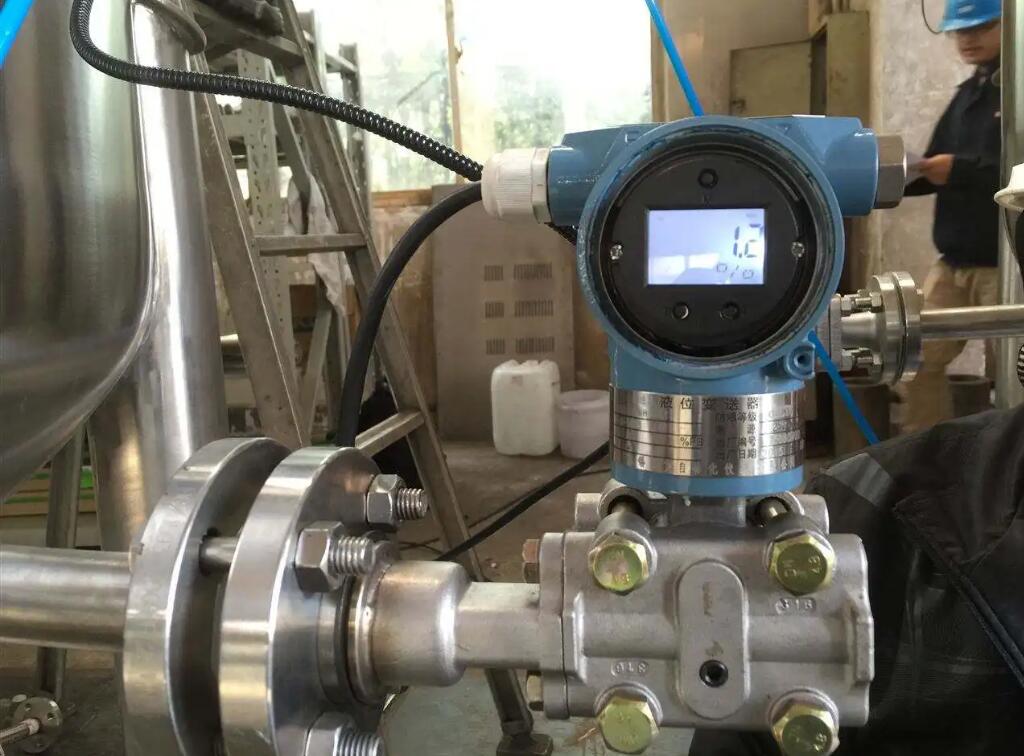
A single-flange pressure level transmitter is a type of instrument designed to measure the liquid level in open tanks or containers. It works by measuring the pressure exerted by the liquid column above the transmitter, which is installed at the bottom or side of the tank The working principle of this transmitter is based on hydrostatic pressure, which is the pressure exerted by a fluid at a specific depth due to the force of gravity.
Here’s an explanation of the working principle and the calculation formula in simple, readable language:
Hydrostatic Pressure: When a liquid is at rest, its pressure at a specific depth (h) is directly proportional to the liquid’s height, density (ρ), and acceleration due to gravity (g). The formula to calculate hydrostatic pressure (P) is:
P = ρ × g × h
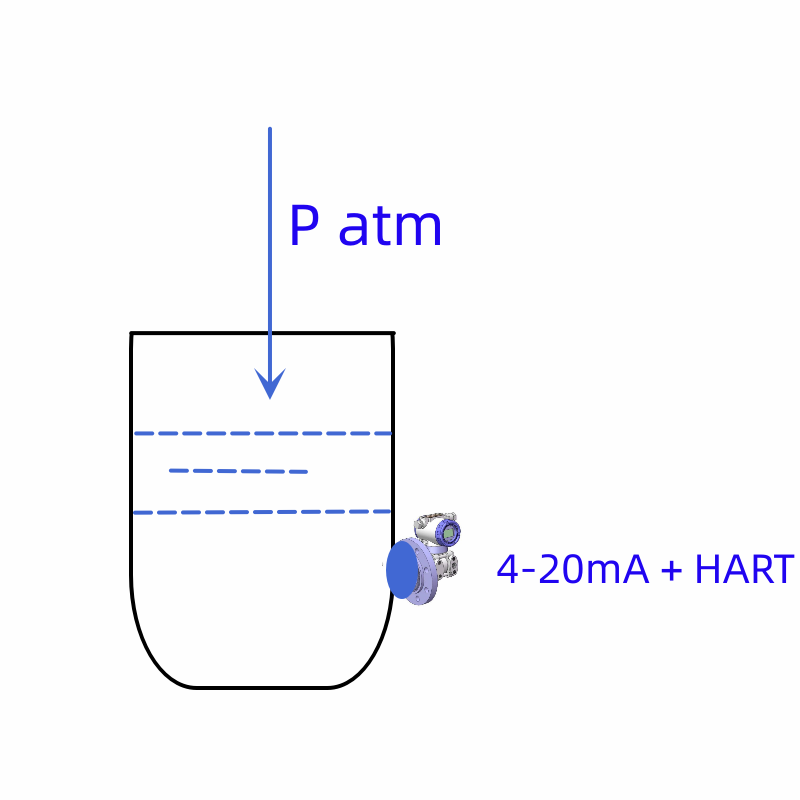
Level Measurement: The single-flange pressure level transmitter senses the hydrostatic pressure exerted by the liquid column above the sensor, which is installed at the bottom or side of the open tank. Since the atmospheric pressure acts on both the liquid surface and the transmitter dia , it gets canceled out, and only the pressure due to the liquid column is measured. This pressure is then used to calculate the liquid level (h) using the following formula:
h = P / (ρ × g)
The single-flange liquid level transmitter senses the measured pressure through a remote device installed on the pipe or container. The pressure is transmitted to the main body of the transmitter through the filling silicone oil (or other liquid) in the capillary.
Then by the delta chamber in the transmitter body and the amplified circuit board. Convert pressure or differential pressure to 4~20mA.DC signal output. Cooperate with a hand-held device conforming to the HART protocol, and can communicate with each other for setting and monitoring.
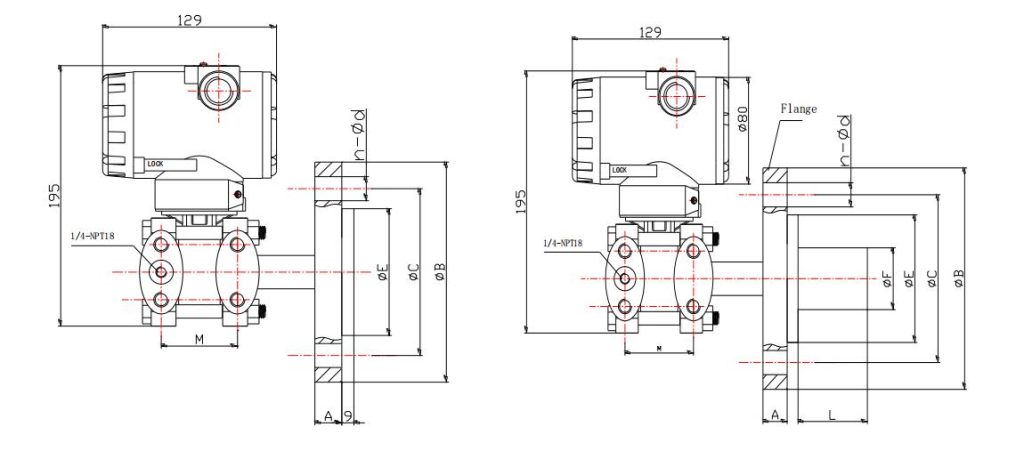
Common flange flush type specifications are as follows:
DN50(2 “) flange dimension specification sheet
| Flange standard | B | C | E | A | Number of bolts n | Bolt aperture |
| 150LB | 150 | 120 | 95 | 19 | 4 | 18 |
| 300LB | 165 | 127 | 95 | 20 | 8 | 18 |
| 600LB | 165 | 127 | 95 | 32 | 8 | 18 |
| 900LB | 215 | 165 | 95 | 45 | 8 | 26 |
| PN1.6/1.0 | 165 | 125 | 95 | 18 | 4 | 18 |
| PN2.5/4.0 | 165 | 125 | 95 | 20 | 4 | 18 |
| PN6.4 | 180 | 135 | 95 | 26 | 4 | 22 |
DN80(3 “) flange dimension specification sheet
| Flange standard | B | C | E | A | Number of bolts n | Bolt aperture |
| 150LB | 190 | 152 | 124 | 20 | 4 | 18 |
| 300LB | 210 | 168 | 124 | 25 | 8 | 22 |
| 600LB | 210 | 168 | 124 | 38 | 8 | 22 |
| 900LB | 240 | 191 | 124 | 54 | 8 | 26 |
| PN1.6/1.0 | 200 | 160 | 124 | 20 | 8 | 18 |
| PN2.5/4.0 | 200 | 160 | 124 | 24 | 8 | 18 |
| PN6.4 | 215 | 170 | 124 | 28 | 8 | 22 |
DN100 (4 “) flange dimension specification sheet
| Flange standard | B | C | E | A | Number of bolts n | Bolt aperture |
| 150LB | 230 | 190 | 155 | 24 | 4 | 18 |
| 300LB | 255 | 200 | 155 | 32 | 8 | 22 |
| 600LB | 275 | 215 | 155 | 45 | 8 | 26 |
| 900LB | 290 | 235 | 155 | 50 | 8 | 33 |
| PN1.6/1.0 | 200 | 180 | 155 | 20 | 8 | 18 |
| PN2.5/4.0 | 200 | 190 | 155 | 24 | 8 | 22 |
| PN6.4 | 215 | 200 | 155 | 28 | 8 | 26 |
DN40 Flange size specification sheet
| Flange standard | B | C | E | A | Number of bolts n | Bolt aperture |
| PN1.6/2.5 | 150 | 110 | 84 | 18 | 4 | 18 |
| PN2.5/4.0 | 150 | 110 | 84 | 18 | 4 | 18 |
| PN6.4 | 170 | 125 | 89 | 26 | 4 | 22 |
Common flange insertion barrel specifications are as follows:
DN50(2 “) flange size specification sheet
| Flange standard | B | C | E | F | A | Number of bolts n | Bolt aperture |
| 150LB | 150 | 120 | 95 | 48 | 19 | 4 | 18 |
| 300LB | 165 | 127 | 95 | 48 | 20 | 8 | 18 |
| 600LB | 165 | 127 | 95 | 48 | 32 | 8 | 18 |
| 900LB | 215 | 165 | 95 | 48 | 45 | 8 | 26 |
| PN1.6/1.0 | 165 | 125 | 95 | 48 | 18 | 4 | 18 |
| PN2.5/4.0 | 165 | 125 | 95 | 48 | 20 | 4 | 18 |
| PN6.4 | 180 | 135 | 95 | 48 | 26 | 4 | 22 |
DN80(3 “) flange size specification sheet
| Flange standard | B | C | E | F | A | Number of bolts n | Bolt aperture |
| 150LB | 190 | 152 | 124 | 74 | 20 | 4 | 18 |
| 300LB | 210 | 168 | 124 | 74 | 25 | 8 | 22 |
| 600LB | 210 | 168 | 124 | 74 | 38 | 8 | 22 |
| 900LB | 240 | 191 | 124 | 74 | 54 | 8 | 26 |
| PN1.6/1.0 | 200 | 160 | 124 | 74 | 20 | 8 | 18 |
| PN2.5/4.0 | 200 | 160 | 124 | 74 | 24 | 8 | 18 |
| PN6.4 | 215 | 170 | 124 | 74 | 28 | 8 | 22 |
DN100(4 “) flange size specification sheet
| Flange standard | B | C | E | F | A | Number of bolts n | Bolt aperture |
| 150LB | 230 | 190 | 155 | 89 | 24 | 4 | 18 |
| 300LB | 255 | 200 | 155 | 89 | 32 | 8 | 22 |
| 600LB | 275 | 215 | 155 | 89 | 45 | 8 | 26 |
| 900LB | 290 | 235 | 155 | 89 | 50 | 8 | 33 |
| PN1.6/1.0 | 200 | 180 | 155 | 89 | 20 | 8 | 18 |
| PN2.5/4.0 | 200 | 190 | 155 | 89 | 24 | 8 | 22 |
| PN6.4 | 215 | 200 | 155 | 89 | 28 | 8 | 26 |
| Model | Transmitter type | |||
| SI-3151LT Pressure Level Transmitter | Flange liquid level transmitter | |||
| Code | Scale range | |||
| 4 | 0-4.0~40kPa(0-400~4000mmH2O) | |||
| 5 | 0-20~200kPa(0-2~20mH2O) | |||
| 6 | 0-70~700kPa(0-7~70mH2O) | |||
| 7 | 0-210~2100kPa(0-21~210mH2O) | |||
| 8 | customize | |||
| Code | Output form | |||
| E | Linear output 4-20mAdc | |||
| SF | Linear output 4-20mAdc +HART signal | |||
| F | MODBUS-485 signal | |||
| Code | Flange standard (high pressure side flange) | |||
| A | ANSI American Standard (HG20615) | |||
| D | DIN European Standard (HG20592) | |||
| Code | Process connection size | |||
| ANSI American Standard (HG20615) | DIN European Standard (HG20592) | |||
| 25 | 1” | DN25 | ||
| 40 | 1.5” | DN40 | ||
| 50 | 2” | DN50 | ||
| 80 | 3” | DN80 | ||
| 0 | 4” | DN100 | ||
| Code | Process connection pressure rating | |||
| ANSI American Standard (HG20615) | DIN European Standard (HG20592) | |||
| A | 150LB | PN16/25 | ||
| B | 300LB | PN40 | ||
| C | 600LB | PN64 | ||
| D | 900LB | PN100 | ||
| Code | High pressure side diaphragm | |||
| A | 316 stainless steel | |||
| B | Hastelloy C | |||
| C | Monel | |||
| D | Tantalum | |||
| E | Titanium | |||
| F | Special Requirements | |||
| Code | High pressure side insert tube length | High pressure side insert cylinder material | ||
| A | 0 mm | None | ||
| B | 50 mm | 316L Stainless steel | ||
| C | 150 mm | 316L Stainless steel | ||
| D | 200 mm | 316L Stainless steel | ||
| Code | High pressure side filling fluid | |||
| D | General silicone oil (-40~104℃) | |||
| F | High temperature silicone oil (-40~304℃) | |||
| S | Inert liquid (-40~204℃) | |||
| Low pressure side structural material | Flange (joint) | Exhaust/drain valve | Isolation diaphragm | Sensor filling fluid |
| 22 | 316 Stainless steel | 316 Stainless steel | 316 Stainless steel | Silicone oil |
| 23 | 316 Stainless steel | 316 Stainless steel | Hastelloy C | Silicone oil |
| 24 | 316 Stainless steel | 316 Stainless steel | Monel | Silicone oil |
| 25 | 316 Stainless steel | 316 Stainless steel | Tantalum | Silicone oil |
| 33 | Hastelloy C | Hastelloy C | Hastelloy C | Silicone oil |
| 35 | Hastelloy C | Hastelloy C | Tantalum | Silicone oil |
| 44 | Monel | Monel | Monel | Silicone oil |
| S2 | A remote transmission device (with a remote transmission device on the low-voltage side) | |||
| Code | Shell material | Conduit inlet dimensions | ||
| A | Low copper aluminum alloy polyurethane coating | M20×1.5 | ||
| B | Low copper aluminum alloy polyurethane coating | 1/2-14 NPT | ||
| C | Stainless steel | M20×1.5 | ||
| D | Stainless steel | 1/2-14 NPT | ||
| Code | Optional parts | |||
| M1 | 0~100% Linear indicator head | |||
| M4 | LCD multi – power digital display head | |||
| D1 | Side discharge valve at the top (only for the low pressure side of the low pressure side without remote transmission) | |||
| D2 | Side discharge valve at the top (only for the low pressure side of the low pressure side without remote transmission) | |||
| Da | Flameproof ExdIIBT5Gb;(explosion-proof certificate no. : CE16.1163) | |||
| Fa | Intrinsically safe ExiaIICT4 / T5 / T6Ga;(explosion-proof certificate no. : CE15.2354X) | |||
| CX | With corresponding 316 flushing ring |
In summary, Sino-Inst is a professional manufacturer of Pressure Level Transmitters, providing you with reliable and precise solutions for monitoring liquid levels in various tank and vessel applications. With years of experience and a commitment to quality, our products are designed to deliver accurate results and ensure smooth operations for your industry needs.
Contact us today to learn more about our Pressure Level Transmitters and experience the Sino-Inst difference. Our dedicated team is ready to assist you in selecting the best instrument for your application. Trust Sino-Inst for all your pressure level measurement needs and elevate your operations to new heights.

Zhang Wei, possesses 20 years of experience as an automation instrumentation engineer, specializing in the research, design, installation, commissioning, and maintenance of automation instruments.
Face to various instrument communication protocols (such as Modbus, Profibus, etc.), with solid hardware circuit design and software programming skills (proficient in C language and PLC programming). Has extensive project experience; projects he has led and participated in have all achieved outstanding results, improving product accuracy, reducing costs, and increasing production efficiency.
Possesses excellent communication and coordination skills and a strong team spirit, enabling him to quickly respond to customer needs and provide high-quality automation instrumentation solutions.
SI-3151LT flange mount pressure level transmitter for tanks. 4-20mA HART output, 0.075% accuracy, sanitary or chemical seal options. Request a quote.
Product SKU: SI-3151LT Pressure Level Transmitter-Flange Mounting
Product Brand: Sino-Inst
Product Currency: USD
Product Price: 400
Price Valid Until: 2029-09-09
Product In-Stock: PreOrder