Home > Blog > What Causes Flow Meter Failure? 11 Check List
What Causes Flow Meter Failure? 11 Check List
Flow measurement is a crucial aspect of industrial process parameter monitoring. Whether it’s gas, liquid, steam, or even solid powder, flow meters can accurately monitor flow rate. However, even the most advanced flow meters can fail. Flow meter failure affects measurement accuracy and can lead to downtime, economic losses, product damage, and violations.
What Causes Flow Meter Failure? Based on our years of experience in flow measurement at Sino-Inst, and combined with analysis of flow measurement across various industries, we have compiled a 11-point checklist to help you prevent flow meter failures.
Category 1: Causes Related to the Flow Meter Itself
It’s possible that you chose the wrong flow meter and the wrong flow meter supplier from the very beginning.
Flow Meter Manufacturing Quality
Flow meters may malfunction due to improper manufacturing or design flaws. In field use, flow meters exhibiting regular or frequent malfunctions should raise concerns, potentially requiring the selection of a more reliable product.
It’s difficult to judge the quality of a flow meter with the naked eye, especially the internal materials, structure, and circuit board quality. Therefore, we recommend against choosing excessively cheap flow meters; your cost will correspond to the quality of the flow meter.
Incorrect Flow Meter Selection
Unprofessional flow meter suppliers may mislead you into selecting the wrong flow meter model.
For example, a DN50 pipe with a flow rate of only 2 m³/h. An irresponsible supplier might select a flow meter based solely on the pipe diameter, ignoring the actual flow rate. When the flow rate is too low, a pipe necking method or a different flow meter type may be necessary.
Therefore, when selecting a flow meter, you must clearly communicate the detailed parameters with our flow meter supplier.
This is a slightly more complex and technically challenging issue. If the supplier is unprofessional, or the user lacks understanding of flow meters, problems can easily arise during use due to incorrect flow meter parameter settings.
For example, ultrasonic flow meters require setting numerous parameters such as pipe diameter, wall thickness, material, fluid type, flow velocity, and pressure. Other flow meters may require setting parameters like frequency and K-factor.
Another category of parameters is flow meter calibration.
Depending on the type of flow meter, periodic calibration may be required. Even if the flow meter has good mechanical performance, improper calibration can lead to inaccurate or inconsistent readings.
We recommend choosing a professional flow meter supplier like Sino-Inst. We will provide you with complete flow meter manuals, and most flow meters have their parameters pre-configured before leaving the factory. We will also provide technical support if parameter modifications are needed.
Category 2: Reasons Related to the Measured Medium
Corrosiveness of the Medium
The measured medium will directly contact the inside of the flow meter. Corrosive media may prevent the flow meter body or threads from opening, or even damage internal circuit boards or mechanical components.
This is an issue that needs to be considered in advance. If the measured medium or environment may be corrosive, be sure to inform us when purchasing the flow meter.
Impurities in the Medium
Impurities in the medium may include scale, rust, sediment, viscous substances, and other particles.
For example, if your pipeline is made of cast iron, metal ions in groundwater or tap water will crystallize and adhere to the inner wall of the pipe, forming scale. These scales are composed of elements such as calcium, manganese, and sodium. If too many layers of scale accumulate, the flow channels within the pipe will narrow, restricting the flow rate.
Unlike scale, rust is a problem caused by oxidation inside the pipe. Rust can flake off and break off, causing blockages inside the flow meter or adhering to the flow meter’s observation window.
Also, deposits, viscous substances, or algae can adhere to the internal structure of the flow meter, leading to mechanical component failure.
If your pipeline is old, it is recommended that you choose a flow meter without obstructions or moving mechanical parts. Alternatively, you can install a filter before the flow meter.
Air Bubbles
When liquid flows in from the inlet, air may also mix in, forming bubbles along with impurities in the liquid. These bubbles can accumulate due to temperature changes. Air bubbles can significantly affect liquid flow measurement.
For example, In vortex flow meters, air bubbles interfere with the formation of Karman vortices.
In ultrasonic flow meters, the propagation of ultrasonic waves can be suppressed by air bubbles, leading to malfunctions or incorrect readings.
For pipelines with a small number of air bubbles, a Coriolis mass flow meter is recommended. Coriolis flow meters measure mass flow and are therefore unaffected by air bubbles. Alternatively, we recommend configuring a bubble elimination system for your pipeline.
Pulsating Flow
When pulsation is significant, the instantaneous flow rate may momentarily exceed the flow meter’s rated flow rate. In this case, the flow meter displays a flow rate lower than the actual flow rate through the pipeline. For example, positive displacement reciprocating pumps are prone to significant pulsation.
To reduce pulsation, consider using vibration dampers such as accumulators. Furthermore, when pulsation causes the flow meter reading to change over time, extending the flow meter’s response time can ensure stable readings.
Category 3: Installation Reasons
Insufficient Straight Pipe Section
The ideal installation location for a flowmeter is where the fluid flow upstream and downstream is a single-phase steady flow. This ensures that the influence of local resistance pipe fittings upstream and downstream on the fluid flow state does not directly interfere with the flowmeter’s measurement accuracy.
Ensuring sufficient straight pipe sections before and after the flowmeter helps stabilize and homogenize the fluid flow. This reduces vortices and uneven velocity distribution caused by local pipe resistance, thereby improving measurement accuracy.
The required straight pipe section varies for each type of flowmeter. Besides being related to the flowmeter’s measurement principle, it also depends on the type and arrangement of upstream and downstream resistance components (such as elbows, gate valves, regulating valves, etc.). Generally, a minimum of 15d upstream and 5d downstream straight pipe section is required for flowmeters. For electromagnetic flowmeters, 5d upstream and 3d downstream are required. Refer to the user manual for specific details.
Of course, some types of flowmeters do not require a pre-reserved straight pipe section. Examples include gear flowmeters and Coriolis mass flowmeters.
Poor sealing of the flowmeter is one of the main causes of malfunction. Poor sealing can allow rainwater, condensation, dust, and humid gases to enter the flow meter.
Therefore, a good seal at the wire inlet is essential, and proper installation and maintenance procedures must be followed. Silicone sealant and glass glue can be used to improve sealing.
Category 4: Pipeline Environmental Factors
Pipeline Vibration
When fluid flows through a pipeline or valves open and close, the pipeline itself vibrates. Furthermore, vibrations generated during equipment and device operation may also be transmitted to the pipeline.
Vibration is a common problem affecting flow meters. Vibration can cause flow meter bolts to loosen, pressure guide tube clamps to loosen, flow meter terminals to loosen, and weld cracks to appear.
For example, Coriolis and vortex flow meters may fail to measure flow accurately due to vibration. Electromagnetic and ultrasonic flow meters generally do not have this problem.
To reduce the impact of vibration on flow meters, measures such as using spring washers on bolts and tightening fixing bolts can be taken, and vibration prevention measures should be implemented in cooperation with process and equipment personnel.
Electromagnetic Interference
Electromagnetic interference (EMI) is electronic noise that interferes with cable signals and reduces signal integrity. EMI is usually generated by electromagnetic radiation sources such as motors and machines. This interference can lead to degraded equipment performance, data transmission errors, communication interruptions, and even hardware damage.
By taking comprehensive measures such as selecting appropriate installation locations, optimizing electrical connections, improving equipment anti-interference capabilities, performing regular maintenance and calibration, and adopting anti-interference technologies, the impact of electromagnetic interference on measurements can be effectively avoided, ensuring the accuracy and stability of the flow meter.
An electromagnetic flow meter is an instrument that measures the flow rate of conductive fluids by utilizing the induced voltage generated by the fluid. Because electromagnetic flow meters are designed not to introduce protrusions or obstructions in the pipeline, they are suitable for a wide range of applications, from clean liquids to slurries and highly … Read more
Gravity flow meters can be used to measure flow in gravity-fed pipelines. These pipelines typically do not have a pressurized pump. Instead, the fluid flows downward from a height, relying on gravity. This type of measurement is often difficult due to the slow flow rate and low flow rate. In our experience, if the fluid … Read more
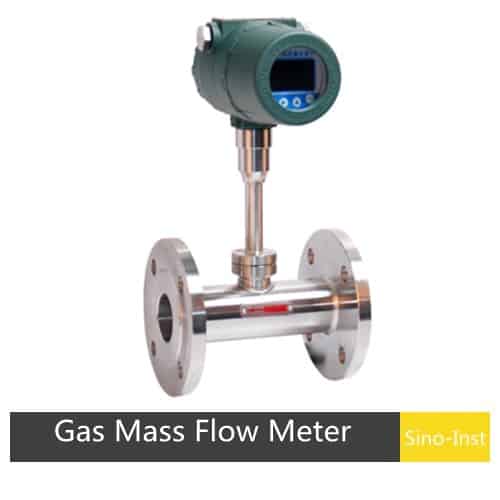
Thermal mass flow meters are widely used to measure gas flow in industrial processes. They determine the mass flow rate by measuring the thermal changes in the fluid as it flows through the sensor. Sino-Inst’s thermal mass flow meters utilize a unique temperature differential measurement method to overcome the drawback of traditional thermal mass flow … Read more
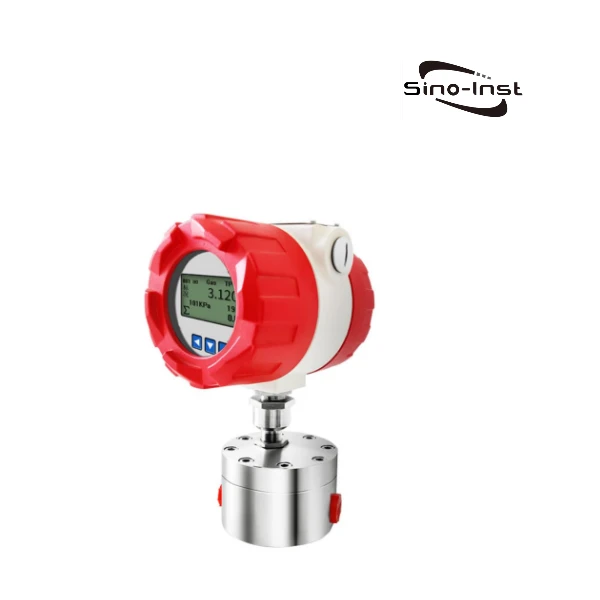
A circular gear flow transmitter is a positive displacement flow meter designed for high-precision, continuous or intermittent measurement of the volumetric or instantaneous flow rate of liquids in pipelines. It uses a pair of precision-machined cylindrical gears, driven by the fluid, to rotate. The fixed-volume cavity between the gears measures the volume of liquid passing … Read more
In industries such as fine chemicals, pharmaceuticals, and food processing, there is often a need to accurately measure and control small flow rates of glycerol liquids. As a viscous fluid, accurate flow measurement of glycerol is crucial for ensuring product quality and process control. Therefore, selecting the appropriate flow meter is key to ensuring measurement … Read more
An oval gear flowmeter, also known as a displacement flowmeter, is a type of positive displacement flowmeter and offers the highest accuracy among flow instruments. It is particularly suitable for measuring the flow of highly viscous liquids such as heavy oil, asphalt, paint, diesel, and bunker fuel. An oval gear flowmeter uses a mechanical measuring … Read more
Electromagnetic heat meter is an inductive instrument for measuring conductive media, suitable for measuring the volume flow of conductive liquids with a conductivity greater than 5μs/cm. The electromagnetic heat meter consists of a flow measurement unit, a heat calculation unit and a paired temperature sensor (PT1000), which can calculate, accumulate, store and display the amount … Read more
Cryogenic Flow Meters are flow meters that can be used to measure cryogenic liquids or liquefied gases. Such as liquid nitrogen, liquid oxygen, liquid hydrogen, liquid argon, etc. The lowest temperature of the medium that can be measured by general flow meters is -40~-20℃. Cryogenic Flow Meters can meet the measurement of media at -200℃. … Read more
Oxygen is an important gas in the industrial process and is widely used in various industrial sectors as an oxidant and combustion aid. Reasonable oxygen flow measurement can further improve production efficiency, reduce energy consumption, protect the environment, and achieve a win-win situation of economic and social benefits. We, Sino-Inst, supply various types of oxygen … Read more
Petrol/Diesel/Gasoline/Fuel oil is an important source of energy for vehicles, ships, power generation, and production machinery. With the use of flow meters, it is possible to effectively monitor the consumption of Petrol delivered. Petrol flow meters can be mechanical or electronic. For example, the common elliptical gear flow meter, turbine flow meter, etc. can be … Read more
A power plant uses lime slurry as a desulfurizer. Gypsum or calcium sulfate is formed by reacting with sulfur dioxide in the flue gas. Thus, the purification and emission control of harmful gases in exhaust gas can be achieved. Measuring the density (concentration) of lime slurry is to ensure that the appropriate amount of desulfurizer … Read more
Brewery flow meters are specialized devices that are used to measure the flow rate of liquids, such as beer and wine, in a brewery or winery setting. These devices can be used to monitor the production process, ensure quality control, and optimize the use of resources. There are a variety of different types of brewery … Read more
Like all switches, flow switches are devices used to connect and disconnect current in a circuit. In industrial systems, flow switches are critical equipment for ensuring production continuity and safety. They are essential for flow monitoring, automated control, and safety protection. Flow switches are used to control and monitor the flow rate of air, steam, … Read more
What Is a Differential Pressure Flow Meter? A differential pressure flow meter is a device that measures flow rate by measuring the pressure difference. The differential pressure transmitter is the key component in differential pressure flow measurement. Using a differential pressure transmitter, the pressure difference before and after a pipe throttling device can be measured. … Read more
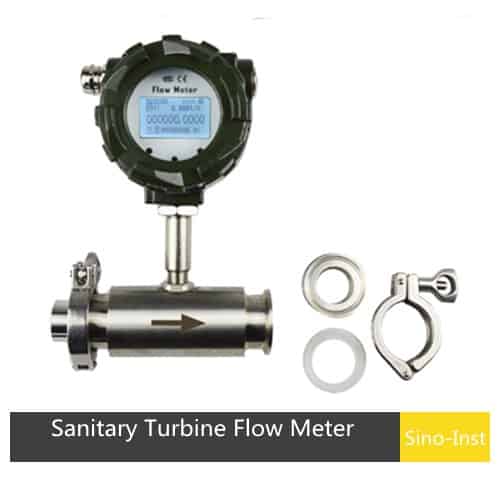
Sanitary flow meters are flow measurement instruments specifically designed for industries with high hygiene requirements, such as food and pharmaceuticals. They feature excellent cleanability and resistance to contamination. Sino-Inst supplies a range of sanitary flow meters, including electromagnetic, Coriolis, turbine, gear, and oval gear types. Sanitary flow meters typically use a sanitary Tri-Clamp Connection fitting … Read more
Positive displacement flow meters(PD Meter) are versatile and cost-effective. They can be used to measure clean, corrosive fluids and gases. When you need a high-precision flow meter at a reasonable price, a positive displacement flow meter is often the best choice. This article will explain how positive displacement flow meters work, the technology behind different … Read more
Accurate measurement of flare gas flow presents a significant challenge in industrial process control. This is primarily due to the extreme variability of flare gas flow rates, the unpredictability of gas composition, and harsh operating environments. Thermal mass flow meters provide a reliable and compliant method for flare gas measurement, enabling industries to meet stringent … Read more
Understanding the reasons why flow meters are prone to failure in the field is crucial for improving process control and production efficiency. These failures can be reduced through appropriate quality control, personnel training, environmental monitoring, and maintenance procedures, ensuring the reliability and stability of flow meters.
We, Sino-Inst, are a professional flow meter supplier. We will carefully select and supply the best-performing flow meters for you based on your specific on-site measurement conditions. Please feel free to contact us anytime!
Zhang Wei, possesses 20 years of experience as an automation instrumentation engineer, specializing in the research, design, installation, commissioning, and maintenance of automation instruments.
Face to various instrument communication protocols (such as Modbus, Profibus, etc.), with solid hardware circuit design and software programming skills (proficient in C language and PLC programming). Has extensive project experience; projects he has led and participated in have all achieved outstanding results, improving product accuracy, reducing costs, and increasing production efficiency.
Possesses excellent communication and coordination skills and a strong team spirit, enabling him to quickly respond to customer needs and provide high-quality automation instrumentation solutions.