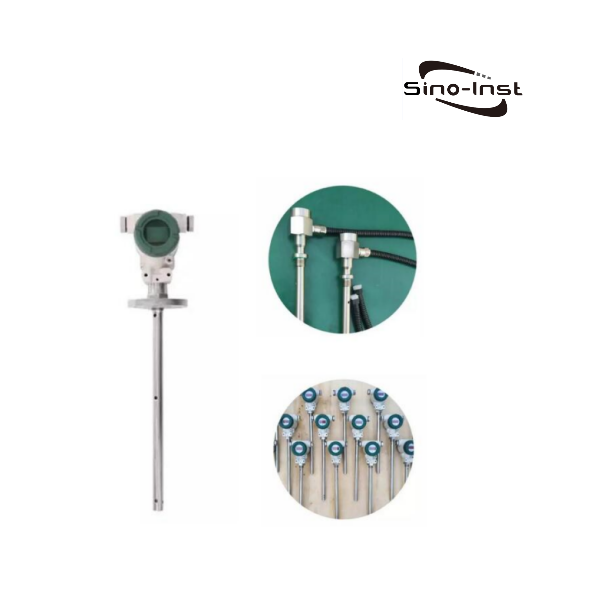
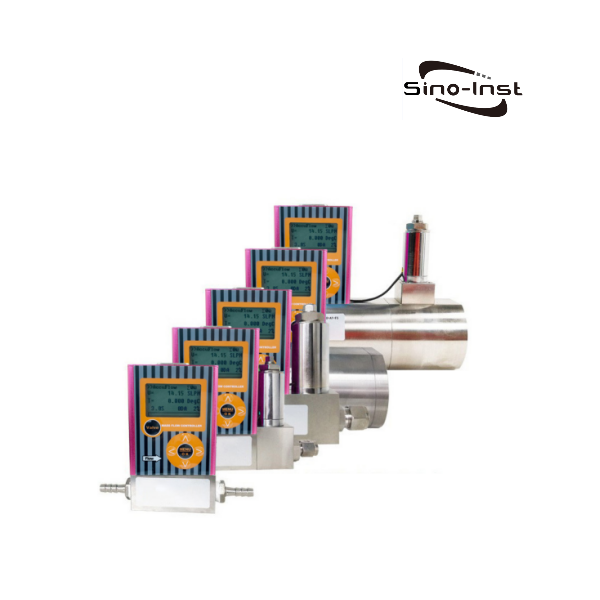
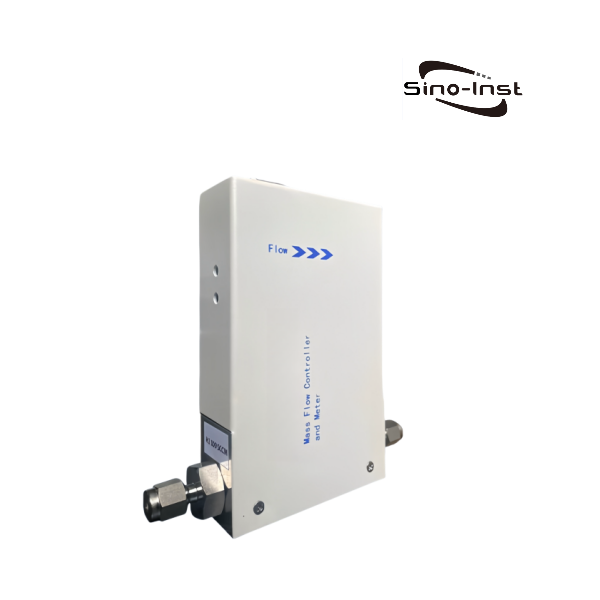
Liquid nitrogen flow meters are a type of cryogenic flow meter specifically designed to measure the flow rate of liquefied nitrogen at extremely low temperatures (-196°C; -320°F; 77 K). Of course, similar cryogenic liquefied media can also be measured, such as LNG, LOX, LAR, and LH2. Accurate flow measurement of cryogenic fluids can optimize process flows, improve overall efficiency, and save costs.
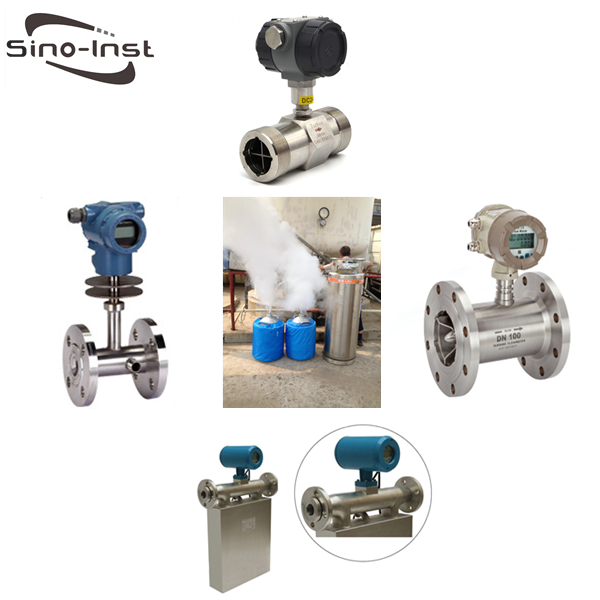
For liquid nitrogen flow measurement, Sino-Inst offers turbine flow meters, mass flow meters, gear flow meters, and target flow meters. When measuring liquid nitrogen flow, please ensure nitrogen protection for liquid nitrogen storage tanks and pipelines.
This guide covers flow meters for liquid nitrogen — the cryogenic phase at –196 °C. For room-temperature nitrogen gas (N2) measurement, see [our N2 gas flow meter guide]
Liquid nitrogen is inert, colorless, odorless, non-corrosive, non-flammable, and extremely low temperature. Nitrogen constitutes most of the atmosphere (78.03% by volume and 75.5% by weight). Nitrogen is inactive and does not support combustion. Frostbite is caused by a large amount of endothermic contact during vaporization. Nitrogen makes up 78% of the air.
Under normal pressure, the temperature of liquid nitrogen is -196°C. 1 cubic meter of liquid nitrogen can expand to 696 cubic meters of pure gaseous nitrogen at 21 ° C. Liquid nitrogen is a colorless, odorless liquid and gas that is cold at high pressure. Liquid nitrogen (often written as LN2) is a liquid form of nitrogen formed at low temperatures. The boiling point of nitrogen is -196°C.
Under normal atmospheric pressure, liquid nitrogen will form if it is below this temperature. If pressurized, liquid nitrogen can be obtained at higher temperatures.
In industry, liquid nitrogen is obtained by fractional distillation of air. After the air is purified, it is liquefied in a pressurized and cooled environment and separated by the different boiling points of the components in the air.
When nitrogen turns into a liquid, it becomes a cryogenic liquid. Cryogenic liquids are liquefied gases that generally have a boiling point below –238 ° F (–150 ° C). The boiling point of liquid nitrogen is –320.5 ° F (–195.8 ° C). Because the temperature difference between the product and the surrounding environment is very large, even in winter. It is important to keep liquid nitrogen isolated from the surrounding environment. Products also require specialized use and storage equipment.
Industrial use of liquid nitrogen
In industrial production, liquid nitrogen is obtained by compressed liquid air fractionation. Liquid nitrogen can be used as a deep refrigerant. Because of its chemical inertness, it can directly contact biological tissues and freeze immediately without destroying biological activity.
Therefore, liquid nitrogen can be used:
Quickly freeze and transport food, or make ice products;
Research on low temperature physics;
Demonstrate low temperature conditions in science education. Soft objects at room temperature are brittle like glass when soaked in liquid nitrogen;
Provide the temperature required for high-temperature superconductors to show superconductivity. Such as yttrium barium copper oxide.
Can be used as a refrigerant to quickly freeze biological tissues to prevent tissues from being damaged.
For industrial nitrogen fertilizer.
For chemical detection, such as the BET specific surface area test method.
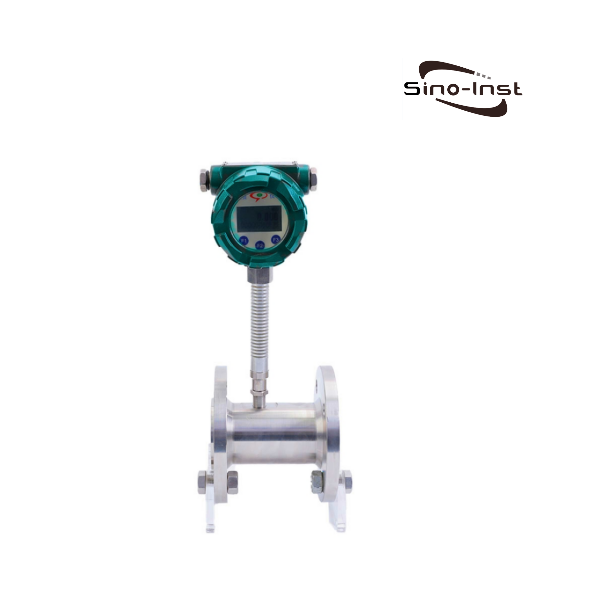
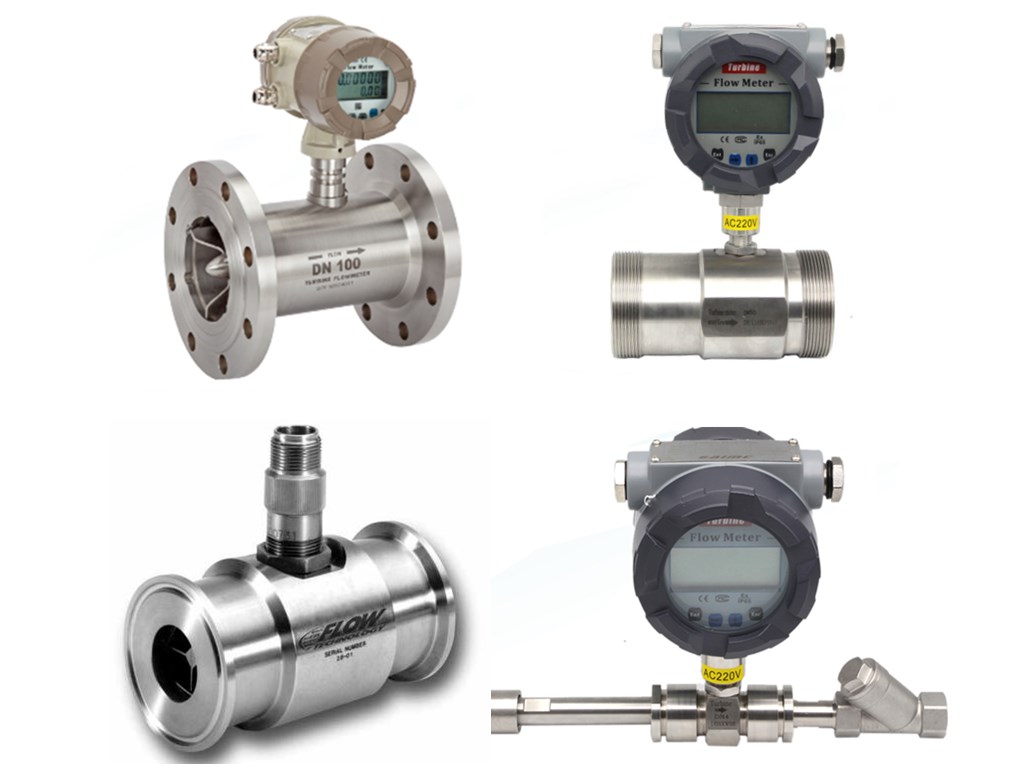
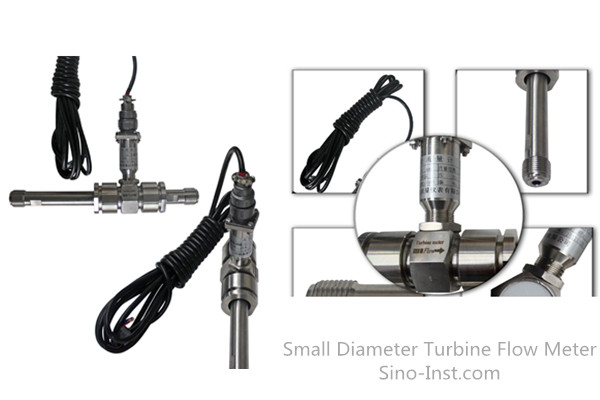
1. Turbine Flow Meter for Industrial Liquid Nitrogen Flow Measurement
Low Temperature turbine flowmeter is a dedicated liquid nitrogen flowmeter. It can also be used to measure cryogenic liquids such as liquid oxygen.
In industrial production, liquid nitrogen can be used as a deep refrigerant. The low-temperature turbine flowmeter is used as a liquid nitrogen flowmeter, which can work at a low temperature of -196°C (-320.8 °F). Liquid Nitrogen Flow Meter’s Turbine sensor structure at ultra-low temperature (-196℃) is made of special customized material. Realize the instantaneous and cumulative flow monitoring of liquid nitrogen.
A turbine flow meter is constructed with rotor and blades. Turbine flow meters use the mechanical energy of the fluid to rotate the rotor in the flow stream. Turbine flow meter is the most popular equipment to measure inline flow electronically. Turbine flow meters measure the velocity of liquids, gases and vapors in pipes. Such as hydrocarbons, chemicals, water, cryogenic liquids, air, and industrial gases. Turbine Flow Meters are easy to maintain, durable and versatile.
Best Technology Guide to Turbine Flow Meters. Turbine flow meter is the most popular equipment to measure flow electronically. They offer a wide flow and application rangeability. Turbine Flow Meters are easy to maintain, durable and versatile.
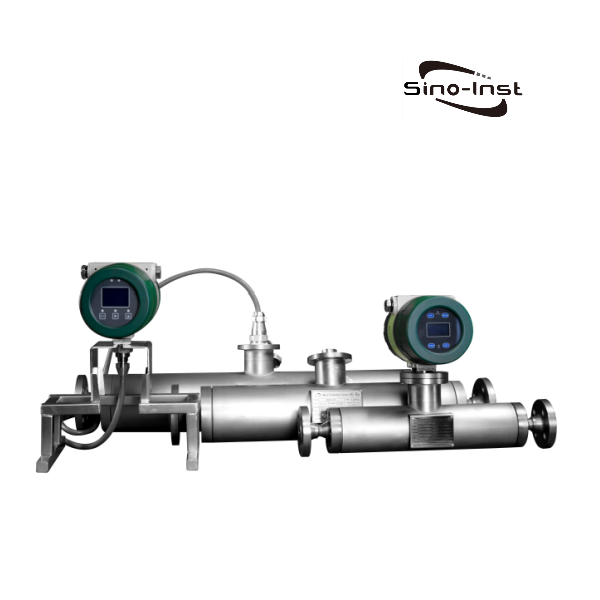
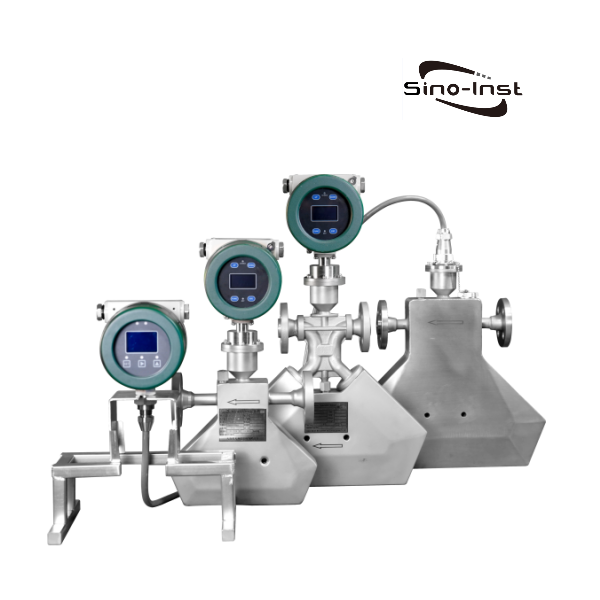
2. Mass Flow Meter for Industrial Liquid Nitrogen Flow Measurement
Why Coriolis Is the Most Accurate Choice for LN2?
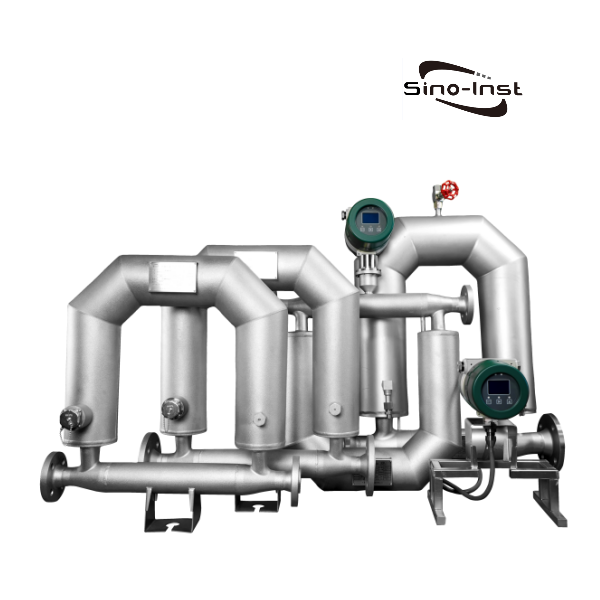
A Coriolis mass flow meter is the most accurate technology available for liquid nitrogen at –196 °C, delivering ±0.1% to ±0.2% accuracy of measured mass flow. Unlike volumetric meters (turbine, gear, vortex), Coriolis measures mass directly through the Coriolis force on a vibrating tube — so it does not require temperature, pressure, or density compensation. This makes it the default choice for custody transfer, batching, and process control applications where LN2 billing accuracy or recipe precision matters.
Cryogenic Coriolis Specifications: Tube Material, Pressure, Range
Real Application: Coriolis in Cryogenic Custody Transfer
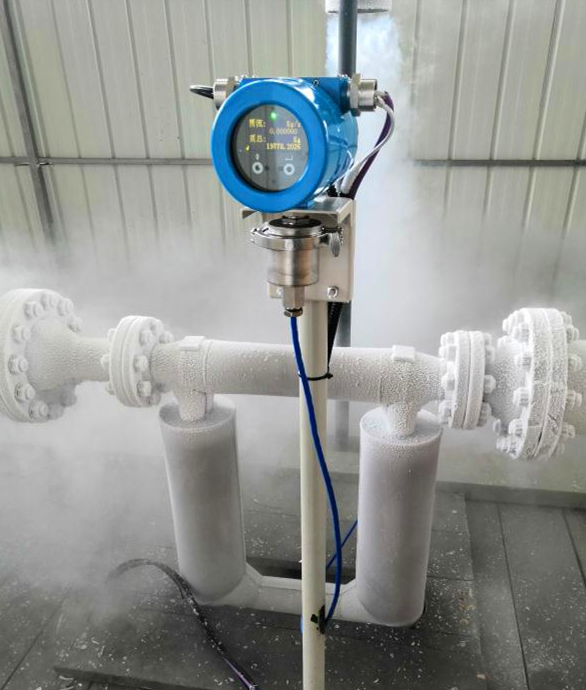
A U.S. aerospace thermal vacuum systems integrator specified a Sino-Inst U-type Coriolis mass flow meter for cryogenic LN2 measurement in their thermal vacuum (TVAC) chamber feed line. Final configuration:
Parameter
Specification
Sensor type
U-type Coriolis with heat-preservation jacket
Diameter
DN20
Medium
Liquid nitrogen (LN₂)
Flow range
0 – 720 kg/h
Medium temperature
–200 to +200 °C
Pressure rating
0 – 1.6 MPa
Accuracy
±0.1% of measured value (liquid)
Measuring tube
SS 316L
Housing
SS 304
Display
Cumulative flow + Instantaneous flow + Temperature + Density
Power supply
24 VDC / 220 VAC universal
Output
4–20 mA + Pulse + RS485
Connection
Custom flange
Installation
Integrated (sensor + converter as one unit)
Hazardous area rating
Ex db ia ⅡC T6 Gb
Ingress protection
IP67
Applicable certifications
SIL 3 · ATEX · CE (ECM) · CE (SGS) · 3A Sanitary · Ex db ia ⅡC T6 Gb
Why this configuration:
The integrator selected the heat-preservation jacket variant to insulate the measuring tube from ambient heat ingress, preventing condensation, ice formation, and cold-induced drift on the vibration tube. The 0.1% accuracy class was required for thermal-control mass balance in the TVAC chamber, where LN2 consumption is a process-validation metric. Integrated installation eliminated the field cabling step typical of split-type meters, reducing installation risk in a clean-room build environment. The full LCD readout (mass flow, density, temperature, totalizer) supports both local operator monitoring and remote DCS integration via the 4–20 mA + Pulse + RS485 outputs.
3. Target Flow Meter for LN2 Flow Measurement
Target flow meters also known as drag force flow meters. Insert a target (drag element), usually a flat disc or a sphere with an extension rod, into the flow field. They then measure the drag force on the inserted target and convert it to the flow velocity. The structure of target type flowmeter: a measuring tube (housing), a new capacitive sensor, a choke, an integrated display and an output part. The target type flowmeter has the characteristics of high accuracy. Capable of measuring various media. For example: water flow, fuel oil, liquid diesel, air flow measurement.
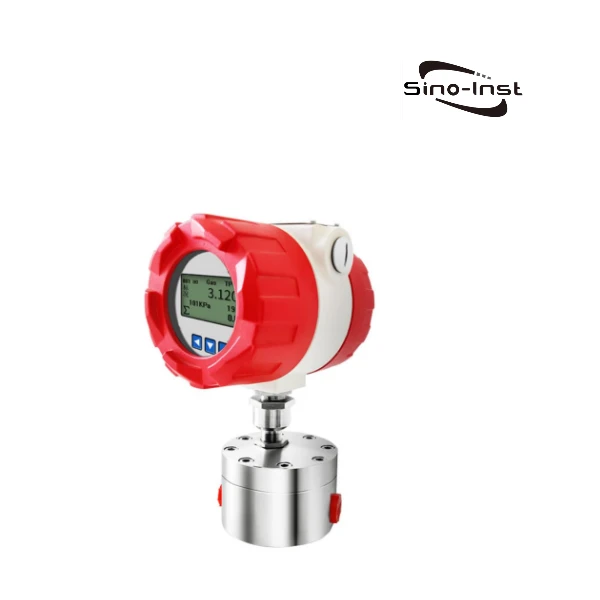
4. Gear Flow Meter for Low LN2 Flow
Gear flow meters are a newly launched product of our company. A gear flow meter is a positive displacement flow transmitter used for high-precision measurement of volumetric flow rate with fewer installation restrictions.
Compared to oval gear flow meters, the GF series gear flow meters have a greater advantage in measuring minute flow rates. This series of flow meters is made of aluminum alloy and stainless steel and can measure hydraulic oil, diesel oil, and even high-viscosity fluids. Furthermore, the GF gear flow meter has unique advantages in measuring high-temperature and low-temperature media: 200℃ and -200℃. Therefore, the GF gear flow meter is also a good choice for measuring minute LN2 flow rates.
Working Principle
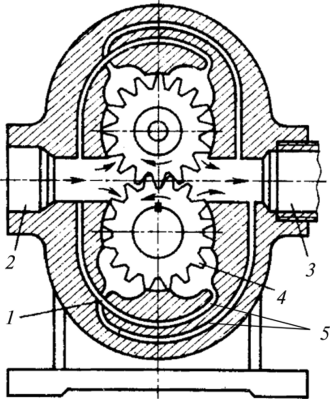
As the medium flows, the gears mesh and rotate. The fluid flow creates a pressure differential between the inlet and outlet of the meter. Without power, a pair of gears rotate freely, filling the cavity between them with liquid. The liquid is expelled as the gears rotate, and measuring the number of gear revolutions provides the flow rate of the liquid passing through the meter.
The speed of the circular gear transmitter is detected by a sensor coil in a signal amplifier mounted on the meter case. The signal amplifier is not in contact with the measured medium. When the transmitter gears cut through the magnetic flux generated by the permanent magnets in the housing, this causes a change in the magnetic flux in the sensor coil.
The sensor coil feeds the detected signal into a preamplifier, which amplifies and shapes the signal to generate a pulse signal proportional to the flow rate. The signal is then fed into the unit conversion and flow totalizer circuits to display the accumulated flow value. It is also fed into the frequency-to-current conversion circuit, which converts the pulse signal into an analog current, indicating the instantaneous flow value.
Real-World Application: -196 °C Cryogenic Flow Measurement (Case)
A customer from the United States wanted to measure the flow rate of cryogenic liquid nitrogen. He saw our product on our website and contacted us. The final specifications are as follows:
User Type: U.S. aerospace thermal vacuum systems integrator Application Scenario: Thermal vacuum (TVAC) cryogenic shroud cooling loop
Due to the user’s cost constraints, and the need to maintain high accuracy at a low flow rate of 300 L/H, and to operate under low pressure, we recommended the GF06 gear flow meter. Its split design, added insulation, and upstream filtration ensure stable operation and high totalization accuracy.
Parameter configuration is as follows:
Gear flow meter
Model: GF06
Measuring range: 10-500 L/H
Low temperature: -196°C
Pressure: 22 psi
Split-type local display
G1/2 thread installation
24VDC power supply
4-20 mA output signal + pulse signal output
5. Vortex Flow Meter For LN2
A vortex flow meter is a type of flow meter applicable to gases, liquids, and steam.
For liquid nitrogen flow measurement, a vortex flow meter is a good choice. It operates based on the Karman vortex street principle and can withstand temperatures as low as -196°C when measuring cryogenic fluids like liquid nitrogen. It also has a wide measurable flow range; for example, with a pipe diameter of 50mm, the measurement range can reach 0.6-6 m²/h, with an accuracy controllable within ±0.5%-±1%.
FAQ
The core difference is temperature. Liquid nitrogen is a cryogenic liquid at -196 °C, while nitrogen gas is a room-temperature gas; the design philosophies of the two types of meters are completely different.
Liquid nitrogen flow meters require cryogenic materials with a temperature range of -200 to +200 °C, and are often designed as separate units or with insulation jackets. The operating principles typically include Coriolis mass flowmeters, cryogenic turbines, and cryogenic gear flowmeters. Nitrogen gas flow meters, on the other hand, use room-temperature components, and the mainstream designs are thermal mass flowmeters, vortex flowmeters, and rotor flowmeters.
Forcibly mounting a nitrogen flow meter onto a liquid nitrogen pipeline will cause it to freeze immediately upon the introduction of the medium, freezing the electronic components and completely distorting the readings. The two types are not interchangeable.
It’s to move the electronic components out of the cold zone. The transmitter circuit board typically operates at a lower temperature limit of -40 °C, while the measuring tube operates at -196 °C. A single unit would allow the cold air to be directly transferred to the circuitry, causing capacitors and crystal oscillators to drift or even fail at low temperatures. A separate unit mounts the transmitter on a bracket 1-2 meters away, ensuring circuit stability at ambient temperatures, and eliminating the need to remove the insulation layer for on-site maintenance.
In low-flow scenarios, some customers occasionally choose a single unit with an insulation jacket for convenience, which may work in the short term. However, for long-term operation or larger pipe diameters, a separate unit is still recommended.
The mass type (Coriolis). It directly measures mass, requiring no temperature or density compensation, and achieves an accuracy of ±0.1%. In comparison: cryogenic turbine flow meters typically have an accuracy of ±0.5% to ±1.0%, while cryogenic gear-type volumetric flow meters are approximately ±0.5%. The trade-off is that Coriolis is more expensive and takes up more space.
Selection should be based on application: For trade settlement, formula metering, and heat balance calculation—choose Coriolis; for routine process monitoring and flow trend observation—a turbine flow meter is sufficient.
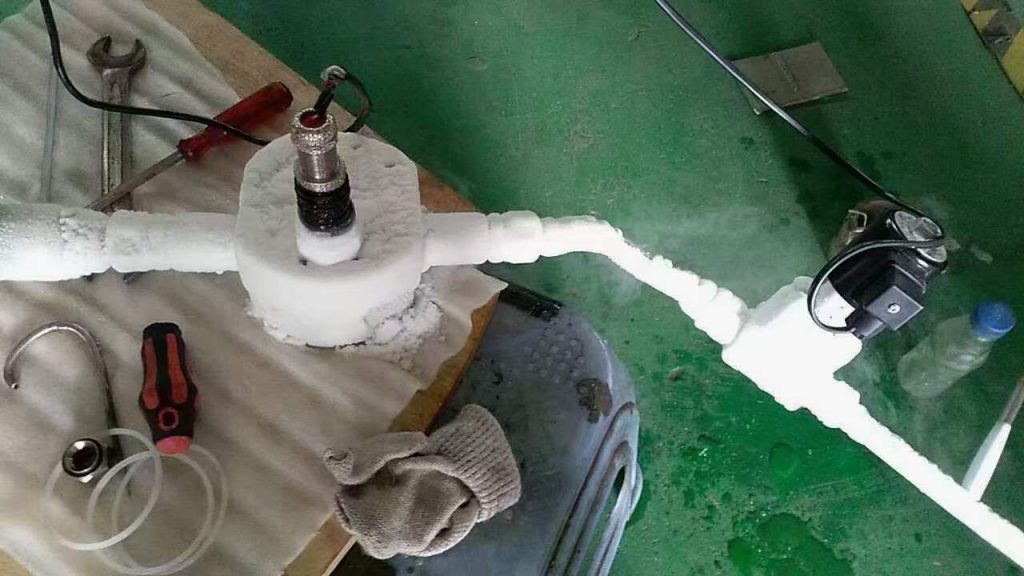
The key is to prevent moisture from contacting the cold surface. Specifically: Insulate the measuring pipe and inlet/outlet short pipes entirely (using polyurethane foam or vacuum jacketing, depending on budget). For split-type or jacketed models, keep the electronic components away from cold areas. Install a drain valve at the bottom of the insulation layer to allow condensate to drain promptly. Before installation, purge the pipe cavity with dry nitrogen to replace any humid air. For outdoor or damp sites, the junction box seal should be at least IP67.
A common pitfall in the field: Insulation only covers the pipes, not the flanges. Condensate seeps into the junction box through the flange seams, causing malfunctions after a few months. Make sure to seal the flanges during installation.
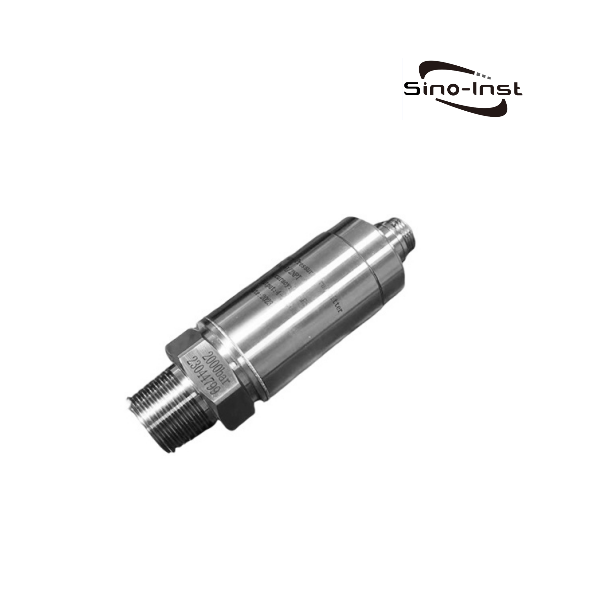
In addition to liquid nitrogen flow meters, Sino-Inst also supplies nitrogen flow controllers, nitrogen flow meters, liquid nitrogen level transmitters, level and pressure transmitters, and other specialized cryogenic testing instruments.
Flow measurement is a crucial aspect of industrial process parameter monitoring. Whether it’s gas, liquid, steam, or even solid powder, flow meters can accurately monitor flow rate. However, even the most advanced flow meters can fail. Flow meter failure affects measurement accuracy and can lead to downtime, economic losses, product damage, and violations. What Causes … Read more
An electromagnetic flow meter is an instrument that measures the flow rate of conductive fluids by utilizing the induced voltage generated by the fluid. Because electromagnetic flow meters are designed not to introduce protrusions or obstructions in the pipeline, they are suitable for a wide range of applications, from clean liquids to slurries and highly … Read more
Brewery flow meters are specialized devices that are used to measure the flow rate of liquids, such as beer and wine, in a brewery or winery setting. These devices can be used to monitor the production process, ensure quality control, and optimize the use of resources. There are a variety of different types of brewery … Read more
Like all switches, flow switches are devices used to connect and disconnect current in a circuit. In industrial systems, flow switches are critical equipment for ensuring production continuity and safety. They are essential for flow monitoring, automated control, and safety protection. Flow switches are used to control and monitor the flow rate of air, steam, … Read more
What Is a Differential Pressure Flow Meter? A differential pressure flow meter is a device that measures flow rate by measuring the pressure difference. The differential pressure transmitter is the key component in differential pressure flow measurement. Using a differential pressure transmitter, the pressure difference before and after a pipe throttling device can be measured. … Read more
Sanitary flow meters are flow measurement instruments specifically designed for industries with high hygiene requirements, such as food and pharmaceuticals. They feature excellent cleanability and resistance to contamination. Sino-Inst supplies a range of sanitary flow meters, including electromagnetic, Coriolis, turbine, gear, and oval gear types. Sanitary flow meters typically use a sanitary Tri-Clamp Connection fitting … Read more
Positive displacement flow meters(PD Meter) are versatile and cost-effective. They can be used to measure clean, corrosive fluids and gases. When you need a high-precision flow meter at a reasonable price, a positive displacement flow meter is often the best choice. This article will explain how positive displacement flow meters work, the technology behind different … Read more
Over 10 liquid nitrogen flowmeter products are offered for sale by Sino-Inst on sino-inst.com. A wide variety of liquid nitrogen flowmeter options are available to you. Sino-Inst are supplier sells liquid nitrogen flowmeter on sino-inst.com,located in China. The top countries of supplier is China, from which the percentage of liquid nitrogen flowmeter supply is 100% respectively.