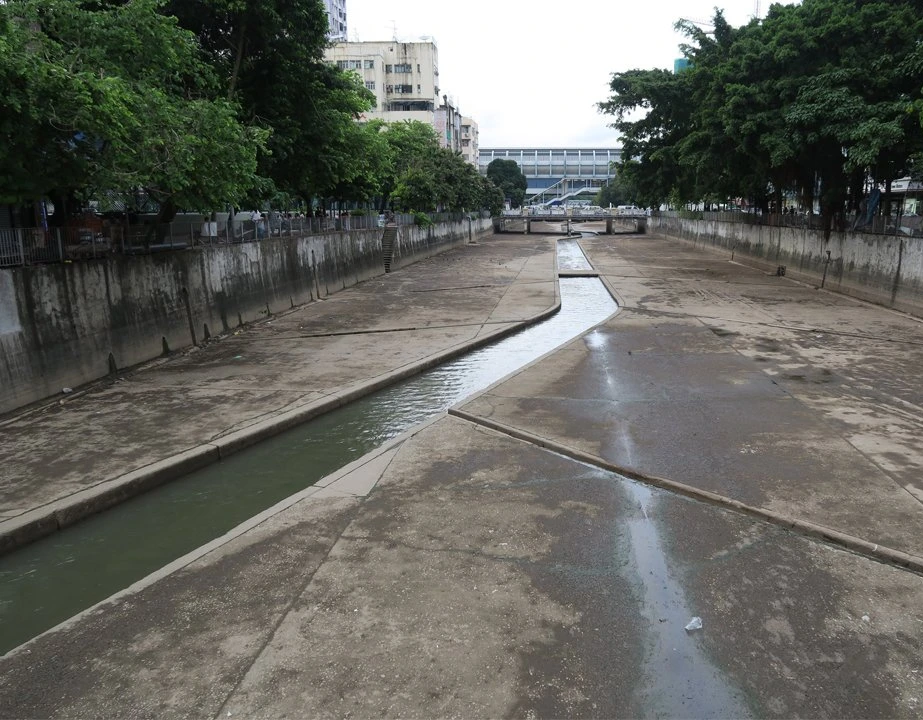
What is an open channel flow meter? Open channel flow meters are primarily used to measure liquid flow rates in open channels. Common applications include agricultural irrigation, municipal sewers, rivers, drainage channels, and wastewater treatment plants. These meters directly measure the water level and flow velocity in the channel to calculate the flow rate. They also support 4–20 mA, RS485, and switch alarm outputs, as well as wireless signal transmission, making it easy for users to set up open channel flow monitoring and management systems.
Based on measurement technology, open channel flow meters mainly include ultrasonic flow meters, Ultrasonic Doppler Flow Meters, and radar flow meters. They all monitor open channel flow based on the velocity-level calculation method. Let us now examine their operating principles and differences in detail:
1. Ultrasonic Open Channel Flow Meters
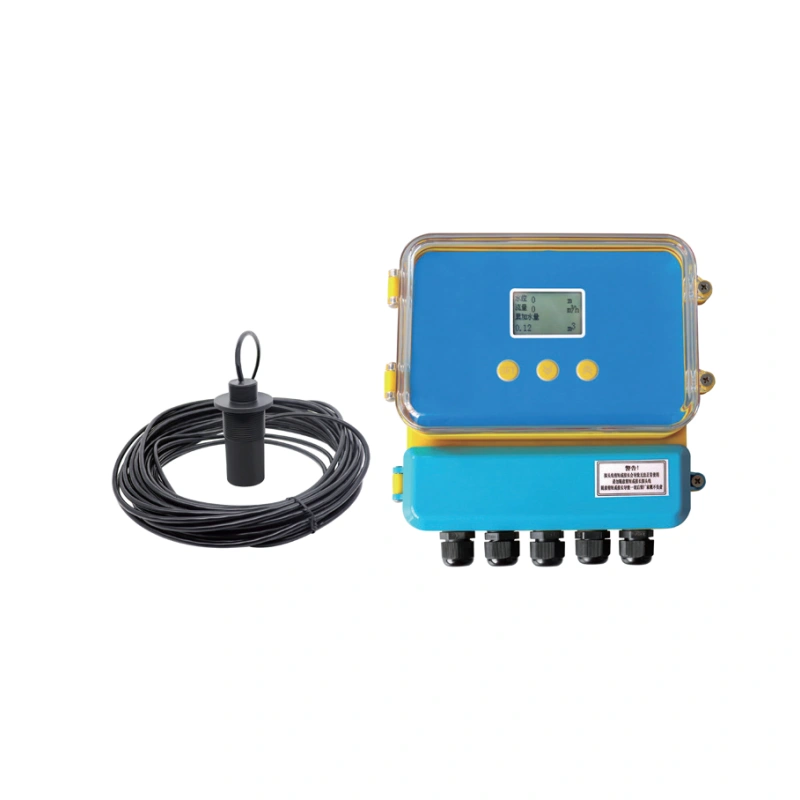
Ultrasonic open channel flow meters must be used in conjunction with a weir or flume. Once the water level height is measured, it must be converted into a flow rate value; this process involves a series of data processing steps. The cross-sectional area of the flow can be calculated based on the known type and dimensions of the weir or flume.
A weir or flume is an obstruction installed in an open channel designed to create a stable water level as the flow passes through. Common types include rectangular, triangular, and trapezoidal weirs; different types impose specific requirements for water level measurement.
Next, the average flow velocity is calculated by combining the measured water level height with the velocity distribution. Finally, the flow rate value is obtained by multiplying the cross-sectional area of the flow by the average velocity.
2. Ultrasonic Doppler Flow Meters
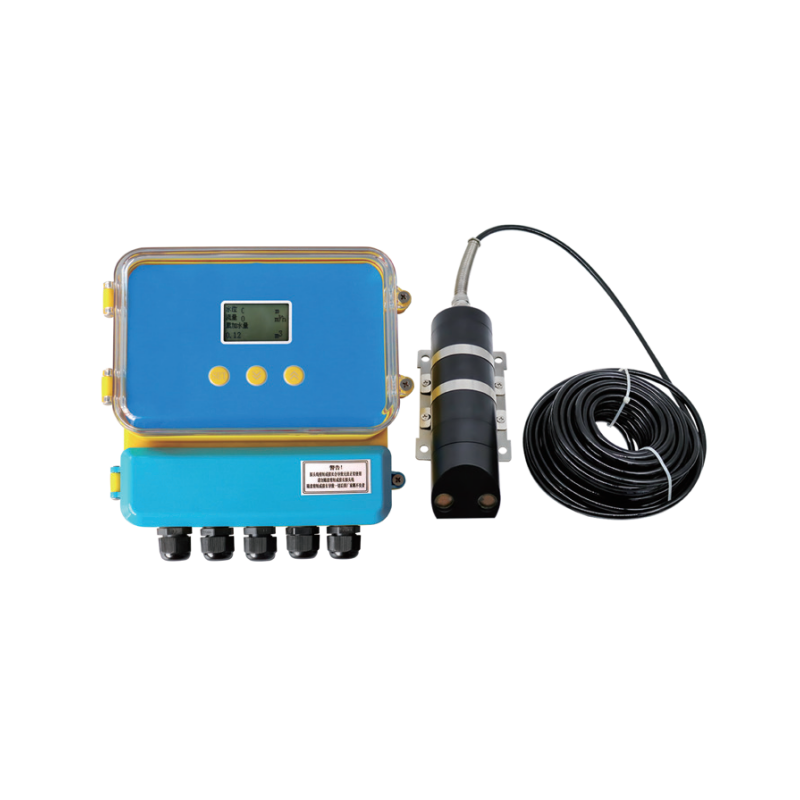
The ultrasonic Doppler flow meter is a contact-based flow measurement device suitable for open channels, full pipes, partially filled pipes, and natural rivers. It offers advantages such as ease of installation and operation, high accuracy, low power consumption, and maintenance-free performance. It does not require the use of a weir or flume. With an integrated pressure-based water level sensor, it eliminates the need for an external level gauge, enabling simultaneous monitoring of water level, flow velocity, and water temperature.
3. Radar Flow Meters
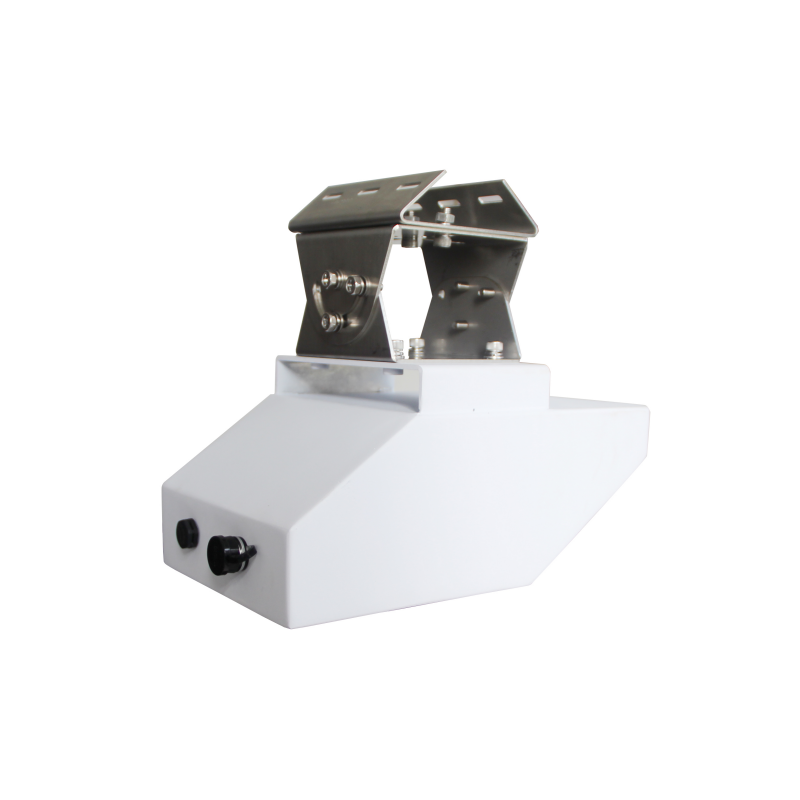
The radar flow meter is an instrument that utilizes microwave technology to detect water level and flow velocity, combining the measurement capabilities of established radar water level gauges and radar flow velocity meters. Based on built-in software algorithms, it calculates and outputs both instantaneous cross-sectional flow and cumulative flow. It also outputs flow velocity and water level data, integrates easily with telemetry platforms, and allows measurement information to be viewed via cloud platforms.
It supports the transmission of measurement results via digital (RS485, RS232) or analog (4-20mA) interfaces using the standard Modbus-RTU protocol. Wireless data transmission is supported (as an option) via 4G, NB-IoT, and LoRa technologies.
This radar flow meter is suitable for non-contact flow measurement in applications such as open channels, rivers, irrigation areas, underground drainage networks, and flood warning systems. The measurement process remains unaffected by environmental factors such as temperature, air pressure, sediment, dust, river pollutants, floating debris, or air conditions.
An open channel is a water flow path with a free surface that is in contact with the atmosphere. All points on the water surface are subject to atmospheric pressure, hence it is also called unpressurized flow. This contrasts with enclosed channels (such as underground pipes) that are not in contact with the atmosphere.
There are four main methods for measuring flow in an open channel: the weir method, the flume method, the velocity-water level calculation method, and the electromagnetic flowmeter method.
Weir Method:
A weir flowmeter uses a plate wall with an opening at the top as a weir in the flow channel. When the fluid is blocked by the weir, the water level rises to a certain extent, and then overflows the opening to flow downstream.
At this point, there is a correlation between the water level upstream of the weir wall and the flow rate. By measuring the water level, the corresponding flow rate can be calculated.
Based on the shape of the weir plate opening, weirs can be further divided into triangular weirs, rectangular weirs, and equal-width weirs, etc.
Flume Method:
A flume flow meter is designed to throttle a portion of an open flow channel. When water flows through this section, the flow velocity increases, and the water level in that section drops.
The device that calculates the corresponding flow rate based on the measured drop in water level is called a flume flow meter, such as the well-known Parshall flume.
Velocity-Level Calculation Method:
Measure the flow velocity at a specific point (point, line, or small area) in the flow channel to represent the average velocity. Then measure the water level to determine the flow area. Multiply this by the coefficient between the local velocity and the average velocity, and calculate the flow rate.
This method simply involves placing the sensor of an ultrasonic flow meter or radar flow meter at the bottom of an open channel, flume, or non-full pipe to measure the flow velocity, and then using a top ultrasonic sensor to measure the liquid level to calculate the real-time flow rate.
Electromagnetic Flow Meter Method:
This method is divided into two categories: submersible electromagnetic flow meter method and non-full pipe electromagnetic flow meter method.
Non-full-pipe electromagnetic flowmeters have their sensors directly installed in circular culverts of the same diameter. The principle of flow velocity measurement is the same as traditional electromagnetic flowmeters, and they also have the function of measuring water level. However, the electrodes, magnetic circuit, and measurement circuit differ significantly.
Submersible electromagnetic flowmeters operate by submerging the orifice. The outflow velocity is independent of the orifice’s submersion depth below the free surface, depending only on the water level difference between the upstream and downstream sides. In other words, the flow measurement value is independent of the installation position of the flow sensor (or flow divider model), but it should be as low as possible to ensure that it is always in a submerged flow state during operation. The flow velocity through the flow sensor is typically 2~3.5 m/s, with the upstream water level raised by 100~300 mm.
Most open-channel flow meters currently in use are designed based on the velocity-area method—examples include ultrasonic open-channel flow meters, ultrasonic Doppler flow meters, and radar flow meters.
They do not require the construction of specialized flow-measuring structures; instead, the flow rate is determined by measuring the cross-sectional area of the flow (which is actually calculated based on the measured water level) and the flow velocity.
This discussion focuses on flow meters designed for measurement in closed, full-pipe systems; these primarily fall into two categories: mass flow meters and volumetric flow meters.
Mass flow meters measure the mass flow rate of the medium within the pipeline, with common units being kg/h, t/h, etc. Volumetric flow meters measure the volumetric flow rate of the medium within the pipeline, with common units being m³/h, L/h, etc.
Flow meters focus on measuring gasses and liquids in pipes. Improving the precision, accuracy, and resolution of fluid measurement are the greatest benefits of the best flow meters. The material…
Proper lubrication is indispensable for maintaining optimal performance of industrial instrumentation and heavy-duty equipment. Both under-lubrication and over-lubrication is critical. Grease and Lube Flow Meters ensure that lubricants are applied…
Liquefied Petroleum Gas (LPG) is an indispensable commodity of domestic and industrial applications. It is increasingly used as an aerosol propellant and a refrigerant, replacing chlorofluorocarbons in an effort to…
As two common types of installation processes, vertical and horizontal flow meters have their own unique structure and performance advantages. Although most applications are horizontally oriented, mounting the meter vertically…
Mass flow meters are basal for quantifying fluid and gas flow in industrial settings. A mass flow meter is a type of flow meter that accurately measures the mass flow…
Ascertaining accurate and reliable measurement of gas flow rates is critical for a variety of industrial processes. The ability to measure gas mass flow accurately, rather than simply volumetric flow,…
Zhang Wei, possesses 20 years of experience as an automation instrumentation engineer, specializing in the research, design, installation, commissioning, and maintenance of automation instruments.
Face to various instrument communication protocols (such as Modbus, Profibus, etc.), with solid hardware circuit design and software programming skills (proficient in C language and PLC programming). Has extensive project experience; projects he has led and participated in have all achieved outstanding results, improving product accuracy, reducing costs, and increasing production efficiency.
Possesses excellent communication and coordination skills and a strong team spirit, enabling him to quickly respond to customer needs and provide high-quality automation instrumentation solutions.