Home > Blog > Flow Meter Selection Guide: Starting from Measurement Conditions
Flow Meter Selection Guide: Starting from Measurement Conditions
There are more than a dozen categories and hundreds of models of flow meters on the market, all claiming to have unique measurement advantages. So how do you choose the flow meter that meets your needs?
Simply put, start with your actual measurement conditions. Select the most suitable flow meter based on your specific application parameters.
1. Define the Medium Being Measured
Current flow measurement technology is not universally applicable to flow meters for liquids, gases, steam, and solid powders.
If the measured medium is a liquid, you need to confirm the following:
Name;
Viscosity;
Temperature;
Pressure;
Conductivity;
Density;
Flow range;
Impurity content;
Pipe diameter;
Corrosiveness;
If the measured medium is a gas, you need to confirm the following:
Name;
Temperature;
Pressure;
Pipe diameter;
Flow range;
Humidity;
Corrosiveness;
If the measured medium is steam, you need to confirm the following:
Whether it is superheated steam or saturated steam;
Pressure;
Temperature;
Pipe diameter;
Flow range;
If the measured medium is a solid powder, you need to confirm:
Name;
Temperature;
Pipe diameter;
Particle size;
Flow rate range;
Abrasiveness;
2. Confirm the Measurement Purpose.
This means understanding why we need to measure and what we need to obtain from the measurement.
This means we need to understand why we need to measure and what we need to obtain through measurement. For example:
Do we need to directly read the volumetric flow rate or the mass flow rate?
What level of measurement accuracy is desired? For example, 0.5% or 0.1%?
Does the flow meter need to be equipped with signal output for building a remote flow monitoring system?
3. Characteristics of Different flow meters
Different types of flow meters have different advantages, disadvantages and performance parameters. For details, please refer to: 11 Flow Meter Types and Their Advantages and Disadvantages. Before we choose a flow meter, it is best to understand the performance parameters of various flow meters. Mainly from the following aspects:
There are two types of flow measurement: instantaneous flow and cumulative flow.
For example, the crude oil in the distribution station pipeline belongs to the custody transfer, or the continuous proportioning of the petrochemical pipeline, the process control of the production or production process, etc. need to measure the total amount. Occasionally supplemented by observation of instantaneous flow.
In some workplaces, instantaneous flow measurement is required to control the flow rate. Therefore, the selection should be made according to the needs of on-site measurement.
Of course, most of our Sino-Inst digital flow meters can display both instantaneous flow and cumulative flow simultaneously.
This accuracy class refers to the maximum error of the flow meter.
For example: the measuring range of the flow meter is 10m³/h. Then an accuracy of level 1.0 means that the difference between the measured value of the flow meter at any measuring point and the real flow rate is within plus or minus 1m³/h.
For example, when the measured value of the flow meter is 5m³/h, the actual flow rate is between 4-6m³/h.
Therefore, the higher the accuracy of the flow meter, the more accurately it represents the true flow rate. Level 0.5 is definitely more accurate than level 1.0.
Generally, we select a flow meter with the same pipe diameter. Each flow meter of a given diameter has its own corresponding measurement range.
If the flow meter’s measurement range perfectly covers the minimum and maximum flow rates of the pipe, then you can simply select that flow meter.
If the flow meter’s measurement range does not cover the pipe’s flow rate, you will need to consider reducing or increasing the pipe section size. Please contact us for detailed recommendations based on our flow meter range table.
Pressure loss generally refers to the irrecoverable pressure loss that changes with the flow rate due to the static or movable detection element installed in the flow channel or the change of flow direction in the flow sensor.
Therefore, the flowmeter should be selected based on the pumping capacity of the pipeline system and the inlet pressure of the flowmeter to determine the allowable pressure loss of the maximum flow rate.
To facilitate remote monitoring and management of flow rates, most modern flow meters are equipped with signal outputs. These include options such as 4-20mA, RS485, pulse/frequency output, and HART, and even wireless communication via 4G/GPRS.
The specific signal output to be used needs to be confirmed with the backend monitoring equipment. The flow meter should be configured to provide the signal type that the backend equipment accepts.
4. Flow Meter Installation Requirements.
Different flow meters have different requirements regarding pipe installation conditions, such as straight pipe sections and installation direction. The main considerations include: flow meter installation direction, fluid flow direction, upstream and downstream straight pipe section configuration, valve position, protective accessories, pulsating flow effects, vibration, electrical interference, and flow meter maintenance.
Among these, upstream and downstream straight pipe sections are important for most flow meters. Except for oval gear flow meters, GF gear flow meters, and Coriolis mass flow meters, which do not require upstream and downstream straight pipe sections, other types of flow meters require sufficient straight pipe sections upstream and downstream. Please refer to our detailed description for more information: Flowmeter Installation: Upstream and Downstream Straight Run Requirements
5. Flow meter cost
Based on our experience, we recommend that you choose a flow meter with a higher price within your budget. A higher price generally corresponds to better measurement performance, which is highly likely to reduce subsequent maintenance costs.
Purchase cost of the flow meter. When purchasing a flowmeter, the economic impact of different types of flowmeters on the entire measurement system should be compared. For example, measuring water pipe flow, DN300 large diameter. Then the external clamp ultrasonic flowmeter will cost less than other flowmeters.
Installation and maintenance costs When purchasing a flow meter, you must consider not only the purchase cost of the flow meter, but also other costs, such as accessory purchase fees, installation and commissioning fees, maintenance and regular testing fees, operating fees and spare parts fees.
Flow Meter Comparison-Different Application Guidance
Below is a summary of flow meter options for some common application types. For your preliminary reference:
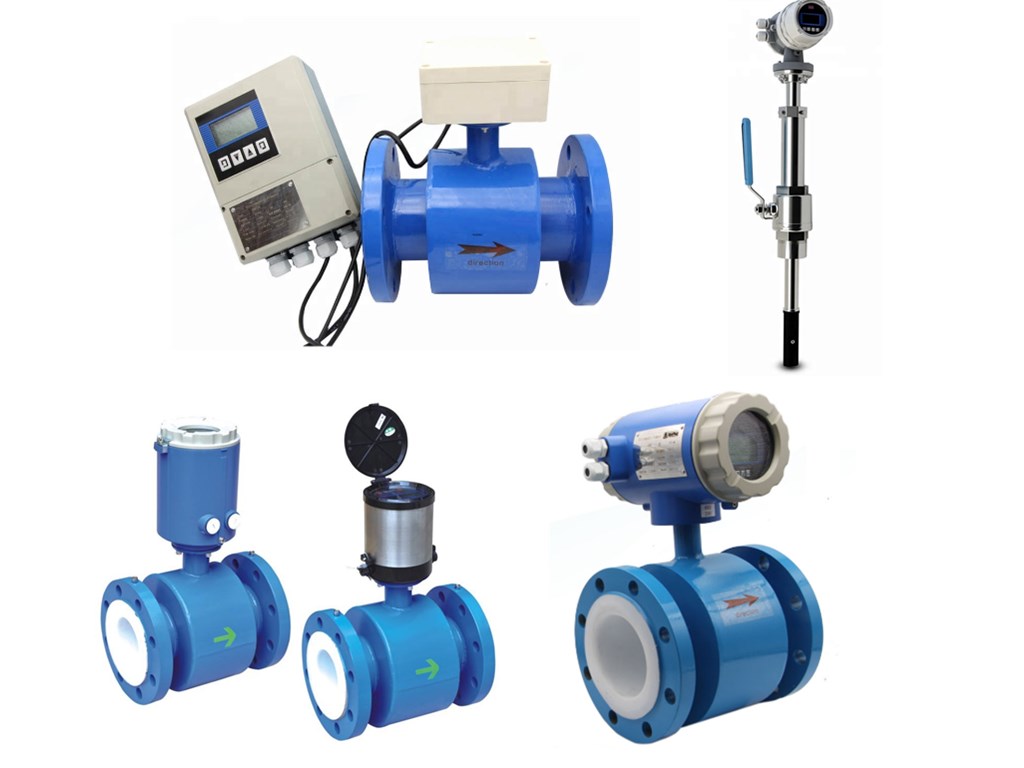
Electromagnetic flow meters, also called mag meters or magnetic meters. Mag meter is ideal for wastewater applications, or any dirty liquid which is conductive or water based. Accuracy over a wide flow range can be as good as ± 0.5% of flow rate or better.
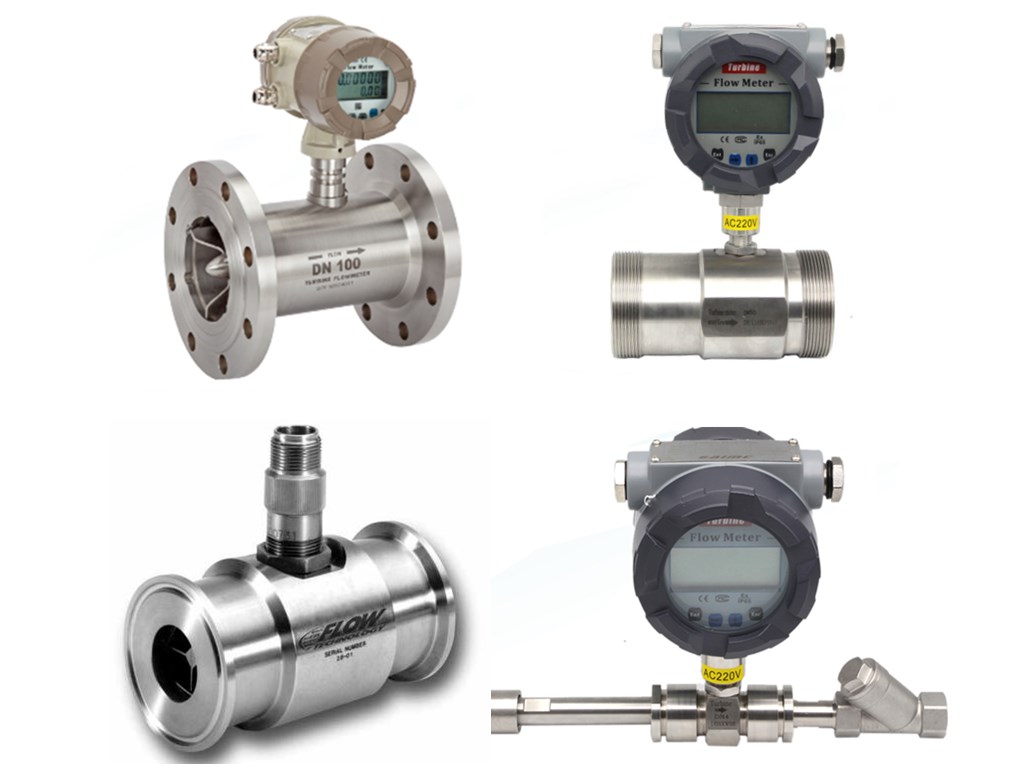
Turbine flow meter is the most popular equipment to measure inline flow electronically. Turbine flow meters measure the velocity of liquids, gases and vapors in pipes. Such as hydrocarbons, chemicals, water, cryogenic liquids, air, and industrial gases.
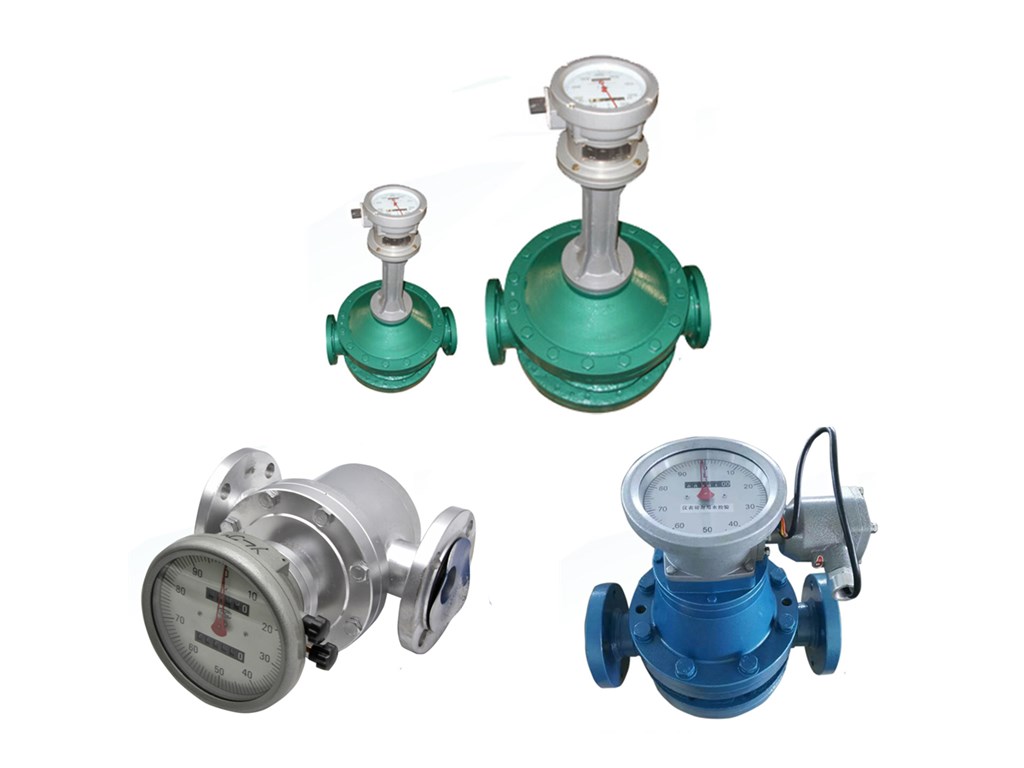
Industrial Oval Gear Flow Meters are positive displacement type volume meters. Sino-Inst offers High temperature and high pressure types oval gear flow meters for special use. Oval Gear Flow Meters are suitable for chemical fluids, like: fuel oil, water…
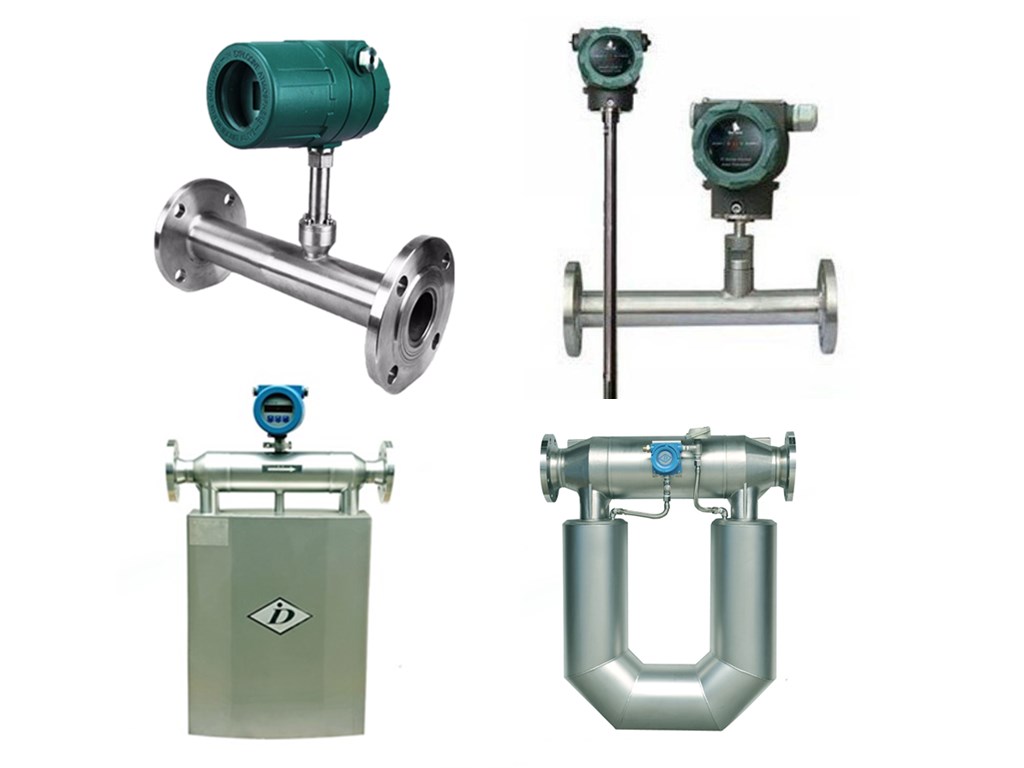
Mass Flow meters for all industrial flow measurement. Coriolis mass flow meters and Thermal mass flow meters. Coriolis Mass flowmeters are ideal for liquid flow measuring applications. And Thermal Mass flowmeters are for compressed gas applications.
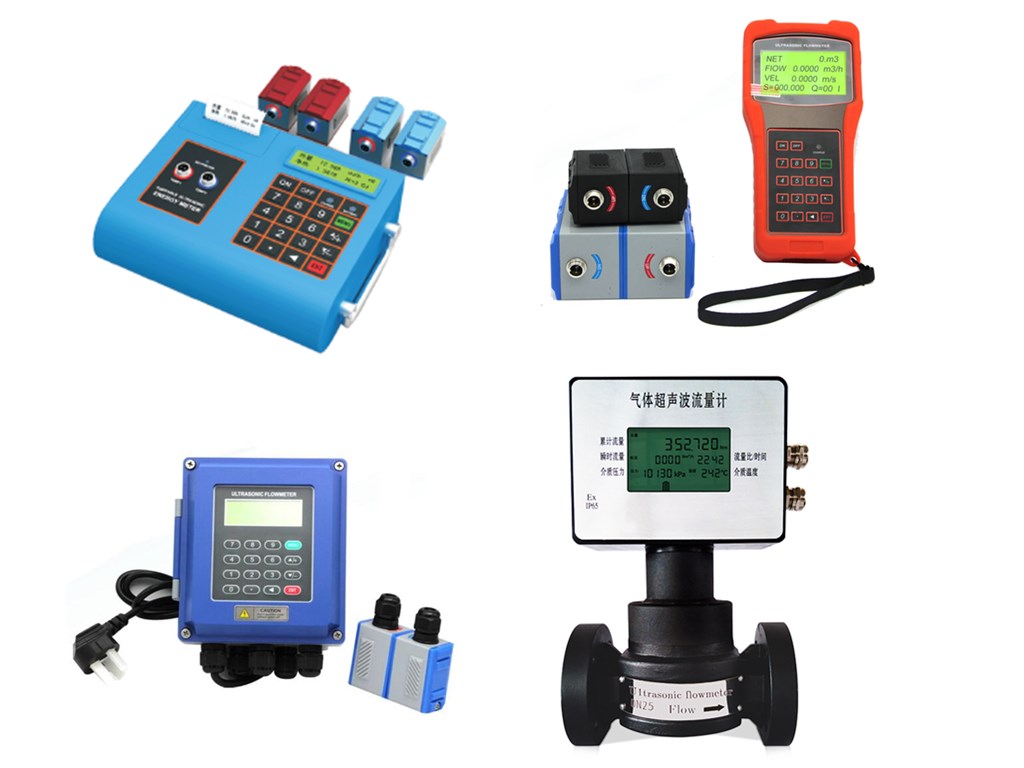
Ultrasonic flowmeters measure the fluid flow rate in a pipe. With the sound waves transit time principle to determine the flow rate. Ultrasonic flow meters, with easy installation, could be clamp on, handheld, and portable.
A customer from the United States was looking to purchase a flow meter to measure the flow rate of liquid R134A in their HVAC system. The system requirements and fluid properties were as follows:
Fluid: Liquid R134A
Connection tube size: 1/4″
Flow rate: 5-250 L/h
Operating temperature: -30°C to 150°C (-22°F to 302°F)
Operating pressure: 0 to 600 psig
Preferred output signal: 0-5V DC (alternative options: 0-10V DC, 4-20mA)
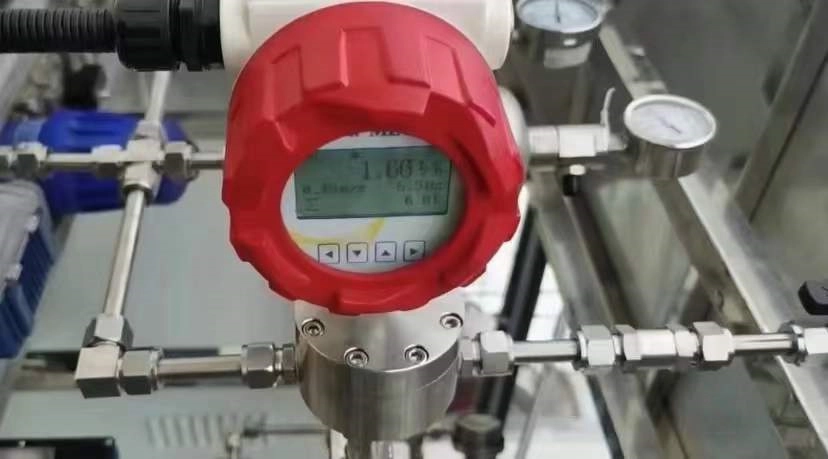
After evaluating various flow meter technologies, the customer selected our gear flow meter due to its suitability for their specific application. The gear flow meter provided accurate measurement for the refrigerant and met the temperature and pressure requirements. The selected gear flow meter had the following specifications:
Model: GF-04
Measuring range: 5-250 L/h
Material: Stainless steel
Connection: G3/8 thread
Operating temperature and pressure: -30°C to 150°C (-22°F to 302°F), 0 to 600 psig
Output signal: 0-5V DC
By choosing the gear flow meter, the customer was able to accurately measure and control the flow rate of liquid R134A in their HVAC system, ensuring optimal performance and energy efficiency.
Choosing the right flow meter for your application is critical to achieving accurate, efficient flow measurement. By considering the factors discussed in this Flowmeter Selection Guide and understanding the different flow meter technologies available, you can make an informed decision and find the product that best suits your specific needs.
As an experienced manufacturer and supplier, Sino-Inst offers a variety of flow meters and supports customization to meet your unique requirements.
Contact us today to discuss your flow meter needs and learn how our expertise can help you improve process control and efficiency.
Zhang Wei, possesses 20 years of experience as an automation instrumentation engineer, specializing in the research, design, installation, commissioning, and maintenance of automation instruments.
Face to various instrument communication protocols (such as Modbus, Profibus, etc.), with solid hardware circuit design and software programming skills (proficient in C language and PLC programming). Has extensive project experience; projects he has led and participated in have all achieved outstanding results, improving product accuracy, reducing costs, and increasing production efficiency.
Possesses excellent communication and coordination skills and a strong team spirit, enabling him to quickly respond to customer needs and provide high-quality automation instrumentation solutions.
Want to see more of our engineering guides in Google Search? Add Sino-Inst as a preferred source.