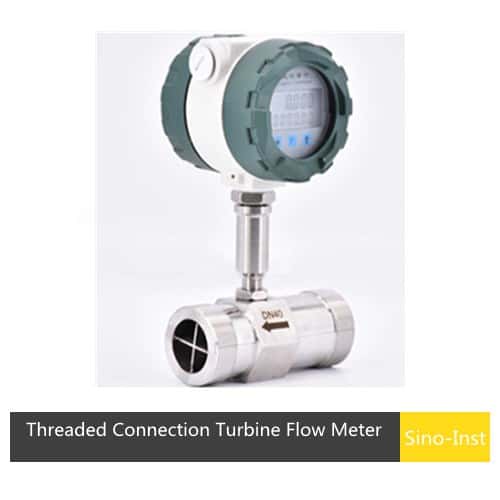
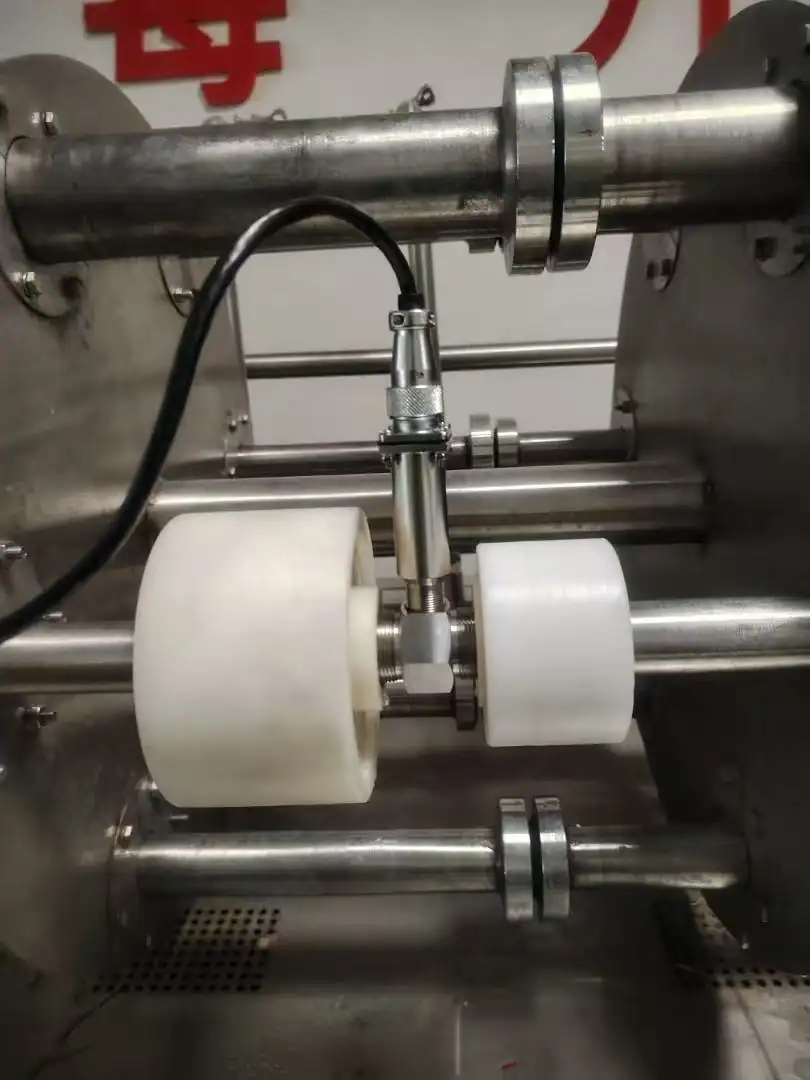
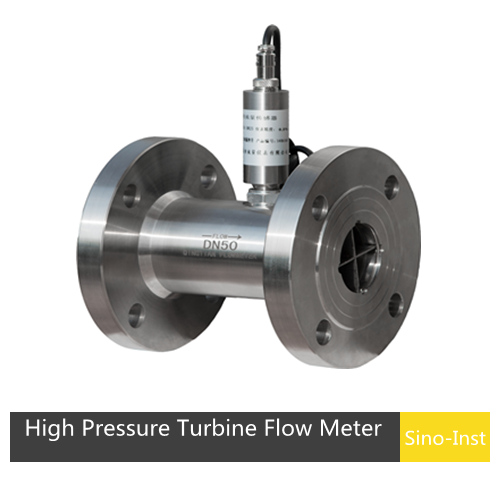
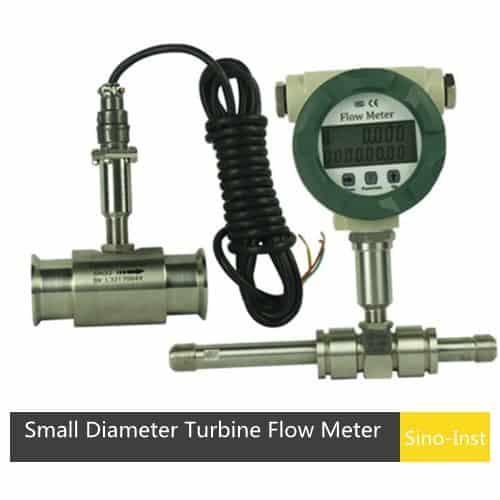
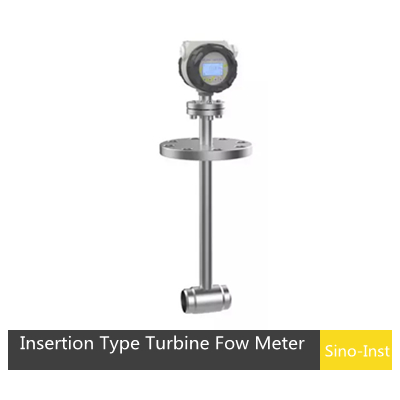
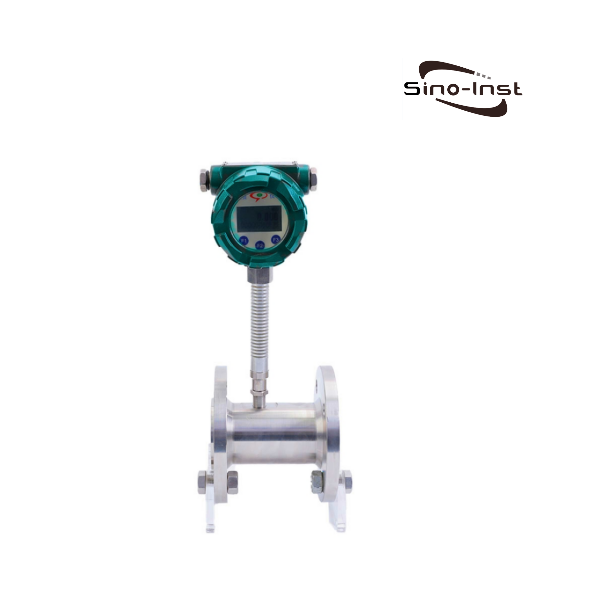
Threaded installation is a common method for small-diameter turbine flow meters. The SI-3205 Threaded Connection Turbine Flow Meter offers high accuracy, typically ±1%R or ±0.5%R, with a high-precision model reaching ±0.2%R. Threaded installation is available for sizes from DN2 to DN100.
Diameter
DN2~DN100
Accuracy
0.5% or 1.0% of Reading
Temp. range
-200~+180℃
Pressure
1.6 MPa
protection
IP65, IP68
Output
Pulse, 4-20mA analog output, RS485 (Modbus-RTU protocol), HART
24VDC,Pulse and 4-20mA output,RS485,Digital display,EX
E2+B
24VDC+battery power supply,Pulse and 4-20mA output,RS485,Digital display,EX
E3
24VDC,Pulse and 0-20mA output,RS485,Digital display,EX
E3+B
24VDC+battery power supply,Pulse and 0-20mA output,RS485,Digital display,EX
E+H
24VDC,4-20mA output,HART,Digital display,EX
G5
220VAC,Pulse and 4-20mA output,RS485,Digital display,EX
G6
220VAC,Pulse and 0-20mA output,RS485,Digital display,EX
Accuracy
10
±1.0%R
5
±0.5%R
Flow Range
S
Standard Range
E
Extended Range
Body Material
S4
SS304
S6
SS316
Explosion-Proof
BT
Exd II BT6
NA
None
Connection
THM
External thread,Apply to DN4~DN50mm
THF
Internal thread,Apply to DN4~DN50mm
WAF
Flange clamp
DXX
D16:DIN PN16 Flange;D25:DIN PN25 Flange
AXX
A15:ANSI 150# Flange;A30:ANSI 300# Flange
JXX
J10:JIS 10K Flange;J20:JIS 20K Flange
Temperature
T1
-20~+80℃
T2
-20~+120℃
T3
-20~+180℃
SI-3205 DN50 E210 SS4 BTD16T2
① ② ③ ④ ⑤ ⑥ ⑦ ⑧
① Diameter:DN50
② E2:24VDC,Pulse and 4-20mA output,RS485,Digital display,EX
③ 10:1.0% of rate accuracy
④ S:Standard range 4-40m³/h
⑤ S4:SS304 Body Material
⑥ BT:Exd II BT6
⑦ D16:Flange DIN PN16
⑧ T2:-20~+120℃
About Threaded Connections
What is a threaded connection? It’s a connection method where external and internal threads mesh to achieve fastening and sealing. The sealing method involves a tight connection between the internal threaded hole and the external threaded post.
Sealing methods are divided into: threaded sealing and end-face sealing.
Threaded sealing refers to the tightening of the internal and external threads using a spiral sealant (such as PTFE tape) or thread sealant to fill the small gaps between the threads to achieve a seal.
End-face sealing refers to using a gasket or O-ring placed between the threads or at the bottom of the threaded component to ensure a tight seal.
Sino-Inst offers the following thread types: G threads, M threads, NTP threads, spherical threads, etc.
G-thread: A type of imperial thread, widely used primarily because it uses the imperial unit “inch,” one inch equals 25.4 mm.
M-thread: A thread standard defined by the International Organization for Standardization (ISO), also known as ISO thread, with the unit of measurement being mm.
NTP thread: The most commonly used pipe thread standard in the United States, used for pipe and fitting connections. It features a tapered design with a 60° thread angle. Note that the unit for NTP threads is also “inch.”
Spherical thread: A special type of thread with a spherical thread shape. Spherical threads are typically used to connect parts with spherical interfaces, such as ball valves and ball joints. The shape of the spherical thread makes the connection tighter and provides higher sealing performance.
Thread Application Scope
Threaded connections are suitable for many field environments. We will explain the suitable environments for threads from the following perspectives:
First, Instrument Diameter:
External thread connections are generally used to connect larger pipes, providing a secure connection. Internal thread connections are mainly used to connect and secure smaller pipes.
DN50 is a threshold, DN80 is another threshold, and anything below 50 (including 50) can be made into internal, external, and spherical threads. DN50-DN80 can be made into external threads, but internal threads are not recommended.
Second, Pressure:
The selection of thread pressure is complex and can be referenced to the national standard (GB/T 19215.1-2003). Our current pressure standards are: external threads: 6.3 MPa; internal threads: 1.6 MPa; spherical threads: 16 MPa.
Third, Material:
Thread materials can be 304 and 316 stainless steel, PE (maximum pressure resistance 1.6 MPa, not suitable for spherical threads), and other metal materials.
Applications
Threaded turbine flowmeter is a kind of precision measuring instrument. It adopts advanced micro-processing technology,and has the characteristics of strong function, wide flow range, simple operation and convenient installation and use.
The turbine flowmeters, which are widely used in petroleum, chemical, metallurgical, scientific research and other fields, and equipped with sanitary joints, are mostly used in the pharmaceutical field.
We previously received an inquiry from a user in Mexico requesting a selection recommendation and a quote for an oval gear flowmeter (a type of positive displacement flowmeter). The application involved a DN100 pipe with a flow range of 150–2500…
The 3D radar level scanner accurately detects the three-dimensional information of solid materials in silos. Based on 80–140 GHz frequency modulated continuous wave (FMCW) radar, the radar sensor is driven by a rotating and pitching structure to perform a 360°…
Sino-Inst supplies 10,000 psi pressure transducers, 1/4 NPT threaded mounting and a 1–5 VDC output. It is suitable for measuring the pressure of gases and liquids. 10,000 psi is equivalent to 68.95 MPa or 689.5 Bar. Benefits Technical Specifications Measuring…
For reactors, buffer knockout tanks and similar process equipment, operating temperatures tend to run high, and steam together with condensate commonly appear within the vessel gas space. When carrying out level measurement for such units, our preferred instrument option is…
Guided wave radar and pressure-based level sensors are common contact-type instruments used for liquid level measurement in industrial storage tanks. Pressure-based level sensors represent a more traditional measurement method; they offer consistently stable performance and are highly trusted by users…
For a project involving level measurement in a sodium hydroxide (NaOH) storage tank, the client had previously used pressure-based level transmitters. Given the corrosive nature of the strong alkaline medium, we recommended an 80 GHz non-contact radar level transmitter; compared…
Threaded turbine flow meters are relatively easy to install and suitable for situations requiring quick connection and maintenance. They are typically used for small-diameter pipelines. Sino-Inst will recommend different threads for different operating conditions. For example, threaded connections are suitable for low-pressure or normal-pressure pipelines, and should be avoided in high-pressure pipeline systems. For high-pressure pipelines, spherical threads can be selected.
Sino-Inst has many years of experience in the production and installation of turbine flow meters. Our turbine flow meters are exported to Singapore, the United States, Indonesia, and other countries, and are used in factories across various industries. Please feel free to contact our sales engineers for customization!
Zhang Wei, possesses 20 years of experience as an automation instrumentation engineer, specializing in the research, design, installation, commissioning, and maintenance of automation instruments.
Face to various instrument communication protocols (such as Modbus, Profibus, etc.), with solid hardware circuit design and software programming skills (proficient in C language and PLC programming). Has extensive project experience; projects he has led and participated in have all achieved outstanding results, improving product accuracy, reducing costs, and increasing production efficiency.
Possesses excellent communication and coordination skills and a strong team spirit, enabling him to quickly respond to customer needs and provide high-quality automation instrumentation solutions.