
Flush Diaphragm Pressure Transducers for Viscous, Slurry and Sanitary Media
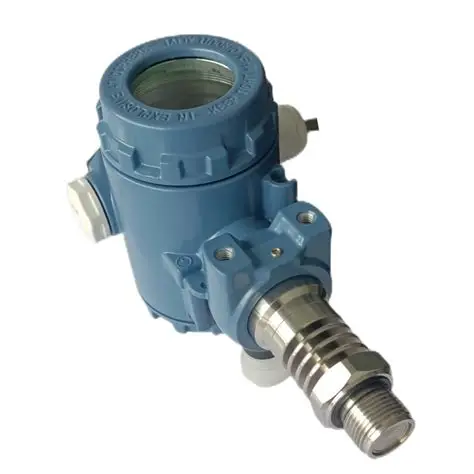
Flush Diaphragm Pressure Transducers are specifically designed for measuring the pressure of viscous, low-flow, or hygienically sensitive media. They utilize diaphragm isolation technology and a no-bore design to prevent media blockages and leakage of the measured medium.
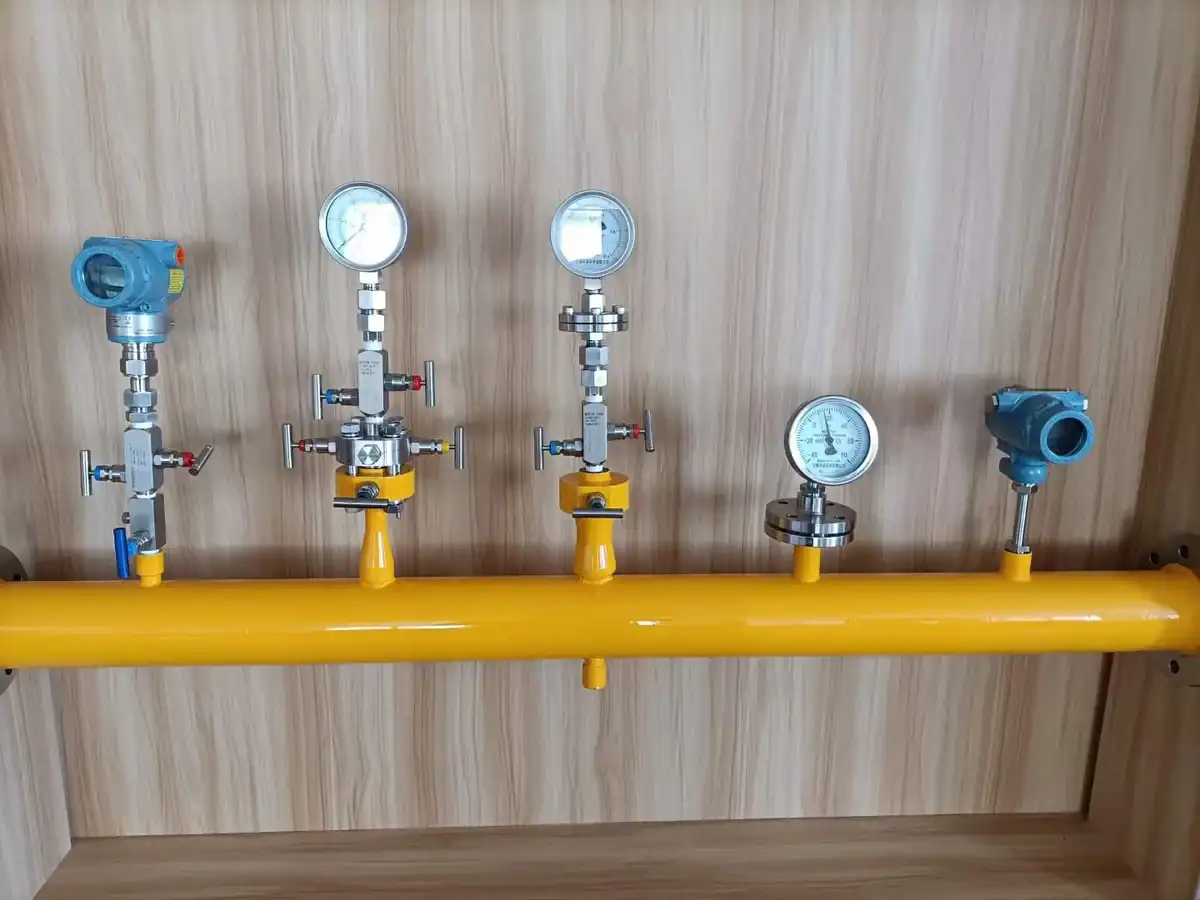
Sino-Inst offers pressure transducers with flush diaphragms, flush-mounted diaphragms, and sanitary clamp-on flush diaphragms, among others. We also provide specialized Flush Diaphragm Pressure Transducers for high-temperature melts, earth pressure, and shield machines.
What Is a Flush Diaphragm Pressure Transducer?
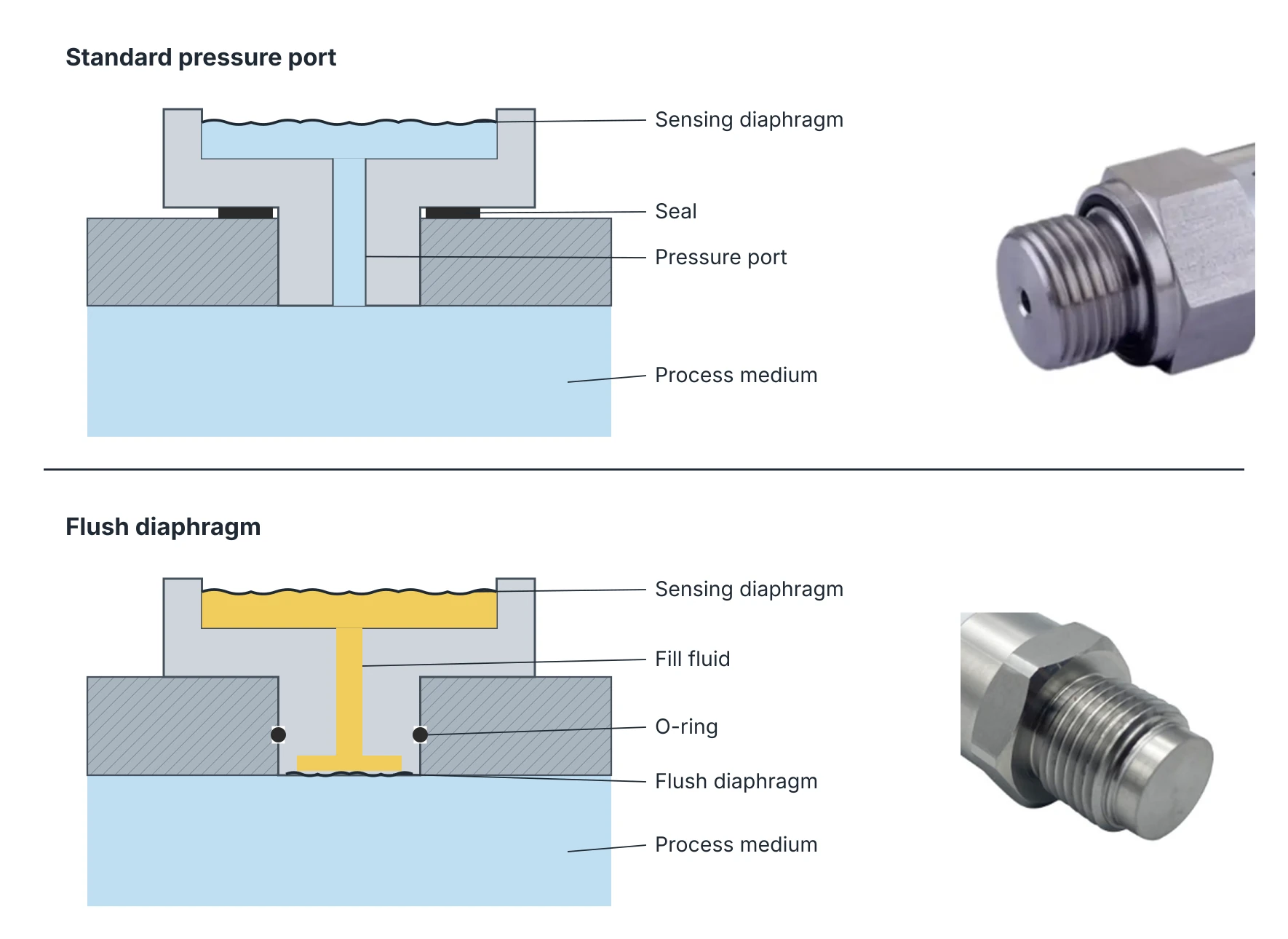
A flush diaphragm pressure transducer is a pressure measurement device that uses a flat diaphragm as its core sensing element. The sensing diaphragm is located directly at the front end of the process interface, so the medium exerts pressure directly on the diaphragm—there are no pressure ports, cavities, or dead zones that can become clogged. The medium’s pressure causes a slight displacement of the diaphragm, which is then converted into an electrical signal output.
It has several names in English: flush diaphragm, flush mount, front flush, and some also call it a flat diaphragm pressure sensor. These all refer to the same structure.
Conventional pressure sensors feature 3–5 mm pressure-transmitting holes at the threaded connection; the medium passes through these holes to act on the sensor core, thereby enabling pressure measurement. However, when measuring viscous media, the pressure-transmitting orifices in threaded connections may become clogged over time due to media buildup, which can affect measurement accuracy. With flush-diaphragm pressure sensors, the pressure-sensing diaphragm is positioned at the very front of the threaded connection, allowing for extensive contact with the measured medium and preventing clogging. Even if residue or scale adheres to the corrugated diaphragm, it is easy to clean, effectively extending the sensor’s service life.
Featured Flush Diaphragm Pressure Transducer Models
Six flush diaphragm models cover pipelines, storage tanks, sanitary lines and extruders. Compare the standard specifications below, then open the product page for the full order code.
| Model | Range | Accuracy | Media temperature | Process connection | Output | Best for |
|---|---|---|---|---|---|---|
| SI-703 | 0–0.6 to 0–200 MPa | 0.2 / 0.5 / 1.0% FS | -20 to 85 °C; high-temperature version on request | G1/2, M20×1.5 | 4–20 mA, 0–5 / 1–5 / 0–10 V, RS485 | Viscous and particle-laden media, high pressure |
| SI-1150 | 0–1.6 to 0–150 MPa | ±0.5% FS | -20 to 85 °C; -40 to 125 °C option | M20×1.5 | 4–20 mA, 0–5 / 1–5 / 0–10 V | Abrasive mud, concrete, coal slurry |
| SI-1318 | Up to 0–4 MPa (0–10 MPa custom) | ±0.5 / ±0.1% FS | -20 to 80 °C; -40 to 200 °C option | Tri-clamp, DIN 11851 | 4–20 mA, HART, RS485, voltage | Food, beverage and pharma lines with CIP |
| TBM | 0–6 to 0–100 bar | 0.25 / 0.5 / 1.0% FS | -25 to 85 °C | G1/2, M20×1.5 | 4–20 mA, 0–5 / 1–5 / 0–10 V | Grouting and slurry pressure on tunnel boring machines |
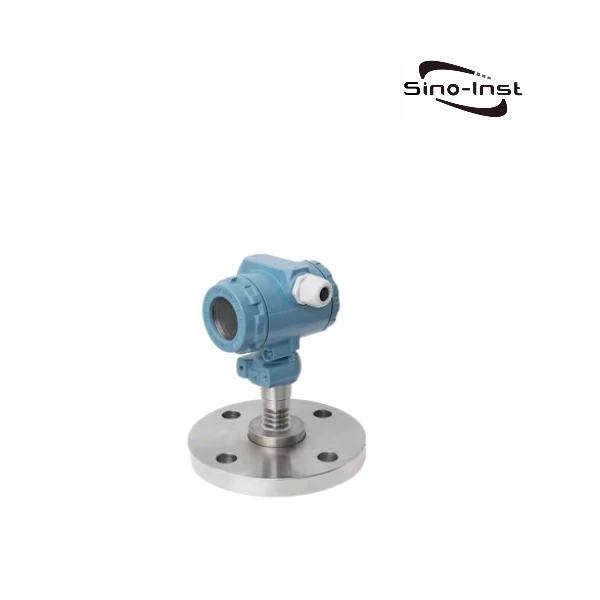
| SI-3151TLT | -100 kPa to 60 MPa | 0.25 / 0.5% FS (±0.075% on request) | -30 to 85 °C | Flange; M20×1.5 | 4–20 mA | Corrosive slurry tanks, low pressure |
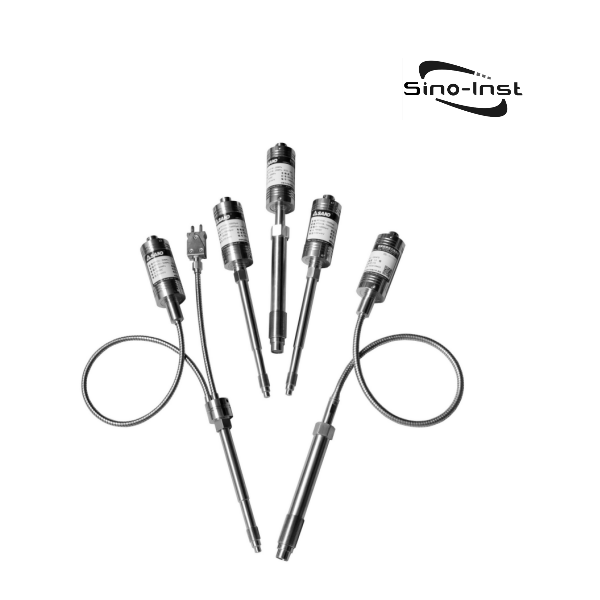
| Melt pressure transducer | Up to 0–300 MPa | ±0.5 / ±1.0% FS | Diaphragm rated to 400 °C | 1/2″-20UNF, M14×1.5, M18×1.5, M22×1.5, G3/4 | 4–20 mA, 0–5 / 0–10 V | Plastic and rubber extrusion |

Types of Flush-Mount Diaphragms
We at Sino-Inst supply:
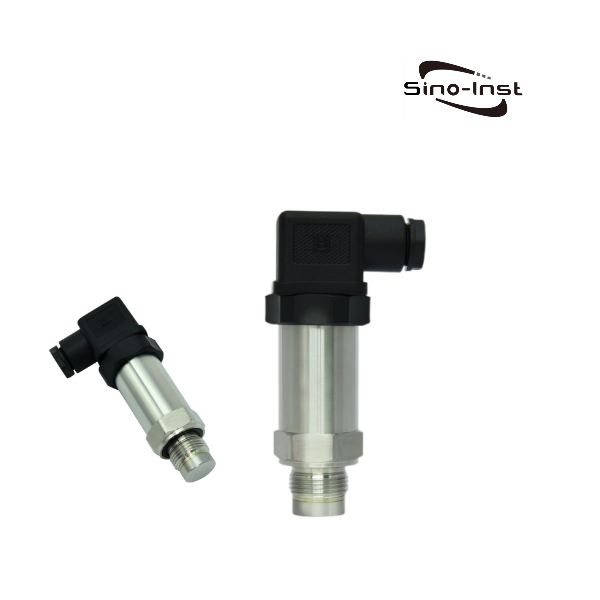
1. Plain Membrane Elements
These have no threads and are simply cylindrical, flat membrane elements selected by outer diameter and height. Common sizes include φ19×11.5 mm and φ19×15 mm. They are suitable for manufacturers who need to install the elements into their own equipment.
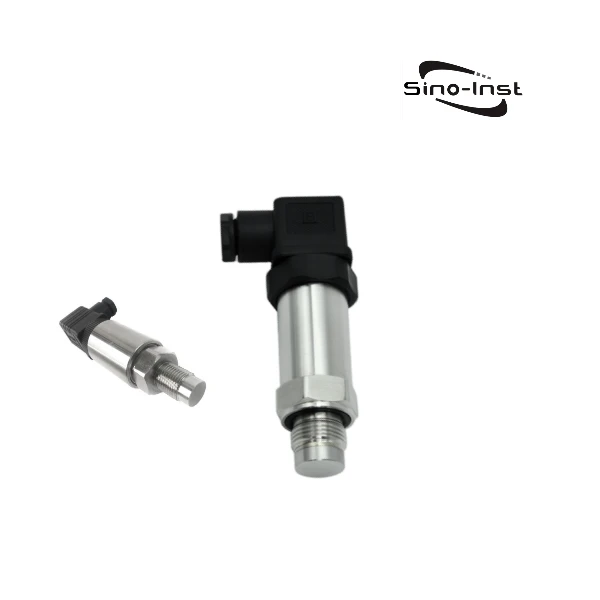
2. Flush-Mounted Threaded Membranes
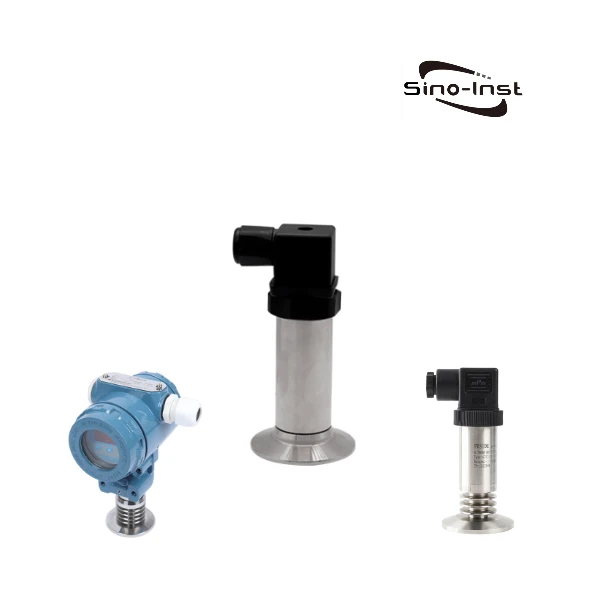
The membrane is mounted on the end face of a threaded fitting and screwed into a threaded port on a pipe or piece of equipment, with the end face flush with the inner wall. Standard threads include M20×1.5, G1/2, and R1/2.
3. Sanitary Clamp Type
Connected using Tri-Clamp couplings, these allow tool-free installation and removal and ensure no cleaning dead zones, making them suitable for food, pharmaceutical, and CIP-required pipelines. The common size is DN25. For high-temperature media, a finned design is available.
4. Special Threads
For applications with ANSI or other non-standard connections on-site, flush diaphragm products with threads such as NPT 3/4 or R 3/8 can be manufactured.
Which Media Need a Flush Mount Pressure Transducer?
Flush Diaphragm Pressure Transducers (flush-mounted pressure sensors) are particularly suitable for measuring high-viscosity, abrasive, particulate-laden, or scale-prone media because their pressure-sensing diaphragms are located at the very front of the threaded connection, eliminating measurement dead zones and facilitating easy cleaning.
- High-viscosity fluids, such as adhesives, glues, sealants, paints, inks, coatings, slurries, etc..
- Abrasive media, such as slurries, ceramic slurries, wastewater containing solid particles, mineral slurries, etc.
- Crystalline or scale-prone media, such as greases, pastes, and chemical liquids containing crystals
- Food-grade and sanitary-grade media, such as chocolate, milk, syrup, pharmaceuticals, etc.
Mud containing coarse sand is the most common cause of incorrect sensor selection. The diaphragms of standard flat-diaphragm sensors are very thin; while they can prevent clogging, they cannot withstand the impact of particles. For such operating conditions, use the SI-1150 hardened flat-diaphragm sensor, which features a thickened diaphragm and a surface-hardened finish.
Food and pharmaceutical pipelines must prevent not only clogging but also cleaning dead zones. Material residue left in the pressure ports—which CIP cannot reach—can lead to bacterial growth. The SI-1318 Sanitary Pressure Transmitter uses a clamp connection, with the diaphragm flush with the inner wall of the pipe, allowing the cleaning solution to directly reach the diaphragm surface.
Conversely, media such as clean water, compressed air, and clean hydraulic oil do not require a flat diaphragm. Standard ports are less expensive and are entirely sufficient.
Flush Diaphragm vs Standard Port vs Diaphragm Seal
All three are commonly used pressure transmitter configurations, and the difference lies in how pressure is transmitted to the sensing element. A standard port allows the medium to enter directly through the pressure ports; a flush diaphragm restricts the medium to exerting pressure only on the diaphragm at the very front of the port; and a diaphragm seal integrates the diaphragm into the flange, then transmits pressure to the transmitter via a filling fluid and capillary tubes (or a direct connection).
| Items | Standard port | Threaded flush diaphragm | Sanitary tri-clamp flush diaphragm | Flush flanged diaphragm seal | Extended flanged diaphragm seal |
|---|---|---|---|---|---|
| How pressure reaches the sensor | Media flows through the port bore to the sensing element | Media presses on the front diaphragm; fill oil transfers it to the sensing element | Same as threaded flush diaphragm | Media presses on the flange diaphragm; fill fluid transfers it to the transmitter | Same, with the diaphragm extending into the vessel nozzle |
| Clogging risk | Yes, solids build up in the narrow bore | No | No | No | No, and no dead space in the nozzle |
| Cleaning | The bore cannot be flushed | Face can be flushed directly | Face can be flushed directly; CIP-ready | Flange face can be flushed directly | Same |
| Lowest range | 0–1 kPa (SI-2088) | 0–0.6 MPa (SI-703, TBM) | 0–10 kPa (SI-1318) | 0–5 kPa (SI-3151TLT) | 0–4 kPa (SI-3151LT) |
| Temperature effect | Low | Low | Low | Fill fluid expands and contracts with temperature; more noticeable with capillaries | Same |
| Typical use | Clean water, gas, clean oil | Slurry and paste in pipelines | Food, beverage, pharma | Tanks, corrosive media, low pressure | Insulated or thick-walled vessel nozzles |
Flush diaphragms are suitable for installation on pipelines; they are compact and offer fast response times. The drawback is that the diaphragm diameter is limited by the thread size, so the measurement range cannot be very low: our SI-703 and TBM models have a minimum range of 0–0.6 MPa, while the SI-1150 has a minimum range of 0–1.6 MPa. To measure low pressures below tens of kPa, a large diaphragm is required: sanitary clamp-type transmitters have a minimum range of 0–10 kPa, while flanged types have a minimum range of 0–4 kPa.
Standard-port pressure taps are not limited by diaphragm size; the SI-2088 can achieve a minimum range of 0–1 kPa. For low-pressure applications with clean media, standard-port transmitters are actually the better choice.
Diaphragm-sealed transmitters feature large diaphragms, ensuring accurate low-pressure measurements while isolating the transmitter from high-temperature and corrosive media. The trade-off is the addition of two variables: the filling fluid and the capillary tube. Emerson conducted tests showing that a remote-transmitting unit with a capillary tube filled with 705 high-temperature silicone oil had a response time of approximately 30 seconds at 20°C and about 8 minutes at 0°C; whereas direct-mount transmitters respond virtually instantly. Therefore, use direct connections whenever possible instead of capillary tubes; keep capillary tubes as short as possible; and select a fill fluid rated for low temperatures when installing outdoors in winter.
Flush Diaphragm Pressure Transducers Working Principle
Flush diaphragm pressure transducers convert pressure into an electrical signal. The working principle is as follows: the pressure of the medium acts on the flush diaphragm, causing it to deform under pressure. The sensing element converts this deformation into a change in resistance or capacitance. The Wheatstone bridge outputs a mV signal, which is then amplified, temperature-compensated, and linearized. The transmitter then converts this signal into a standard output, such as 4–20 mA, 0–5 V, or RS485.
The front diaphragm is flush with the connection face, but there are three common types of sensor elements behind the diaphragm:
1. Oil-filled diffused silicon
The sensor contains two diaphragms. The front is a 316L stainless steel isolation diaphragm that contacts the medium; behind it is a silicon chip on which four resistors are fabricated using diffusion or ion implantation processes, connected to form a Wheatstone bridge. Beneath the resistors is a microfabricated silicon diaphragm. The space between the two diaphragms is filled with silicone oil. Our SI-703 uses this type of sensing element.
2. Thin-film sputtering
No silicone oil is used. An insulating film is sputtered onto the back of the stainless steel diaphragm, followed by strain gauges to form a bridge circuit. The front diaphragm itself serves as the pressure-sensing element; when deformed under pressure, it directly changes its resistance value.
3. Ceramic
No silicone oil is used. The front end consists of a ceramic diaphragm, with thick-film resistors (piezo-resistive) or electrodes (capacitive) printed on the back. Ceramic is corrosion-resistant but hard and brittle; it is susceptible to impact from hard particles and is therefore unsuitable for slurries containing sand
How to Select a Flush Diaphragm Pressure Transducer
Sino-Inst has been manufacturing and supplying pressure transducers for over 10 years. Based on our experience, we recommend that you consider the following 7 points:
- Medium and Particle Hardness, which determines the diaphragm type.
- Range and Diaphragm Diameter: For low-pressure applications, we recommend selecting a larger diaphragm.
- Medium Temperature;
- Diaphragm Material: 316L, Hastelloy C, Tantalum, Titanium.
- Process Connection.
- Output Signal.
- Explosion-Proof Rating and Protection Rating.
Further Reading
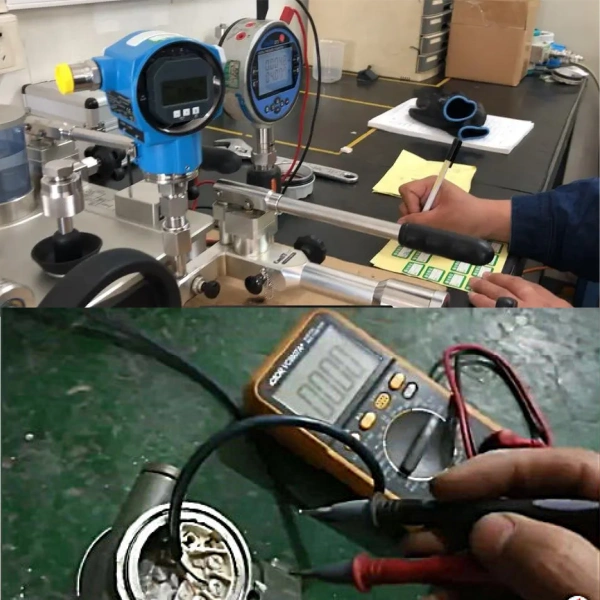

Zhang Wei, possesses 20 years of experience as an automation instrumentation engineer, specializing in the research, design, installation, commissioning, and maintenance of automation instruments.
Face to various instrument communication protocols (such as Modbus, Profibus, etc.), with solid hardware circuit design and software programming skills (proficient in C language and PLC programming). Has extensive project experience; projects he has led and participated in have all achieved outstanding results, improving product accuracy, reducing costs, and increasing production efficiency.
Possesses excellent communication and coordination skills and a strong team spirit, enabling him to quickly respond to customer needs and provide high-quality automation instrumentation solutions.
Want to see more of our engineering guides in Google Search? Add Sino-Inst as a preferred source.