
Pressure Sensor Selection: Gauge Pressure vs. Sealed Gauge Pressure

Previously, we discussed the differences and relationships between Gauge Pressure and Absolute Pressure. Some users have noticed that when purchasing pressure transmitters, there’s also the option of choosing between sealed gauge pressure and gauge pressure. So, what is the relationship between these two, and how should we choose?
Gauge, sealed-gauge and absolute references are all available on our CAN bus pressure transducer with CANopen output.
Gauge Pressure
Gauge pressure is a pressure value higher than atmospheric pressure, using atmospheric pressure as a reference. The back pressure chamber of a gauge pressure sensor is directly open to the atmosphere, its biggest advantage being that it is unaffected by changes in external atmospheric pressure when measuring gauge pressure. However, its environmental resistance is relatively weak. It is mainly used in applications with small pressure ranges.
Sealed Gauge Pressure
Sealed pressure refers to a pressure sensor whose back pressure chamber is sealed to a standard atmospheric pressure reference. The back pressure chamber is isolated from atmospheric pressure, thus maintaining the pressure sensor’s high environmental resistance, such as to humidity and atmospheric pressure flow.
When measuring gauge pressure, changes in atmospheric pressure will affect its performance. However, when measuring higher gauge pressure ranges (e.g., 350 bar), the effect of atmospheric pressure changes is negligible. Therefore, sealed pressure products are commonly used in applications measuring high pressure ranges.
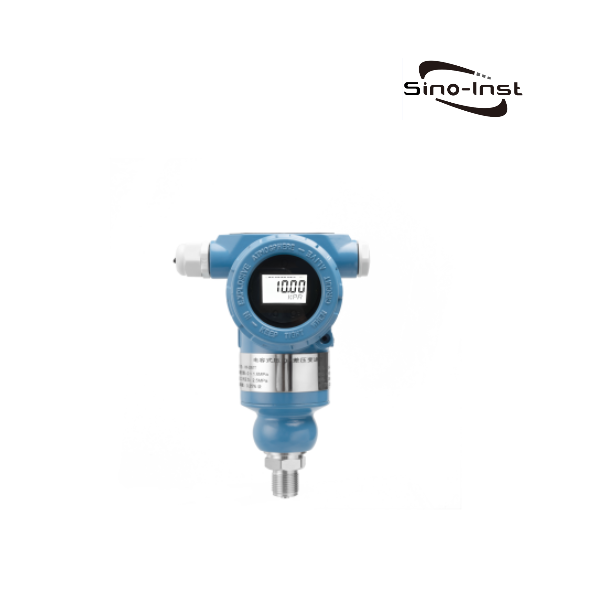
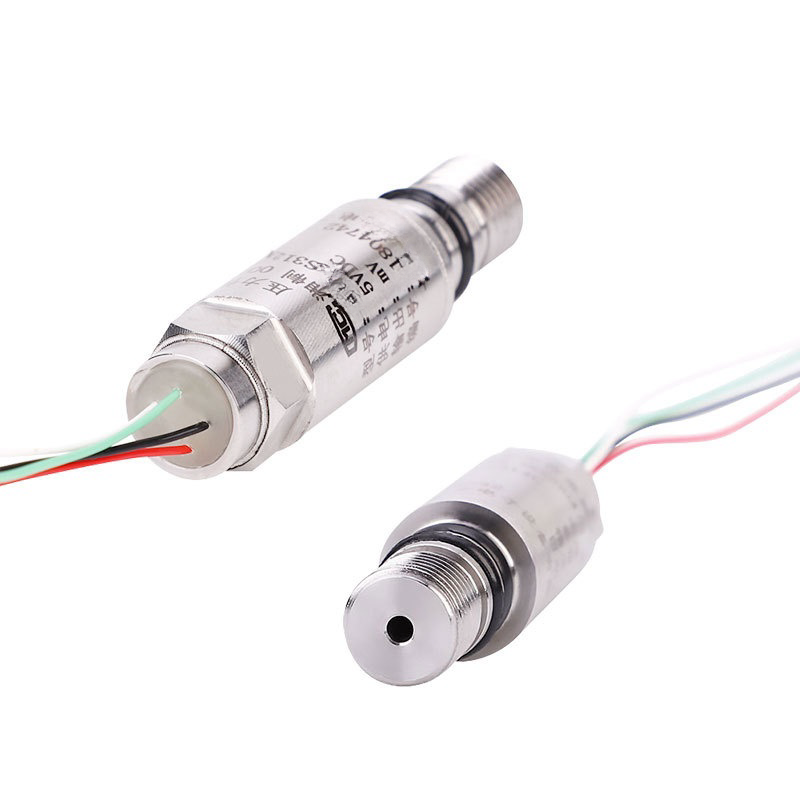
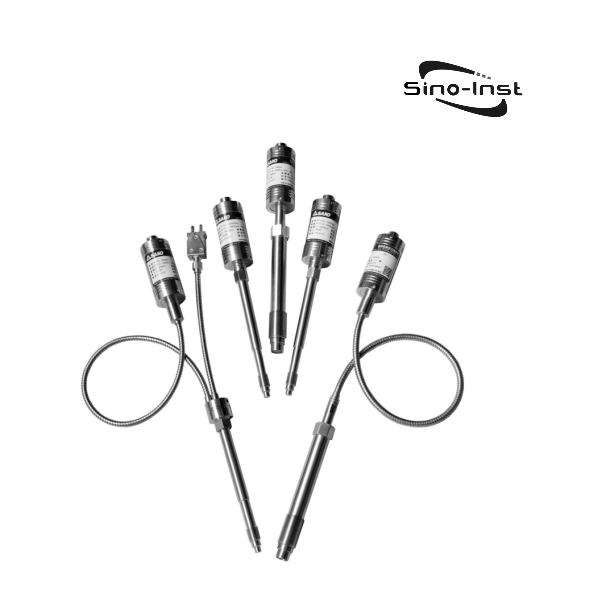
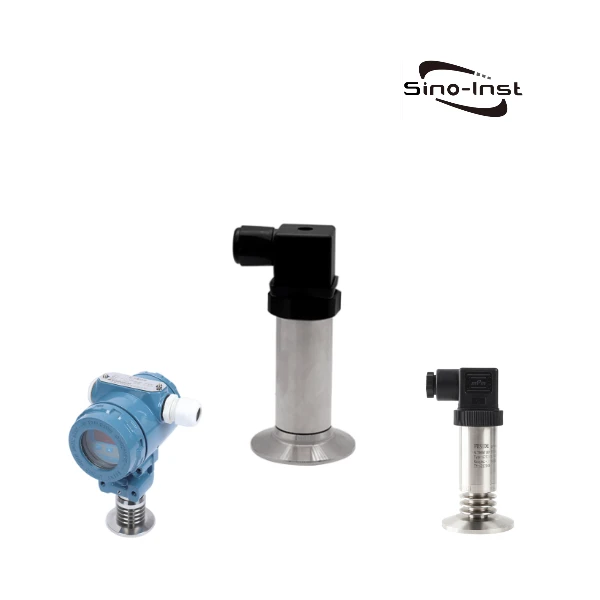
Impact on Pressure
Generally, pressure sensors with a range below 3.5 MPa are gauge pressure sensors, while those above 3.5 MPa are sealed gauge pressure sensors. So, how much do gauge pressure and sealed gauge pressure sensors affect measurement accuracy? We can look at it this way:
For example, if we need to measure a pressure of 3 MPa using a gauge pressure sensor, the sensor’s back pressure chamber (i.e., the reference pressure is atmospheric pressure) is open to the atmosphere. Therefore, regardless of the local atmospheric pressure, the sensor’s measurement value is unaffected by changes in atmospheric pressure.
However, if we use a sealed gauge pressure sensor to measure 3 MPa, assuming the current atmospheric pressure at the user’s location is 99 kPa, while the sealed gauge pressure sensor’s back pressure chamber is sealed to a standard atmospheric pressure of 101.32 kPa, then there will be an error of 2.32 kPa when using a gauge pressure sensor versus a sealed gauge pressure sensor.
Let’s calculate its relative error: (101.32 kPa – 99 kPa) ÷ 3000 kPa = 0.0007733. It can be seen that using a sealed gauge pressure sensor to measure 3 MPa pressure introduces a 0.077% error from the sensor itself.
Under the same conditions, if a pressure of 6 MPa needs to be measured, the error using a sealed gauge pressure sensor is 0.038%; if a pressure of 30 MPa needs to be measured, the error using a sealed gauge pressure sensor is 0.0077%.
Therefore, we can see that for pressure ranges below 3.5 MPa, if a high-precision pressure sensor is required, a gauge pressure sensor is the best choice. In the high-pressure range, the impact of sealed gauge pressure on the sensor’s measurement accuracy is negligible.
More Pressure Measurement Cases and Solutions
- Industrial Water Pressure Sensors | Selection Guide
- Pressure Transducer Troubleshooting: Expert Insights & Tips
- Fluid Pressure Guide: Static Pressure Vs. Dynamic Pressure Vs. Total Pressure
- Industrial Pressure Transmitters: 7 Sensor Principles and 4 Main Types!
- Industrial HART Pressure Transmitters and DP Transmitters
- Fluid Pressure Sensors for Industrial Liquids Pressure Measurement
- Featured Stainless Steel Pressure transducers | Best Price
- Industrial Pressure Sensors for High Pressure Measurement
Sino-Inst is a pressure transmitter manufacturer from China. We supply various types of pressure transmitters, including gauge pressure transmitters, absolute pressure sensors, and differential pressure transmitters. We can customize measurement parameters for high temperature, high pressure, and extremely low temperature applications.
If you require pressure measurement, please feel free to contact us to customize your parameters.
Zhang Wei, possesses 20 years of experience as an automation instrumentation engineer, specializing in the research, design, installation, commissioning, and maintenance of automation instruments.
Face to various instrument communication protocols (such as Modbus, Profibus, etc.), with solid hardware circuit design and software programming skills (proficient in C language and PLC programming). Has extensive project experience; projects he has led and participated in have all achieved outstanding results, improving product accuracy, reducing costs, and increasing production efficiency.
Possesses excellent communication and coordination skills and a strong team spirit, enabling him to quickly respond to customer needs and provide high-quality automation instrumentation solutions.