Home > Pressure Sensor > SI-90 Dynamic High Frequency Pressure Sensor – High Speed, up to 200 kHz
SI-90 Dynamic High Frequency Pressure Sensor – High Speed, up to 200 kHz
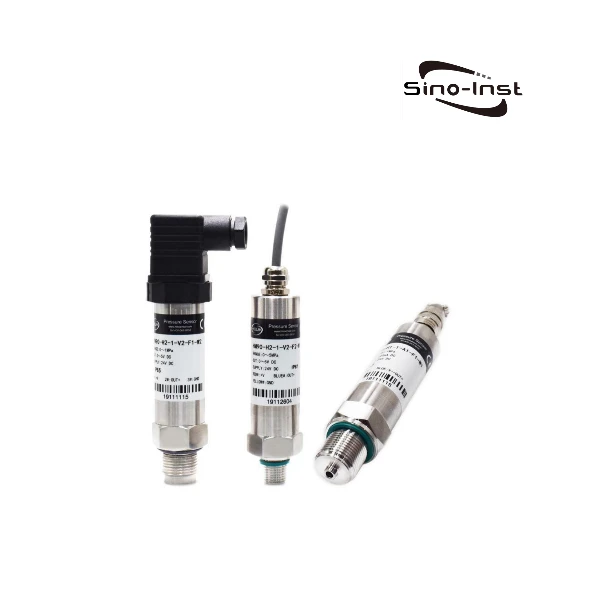
The High-Frequency Dynamic Pressure Sensor, also known as a high-speed pressure transducer, is capable of measuring high-frequency pressure variations within a bandwidth of 0–200 kHz, with a rise time as short as 1 µs. The pressure measurement range spans from -100 kPa to 100 MPa. The SI-90 High-Frequency Dynamic Pressure Sensor features high-speed response characteristics, making it an ideal solution for dynamic and transient pressure measurements.
In scientific experiments—such as military engineering, chemical and explosive testing, and hydraulic power machinery testing—as well as in modern instrumentation, there is a need to measure dynamic pressure waveforms with high frequency of variation and steep rising edges, along with their amplitudes and root-mean-square (RMS) values, without distortion. This requires the pressure sensor to have a high natural frequency, an extremely short rise time, and a wide, high-quality response frequency band to ensure sufficient dynamic pressure measurement accuracy.
Dynamic pressure measurement requires pressure sensors with a fast response speed that can keep up with transient signals. Ensure that the sensor’s resonant frequency is significantly higher than the frequency of the signal you are measuring. Conventional pressure sensors typically have a maximum frequency of only 2 kHz to 3 kHz. The SI-90 Dynamic-High Frequency Pressure Sensor has a response frequency of 20 kHz to 200 kHz.
High Speed – Rise Time
This is the most critical factor. To capture fast transient signals, you need a pressure sensor with a fast response speed. We are referring to rise times in the microsecond range. If the sensor responds too slowly, it will miss the peak amplitude of the pressure spike. The rise time of our SI-90 dynamic pressure sensor is as short as 1 µs with the H3 (0–200 kHz) option.
Generally, there is a negative correlation between the measurement frequency and response time of a pressure transmitter. That is, the higher the frequency, the shorter the response time.
High Frequency Pressure Sensor Applications
Typical applications of the SI-90 include:
Military engineering
Chemical explosion test
Petroleum Exploration and Well Testing
Mechanics
Civil Engineering
Rock Mechanics
Trauma medicine
Hydraulic power machinery test and other scientific tests
Application Cases of High-Frequency Dynamic Pressure Sensors
Pressure detection of gas explosion.
Generally used in pipeline gas explosion experiments, the pressure range is generally 0.5MPa ~ 10Mpa. According to the amount of gas mixed in the experiment, the explosion space and the installation location, the pressure range is different.
Underwater blasting experiment.
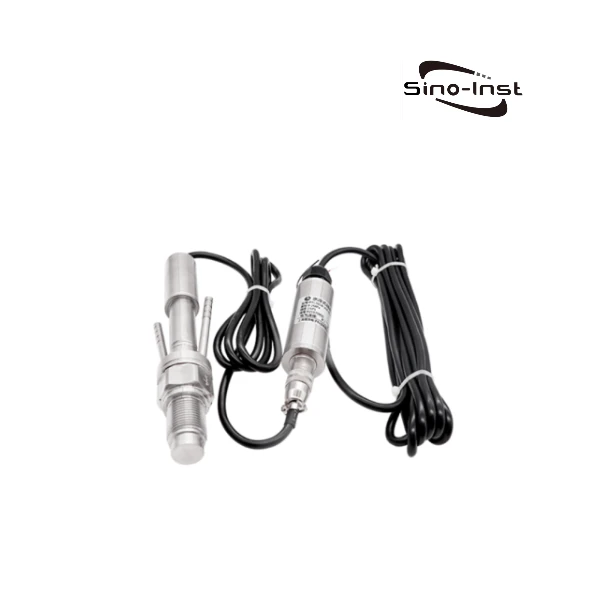
Generally, the sensor is installed on the inner wall of the underwater instrument. The pressure sensitive element of the sensor is exposed to the test environment. The change of water pressure before and after the explosion moment is monitored. The pressure data is collected by a high-frequency acquisition instrument and restored to a pressure waveform to truly restore the explosion. Instantaneous pressure changes in the surrounding environment.
It is similar to the pressure detection of such explosion conditions. Generally, a high-frequency pressure sensor with a response bandwidth of 0-200KHz is selected. The rise time of the sensor is measured in microseconds, and the overall experiment is relatively short.
Pressure detection with frequent reciprocating changes.
For example, pressure detection of reciprocating pumps, pressure detection of hydraulic machines that are frequently pressurized and depressurized. Generally, the pressure change of air pressure is relatively fast, and the pressure change of liquid pressure is relatively slow. According to actual working conditions, a high-frequency pressure sensor with an appropriate bandwidth can be selected.
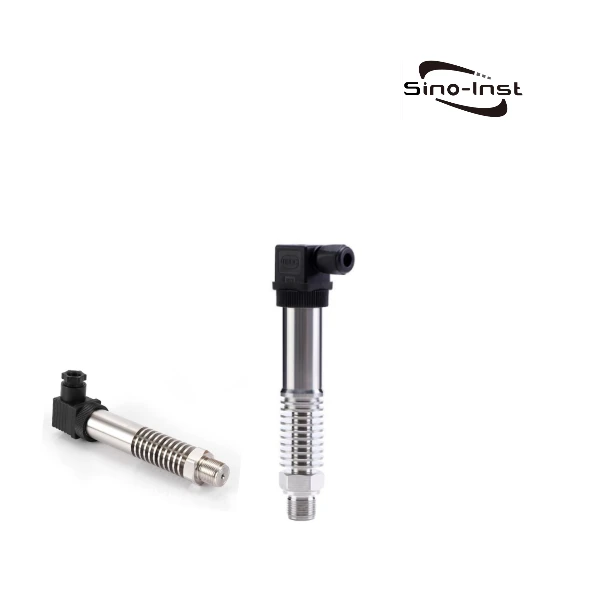
For rapidly changing pressure in high-temperature media, the allowable media temperature depends on the bandwidth option. Please tell us the media temperature and the required bandwidth when you inquire. For media temperatures beyond the limits of the SI-90, see our high temperature pressure transducers.
Learn More About High Frequency Pressure Sensor
A dynamic pressure sensor is a type of sensor specifically designed to measure rapidly changing fluid pressure. Typical parameters include the specified measurement frequency and response time. Dynamic pressure sensors can have response frequencies ranging from 20 kHz to 200 kHz, and response times can be as short as 0-0.2 µs to 1 µs.
Dynamic pressure is different from static pressure and cannot be measured using conventional static pressure sensors.
Yes, it can. One of our previous clients needed to use a single sensor to monitor steady-state pressure (0–10 bar) while simultaneously capturing pressure pulsations at approximately 5 kHz—the SI-90 was able to handle both.
Our SI-90 High-Speed Pressure Transducer utilizes a single-crystal silicon piezoresistive sensing element with a bandwidth starting from 0 Hz (e.g., 0–20 kHz). This allows it to measure both constant static pressure and high-frequency fluctuations superimposed upon that static pressure.
First, you need to determine the highest frequency at which the pressure changes in your specific application. Then, select a sensor with a bandwidth at least 3–5 times that frequency. For example:
Option
Bandwidth
Rise time
Accuracy
Typical applications
H1
0–1 kHz / 3 kHz
75 µs – 0.2 ms
±0.1%FS
Hydraulic pressure shocks, reciprocating pump and compressor pulsation, water hammer, pneumatic testing
H2
0–20 kHz
≤12 µs
±0.25%FS
Engine combustion pressure, high-frequency pulsation in gas pipelines
We once had a client inquire about the SI-90, but after further discussion, it turned out they only required a response time of 2–3 ms. In such cases, a standard fast-response pressure transmitter is sufficient and can help reduce costs.
The criterion for selection is simple: do you need a “pressure value” or a “pressure waveform”? If you only need a reading—for instance, for use in a control loop (such as pneumatic pressure control)—and the required response time is 1 ms or longer, a standard fast-response transmitter (like the SI-2088, which has a response time of 2–3 ms) will suffice and is significantly more affordable than the SI-90.
However, if you need to reconstruct a pressure waveform or capture pressure spikes occurring on a millisecond or microsecond scale (e.g., for pulsation analysis, combustion pressure monitoring, or shockwave detection), then the SI-90 High-Speed/High-Frequency Pressure Sensor is the right choice.
If you cannot find an answer to your question in our Dynamic-High Frequency Pressure Sensor, you can always contact us and we will be with you shortly.
In fields such as military engineering, explosive testing, oil and gas exploration, materials and geotechnical mechanics, trauma medicine, and hydraulic power testing, the precise measurement of high-frequency transient pressure waveforms places stringent demands on the dynamic performance of sensors. The SI-90 high-frequency dynamic pressure transmitter is designed specifically for these applications. Through micromachining technology, it achieves … Read more
Master dynamic pressure sensor technology. We’ll guide you through the piezoelectric principle, fast response characteristics, and industrial applications. What is a Dynamic Pressure Sensor? Dynamic pressure sensors are specifically designed to measure dynamic pressure with high frequency variations and steep pressure waveform rise times. They measure instantaneous pressure changes, not “average” pressure. Dynamic pressure sensors … Read more
Sino-Inst is a manufacturer of Dynamic-High Frequency Pressure Sensor. High-frequency pressure sensors are also called high-frequency dynamic pressure sensors, dynamic pressure sensors, and pulsating pressure sensors. Typically used for rapidly changing pressure measurements. For example, pressure detection at the moment of explosion, frequent reciprocating pressure detection, etc.
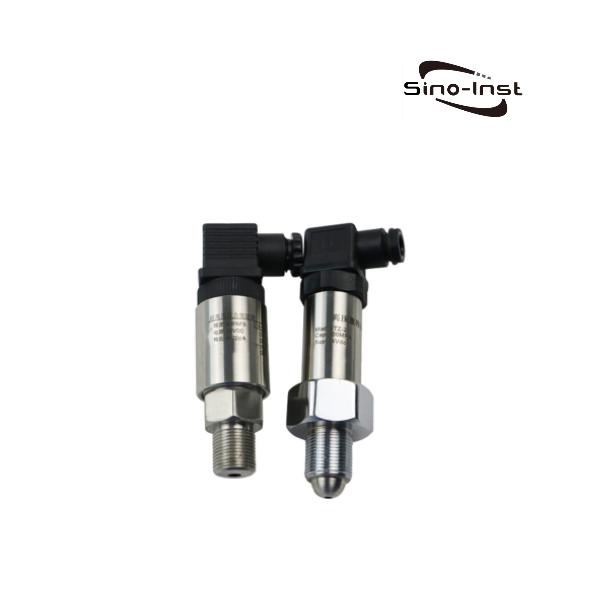
The high-frequency pressure transmitter is a high-frequency analog pressure transmitter. A piezoresistive pressure sensor with a stainless steel diaphragm in flush diaphragm construction as signal measuring element. The supporting dedicated high-frequency response signal processing circuit converts the signal of the measuring element into a standard current or voltage output signal. It is used in the measurement of dynamic pressure in engine test equipment and the measurement occasions with high response frequency, such as explosion waves.
SI-90 Dynamic-High Frequency Pressure Sensors are widely used in various places such as petroleum machinery, chemical machinery, pumps and compressors, electric power, boilers, and natural gas.
Sino-Inst has provided pressure measurement solutions to customers for many years. Our pressure sensor, made in China. Widely exported to the United States, Britain, Germany, South Africa, Norway and other countries.
If you need Dynamic-High Frequency Pressure Sensors, but have technical questions, please feel free to contact our sales engineers.
Zhang Wei, possesses 20 years of experience as an automation instrumentation engineer, specializing in the research, design, installation, commissioning, and maintenance of automation instruments.
Face to various instrument communication protocols (such as Modbus, Profibus, etc.), with solid hardware circuit design and software programming skills (proficient in C language and PLC programming). Has extensive project experience; projects he has led and participated in have all achieved outstanding results, improving product accuracy, reducing costs, and increasing production efficiency.
Possesses excellent communication and coordination skills and a strong team spirit, enabling him to quickly respond to customer needs and provide high-quality automation instrumentation solutions.