
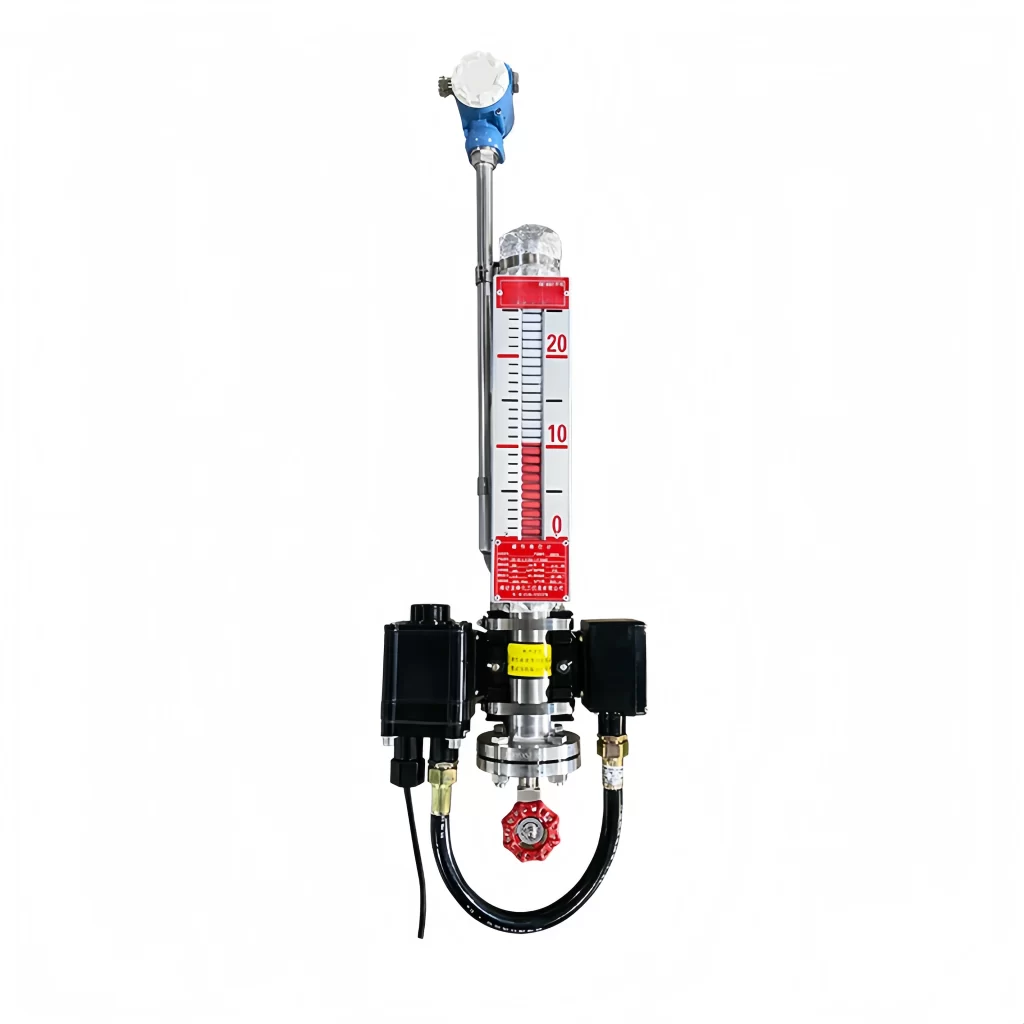
Magnetic level indicators feature customized heat tracing devices, suitable for measuring easily condensable and crystallizing media in low-temperature environments, or for measuring liquids with high viscosity and high temperature. They can be configured with steam/vacuum jackets, electric heating, and insulation/heat protection devices for various complex applications.
Heat Tracing Types
Generally, there are two main methods for heat preservation of Magnetic Level Indicators: electric heating/electric heat tracing and vacuum jacket insulation. The following describes these two insulation methods for magnetic level gauges:
Electric heating/electric heat tracing uses resistance wire wound around the main pipe of the magnetic level gauge to heat the pipe, keeping the liquid inside above its freezing point and preventing freezing due to excessively low temperatures.
The temperature can be adjusted by a temperature controller throughout the process. During use, an insulation layer is applied to the electric heating tape for antifreeze, anti-condensation, and process insulation. Provides strong support for smooth operation during winter.
The insulation jacket serves both heating and insulation purposes, and can also be used to circulate cooling media for temperature reduction. It is suitable for liquid level measurement in chemical plants requiring antifreeze, insulation, high temperature, and heating applications. Jacket types include steam, circulating water, heat transfer oil, and vacuum jackets.
For low-temperature media and low-temperature measurement environments, the insulation jacket contains a vacuum layer. This effectively isolates cold and heat conduction, ensuring that the outside of the liquid level gauge’s main tube will not freeze or frost, thus guaranteeing the normal operation of the liquid level gauge.
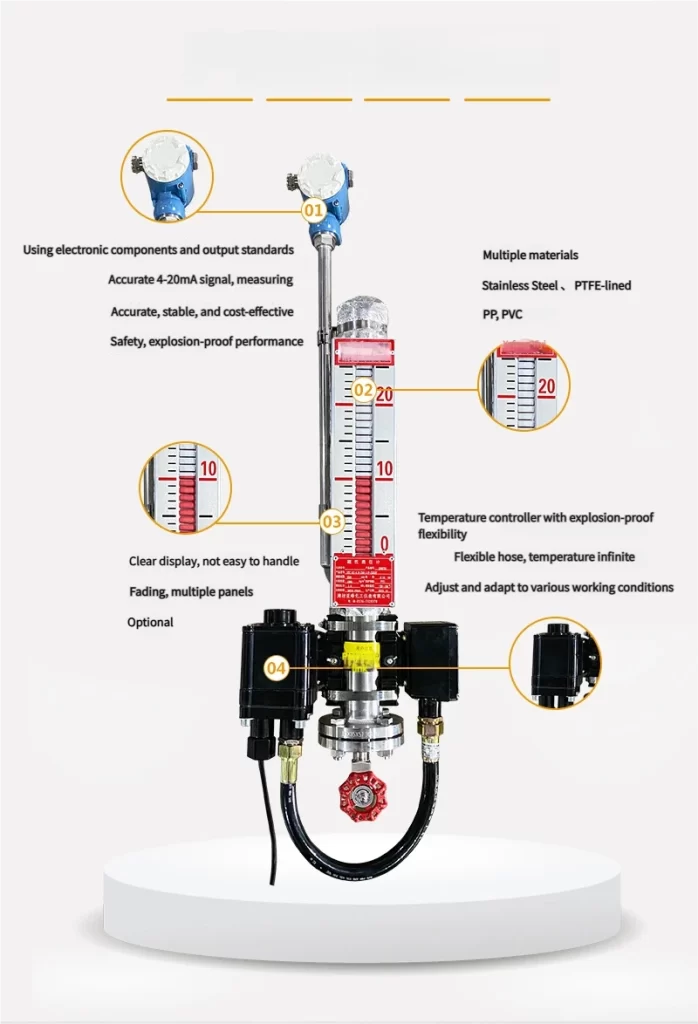
Features
Technical Parameters
| Measurement Range: | 200~8000mm, manufactured in sections for lengths >6000mm; |
| Accuracy: | ±10mm; |
| Medium Viscosity: | ≤0.4 Pa·s; |
| Medium Density: | 320~2000 kg/m³ (measuring liquid level); |
| Medium Density Difference: | ≥50 kg/m³ (measuring interface); |
| Process Pressure: | -0.1~42MPa; |
| Ambient Temperature: | -40℃~+80℃; |
| Ambient Vibration: | Frequency ≤25Hz, amplitude <0.5mm; |
| Operating Temperature: | -196~+450℃; |
| Output Signal: | 4-20mA, RS485 |
| Response Speed: | ≤0.08m/s; |
| Mounting Type: | Side-mounted, top-mounted, bottom-mounted, etc.; |
| Process Connection: | Flanges, nominal diameter DN15~DN200, flange standards include ANSI, ASME, DIN, HG/T, GB/T, JS, etc., available in threaded or welded configurations; |
| Steam Jacket Process Pressure: | 0~1.0MPa; |
| Heating Jacket Process Pressure: | ≤2.5MPa; |
| Heating Jacket Interface: | Flange, threaded, etc.; |
| Optional Features: | Heat tracing jacket available; Heat tracing pipe available; Electric heat tracing available; Transmitter unit available; Switching unit available. |
Case Study: Oilfield Wastewater Heating System Application
An oilfield located in a cold northern region experienced frequent malfunctions in its magnetic level gauges during winter due to condensation and freezing, resulting in inaccurate level readings in the separator’s oil and water chambers and increasing operational difficulty.
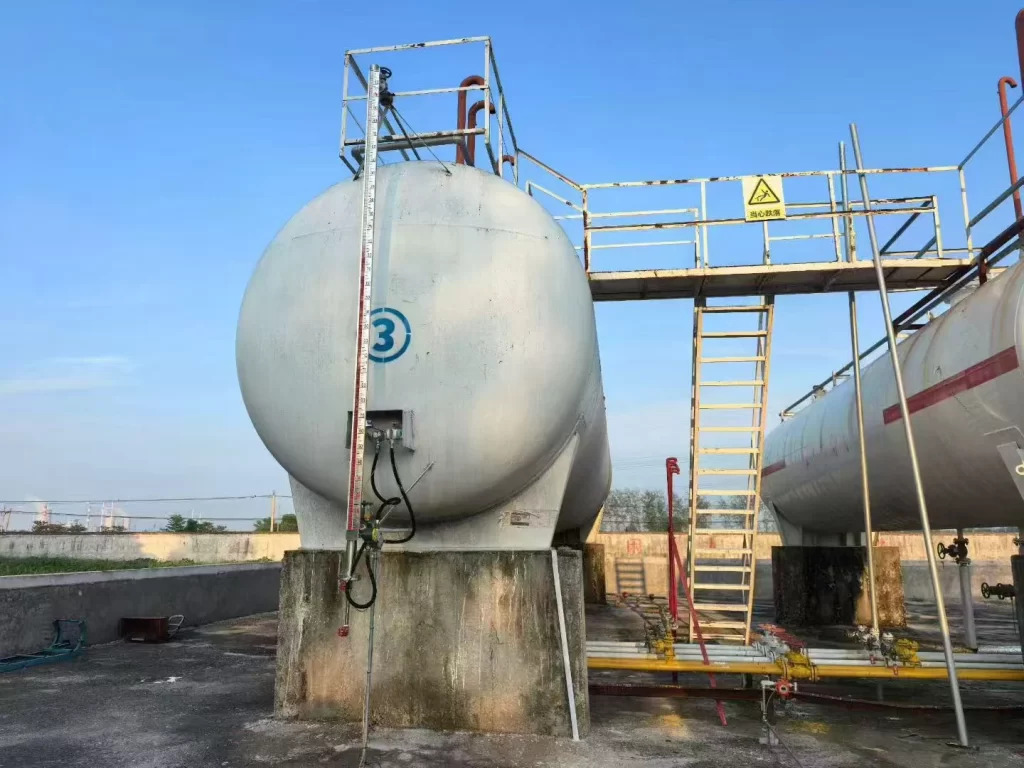
Solution:
Utilizing the condition that the separator’s pressure (0.19 MPa) is greater than the wastewater outlet pipeline pressure (0.13 MPa), and the separator’s inlet liquid temperature in winter is 52℃~54℃, this wastewater is used to heat the magnetic level gauges.
The system consists of five parts: the main heat tracing unit, PPR process connection pipes, inlet/outlet water control valves, vent valves, and insulation material.
Application Results:
During the period of system use from January 2021 to March 2022, the number of times the three-phase separator’s magnetic level gauges froze and blocked decreased from 66 times to 3 times.
The internal liquid temperature of the level gauge body was maintained at approximately 39℃, effectively preventing false level readings.
Compared to using electric heating tape (calculated at 40W.h per meter, with 10 meters used per set), the oilfield joint station can save 33,600 yuan in electricity costs annually by adopting the sewage heating system.
More Level Gauges
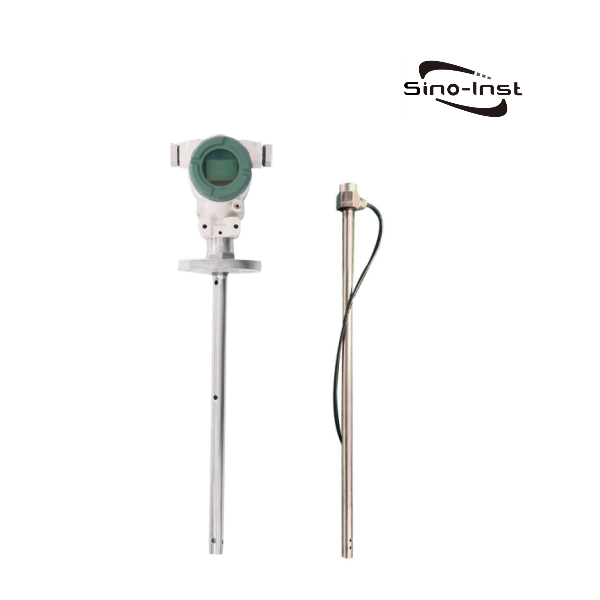

Tank Level Measurement with Pressure Transmitters/DP Transmitters
Hydrostatic Level Measurement-Liquid Level Measurement with Pressure Sensors
Difference Between Radar and Guided Wave Radar Level Transmitter
Guided Wave Radar Level Transmitter Installation Guide and Troubleshooting
Featured 5 Guided Wave Radar Level Transmitter Types
Industrial Ultrasonic Level Transmitters | Non-contact Level Measurement
Sino-Inst UHZ-R Magnetic Level Indicator can be equipped with a heat tracing system to achieve temperature control. It can also be cooled by introducing a cooling medium, making it suitable for level measurement in antifreeze, heat preservation, and heating applications. Available in steam jacket, water circulation jacket, vacuum jacket, electric heat tracing, etc.

Wu Peng, born in 1980, is a highly respected and accomplished male engineer with extensive experience in the field of automation. With over 20 years of industry experience, Wu has made significant contributions to both academia and engineering projects.
Throughout his career, Wu Peng has participated in numerous national and international engineering projects. Some of his most notable projects include the development of an intelligent control system for oil refineries, the design of a cutting-edge distributed control system for petrochemical plants, and the optimization of control algorithms for natural gas pipelines.