Home > Blog > 7 Types of Biogas Flow Meters – 9 Steps to Select the Right One
7 Types of Biogas Flow Meters – 9 Steps to Select the Right One
Biogas is a form of clean energy, primarily composed of methane (CH4) and carbon dioxide (CO2). In the fields of renewable energy, environmental protection, and energy management, biogas flow measurement is a critical step in ensuring accuracy during production, utilization, and trade. This article outlines the various types of biogas flow meters and provides guidance on selecting the most suitable one for your needs.
Flammable and explosive: The primary component is methane (50%–65%); the minimum explosion-proof rating is Exd IIB T4. Explosion-proof instrumentation is mandatory for enclosed biogas generator rooms and underground piping networks, with a standardized 24V DC power supply.
High impurity content and prone to fouling/clogging: Contains significant amounts of water vapor, hydrogen sulfide (H₂S), biogas residue dust, and condensate. Long-term exposure can coat sensing elements and corrode internal mechanisms.
Corrosive media: Hydrogen sulfide reacts with water to form hydrosulfuric acid; ordinary carbon steel and 304 stainless steel are susceptible to rapid corrosion. 316L stainless steel is preferred for wetted parts, while Hastelloy is recommended for high-sulfur biogas applications.
Significant fluctuations in gas composition: Methane concentration varies daily, and volumetric flow is influenced by both temperature/pressure and gas composition. Internal monitoring requires temperature and pressure compensation, whereas mass flow meters or positive displacement meters are preferred for custody transfer metering.
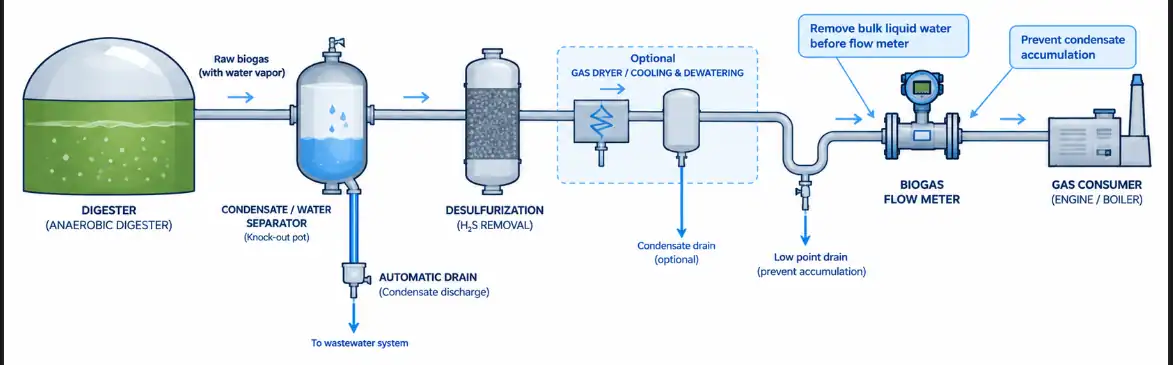
Prone to condensate accumulation: Water collects at low points in the pipeline, and the resulting liquid slugs can impact the flow meter, causing erratic readings. Gas-liquid separation and drainage devices must be installed.
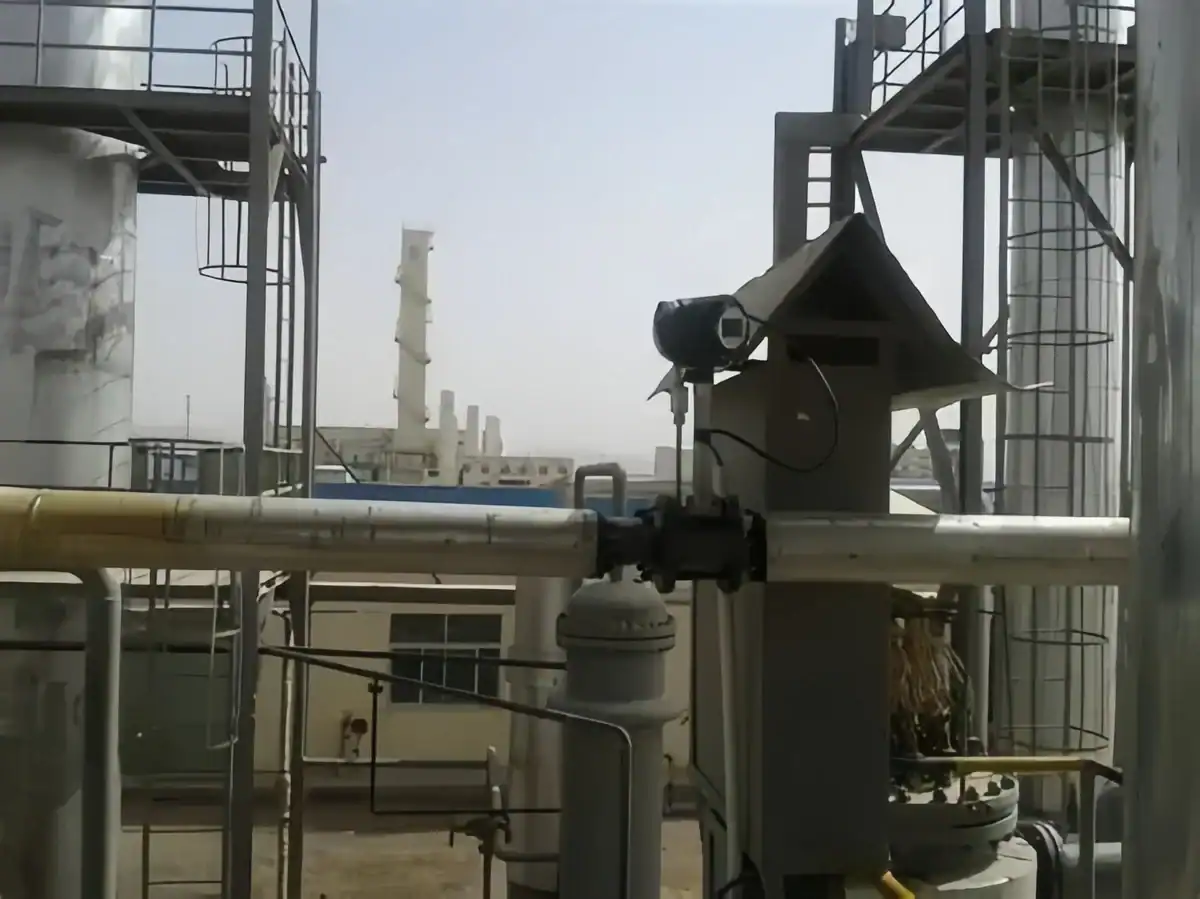
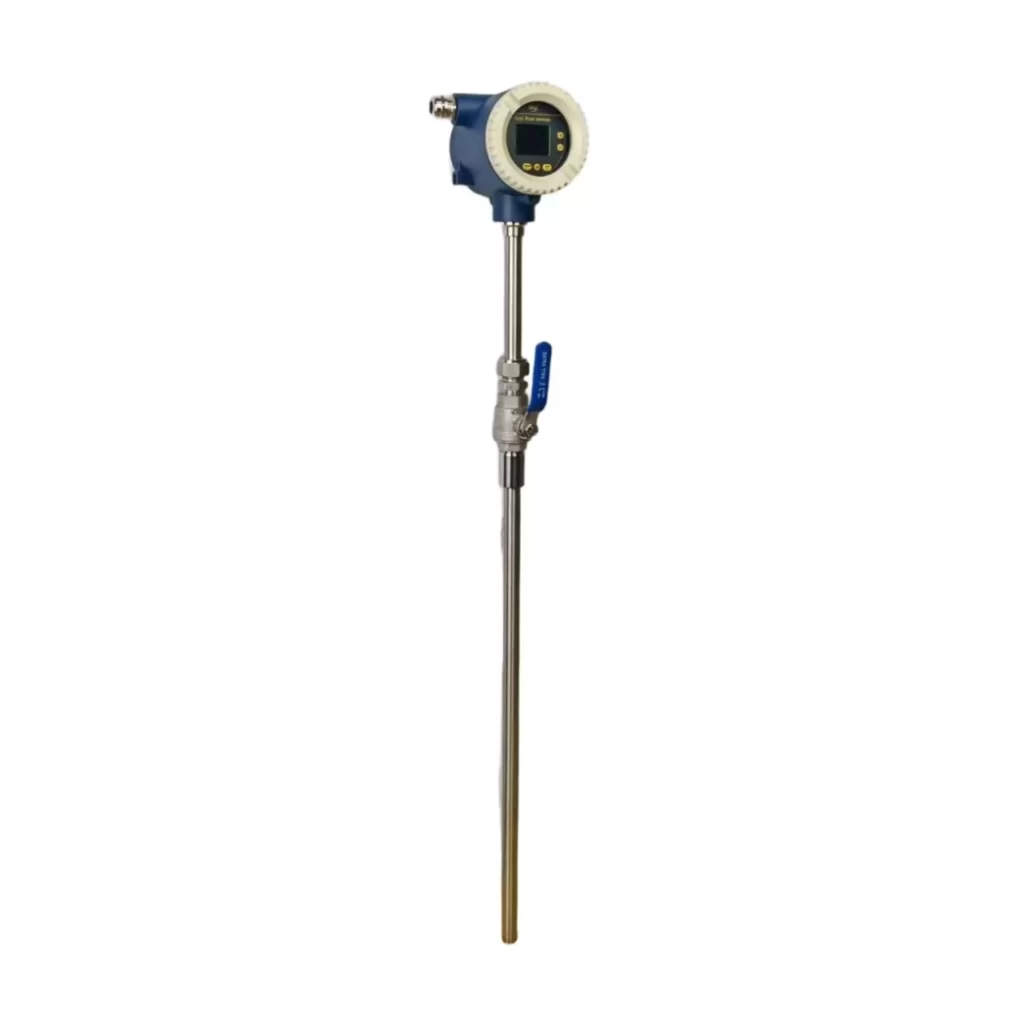
Thermal mass flow meters enable direct, high-precision measurement of gas mass flow. They offer significant advantages, including low pressure drop, a wide turndown ratio, no moving parts, and flexible installation.
For thermal mass flow meters to measure biogas effectively, the gas must be dry, and its composition should remain relatively constant.
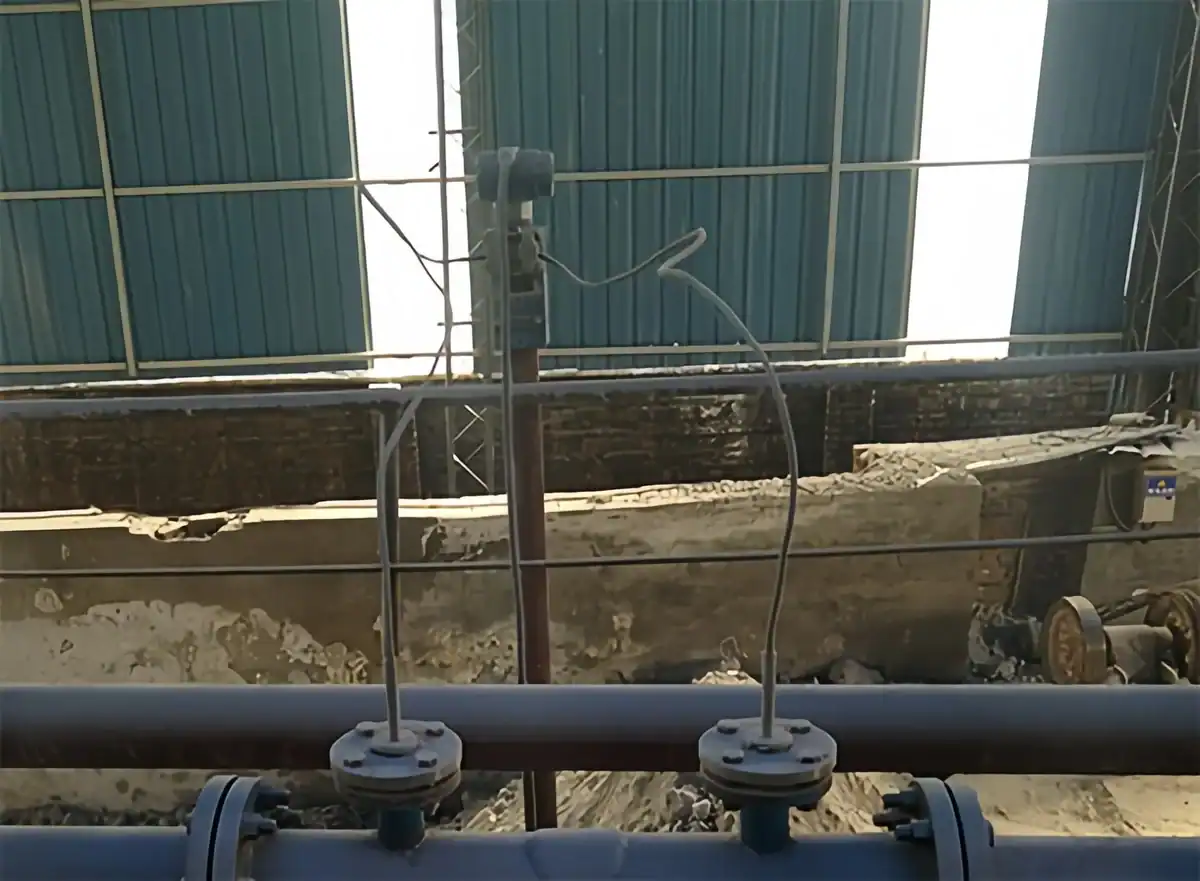
We have previously configured units with the following specifications for customers:
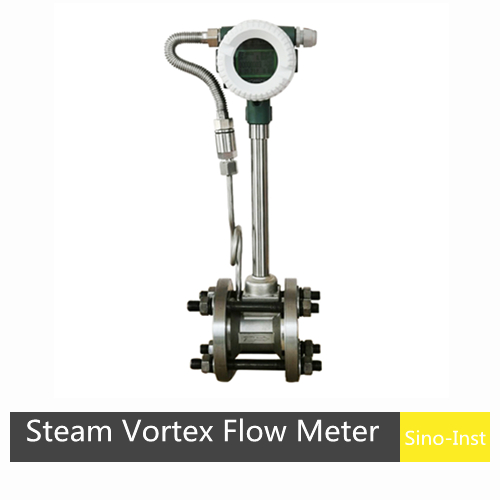
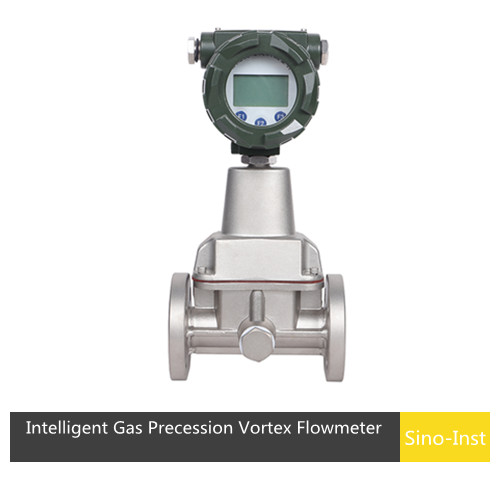
Vortex flowmeters operate on the principle of the Kármán vortex street, determining fluid flow rate by measuring vortex frequency. The output signal is directly proportional to the flow rate and, within a specific Reynolds number range, remains virtually unaffected by fluid density, viscosity, pressure, or temperature, thereby ensuring high measurement accuracy and stability.
Among these, precession vortex flowmeters are available in customized high-pressure versions (up to 42 MPa), offering a wider range of applications.
Vortex flowmeters demonstrate superior compatibility with biogas, effectively handling impurities and moisture.
3. Gas Turbine Flow Meter
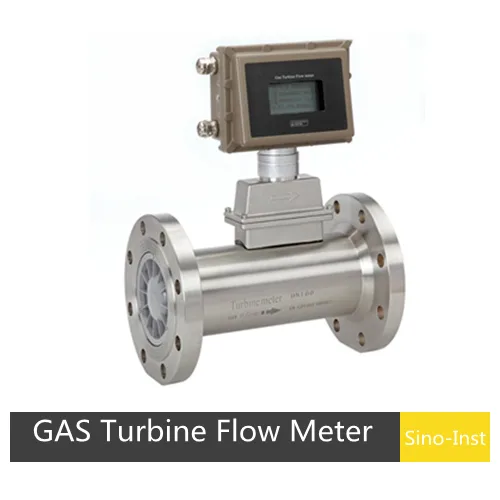
Compared to other types of flow meters, gas turbine flow meters offer low pressure loss, high accuracy, low starting flow rates, good resistance to vibration and pulsating flow, and a wide turndown ratio.
4. Positive Displacement Gas Flow Meter
The most common type is the gas Roots flow meter. It is unaffected by slight fluctuations in methane concentration, offers an accuracy class of 0.2–0.5, and complies with standards for biogas supply custody transfer metering. With a turndown ratio of 50:1, it ensures no loss of measurement data during the low-flow periods typical of nighttime biogas production.
The wetted housing is made of 316L stainless steel with an anti-corrosion coating, and utilizes fluororubber seals to resist hydrogen sulfide corrosion. Additionally, it can be equipped with a mechanical display, allowing for operation even at sites without a power supply.
5. Target Flow Meter
Operating on the differential pressure principle, the target flow meter calculates flow by detecting the kinetic energy of the fluid. It offers high accuracy (±0.2%–1.5%) and a turndown ratio of up to 1:8. It is suitable for high-viscosity and highly corrosive fluids, demonstrating excellent fluid adaptability. It supports flange, wafer, and insertion-style mounting.
Biogas contains small amounts of H₂S and CO₂ and is mildly corrosive; suitable material options include 316L stainless steel, Hastelloy, and PTFE (Teflon) coating for enhanced durability.
6. V-Cone Flow Meter
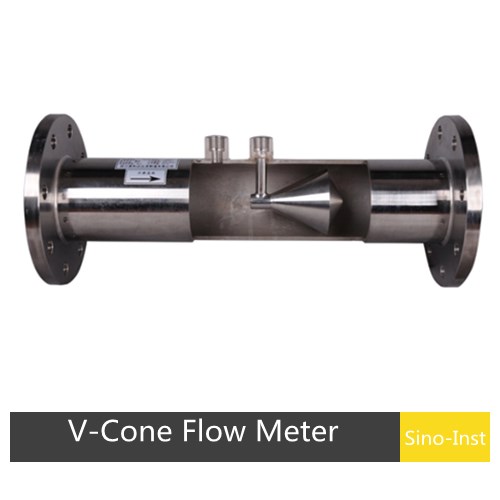
The V-Cone flow meter is an innovative differential pressure flow meter. It withstands high temperatures, humidity, dust, and hydrogen sulfide corrosion, requiring an upstream straight pipe section of only 0.5D. It features a robust, vibration-resistant structure, ensures stability under high-pressure conditions, and offers an accuracy class of 0.3–0.5.
The V-Cone flow meter is suitable for applications such as raw biogas pipelines upstream of anaerobic tanks, sites with limited installation space (e.g., machinery rooms), and locations with dense piping layouts where straight pipe sections are insufficient due to numerous elbows.
7. Orifice Flow Meter
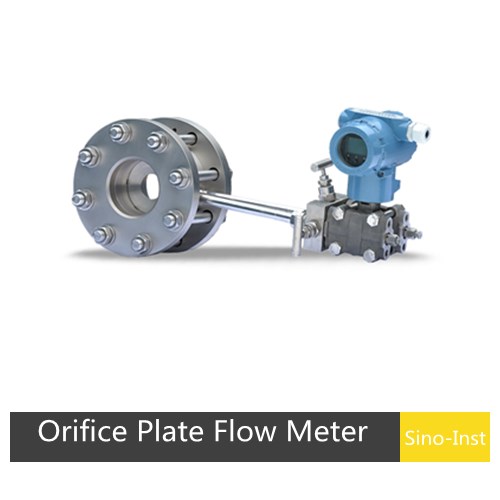
The operating principle of an orifice flow meter is based on Bernoulli’s theorem and the continuity equation. When fluid flows through an orifice plate with a specific aperture, the sudden reduction in the flow cross-section causes the fluid velocity to increase and the pressure to decrease. By measuring the pressure difference across the orifice plate, the fluid flow rate can be calculated.
The orifice flow meter is a traditional method for measuring biogas. It is widely used in the biogas market due to advantages such as low cost and compact structure. However, it has the disadvantages of high pressure loss and a low turndown ratio; therefore, specific operating conditions must be considered when selecting this type of meter.
Before selecting a suitable biogas flow measurement solution, users must determine whether the biogas is dry or wet. Simply put, measuring dry biogas is primarily a matter of “gas flow measurement,” whereas measuring wet biogas involves a complex combination of gas-liquid two-phase flow, condensate, and impurities.
Dry biogas: Typically undergoes processes such as dehydration and mist removal. It contains virtually no liquid water, and operating conditions are relatively stable. It is suitable for measurement using various gas flow meters, such as thermal mass or vortex flow meters.
Wet biogas: Has a high moisture content, making it prone to condensate formation as the temperature drops. The presence of liquid water or gas-liquid two-phase flow can compromise the measurement stability of standard gas flow meters. Therefore, installing gas-water separation and condensate drainage devices prior to measurement is recommended; if condensate cannot be avoided, a flow meter specifically designed for wet biogas applications should be selected.
Wet Biogas Flow Measurement
Measuring wet biogas presents significant challenges; conventional flow meters are often unsuitable for this application. Currently, KROHNE’s OPTISONIC 7300 Biogas is available on the market for the direct measurement of wet biogas flow, though it comes at a high cost.
Alternatively, to reduce costs, we recommend installing a gas-liquid separator and condensate drainage system upstream of the flow meter to minimize the amount of liquid water entering the device. Please refer to the process setup scheme below:
9 Steps to choose the right Biogas Flow Meter
Now that you understand the characteristics of the seven types of biogas flow meters described above, you need to select the most suitable one based on your actual measurement conditions.
Medium: Raw biogas from fermentation or purified biogas; methane concentration, hydrogen sulfide content, presence of significant amounts of water vapor or dust; moisture content, etc.
Operating Conditions: Operating pressure, medium temperature;
Application Scenarios: Energy consumption tracking for biogas-fired boilers, commercial gas supply from livestock farms, anaerobic digester outlet manifolds, and metering prior to biogas purification, etc.
Accuracy: Class 0.2–0.5 for trade settlement; Class 1.0–1.5 is sufficient for on-site monitoring;
Explosion-proof rating requirements
Output signals: 4–20 mA, RS485, pulse, HART
Pre-treatment conditions: Presence or absence of a vapor-water separator and biogas filter upstream. Whether a probe purge device is required.
Selecting the right biogas flow meter is a technically challenging task. Drawing on years of experience in flow measurement, Sino-Inst has provided biogas flow measurement solutions to a wide range of clients.
For instance, for trade settlement in gas supply from small-to-medium-sized biogas plants, we recommend a 316L corrosion-resistant, explosion-proof Roots (rotary piston) gas flow meter, paired with a moisture separator and a filter. For applications involving raw biogas headers from anaerobic digesters—where gas production fluctuates significantly between day and night, or where internal power generation consumption is monitored—we recommend an explosion-proof thermal gas mass flow meter equipped with an automatic purge function.
If you are unsure how to select the appropriate biogas flow meter, please feel free to contact our sales engineers at any time.
In gas flow measurement and control, it is crucial to distinguish between Normal Conditions and Standard Conditions. This is primarily because the volume of gas changes with temperature and pressure…
Analog gas flow meters specifically refer to a type of flow meter that outputs analog signals. The main function of a flow meter is to measure volumetric flow rate or…
A rotameter, also known as a variable area flow meter, is widely used to measure the flow rate of various gases, especially in situations where no power supply is available…
Accurate measurement of flare gas flow presents a significant challenge in industrial process control. This is primarily due to the extreme variability of flare gas flow rates, the unpredictability of…
Why Natural Gas Flow Measurement is Pivotal? Natural gas is a vital energy source, providing electricity to industries, homes, and businesses worldwide. High-precision natural gas flow measurement is essential for…
Gas flow measurement is an essential technology in many industrial processes. For example, in the production of chemical products, accurate measurement of the flow of gases such as oxygen and…
From extraction to use, natural gas undergoes long pipeline transportation, filtration, storage, and pressure regulation. Monitoring pipeline pressure during these processes is crucial to ensuring proper system operation. Natural gas…
Turbine type flow meter is an important velocity flow meter. It has the advantages of easy maintenance, large flow capacity and relatively low price. It has been widely used to…
Zhang Wei, possesses 20 years of experience as an automation instrumentation engineer, specializing in the research, design, installation, commissioning, and maintenance of automation instruments.
Face to various instrument communication protocols (such as Modbus, Profibus, etc.), with solid hardware circuit design and software programming skills (proficient in C language and PLC programming). Has extensive project experience; projects he has led and participated in have all achieved outstanding results, improving product accuracy, reducing costs, and increasing production efficiency.
Possesses excellent communication and coordination skills and a strong team spirit, enabling him to quickly respond to customer needs and provide high-quality automation instrumentation solutions.
Want to see more of our engineering guides in Google Search? Add Sino-Inst as a preferred source.