Home > Blog-Applicaitons-Technologies

Blog-Applicaitons-Technologies

Bitumen And Asphalt Level Meters: Let’s Learn More About Them

Bitumen is a byproduct of crude oil. The quality of bitumen and ease of production depends on the source and type of crude oil from which it is derived. On the other hand, Asphalt is a composite material with two primary ingredients: aggregates and bitumen. Bitumen and asphalt are hypercritical materials in construction, road paving, … Read more
Rotary Flow Meters for More Stable Measurement and Control Systems

In practice, most machines involve rotary motion as well as linear motion. Rotary motion is defined by stable operation and low impact on mechanical equipment. Therefore, it is very important for the smooth operation of the instrument. Rotary flow meters have been in use for a long time. Over time, they have become the preferred … Read more

Fertilizer Flow Meters for Volume/Mass Flow of Fertilizers

Sino-Inst supplies various types of fertilizer flow meters, including volumetric flow meters, mass flow meters, and mass flow meters for powdered fertilizers. These are suitable not only for agricultural irrigation management but also for industrial-grade production monitoring and management. Fertilizer use has steadily increased over the past 50 years, especially in high-value crops such as … Read more

Knowing Paint Flow Meters – Choose the Right One!

Paint flow meters are necessary component of various industrial environments to measure and control the flow of paint, adhesives, and coatings. In applications like automotive, industrial manufacturing or commercial painting demand metering competent of handling thick, “sticky” and often abrasive materials. Additionally, Paint flow meters must be able to resist pump pulsations at often high line pressures due to the … Read more

Comprehensive Guide On Chlorine Flow Meters

Chlorine is an extremely reactive element and a strong oxidizing agent. The gas is greenish yellow in color. It is easy to compress and can be liquefied into a clear amber coloured liquid. As a corrosive and aggressive gas, the flow measurement of chlorine is a difficult job. Aggressive chemical element bring an element of … Read more

How To Calculate Pressure From Flow Rate And Vice Versa

In fluid dynamics, the relationship between pressure and flow rate is fundamental. In the meantime, calculating pressure from flow rate and flow rate from pressure helps us to understand how fluids behave in various systems, from pipelines to HVAC systems. These calculations help optimize system performance, ensure safety, and improve efficiency. In this blog post, … Read more

Non-Contact Flow Meters: An Advanced Approach To Fluid Measurement

In food production, pharmaceutical industry, chemical industry and other processes, many fluid flow measurements require hygienic and aseptic processes. Non-Contact Flow Meters have become an important choice. For open channels and rivers, a non-contact radar flow meter for open channels measures surface velocity, water level, and flow without touching the water. Non-Contact Flow Meters have … Read more

Relationship Between Pressure And Flow Rate: Key Insights

When the pressure in a pipe increases, does the flow rate also increase? Does the diameter of the pipe matter when calculating the flow rate? Qualitative investigation suggests a proportionate link between pipe pressure and flow rate. Assume a pipeline with a single pressure source at one end. The amount of Water flow meter that … Read more

High Accuracy Flow Meters: Technology, Applications, And Benefits

Flow meters measure the volume or mass of liquid, gas, or steam moving through a piping system. There are many different flow meter technologies, and each delivers different accuracy. The accuracy requirements for a flow meter depend a great deal on the exact application. High accuracy flow meters have become vital tools for industries where … Read more

Right Flow Meter For Molasses

In addition to its potential value in different industries, molasses also provides many benefits to the human body. It helps eliminate problems related to obesity, anemia, depression, acne, and other skin diseases. In addition, molasses is beneficial for bone and hair health. It also keeps the nervous system balanced and accelerates wound healing. Molasses are … Read more

Mechnical & Digital Kerosene Flow Meters

Kerosene is a colorless, transparent liquid that turns light yellow when impurities are present. It is often used as a fuel, solvent, and insecticide spray. The right measurement of kerosene flow is necessary for safety and operational efficiency. One of the key technologies helping industries manage the flow of kerosene is the kerosene flow meter. … Read more

Understanding Asphalt And Bitumen Flow Meters

Asphalt and bitumen are key materials in the construction industry. The two terms are used interchangeably around the world. Asphalt is a polymer material widely used in road construction and other civil engineering projects, with advantages such as high temperature stability, low temperature crack resistance and good waterproof performance. However, the flow measurement of asphalt … Read more

Extreme Temperature Flow Meters: Accurate Flow Measurement In Harsh Environments

When fluids are exposed to extreme temperatures (extremely high and extremely low), meticulous measurement of fluid flow is critical. This is where extreme temperature flow meters come into play. Extreme temperature applications require proper protection of the sensitive electronic components inside the flow meter. In addition, since the viscosity of the heat transfer fluid changes … Read more

Inline Thermal Mass Flow Meters | Sino-Inst

Inline thermal mass flow meters install the pipeline flow meter body in the pipeline for a long time. A thermal gas mass flow meter is a flow meter designed based on the principle of thermal diffusion or heat conduction to measure the mass flow of gas. There are online and insertion structures. Inline thermal mass … Read more

Mass Flow Meter Vs Magnetic Flow Meter

Mass flow meters quantify the fluid’s mass to ascertain the flow rate, whereas magnetic flow meters utilize magnetic fields to gauge the flow of conductive fluids. Selecting between a mass flow meter and a magnetic flow meter depends on your specific application needs. We’ll explore the key differences between mass flow meters and magnetic flow … Read more

Liquid Mass Flow Meters And Its Significance

Mass flow meters are not just noteworthy pieces of technology; they have practical applications across various industries. They play a crucial role in ensuring the accuracy of recipe formulations and material balance calculations in industrial process control and are key to financial operations such as billing and custody transfer. This blog post provides an in-depth … Read more

Gas Mass Flow Meters: Applications, Benefits, And Top Manufacturers

Ascertaining accurate and reliable measurement of gas flow rates is critical for a variety of industrial processes. The ability to measure gas mass flow accurately, rather than simply volumetric flow, provides insights into the true behavior of gases under varying conditions of temperature, pressure, and composition. In this blog post, we will explore the fundamentals … Read more

Types Of Mass Flow Meters And Different Measurement Techniques

Mass flow meters are basal for quantifying fluid and gas flow in industrial settings. A mass flow meter is a type of flow meter that accurately measures the mass flow rate of a fluid moving through a pipe. Mass flow rate measures the mass per unit of time, differing from volumetric flow rate – which … Read more

Bulk Flow Meter for Solids | Applications and Benefits

In the production process of modern industry, bulk flow meters for solids is increasingly widely used, and its performance requirements are getting higher and higher. In order to solve the problem of replacing equipment such as scales in the industry of powder material processing, manufacturing or handling, our company has developed a Bulk Flow Meter, … Read more

A Comparative Analysis Of Vertical And Horizontal Flow Meters

As two common types of installation processes, vertical and horizontal flow meters have their own unique structure and performance advantages. Although most applications are horizontally oriented, mounting the meter vertically actually offers some advantages. Based on relevant information, this blog post will go deeply into a comparative analysis of vertical and horizontal flow meters. Basic … Read more

LPG Gas Flow Meters With Some Prominent Manufacturers And Suppliers

Liquefied Petroleum Gas (LPG) is an indispensable commodity of domestic and industrial applications. It is increasingly used as an aerosol propellant and a refrigerant, replacing chlorofluorocarbons in an effort to reduce damage to the ozone layer. Choosing the right LPG Gas flow meter is crucial for optimal performance, safety, and efficiency of LPG systems. By … Read more

Grease And Lube Flow Meters

Proper lubrication is indispensable for maintaining optimal performance of industrial instrumentation and heavy-duty equipment. Both under-lubrication and over-lubrication is critical. Grease and Lube Flow Meters ensure that lubricants are applied correctly. The Grease And Lube Flow Meters use a rotating oval gear concept with encapsulated magnets to provide a pulsed output that corresponds volumetrically to … Read more

Frame Of Flow Meters: Stainless Steel And PTFE Flow Meters

Flow meters focus on measuring gasses and liquids in pipes. Improving the precision, accuracy, and resolution of fluid measurement are the greatest benefits of the best flow meters. The material used to construct the frame of a flow meters play a big role in making a flow meter the best flow meter for a particular … Read more

Sewer Flow Meters and Their Importance in Sewer Monitoring

Among the tools that play a crucial role in monitoring and managing sewer systems are sewer flow meters, also known as sanitary sewer flow meters. These devices are vital in providing accurate measurements of water flow within sanitary sewer systems. The selection of the most suitable instrument for measuring the flow of sewage is especially … Read more

Bin Level Indicators and Controllers

Bin Level Indicators and Controllers can monitor the changes of materials in the silo in real time and accurately. Choosing the right Bin Level Indicators and Controllers can achieve efficient production planning and ensure the reliable transportation of finished products. In the industrial production process, a variety of liquid, solid, powder and other raw materials … Read more

The Next Level Of Flow Measurement: Here Come Non-Intrusive Flow Meters

The ability to measure flow rates externally without the need for penetration of the fluid-carrying pipe is a boon in modern-day Industrial processes. That’s why, Non-invasive, Non-intrusive flow meters is becoming a perfect pick for sensitive fluids. Ultrasonic flow meter as a favourite option as Non-invasive, Non-intrusive flow meter. It’s a non-contact flow meter. Working … Read more

Right Flow Meter For Breweries: Exploring Food Grade Flow Meters

Beer brewing is an artistry that needs exactitude at each and every step of operation. By providing accurate readings, brewery flow meters help individual and professional brewers accomplish the desired balance of flavor and alcohol content in their beer, making them a staple in efficient brewing operations. Every component of a beer brewing system that … Read more

An Extensive Guide On Magnetic Inductive Flow Meters

There are a few areas where industrial flow measurement is important, such as residential waste. Among the various flow meter types available, inductive flow meters, particularly magnetic inductive flow meters, are widely preferred in applications involving conductive liquids. Inductive flow meters also find homes in many industrial control processes, including chemical/pharma, food and beverage, and … Read more

Flow Measurement For Powders And Granular Materials: Solid Flow Meter

In industries managing powders, granules, and other bulk solids, accurately measuring the flow of materials is critical for efficient operations. Flow measurement of solid particulate matter often faces more challenges than flow measurement of liquids and gases. Solid flow meter, a device specifically designed to measure the flow of solid particulate matter (e.g., powders, granules … Read more

Rotameter vs Flow Meter

Flow measurement is a captious aspect of many industrial and scientific processes. Assuring fine control and monitoring of fluid flow enhances efficiency, quality, and safety. While a rotameter is a type of flow meter, there are key differences that set it apart from other types. This blog will explore these differences, their working principles, and … Read more

Metal Tube Rotameter: Working Principle and Applications

In the arena of flow measurement, metal tube rotameters hold a salient position for their durability, precision, and suitability for difficult environments. Whether you’re in the process industry, water management, or petrochemicals, knowing these devices can heighten your flow measurement abilities. This post dives into the workings, components, benefits, limitations, and application preface of metal … Read more

High Accuracy Flow Meters: A Key To Precision In Flow Measurement

Industrial applications starting from oil refineries to vending machines require precision measurements of temperature, pressure, and flow to control complex and simple processes. Within the food industry, for example, the accurate control of flow when filling bottles and cans can directly influence profits. Likewise, custody transfer applications, such as the exchange of raw and refined … Read more

Guide for High Pressure Flow Meters – Industrial Liquid & Gas Measurement

When it comes to high-pressure applications, choosing the right flow meter is necessary for checking accuracy, reliability, and safety. High Pressure Flow Meters are perfect when measuring the flow of fluids under high pressures, such as in hydraulic testing. It is also perfect for chemical injection systems, as it withstands pressures up to 6.3MPA~42MPA and … Read more

Guide To Low Temperature Flow Meters: Accuracy In Cold Fluid Measurement

Low temperature flow meters designed to measure fluid flow accurately under cold conditions, are critical for ensuring efficiency, safety, and product quality. Most cryogenic fluids are converted into liquids by reducing the temperature of gas to a very low temperature. For example, we often see cryogenic liquid nitrogen and liquid oxygen. Not every flow meter … Read more

Customized Case: High Temperature and High Pressure Pressure Measurement -100MPa-700℃

High temperature and high pressure type pressure measurement is an extremely harsh measurement. Usually, the temperature is higher than 80℃, or the pressure is higher than 60MPa, which exceeds the measurement range of conventional pressure transmitters. Sino-Inst supports providing you with customized solutions for various high temperature and high pressure measurement parameters. Customized case The … Read more

Solution For Low Flow And Low Volume Applications: Low Flow Meter In Detail

Low flow meters are flow measurement devices that are specialized for measuring small liquid volumes and low flow rates. These are essential for high-precision process monitoring and controlling liquid flow. For example, in industries such as pharmaceuticals and chemicals, high-precision consistency of ingredients needs to be ensured. In this guide, we will take a deep … Read more

BTU Meter Optimizes Energy Efficiency of Hot and Cold Water Systems

BTU meter accurately measures the thermal energy of hot and chilled water consumption in British thermal units (BTU), a basic measure of thermal energy for commercial and residential buildings. BTU meters are used in hot and chilled water systems for both commercial and industrial processes and office buildings. BTU meters comprise an accurately calibrated flow … Read more

Pulse Output Flow Meters for Better Water Flow Measurement

Pulse output is the main output signal of the flow meter. One of the major innovations in this field of water flow measurement is the ‘pulse output flow meter’. ‘Analog water flow meter with pulse output’ is another variety of devices with significance. These devices offer sophisticated solutions for monitoring and controlling water flow. This … Read more

Ultrasonic Clamp On Flow Meter – For Easier Water Flow Measurement

Starting from farming and domestic water distribution to industrial processes and environmental observation, Water flow measurement plays a vital part. It’s all-important to accurately measure water flow to optimize efficiency, cut down costs, and meet restrictive requirements. There are several methods utilized to measure the flow rate of water, each with its own plus and … Read more

Guide On Industrial Air Flow Measurement Devices

Air flow measurement is critical in various industrial, automotive, healthcare, and HVAC applications. Many industries call for the measurement of airflow or air velocity. They sometimes ask for some additional requirements like the determination of air temperature, air pressure, or humidity. This is true in electronics and automobile engineering, as well as critical containment applications … Read more

Understanding of HART Protocol and it’s Use in Process Measurement

In today’s industrial process measurement and control, real-time monitoring is essential for continued operation. The HART (Highway Addressable Remote Transducer) protocol has become an indispensable answer to achieving these goals. This blog explores how the HART communication protocol works and its application in critical process measurements. The focus will be on the benefits it brings … Read more

Featured Gauge Pressure Transmitters for Industrial Process Pressure Measurement

Gauge pressure transmitter can realize high-precision measurement of gauge pressure in industrial process. The product is used to measure the level, density and pressure of liquid, gas or steam. Then the pressure signal is converted into 4mA~20mA DC analog current signal output. It can also be configured with HARTRS485, etc. Gauge Pressure Transmitters are suitable … Read more

Chemical Flow Meters

Chemical flow meters are a type of flow meter specifically designed for measuring the flow rate of gases and liquids in the chemical industry. Many gases and liquids in the chemical industry are corrosive or have high viscosity. Monitoring and controlling the flow rate of chemical raw materials is crucial for chemical production. It ensures … Read more

Boat Fuel Flow Meters: Installation Tips and Comparability

Opting the right Boat Fuel Flow Meter and properly installing it can significantly enhance maritime transport efficiency and safety. By knowing the various types of fuel flow meters available and following best practices for installation, you can effectively monitor fuel consumption and optimize performances. With this blogpost, you’re now equipped to select the best fuel … Read more

Platinum Resistance Thermometer: PT100 vs PT1000

The process control industry almost entirely uses Pt100/Pt1000 platinum thermal resistors as temperature measuring elements. Their resistance changes with temperature. The industry also uses this principle of thermal resistors for accurate temperature measurement. The 1000 after the letter “PT” means that its resistance is 1000 ohms at 0°C, while Pt100 is 100 ohms, and the … Read more

An All-inclusive Guide on Crude Oil Measurement

Crude oil is unrefined oil extracted directly from the ground. Crude oil contains hydrocarbon fluids, water and various impurities. Unprocessed crude oil is mainly traded as a commodity. In oil production and trade measurement, it is important to choose a suitable crude oil flowmeter. Many forms of flowmeters can achieve crude oil measurement. Methods of … Read more

Industrial Refrigerant Flow Meters

Refrigerant flow meters can accurately measure the refrigerant flow. It is not only related to the stable operation of the refrigeration system but also directly affects the production efficiency and cost control of the enterprise. There are more than 80 substances that can be used as refrigerants, the most commonly used are ammonia, freon, water, … Read more

Getting to Know The Propane Flow Meters: Better Monitoring of Propane Utilization

Propane is a common fuel source used in a variety of industries, including manufacturing, agriculture, and transportation. Propane flow meters come in various types and designs, tailored to the specific nature of propane, whether it’s in gaseous or liquid form. Given that propane can exist in both states—depending on temperature and pressure—understanding how to measure … Read more

What Are Diaphragm Seal Systems in Pressure Measurement? and Types

What is a diaphragm seal? A diaphragm seal is a sealing device used to prevent fluid leakage, usually composed of a diaphragm, bolts, gaskets and other components. Its main function is to isolate two different media to prevent them from mixing or leaking. The working principle of a diaphragm seal is to use the elasticity … Read more

Guide To Vortex Flow Meters For Steam Applications: Steam Vortex Flow Meter In detail

To begin with: Vortex Flow Meters for Steam Applications The requirement for high-fidelity and trustworthy flow measurement has become pivotal across various industries, especially in applications involving steam. Steam is widely used in industries such as power generation, chemical processing, and manufacturing. Where the need to measure the flow of steam accurately is hypercritical for … Read more

Featured Gas Turbine Flow Meter for Natural Gas and Other Gases

Gas turbine flow meter is a precision metering instrument used for gas flow measurement. Especially in natural gas transportation and trade settlement, the gas turbine flow meter is even more popular. Gas Turbine Flow Meter integrates temperature, pressure, and flow sensors. It is also equipped with an electronic volume corrector, which can simultaneously detect and … Read more

Dry Materials-Bulk Solids-Powder Level Sensors Guide

Powder level sensors are mainly used for the measurement of powders and bulk solids such as silos, storage tanks, and silos. The level measurement of powders can be divided into point measurement and continuous level measurement. Used for level indication or level control. For example, common cement, fly ash, lime powder, flour, grains, etc. Featured … Read more

Industrial Differential Pressure Sensors | Sino-Inst

Differential Pressure Sensor is a sensor used to measure the difference between two pressures. In industry, it can be used to measure differential pressure, flow, liquid level, density, etc. Sino-Inst supplies and manufactures diffused silicon, capacitive, and single crystal silicon differential pressure sensors. Sino-Inst differential pressure sensors are widely used in industrial process control, flow … Read more

4-20mA Flow Meters | Flow Meter Signal Output Guide

4-20mA flow meter refers to a flowmeter with 4-20mA current signal output function. It measures the volume or mass flow of the fluid and converts it into an electrical signal output. It is used for the automation control of the control system. Of course, in addition to 4-20mA, there are also pulses, frequencies, switch signals, … Read more

Analog Flow Meters: An Encompassing Guide

Flow meters are necessary tools used across various industries to measure the rate at which a fluid (liquid or gas) moves through a system. Among the different types of flow meters, analog flow meters stand out due to their simpleness, reliableness, and broad range of applications. In this blog post, we will dig into the … Read more

Industrial Hydraulic Flow Meters | Mechanical & Digital

Hydraulic flow meters, also called hydraulic oil flow meters, monitor and control hydraulic system oil flow continuously or intermittently. To check the performance of hydraulic pumps and the settings of flow control valves. Hydraulic oil is the medium that transmits power in hydraulic machinery. Common hydraulic oils are based on mineral oil or water. Sino-Inst … Read more

RS485 Pressure Sensors

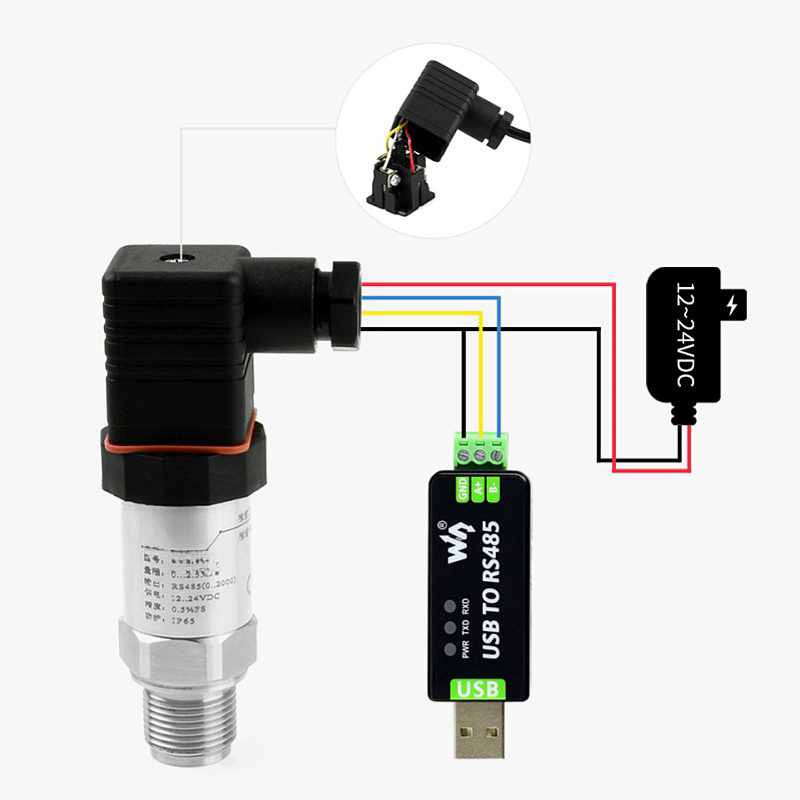
RS485 pressure sensors transmit pressure signals through the 485 bus. There are main advantages: easy integration into digital sensor networks; longer transmission distances, up to 1000m; more efficient and reliable data reading. Modbus-RTU intelligent pressure transmitters act as slaves in RS485 communication networks and follow the Modbus RTU protocol to communicate with the host to … Read more

Role of Hydrostatic Level Transmitters In Well Water Level Monitoring Process

Introduction: An essence of well water level monitoring process Water is a vital resource for every creature’s survival. Wells have historically been one of the firsthand sources of freshwater for numerous cosmopolitan communities for centuries. Ascertaining the sustainable and efficient use of well water requires orderly monitoring of water levels. A well water level monitoring … Read more

Irrigation Flow Meters-Indispensable for Modern Agriculture and Irrigation

Irrigation Flow Meters are instruments used to measure the flow rate or velocity of water within an irrigation system. Including modern agricultural irrigation, commercial irrigation, municipal and groundwater monitoring, etc. Sino-Inst’s Irrigation Flow Meters are popular in modern agriculture. Especially irrigation management. We support customization of various flow meters to meet the monitoring needs of … Read more

Ultrasonic Flow Meters: Doppler Effect vs Transit Time

Ultrasonic flow meters use ultrasonic technology to measure liquid flow. There are two main types: Doppler effect and transit time. Both Doppler Effect and Transit Time ultrasonic flowmeters can be equipped with external clamp or insert sensors. Suitable for measuring large pipe diameters and fluids that are not easily accessible. See also: ultrasonic Doppler open … Read more

Doppler Effect Ultrasonic Flow Meters | Sino-Inst

Doppler effect ultrasonic flow meters are specially designed for the measurement of liquids containing solid particles or bubbles with a lot of impurities or relatively dirty liquids. Can be configured with external clamp sensor or insert sensor. The external clamp sensor can be installed or removed without interrupting the production process. It does not come … Read more

Typical Ultrasonic Level Sensor Applications and Advantages

Ultrasonic Level Sensor Applications are very broad. The ultrasonic liquid level sensor uses ultrasonic pulse echo to achieve liquid level measurement. It can be widely used in liquid level-material level monitoring. The transducer (probe) of an ultrasonic level sensor emits high-frequency ultrasonic pulses. When it encounters the surface of the liquid level being measured, the … Read more

Different Diesel Level Sensors for Diesel Tank Level Measurement

Diesel sensors can be used to measure the liquid level of diesel in storage tanks and convert it into standard electrical signals or switching signals. It can be used to build a diesel storage tank liquid level monitoring system. Sino-Inst supplies float, ultrasonic, radar and other various diesel level sensors. Supports customization of measuring range, … Read more

Differential Pressure Transmitters – Guide and Selection

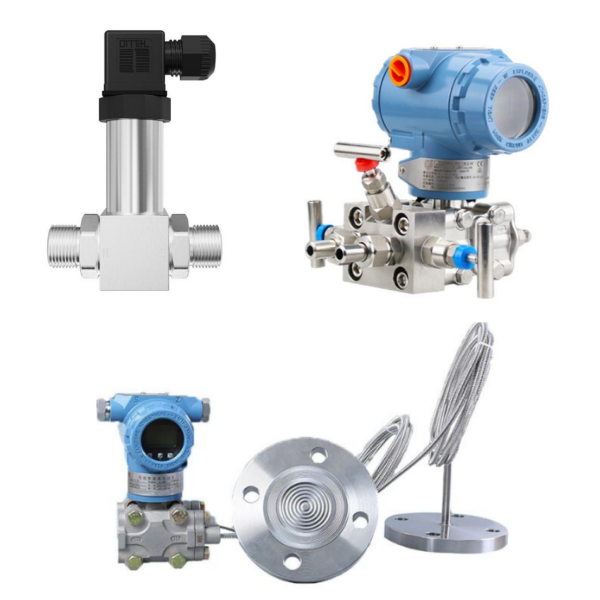
Differential pressure transmitters are transmitters that measure the difference in pressure across the transmitter. Output standard signals (such as 4~20mA, 0~5V). Differential pressure transmitters are mainly used to measure differential pressure, pressure and negative pressure of liquids, gases and steam. It is also possible to measure liquid levels in open or pressurized vessels. Equipped with … Read more

DP Transmitters for Filter Differential Pressure Monitoring

Filter Differential Pressure refers to the difference in inlet and outlet pressures when liquid or gas passes through the filter. By monitoring the differential pressure across the filter, the operator can understand how well the filter is performing. In the filter, there is a pressure difference between the upstream of the filter and the downstream … Read more

4 Wire – 3 Wire – 2 Wire Ultrasonic Level Transmitter

We often hear about 2 wire ultrasonic level transmitter, 4 wire ultrasonic level transmitter, etc. Ultrasonic level transmitter can be divided into two-wire system, three-wire system and four-wire system. Ultrasonic level transmitter emits ultrasonic pulses from a sensor. After the sound wave is reflected by the liquid surface, the sensor receives it. Use an overvoltage … Read more

2 Wire-3 Wire-4 Wire Pressure Transducer Wiring Diagrams

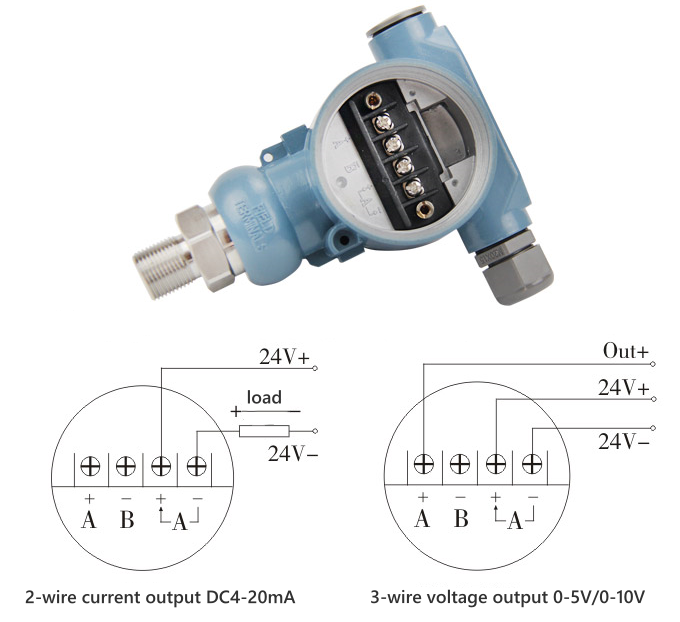
There are generally three types of Pressure transducer wiring diagrams: two-wire, three-wire, and four-wire. As the name suggests, there are several wires that need to be connected to the electrical interface of the pressure transmitter, which is a multi-wire connection method. When purchasing the signal output of the pressure transmitter, you also need to choose … Read more

Industrial Analog Pressure Transducers | 4-20mA, 0-5/10V DC

Analog pressure transducers convert measured pressure into a continuous analog signal output. It provides an output signal proportional to the pressure being measured. Common analog output methods are: 4-20mA, 0-5/10V DC, 0.5-4.5V DC, 0.5V~2.5V DC. Sino-Inst manufactures and supplies a wide range of analog pressure transducers, from compact, cost-effective OEM transducers to high temperature, high … Read more

Submersible Pressure Transducers for Liquid Pressure and Level Measurement

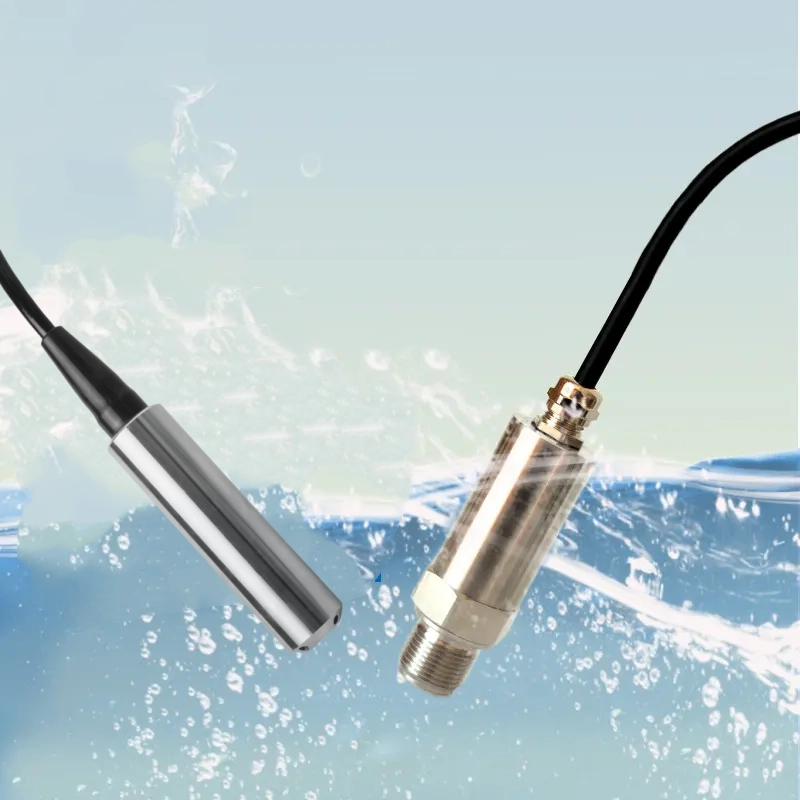
Submersible Pressure Transducers are a special type of pressure transmitter. Equipped with a sturdy, durable and airtight stainless steel casing with a protection level of up to IP68. The probe measures static pressure. This allows conclusions to be drawn about the current liquid level, i.e. the height of the liquid column above. Commonly used for … Read more

Explosion Proof Pressure Transducers- Intrinsically Safe – ExdIICT6-ExiaIICT6 Ga

Explosion proof pressure transducers are pressure measurement devices that are third-party certified for safe operation in hazardous environments. Mainly used in petroleum, chemical industry, coatings, pharmaceuticals and other flammable and explosive places. Explosion-proof technology is employed, meaning the transmitter’s flameproof housing is designed to withstand the pressure generated by an internal explosion while preventing the … Read more

Liquid Level Controllers and Switches for Industrial Tanks

What is Liquid Level Controller? Liquid level controller refers to the control of high and low liquid levels through mechanical or electronic methods. Can control solenoid valves, water pumps, etc. Used to monitor fluid levels and ensure fluids remain at set levels. This enables semi-automatic or full automation of tank liquid level monitoring and control. … Read more

Voltage Output Pressure Transducers | 0-5/10V DC, 1~5VDC, 0.5~2.5VDC

Voltage Output Pressure Transducers are a common type of industrial pressure transmitter. The signals that can be selected are 0~10VDC, 0~5VDC, 1~5VDC, and 0.5~2.5VDC. Current output and voltage output are the analog output signals of the pressure transmitter. Voltage Output Pressure Transducers can be better aligned with programmable logic controller (PLC) and direct digital controller … Read more

Industrial Hydrogen Pressure Transmitters/Transducers

Hydrogen pressure transmitters can convert gas hydrogen or liquid hydrogen pressure signals into standard electrical signals. Hydrogen has strong reducing properties and is a common industrial gas. Sino-Inst supplies hydrogen pressure transmitters specifically designed for industrial hydrogen measurement. Including measuring gaseous hydrogen, low-temperature liquid hydrogen, etc. It has many advantages in pressure monitoring applications of … Read more

Beverage Flow Meters for Flow Monitoring and Quantitative Filling

Beverage flow meters are commonly used in beverage production processes, metering and filling, etc. In the beverage industry, the requirements for the use of flow meters will be higher. Many beverages are acidic or have other properties, which have certain requirements for the material of the flow meter. Sino-Inst Beverage flow meters can provide reliable … Read more

Industrial Digital Helium Flow Meters | Mass-Volume Flow

Helium flow meters are used to measure helium pipeline flow rate, volume flow or mass flow. Helium is an inert, non-flammable noble gas. The flow of helium gas through pipelines and circulation systems can be monitored through various flow sensing technologies. And present the results as physical quantities (such as volume flow or mass flow). … Read more

Liquid and Gas NH3 Ammonia Flow Meters

Liquid and Gas ammonia (NH3) is an important industrial raw material. Ammonia flow meters are specially designed to measure the flow of industrial ammonia pipelines. Output pulse signal, 4-20mA, RS485, etc. Help us effectively monitor the flow of liquid or gaseous ammonia! Gas Ammonia properties and industrial applications Ammonia is a commonly used gas widely … Read more

Magnetic Flow Meter Lining Material and Electrode Selection Guide

Electromagnetic flowmeter is suitable for volume flow measurement of various conductive liquid media. The only media contact parts are the electrode and the lining of the measuring tube. According to the characteristics of different media, select the Magnetic Flow Meter Lining Material and electrode material. It can effectively improve the service life and measurement accuracy … Read more

Electronic Flow Meters-Digital Display

What is electronic flow meter? Electronic flow meter is an industrial digital flow meter used for fluid (gas, liquid, steam) flow measurement. Electronic flow meters are an upgrade from traditional mechanical flow meters. Electronic flow meters usually have a digital display that displays the measured flow rate, instantaneous flow, and accumulated flow. It can even … Read more

Difference Between Radar and Ultrasonic Level Transmitter

The biggest difference between radar and ultrasonic level transmitter is the different measurement principles. Ultrasonic level transmitter uses sound waves, and radar level meter uses electromagnetic waves. Different measurement principles lead to different application scenarios. Radar and ultrasonic level transmitters are both non-contact level measurement technologies. Both types of liquid level meters send signals to … Read more

Pressure Transducer Output Signal Guide

Pressure transducer measures the pressure of fluid, gas or liquid and converts the pressure value into an electrical signal output. Convenient for industrial automation process control. Before purchasing a pressure transmitter, measuring range, Pressure Transducer Output Signal, and connecting thread are three elements that must be clarified. In practical applications, the selection of the pressure … Read more

Industrial Ultrasonic Level Transmitters | Non-contact Level Measurement

Ultrasonic Level Transmitters are mainly used for continuous non-contact measurement of levels in industrial storage tanks, sewage pits, diesel containers, etc. The liquid cannot contain foam, steam, smoke, etc. The main principle of ultrasonic level measurement is to use the high-frequency vibration of ultrasonic waves and its propagation characteristics in the medium to complete the … Read more

Top Explosion Proof Flow Meters for Explosive or Hazardous Areas

Flowmeters are divided into explosion-proof and non-explosion-proof types according to their electrical structure. Explosion Proof Flow Meters are mainly used in flammable, explosive, toxic or other hazardous environments. In these situations, the equipment may be exposed to flammable gases, steam, dust, etc., so it needs to be explosion-proof to ensure safe and reliable operation. We … Read more

What Is Temperature Compensation and Pressure Compensation for Flow Meters?

The principle of temperature compensation and pressure compensation of the flow meter is based on the changes in physical parameters such as density and viscosity of the fluid at different temperatures and pressures, which affects the measurement accuracy of the flow meter. In order to eliminate this effect, temperature and pressure compensation is required. When … Read more

Differences Between Thermocouples: Type S, K, N, J, E, T

Thermocouples have the advantages of simple structure, wide measurement range, and easy processing of output signals. Therefore, thermocouples have become our preferred sensor for temperature measurement. The graduation numbers of thermocouples mainly include S, R, B, N, K, E, J, T, etc. Among them, S, R, and B belong to precious metal thermocouples, and N, … Read more

Application Case: Mass Flow Meter Measures Lime Slurry Flow and Density

A power plant uses lime slurry as a desulfurizer. Gypsum or calcium sulfate is formed by reacting with sulfur dioxide in the flue gas. Thus, the purification and emission control of harmful gases in exhaust gas can be achieved. Measuring the density (concentration) of lime slurry is to ensure that the appropriate amount of desulfurizer … Read more

Guide: Types of Mass Flow Meters

There are 2 common Types of Mass Flow Meters: Coriolis command flow meter and thermal mass flow meter. Mass Flow Meters accurately measure the mass flow of liquids or gases within pipes. A mass flow meter is more accurate than a traditional volumetric flow meter because it is not affected by factors such as temperature, … Read more

Fluid Flow Sensor | Types and Product List

What is a fluid flow sensor? A fluid flow sensor is an instrument used to measure the flow rate or volume of flowing gas, steam, liquid, or solids. Based on various physical principles, such as mechanical or electromagnetic, fluid sensors measure changes in the fluid and calculate the flow rate. Fluid flow sensors can be … Read more

What Is Variable Area Flow Meter?

A Variable Area Flow Meter is a flow meter that can measure the volumetric flow of liquid, gas or steam. It is a type of differential pressure flowmeter. Also called a rotameter. Within the Variable Area Flow Meter, gas or liquid moves the float until equilibrium is reached. The user can read the gas or … Read more

Featured 5 Guided Wave Radar Level Transmitter Types

Understanding the different Guided Wave Radar Level Transmitter Types can help you choose a more suitable model. Since the electromagnetic waves emitted by guided wave radar level transmitters are mostly pulse waves, we can classify guided wave radar level transmitters according to the type of probe. According to the structure of the probe, guided wave … Read more

Guided Wave Radar Level Transmitter Installation Guide and Troubleshooting

Only a reasonable Guided Wave Radar Level Transmitter Installation can ensure long-term reliable and accurate measurement. And paying attention to the details during installation can avoid many troubles during use. Guided Wave Radar Level Transmitter is a contact type liquid level measuring instrument. It can measure liquids, particles and slurries and is not affected by … Read more

Difference Between Radar and Guided Wave Radar Level Transmitter

Radar and Guided Wave Radar Level Transmitter are often used in tank level measurement. Radar Level Transmitter and Guided Wave Radar Level Transmitter both use the principle that electromagnetic waves will be reflected on the surface of the medium to measure the level. For tanks that are tall, have a large measuring range, use clean … Read more

Hydrostatic Level Measurement-Liquid Level Measurement with Pressure Sensors

Hydrostatic liquid level measurement is based on the relationship between the static pressure of a liquid and the height of the liquid level. Hydrostatic Level Measurement typically uses a pressure sensor to measure the hydrostatic pressure of a liquid. The pressure sensor converts the static pressure of the liquid into an electrical signal, which is … Read more

11 Flow Meter Types and Their Advantages and Disadvantages

So far, there are as many as 60 Flow Meter Types available for industrial use. The reason why there are so many varieties is that so far we have not found a flow meter that is suitable for any fluid, any range, any flow state and any use conditions. Each of these 60 kinds of … Read more

Industrial Pressure Sensors for High Pressure Measurement

Industrial high pressure measurement is a challenging measurement. Pressure transmitters are required to have extremely high performance and safety. Our Sino-Inst high-pressure sensors are made of special materials, undergo precise temperature compensation, exquisite all-stainless steel seal welding and perfect assembly technology. During the ultra-high pressure measurement and control process, there was no explosion phenomenon. Suitable … Read more

Capacitive Pressure Transmitter | Manufacturer’s Guide & Product List

Capacitive pressure transmitter is a type of pressure measuring instrument that measures pressure by measuring changes in capacitance. The deformation of the isolator caused by pressure is used to change the capacitance value. The pressure value is measured by measuring the change in capacitance and converting it into a corresponding electrical signal output. Capacitive pressure … Read more

Tank Level Measurement with Pressure Transmitters/DP Transmitters

Pressure transmitters and differential pressure transmitters can be used to measure the level of liquids such as water or fuel in vented or sealed tanks. And in many special working conditions, it has advantages that other liquid level transmitters cannot match. For example, the measurement of viscous, high-temperature, corrosive liquids or gases in vacuum tanks. … Read more

Featured Stainless Steel Pressure transducers | Best Price

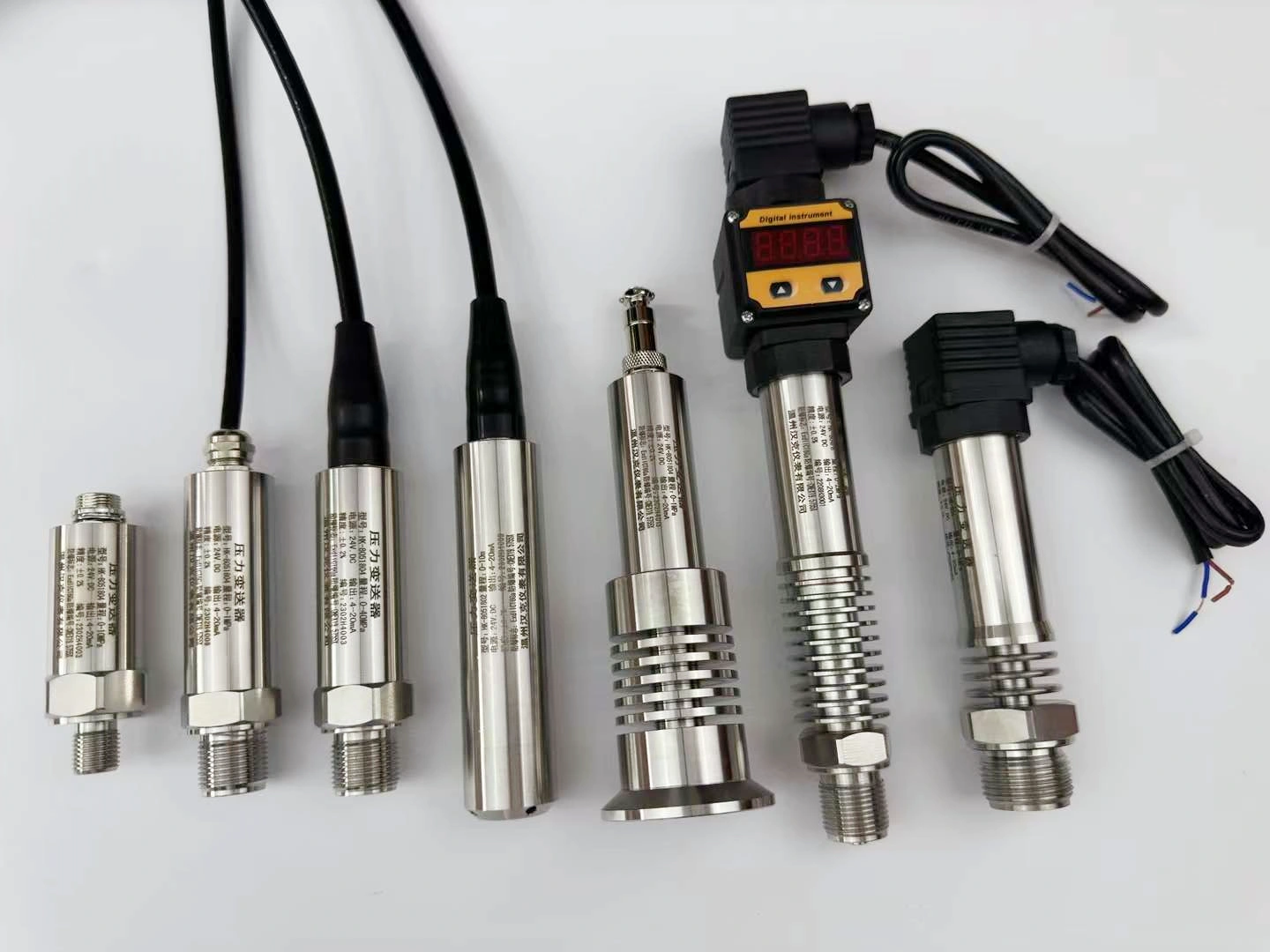
Stainless steel pressure transducers are suitable for detecting air pressure and liquid pressure in harsh media environments. Such as sewage, steam, mildly corrosive liquids and gases, etc. For our stainless steel pressure transmitter, not only the wetted material (measuring diaphragm) is made of stainless steel, but the housing is also made of stainless steel. Can … Read more

    Request For Quote