-1.jpg)
In industries such as chemical engineering, metallurgy, pharmaceuticals, electroplating, and sulfuric acid storage and transportation, sulfuric acid, as a basic raw material, is extremely corrosive. 98% concentrated sulfuric acid is viscous, fuming, and easily releases volatile acid mist. Under certain operating conditions, it is also accompanied by complex conditions such as high temperature and crystallization. Therefore, sulfuric acid storage tank level measurement places stringent requirements on the corrosion resistance, stability, and safety of the equipment.
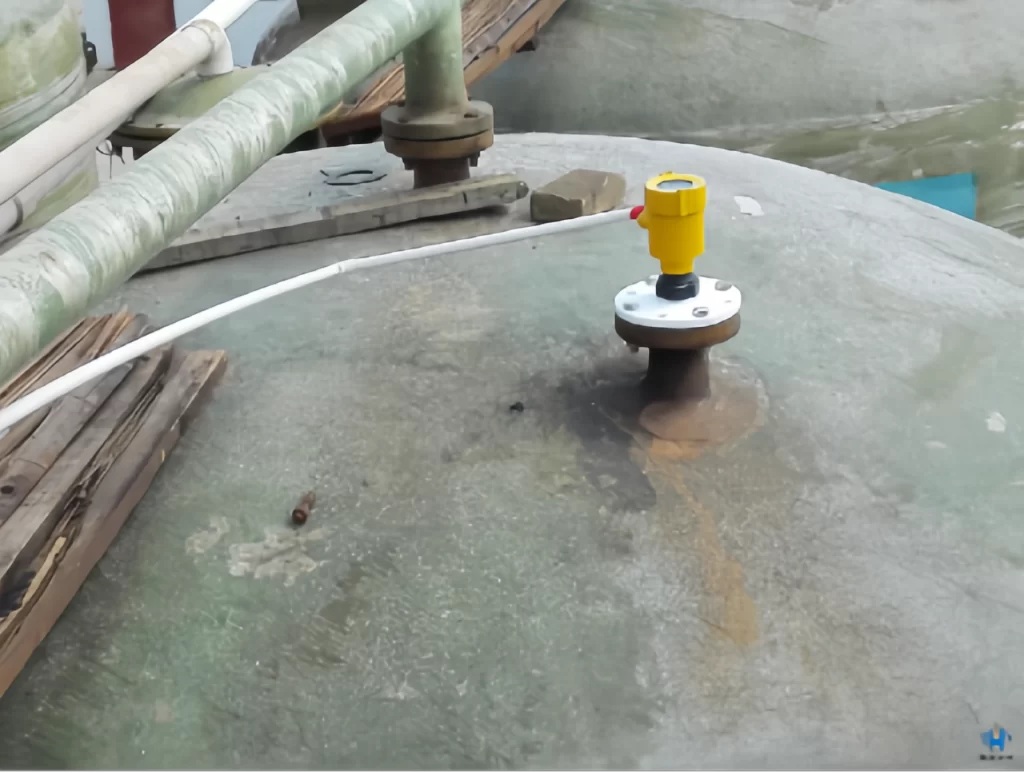
Based on our experience at Sino-Inst, the level gauges available for measuring sulfuric acid storage tank levels include: radar level meters, ultrasonic level transmitters, and corrosion-resistant float level transmitters. Our introduction can help you select a suitable sulfuric acid storage tank level monitoring solution.
Challenges of Sulfuric Acid Storage Tank Level Monitoring
The chemical properties and diverse operating conditions of sulfuric acid determine the core challenges of liquid level measurement, directly affecting the selection and operational reliability of measuring equipment.
Risk of Corrosion by Highly Corrosive Materials:
The corrosiveness of sulfuric acid varies significantly depending on its concentration. Dilute sulfuric acid (concentration <70%) contains a large number of hydrogen ions, exhibiting strong electrochemical corrosion to metallic materials. While 98% concentrated sulfuric acid is weakly acidic, it forms a passivation film with metals such as iron and aluminum, but it has a swelling effect on non-metallic materials (such as ordinary plastics). The acid mist emitted from fuming sulfuric acid (containing free sulfur trioxide) corrodes equipment surfaces and seals, easily damaging conventional liquid level gauge probes.
Measurement Interference Due to Complex Physical Conditions:
High-concentration sulfuric acid (>90%) has high viscosity (approximately 27.7 mPa·s at 20℃), easily adhering to the surface of contact probes, leading to measurement drift. The concentration process of sulfuric acid generates a large amount of acid mist, obstructing optical or ultrasonic signals. Different degrees of foaming occur on the surface of the sulfuric acid during the operation of the sulfuric acid pump. Under certain operating conditions, sulfuric acid may crystallize due to temperature drops (e.g., 65% sulfuric acid crystallizes at approximately -0.7℃), potentially clogging the measuring channel of a contact-type level gauge.
Adaptability requirements for extreme operating conditions:
In chemical production, sulfuric acid is often exposed to high temperatures (e.g., 150-200℃ in waste acid regeneration reactors), negative pressure, or slightly positive pressure environments. Some storage tanks also require explosion-proof features (e.g., when sharing a workshop with flammable raw materials). The level gauge must simultaneously meet multiple performance requirements, including temperature resistance, pressure resistance, and explosion-proof capabilities.
Featured Products
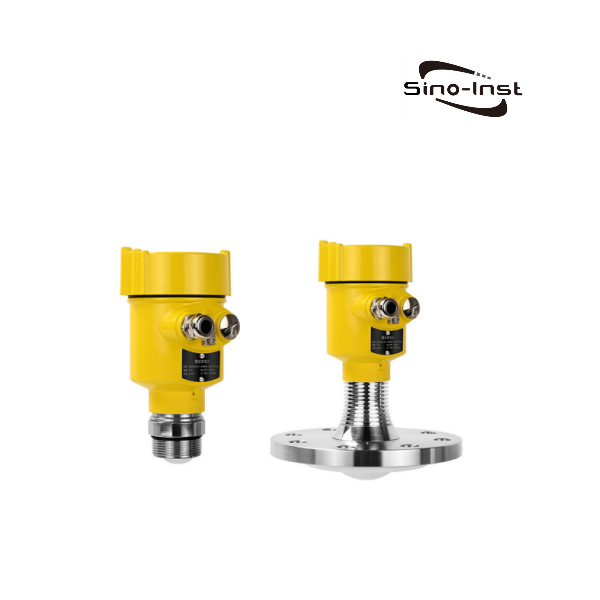
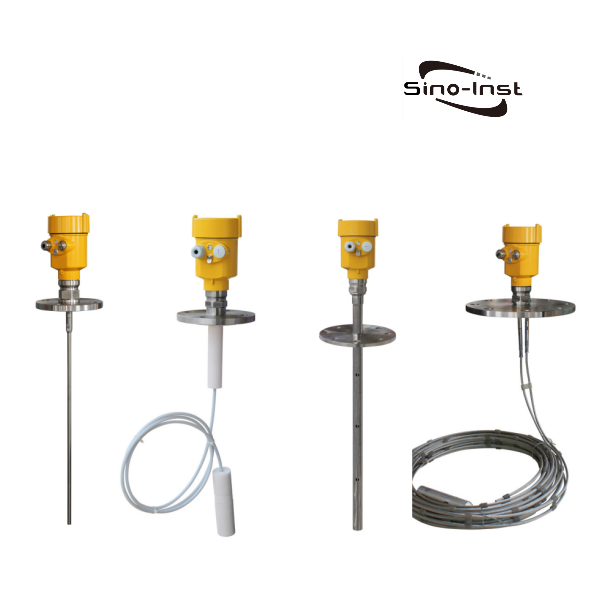
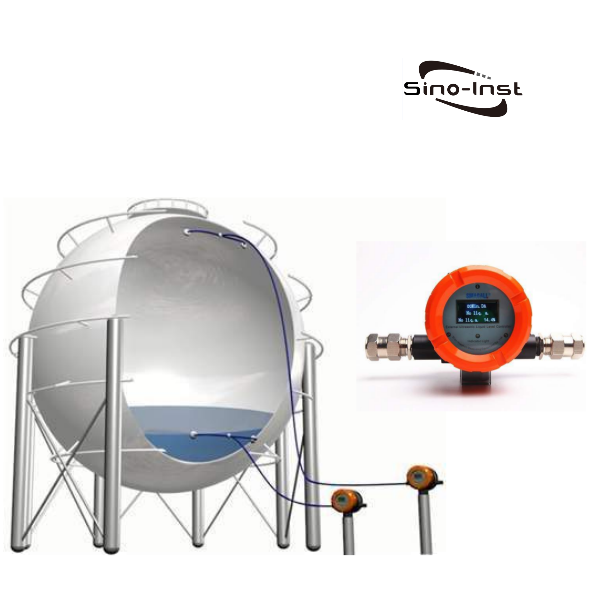
Top Choice: 80G Radar Level Meters
Radar Level Meters emit very narrow microwave pulses that travel at the speed of light through space and contact the surface of the measured medium. A portion of the energy is reflected back and received by the same antenna. The time interval between the transmitted and received pulses is proportional to the distance from the antenna to the surface of the measured medium.
Due to the extremely high speed of electromagnetic wave propagation, the time interval between the transmitted and received pulses is very small (on the order of nanoseconds) and difficult to determine. High-frequency Radar Level Meters employ special correlation demodulation technology to accurately identify the time interval between the transmitted and received pulses, thereby calculating the distance from the antenna to the surface of the measured medium.
Benefits of the 80G Radar Level Transmitter for Measuring Sulfuric Acid Storage Tanks:
- Non-contact Measurement
The radar level sensor is installed on top of the sulfuric acid storage tank or reactor. The antenna has no direct contact with the sulfuric acid medium, fundamentally avoiding corrosion of the probe by the sulfuric acid.
- Corrosion-resistant Materials
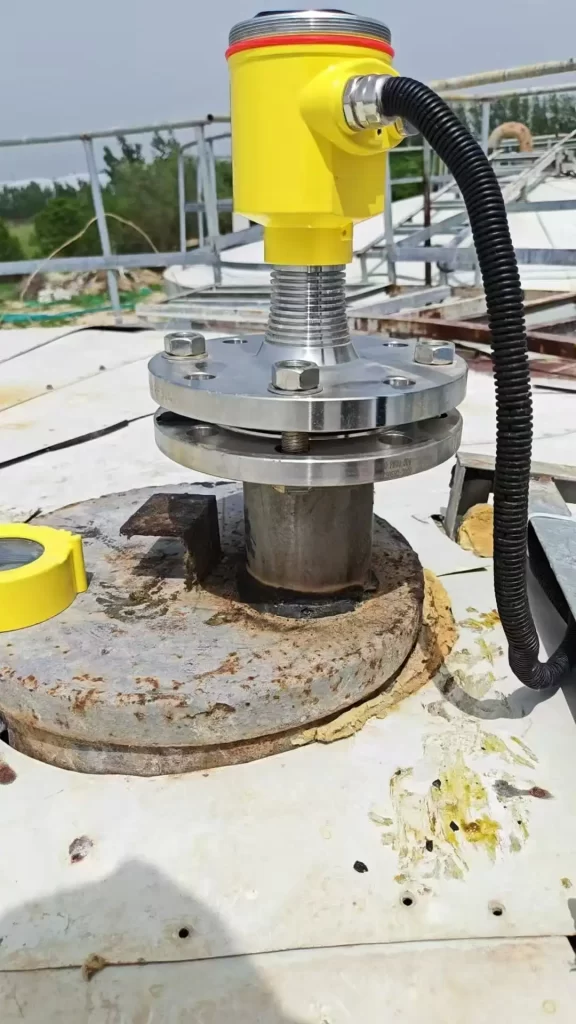
To address the issue of acid mist volatilization, a high-sealing antenna structure (such as a fully sealed metal cavity + PTFE shielding layer) is used to prevent acid mist from entering the sensor and damaging the circuitry.
For dilute sulfuric acid (concentration <70%) and fuming sulfuric acid: PVDF antennas are preferred due to their excellent chemical stability, resistance to corrosion from sulfuric acid of various concentrations, and smooth surface that prevents acid mist residue adhesion.
For 98% concentrated sulfuric acid and high-temperature sulfuric acid (>150℃): Hastelloy C-276 antennas are used. This material exhibits extremely strong corrosion resistance in high-concentration, high-temperature sulfuric acid, preventing softening and deformation of PVDF at high temperatures.
For sulfuric acid containing solid particles (such as metallurgical waste acid): Antennas with anti-scratch coatings (such as PVDF + silicon carbide coating) are used to prevent particle impact and abrasion of the antenna surface.
- Strong Anti-interference Capability
The narrow beam characteristics of high-frequency radar (beam angle ≤3°) can penetrate the acid mist layer on the surface of sulfuric acid to reach the liquid surface directly, avoiding false liquid level readings caused by acid mist reflection. For liquid surface fluctuations that may occur with high-viscosity sulfuric acid, the adaptive filtering algorithm built into Radar Level Meters can filter signal noise. Even if the liquid surface fluctuation amplitude reaches 5cm, the measurement data fluctuation can still be controlled within ±0.5%.
- Large Measuring Range, High Temperature and Pressure Resistance
Industrial-grade sulfuric acid-specific Radar Level Meters can withstand temperatures ranging from -40℃ to 400℃, meeting the temperature requirements of various operating conditions such as sulfuric acid concentration and storage.
Pressure-resistant models can withstand pressures from 0 to 10 MPa, suitable for high-pressure sulfuric acid reactors.
Explosion-proof rating up to Ex d IIC T6, allowing safe operation in flammable and explosive chemical workshops.
Its measuring range covers 0.3m to 150m, suitable for various sulfuric acid containers from small metering tanks (a few cubic meters) to large storage tanks (thousands of cubic meters).
Suitable for sealed tanks: External Ultrasonic Level Meter
Conventional ultrasonic level transmitters are mounted on the top of the tank. Both dilute and concentrated sulfuric acid produce acid mist, which is volatile, and the sulfuric acid pump generates varying degrees of foam on the surface during operation. These factors affect the accuracy of the ultrasonic level meter’s sound velocity measurement.
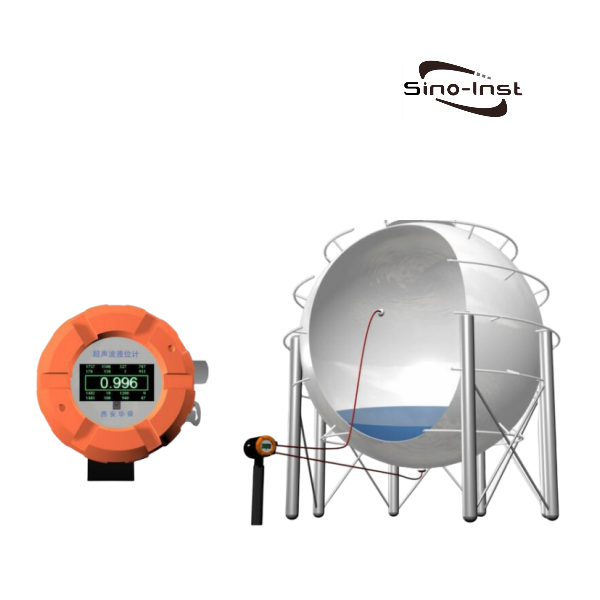
However, Sino-Inst’s external ultrasonic level transmitter can be mounted externally on the bottom of the tank for measurement. No openings are required in the sealed tank, and it is not corroded.
Our external ultrasonic sensors can be customized to meet your needs as continuous level meters or point-measurement level controllers.

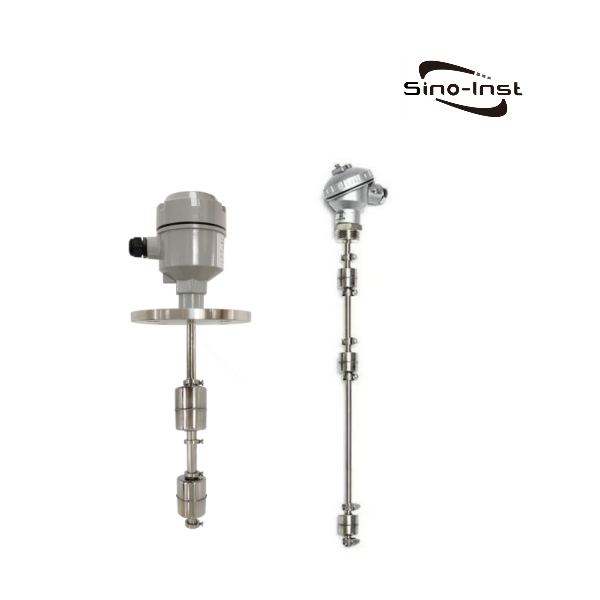
Low Cost: Corrosion-resistant Float Level Transmitter
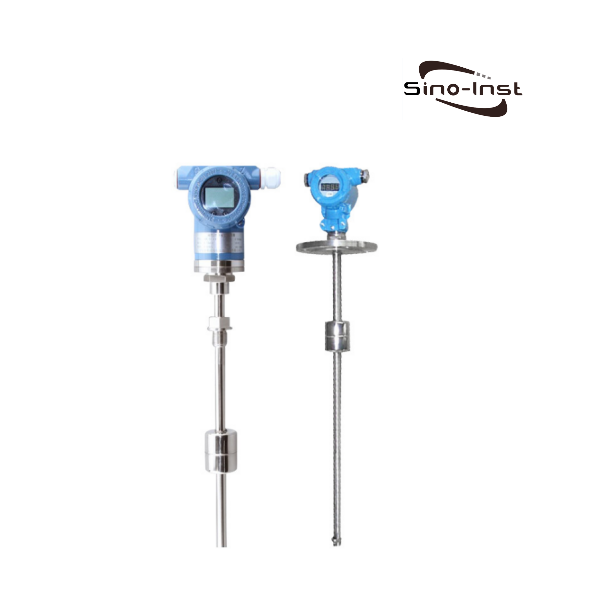
In practice, while radar level meters are effective for measuring sulfuric acid levels, corrosion-resistant float level transmitters are most commonly used for measuring sulfuric acid levels in primary and secondary suction tanks and underground tanks. This is because radar level gauges are relatively expensive, while corrosion-resistant float level gauges offer better value for money.
However, corrosion-resistant float level gauges are rarely used in sulfuric acid storage tank level measurement in sulfuric acid plants. This is because the guide rod of corrosion-resistant float level gauges is prone to bending under the impact of liquid in high-level tanks, making them unsuitable for use in sulfuric acid storage tanks.
Float level transmitters made of corrosion-resistant materials are suitable for small-range measurements. They can also be customized into float level switches.
More Level Measurement Solutions
- Liquid Nitrogen Cryogenic Tank Level Monitoring
- Radar Level Transmitter Working Principle: A Complete Guide
- Radar Level Gauge Guide
- Case Study – Implementing Four-Point Liquid Level Control Using a Float Level Switch
- What Is A Deep Well Water Level Sensor?
- Differential Pressure Level Transmitter: Understanding, Principles and Uses
- Case: Non-Contact Material Level Measurement – Radar Level meter
- Choosing the Right Level Switch for Industrial Applications: A Complete Guide
- What are Capacitive Level Sensors?
In sulfuric acid level measurement, radar level meters effectively solve the measurement challenges posed by the highly corrosive nature of sulfuric acid and complex operating conditions through non-contact measurement, acid-resistant material selection, and strong anti-interference capabilities.
Sino-Inst configures suitable level monitoring solutions based on the user’s sulfuric acid concentration and operating parameters. This enables long-term, accurate monitoring of sulfuric acid levels, providing reliable assurance for process control and safe operation in sulfuric acid production, storage, and transportation.
If you require sulfuric acid storage tank level measurement, please feel free to contact us.