Home > Blog > Analog Sensor vs. Digital Sensor: What’s the Difference?
Analog Sensor vs. Digital Sensor: What’s the Difference?
In industrial automation, sensors play a crucial role. They ensure accuracy, efficiency, and reliability in a wide range of applications. When it comes to sensors, analog and digital sensors are two common types. Each has its own advantages and limitations. They are widely used in various industries and applications.
Understanding the differences between these two types of sensors will help you choose the right sensor for your specific needs.
An analog sensor is a sensor that measures a physical quantity and converts it into a continuous electrical signal. The output of an analog sensor is typically a voltage or current signal.
In other words, an analog sensor produces a continuous analog output signal. An analog signal is a continuous signal; its value changes over time.
These sensors are used in applications that continuously monitor temperature, pressure, and light intensity. Examples include industries such as telecommunications, automotive, and aerospace. Their output signal can be interpreted through the system’s analog input pins. The output of an analog sensor can take any value within a given range.
What Is a Digital Sensor?
A digital sensor is a device that detects a physical quantity and converts it into a digital signal. Digital sensors provide discrete, quantized values, typically represented as “on” or “off” (1 or 0), indicating a “high” or “low” state. This makes them immune to noise and easy to process by computers and microcontrollers.
Digital signals are discontinuous. This makes them immune to noise and easy to process by computers and microcontrollers. Digital signals use discrete pulses to represent data. Digital signals can be transmitted over long distances without losing information or being affected by external interference. Therefore, they are becoming increasingly common in modern communication systems.
Most people prefer to use digital sensors because they are generally much cheaper. Digital sensors are commonly used in applications such as wastewater treatment, water purification, and similar industrial processes. If you are purchasing a digital sensor, the product should include the sensor, transmitter, and cable.
How Do Analog Sensors Work?
Analog sensors work by converting physical variables into continuous electrical signals. This conversion must be performed by the sensor itself. The amplitude of the output signal is proportional to the change in the physical input and varies continuously.
The sensor’s output is a continuous signal. It represents a physical measurement and can take on an infinite number of values within a specific range.
This continuous electrical signal is then processed. In modern systems, it is sent to an ADC to be converted into a digital format. This digital format is then processed by a microcontroller.
How Do Digital Sensors Work?
Digital sensors work by converting physical quantities into digital signals. They typically use ADC to convert analog signals into discrete binary values (1 and 0).
When the sensor detects a physical property, these physical quantities are converted into continuous electrical signals.
Analog Sensors vs. Digital Sensors: A Clear Comparison
Feature
Analog Sensors
Digital Sensors
Output Signal
Continuous
Discrete (Binary)
Data Processing
Requires an analog-to-digital converter (ADC)
Directly compatible
Noise Sensitivity
High
Low
Resolution
High
Resolution is limited by the number of bits in the digital signal.
Response Time
Fast
Uncertain (depending on processing speed)
Power Consumption
Low
High
Cost
Low
High
Typical Applications
Temperature, speed, and pressure
Applications requiring high precision and noise immunity. Applications with direct digital interfaces.
How Do You Determine if a Sensor Is Analog or Digital?
There are many ways to determine whether a sensor is analog or digital. Here are some common methods:
Output Signal. Analog sensors output continuously changing signals, typically voltage or current values. Digital sensors output discrete digital signals, usually transmitted as binary code via communication protocols.
Interface. Analog sensors typically use analog electrical interfaces. Digital sensors use digital interfaces.
Datasheet. The manufacturer’s datasheet is the best source of information. It will specify “analog output” (e.g., 0-5V) or “digital output” (e.g., I2C, SPI, PWM).
External Components. Some sensors require external components, such as analog-to-digital converters to convert analog signals to digital signals.
Application Scenarios. Analog sensors are often used for short-distance transmission, low cost, or simple systems. Digital sensors are suitable for long-distance transmission, high precision, or complex environments.
Analog sensors are widely used in continuous measurement applications. They provide real-time proportional signals.
They are crucial in industrial automation, automotive, and medical devices.
Analog sensors monitor temperature, pressure, flow rate, and liquid level in pipelines and manufacturing processes.
They monitor fuel levels in vehicles.
Analog sensors measure solar irradiance, wind speed, air quality, and water pressure in solar power plants.
They monitor vital signs in patients.
They are used for data acquisition in battery evaluation, displacement measurement, and testing equipment performance.
They detect sound and vibration levels for sound measurement applications.
What Can Digital Sensors Measure?
Digital sensors can measure:
Temperature
Pressure
Humidity
Light
Sound
Motion/Position
Chemical
Magnetic Field
Electrical
Applications of digital sensors include:
Monitoring and controlling temperature, pressure, humidity, sound level, and light intensity
Controlling machine speed, pressure, and flow rate during manufacturing processes
Robot navigation and obstacle avoidance
Monitoring vital signs such as heart rate and body temperature
Tracking air quality and weather conditions.
Advantages of Analog and Digital Sensors
Advantages of Analog Sensors:
High Resolution. Analog sensors output a continuous voltage range, not just 0 and 1. Therefore, virtually unlimited measurement accuracy can be achieved.
Strong Interference Resistance. For example, current-type analog sensors exhibit good resistance to electromagnetic interference during long-distance transmission, reducing signal attenuation and distortion.
Simplicity and Cost. For basic tasks, analog systems do not require internal microprocessors for conversion.
Multi-functional Output. Some analog sensors can directly output standard signals. They also support non-contact measurement, reducing wear and tear.
Fast Response. Analog systems can process signals quickly. Analog signals are not limited by discrete step length, providing virtually unlimited resolution.
Advantages of Digital Sensors:
High Precision. Digital signals are less susceptible to noise and interference.
Intelligent Function Integration. Digital sensors typically feature self-zeroing, self-calibration, and automatic compensation functions. They are directly compatible with PLCs, industrial controllers, and IoT platforms.
Reliability and Durability. Digital sensors maintain reliable operation even in harsh environments. They have strong noise immunity.
Lower Maintenance Requirements. Digital sensors typically include built-in diagnostics and self-calibration functions.
Better Data Transmission. Digital signals can be transmitted over long distances without signal attenuation.
FAQ
The main difference between analog and digital sensors lies in their output signals. Analog sensors output continuous electrical signals, while digital sensors output discrete binary signals (0 and 1).
Analog signals are continuous, capturing data as waveforms, and are easily affected by noise.
Digital signals are discrete, representing data using binary 0s and 1s (on/off).
4-20mA is an analog signal representing a continuous current range in a two-wire loop.
No, digital signals are generally more accurate than analog signals because they are less susceptible to noise and distortion.
Analog sensors are susceptible to noise and interference. Analog signals gradually attenuate during transmission. The signal becomes weaker over long distances.
Digital sensors are more expensive.
Digital sensors consume more power.
Digital sensors have slight measurement delays and limited resolution.
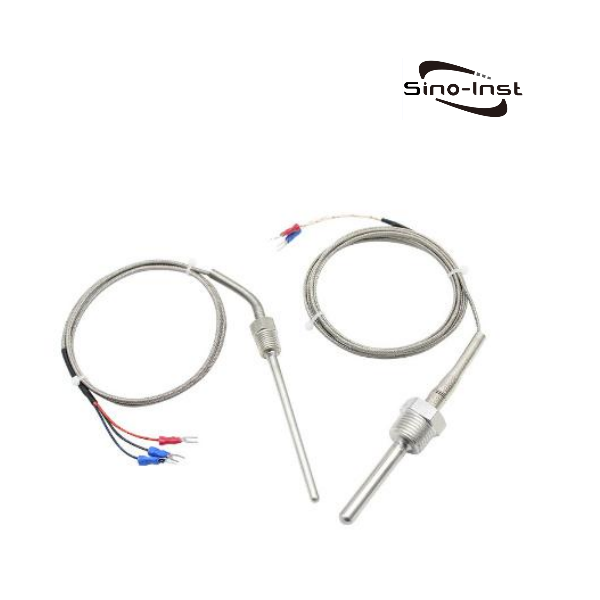
Temperature sensors are among the most common analog sensors, used to measure ambient temperature or the surface temperature of objects. A common type of temperature sensor is the thermocouple. They output a corresponding temperature signal by sensing changes in electrical properties (such as resistance or voltage) caused by temperature variations.
Pressure sensors are widely used in various fields such as ship systems, desalination plants, subsea equipment, and environmental monitoring. These fields are distributed in marine, offshore, and coastal areas. However, seawater is one of the most corrosive natural media because it contains a high concentration of sodium chloride, and chloride ions are highly corrosive. Therefore, … Read more
Previously, we discussed the differences and relationships between Gauge Pressure and Absolute Pressure. Some users have noticed that when purchasing pressure transmitters, there’s also the option of choosing between sealed gauge pressure and gauge pressure. So, what is the relationship between these two, and how should we choose? Gauge Pressure Gauge pressure is a pressure … Read more
Many wells are between 10 and 60 feet deep, while some can reach depths of 1000 feet. Therefore, deep well level sensors are the best choice when customers need to measure water levels in deep wells. Sino-inst deep well level sensors can measure depths up to 6561.68 feet (2000m). These level sensors are inexpensive, versatile, … Read more
Capacitive level sensors are a crucial technology for monitoring the level of liquids and solid powders. Capacitive level sensors are a type of level transmitter that can be used for measuring the level of liquids, oils, and solids. They have no moving parts and are unaffected by water vapor, dust, or condensation. Capacitive level sensors … Read more
The distinction between static and dynamic torque represents a fundamental division in the field of mechanical measurement and engineering. Static torque, often termed reaction torque, pertains to the rotational force applied to an object that does not produce angular acceleration. It is the force of twisting or turning against a fixed resistance. Conversely, dynamic torque … Read more
Pressure switches and pressure sensors are both devices used to detect pressure. However, they differ significantly in their functions, operating principles, and application scenarios. Understanding Pressure Switch vs Sensor can help you choose the most suitable product. First, for us, the main difference between pressure switches and pressure sensors lies in their functions. A pressure … Read more
Water temperature during the production process is an important parameter to monitor. Water temperature sensors are key components in modern industries, automobiles, home appliances, and other fields. Their core function is to accurately sense and feedback temperature information. Sino-inst offers a variety of sensors for measuring water temperature. The electrical signal transmitted from the sensor … Read more
Hydraulic pressure sensors are used to monitor the pressure in hydraulic systems. They ensure the safe operation of the system and provide information for controlling valves. The function of a hydraulic system is to increase force by changing pressure. It uses oil as the working medium. By utilizing the pressure of the oil, it controls … Read more
RTD temperature sensors are small devices. They are commonly used for temperature measurement in a variety of industrial applications. These sensors are more accurate and stable than thermocouples and other temperature probes. They are widely used in various industries, including automotive, aerospace, and food processing. When you need accurate and repeatable temperature readings, Sino-Inst’s RTD … Read more
Digital and analog sensors each have their place in industrial applications. Analog sensors excel in accuracy and continuous measurement. Digital sensors offer higher reliability and are easier to integrate.
By understanding the differential pressure differences between each type of sensor, manufacturers and professionals can make informed decisions.
If you are unsure which sensor is best suited for your application, or what digital sensors we offer, please feel free to contact Sino-inst’s world-class team.