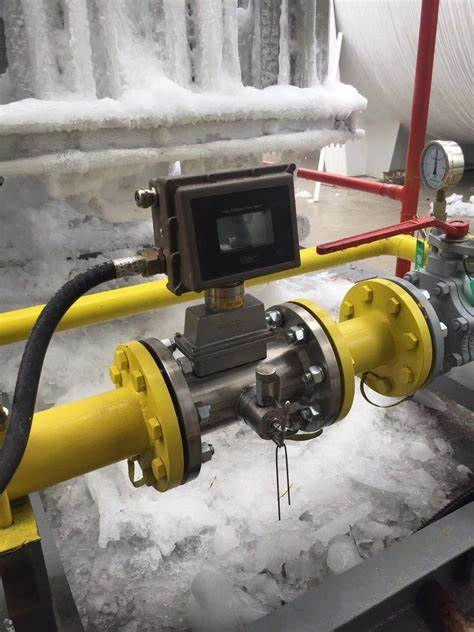
LNG and CNG are different forms of natural gas. In the oil and gas industry, liquefying or compressing natural gas are methods used to improve efficiency. High-precision and stable flow measurement is crucial throughout the production, compression, transportation, and trading of natural gas.
The main difference between LNG (Liquefied Natural Gas) and CNG (Compressed Natural Gas) lies in their storage state and method:
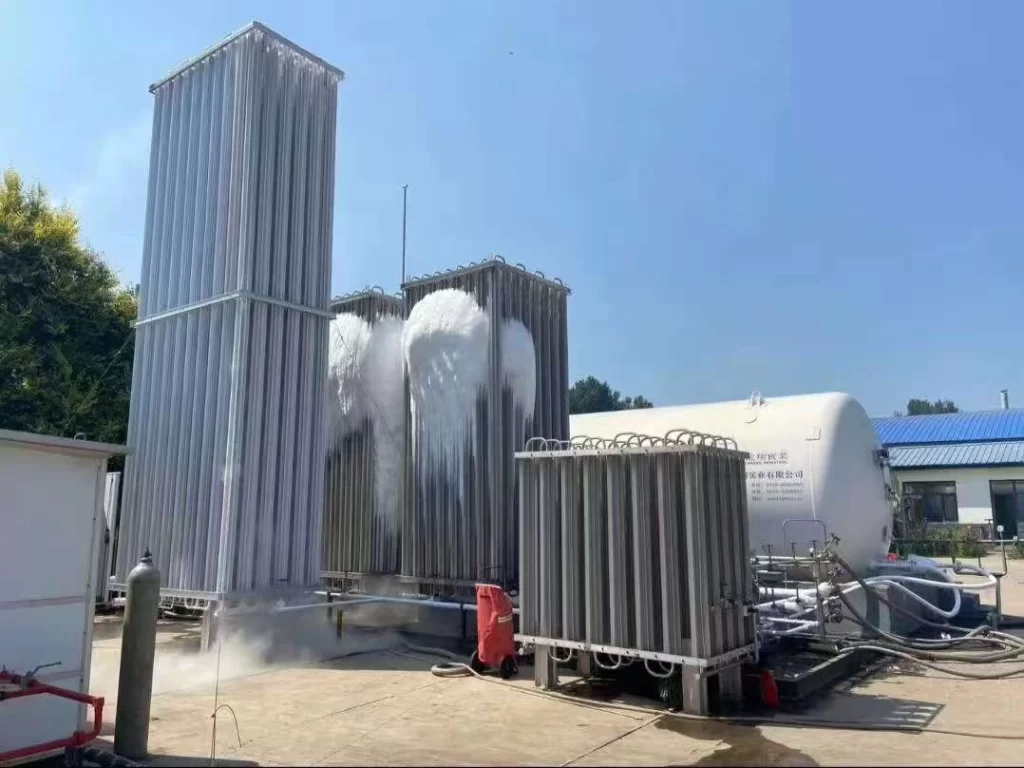
LNG is produced by cooling natural gas to -162°C(-260°F), causing it to liquefy. It is typically stored in cryogenic storage tanks and is suitable for large-scale transportation and applications.
CNG is stored under high pressure, typically 10-25 MPa, in a gaseous state, and is suitable for various applications.
Both have the same main component, methane, but there are significant differences in their storage and transportation methods. LNG saves space and costs during storage and transportation, while CNG is stored at ambient temperature and has a wider range of applications.
Technical Challenges
Extremely Low Temperatures: Especially with LNG, the temperature after liquefaction can drop to -162°C to -196°C. Ordinary flow meters would rupture, freeze, or experience significant drift under these conditions. Specialized cryogenic flow meters are required that can withstand extreme thermal shock.
High Pressure Resistance: CNG is produced by pressurizing natural gas. Therefore, the flow meter needs to be able to withstand high pressure.
High Accuracy and Stability: In LNG/CNG transfer metering, accuracy is crucial. During tanker unloading, even a small error of 0.5% can instantly result in thousands of dollars in losses.
Digital Display and Signal Output: The local digital display on the flow meter allows for faster reading of instantaneous and cumulative flow rates. Transmitting the flow signal to the control room or controller allows for quicker and more convenient monitoring and control of the flow rate.
Sino-Inst Featured LNG & CNG Flow Meters
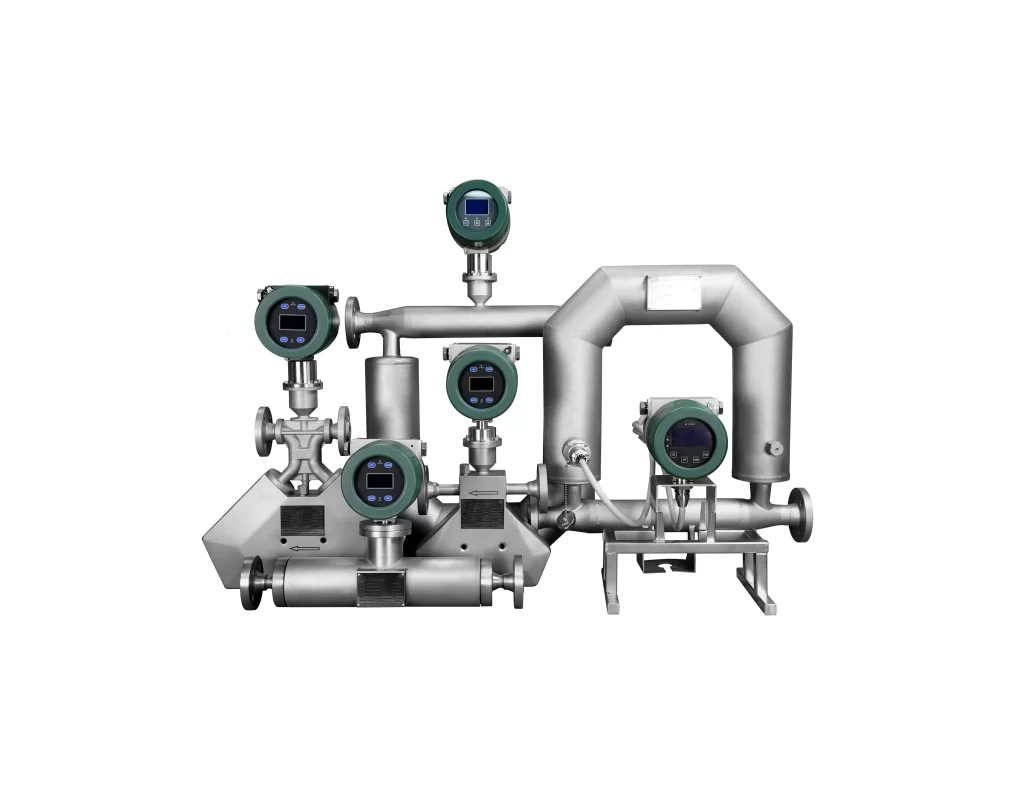
Coriolis Mass Flow Meter – High Accuracy
Coriolis mass flow meters offer the highest accuracy in flow measurement, up to 0.1%, making them the preferred flow meter for trade metering.
For CNG, Coriolis mass flow meters can be customized to withstand high pressure, ranging from 4MPa~10MPa~30MPa.
For LNG, Coriolis mass flow meters can be customized for cryogenic applications down to -200℃.
Furthermore, Coriolis mass flow meters directly measure the mass flow of LNG/CNG, eliminating the effects of fluid volume changes caused by temperature fluctuations, ensuring you only pay for or receive payment for the actual flow in the pipeline.
You not only get mass flow data, but the mass flow meter also simultaneously tracks density and temperature. This reduces the number of sensors you need to install and maintain.
For limited installation space, Coriolis mass flow meters do not require upstream or downstream straight pipe sections. They feature a compact, maintenance-free design, providing accurate metering and custody transfer data.
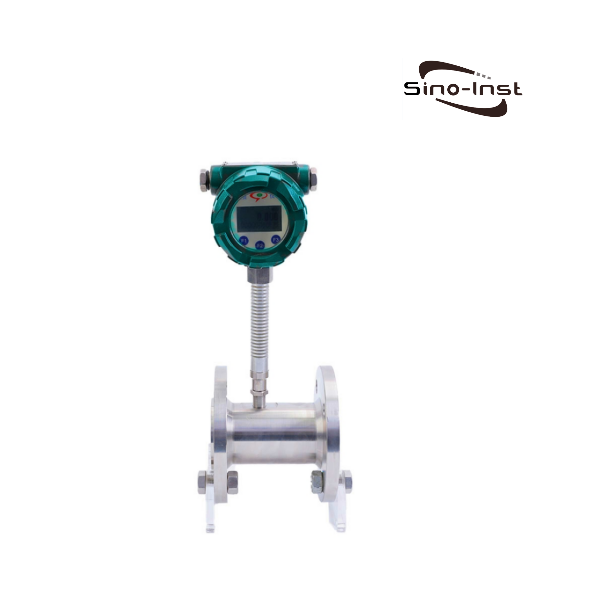
Turbine flow meters are an economical and efficient choice for LNG measurement.
Cryogenic liquid turbine flow meters can meet the low-temperature measurement requirements of LNG at -196℃.
Cryogenic turbine flow meters can provide a measurement accuracy of 0.5%, which meets the measurement needs of most users.
The initial cost of cryogenic turbine flow meters is low, costing only about one-tenth the price of Coriolis mass flow meters.
However, the limitations of turbine flow meters are also quite obvious.
Firstly, there is mechanical wear. Unlike maintenance-free LNG mass flow meters (which have no moving parts), turbine flow meters rely on rotors and bearings for operation. This leads to mechanical wear and requires regular maintenance.
Secondly, there are installation limitations. Turbine flow meters require at least 15DN of straight pipe upstream and 5DN downstream.
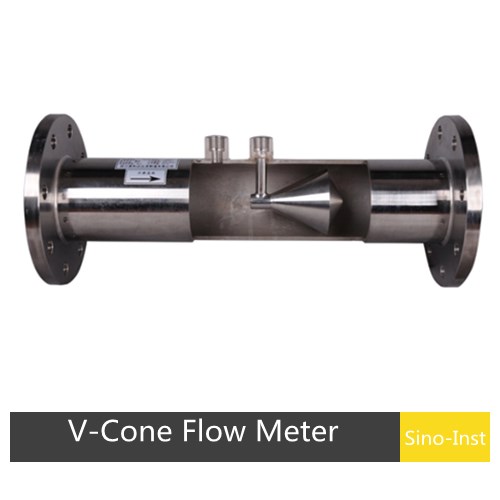
V-Cone Flow Meter – A Good Compromise Option
The V-cone flowmeter overcomes many limitations of traditional differential pressure flowmeters, ensuring stable flow measurement, especially at low flow rates.
The V-cone flowmeter can measure both liquid LNG and gaseous CNG.
It is compatible with dirty media, and can measure even when the gas contains water or the liquid contains gas.
The V-cone flowmeter can be customized for ultra-high pressure levels up to 42 MPa and for extreme temperatures ranging from -200℃ to 700℃.
Most importantly, the V-cone flowmeter is priced lower than Coriolis mass flowmeters but higher than turbine flowmeters. Therefore, the V-cone flowmeter is a compromise solution for the demanding measurement conditions of LNG/CNG.
Why Natural Gas Flow Measurement is Pivotal? Natural gas is a vital energy source, providing electricity to industries, homes, and businesses worldwide. High-precision natural gas flow measurement is essential for…
From extraction to use, natural gas undergoes long pipeline transportation, filtration, storage, and pressure regulation. Monitoring pipeline pressure during these processes is crucial to ensuring proper system operation. Natural gas…
Gas turbine flow meter is a precision metering instrument used for gas flow measurement. Especially in natural gas transportation and trade settlement, the gas turbine flow meter is even more…
Natural gas is a clean energy. The proportion in the energy structure is increasing year by year. The coverage of natural gas is also becoming more and more extensive. Therefore,…
Natural gas is a colorless and odorless hydrocarbon and an important energy source. In the production, transportation, storage, distribution, trade, and factory applications of natural gas, natural gas flow measurement…
Cryogenic Flow Meter can be used to monitor the flow rate of cryogenic fluids. Liquid oxygen, liquid hydrogen, liquid nitrogen, liquid argon, liquid ammonia, and liquefied gas (LNG) are Common…
Customized LNG/CNG Flow Measurement Solutions
At Sino-Inst, we don’t just sell off-the-shelf sensors; we provide high-precision liquefied natural gas (LNG) / compressed natural gas (CNG) flow solutions.
Whether you require specific flange sizes, extreme low temperatures, or ultra-high pressure ratings, we can customize solutions to meet your specific pipeline needs. You can provide us with the following parameters to obtain a solution:
Measured medium
Pipe diameter
Minimum – Normal – Maximum flow rate
Minimum – Normal – Maximum pressure
Minimum – Normal – Maximum temperature
Medium density
Signal output requirements
Accuracy requirements
Installation space limitations
Pressure drop requirements
We have optimized our natural gas flow meter product line to meet the specific needs of global operators, ensuring both product durability and cost-effectiveness. Please feel free to contact us anytime.
Li Rui is responsible for the R&D and design of the company’s automated instrumentation products, leading the development project of the intelligent pressure transmitter. Start with demand analysis and communicate with the market and customers to obtain key parameters, such as measurement range (0 – 10MPa) and accuracy requirements (±0.1%FS).
Responsible for designing hardware circuits, selecting high-performance microprocessors and pressure sensor chips, and building signal conditioning circuits to achieve accurate signal acquisition and processing. On the software side, he wrote C language programs to implement algorithms such as data linearization and digital filtering, ensuring the stability and accuracy of measurement data. After the product was launched, sales reached 5 million yuan in the first year, with positive market feedback, opening up new market areas for the company.