
Case – High Frequency Dynamic Pressure Sensor: 0-200 kHz
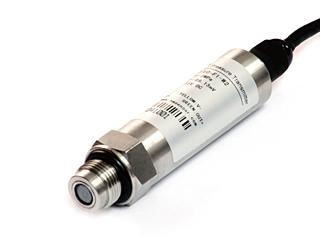
In fields such as military engineering, explosive testing, oil and gas exploration, materials and geotechnical mechanics, trauma medicine, and hydraulic power testing, the precise measurement of high-frequency transient pressure waveforms places stringent demands on the dynamic performance of sensors. The SI-90 high-frequency dynamic pressure transmitter is designed specifically for these applications. Through micromachining technology, it achieves miniaturization of the silicon chip, which possesses ultra-high natural frequency, extremely short rise time, and wide frequency response characteristics. It exhibits excellent elastomechanical properties. And its overall performance surpasses that of piezoelectric dynamic pressure sensors, which makes it a reliable choice for high-precision dynamic pressure measurement.
Case Sharing
A customer from a Chinese university learned about our high-frequency pressure sensors through our website and contacted us to purchase them. The final specifications are as follows:
- High-Frequency Dynamic Pressure Sensor
- SI-90
- Pressure Range: 0-1000 kPa
- Bandwidth: 0-200 kHz
- Output: 0-5 V
- Connection Method: G 1/4 threaded mounting
- Direct cable output
Product Features
- All stainless steel housing, excellent corrosion resistance
- Wide pressure measurement range
- High natural frequency up to 2MHz
- Stable operation and strong anti-interference ability
- Original imported components, reliable performance, small size, light weight, complete range of types, high cost-effectiveness
- Wide range of measurable media
Differences Between High-Frequency Dynamic Pressure Sensors And Ordinary Pressure Sensors
1. High-frequency dynamic pressure sensors have a high natural frequency, ranging from 150KHz to 2MHz. Ordinary pressure sensors typically have a natural frequency less than 10KHz.
2. High-frequency dynamic pressure sensors have a bandwidth of up to 200KHz. Ordinary pressure sensors have a bandwidth of 0-100Hz or lower.
3. High-frequency dynamic pressure sensors have a rise time in the microsecond range, while ordinary pressure sensors have a rise time in the millisecond range.
4. High-frequency dynamic pressure sensors can only measure dynamic pressure, while ordinary pressure sensors can measure static pressure and slowly changing pressure.
Measurement Principle
Our high-frequency dynamic pressure sensor, like most ordinary pressure sensors, uses single-crystal silicon as the sensitive diaphragm, utilizing its piezoresistive effect. Pressure causes microscopic deformation of the material, resulting in a significant change in resistivity. A Wheatstone bridge circuit converts this resistance change into a voltage output.
But why can our high-frequency dynamic pressure sensor achieve high-frequency dynamic measurement? There are three reasons:
1. MEMS technology integrates strain resistors, amplification, and compensation circuits onto the same silicon chip. The sensing element is extremely small (micron-sized), lightweight, and has low inertia, allowing it to quickly follow pressure fluctuations and reduce mechanical hysteresis. Therefore, it possesses good high-frequency response capabilities.
2. The flush diaphragm design exposes the sensing element directly to the pressure field, which eliminates the fluid inertia and damping caused by traditional connecting tubes or cavities.
3. A dedicated high-frequency response signal processing circuit converts the signal from the measuring element into a standard current or voltage output signal.
What Does “High Frequency” Specifically Refer To?
The essence of “high frequency” is that the sensor’s mechanical structure has a high natural frequency, thus supporting a wide usable bandwidth, which ultimately achieves a fast response to rapidly changing pressure signals.
1. Natural Frequency
The natural frequency of a sensor which depends on the physical characteristics of the material and structure of the sensor’s sensing element. It is determined during the sensor chip manufacturing process and cannot be changed by subsequent processing. Therefore, the natural frequency is generally only a physical indicator of the dynamic pressure sensor parameters. The natural frequency determines the upper limit of the sensor’s frequency response and reflects the limit of its mechanical system’s response speed.
2. Bandwidth
Bandwidth refers to the frequency range of pressure signals that the sensor can accurately measure. Engineering requirements dictate that the bandwidth must be less than one-fifth of the natural frequency; therefore, the natural frequency determines the upper limit of the bandwidth. However, the actual bandwidth is the result of design trade-offs, set according to parameters such as accuracy and stability, and is far below the limit. Therefore, when selecting a sensor, one should not only look at the natural frequency, but must also clarify the bandwidth specifications, as this represents the true usable frequency.
Application Scenarios
1. Pressure detection of gas explosions.
Generally used in pipeline gas explosion experiments, the pressure range is typically 0.5 MPa to 10 MPa, varying depending on the amount of gas mixed in the experiment, the explosion space, and the installation location.
2. Underwater explosion experiments.
The sensor is generally installed on the inner wall of the underwater instrument, which exposes the pressure-sensitive element of the sensor to the test environment to monitor changes in water pressure before and after the explosion. Pressure data is collected by using a high-frequency data acquisition instrument, which is reconstructed into a pressure waveform, accurately reproducing the instantaneous pressure changes in the surrounding environment during the explosion.
Similar to pressure detection in such explosion conditions, a high-frequency pressure sensor with a response bandwidth of 0-200 kHz is generally selected. The sensor’s rise time is in microseconds, and the entire experiment is relatively short.
3. Pressure measurement under frequently fluctuating conditions.
For example, pressure measurement in reciprocating pumps or hydraulic presses with frequent pressurization and depressurization cycles. Generally, gas pressure changes more rapidly than liquid pressure. Depending on the actual working conditions, a high-frequency pressure sensor with a suitable bandwidth can be selected.
More Solutions For Pressure Measurement
- High Temperature Pressure Transducers & Cooling Elements
- More Powerful Pressure Transmitter with Diaphragm Seal and Capillary
- Sea Water Resistant Pressure Sensors
- Industrial Smart Pressure Transmitters 4-20mA, HART, RS485 Modbus
- Pressure Sensor Selection: Gauge Pressure vs. Sealed Gauge Pressure
- Top 10 Pressure Transmitter Terminology
- How to Choose the Right Oil Pressure Transmitter for Your Application
- Pressure Transmitter 4-20mA Guide: Testing and Troubleshooting
- High-Temperature Media Pressure Measurement Case: 900-1200°C
- Natural Gas Pressure Transmitters – Selection and Products
- Gas Pressure Measurement for Industrial Tanks and Pipelines
- Industrial Hydraulic Pressure Sensors – Top Guide
Summary: High-frequency dynamic pressure sensors are devices capable of measuring rapidly changing pressure signals. Our high-frequency dynamic pressure sensors can not only capture pressure changes in extremely short periods but also maintain excellent performance in harsh environments with high vibration and shock. If you have any purchasing needs or questions, please feel free to contact our technical staff.