
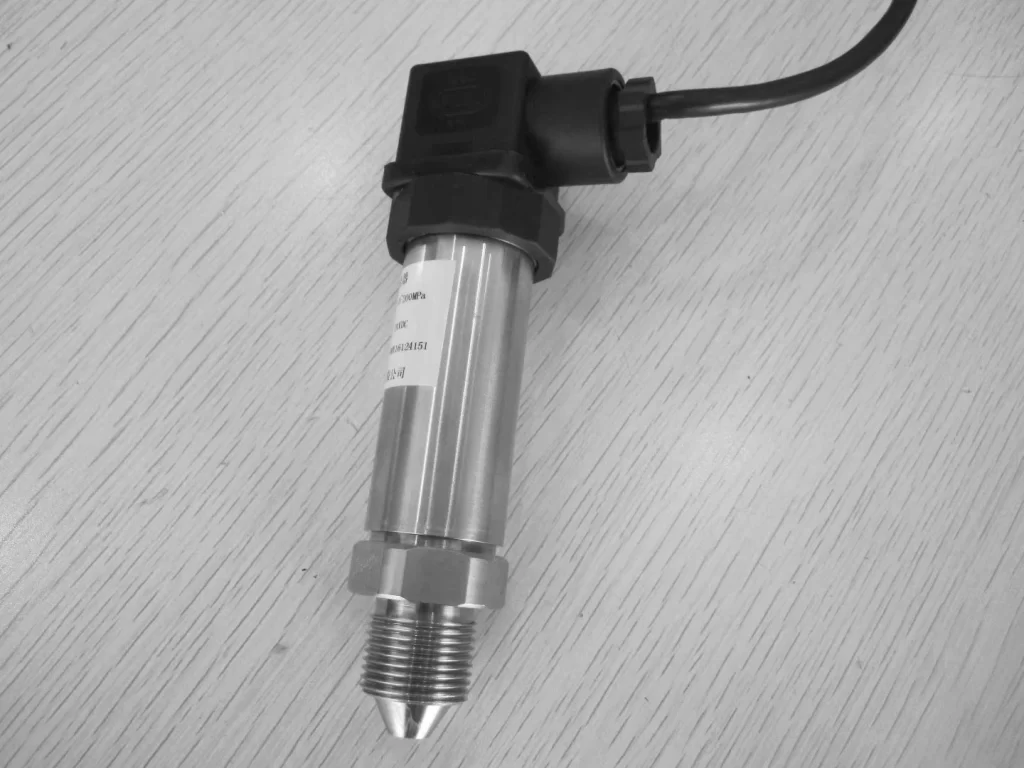
Strain gauge pressure transmitters have good shock resistance and can withstand 100G vibration, making them more suitable for measuring large pressure ranges. They are used in pressure measurement and control in industrial equipment, water pressure testing, building water supply, and hydraulic power stations.
What is Strain Gauge Pressure Transmitter?
Strain gauge pressure transmitters are a type of pressure transmitter that utilizes the “strain effect” of metallic conductors for pressure measurement. From a measurement principle perspective, strain gauge pressure transmitters differ from capacitive and piezoresistive pressure transmitters.
More about: 7 Sensor Principles and 4 Main Types of Industrial Pressure Transmitters!
Strain Gauge Pressure Transmitter Working Principle
A strain gauge pressure transmitter mainly consists of a strain gauge (constantan or nichrome alloy, semiconductor, etc.), a steel/aluminum alloy elastomer, and a signal amplification circuit (adjustable gain).
A strain gauge is a sensitive device that converts strain changes on a measured object into an electrical signal. The most commonly used resistance strain gauges are metal resistance strain gauges and semiconductor strain gauges. Metal resistance strain gauges are further divided into wire strain gauges and metal foil strain gauges.
Strain gauges are typically bonded tightly to a substrate that experiences mechanical strain using a special adhesive. When the substrate is subjected to stress, the strain gauge deforms, changing its resistance and consequently altering the voltage across it.
Strain gauges measure the resistance change caused by the strain of the diaphragm, thus accurately measuring the applied pressure. The resistance change of a strain gauge is usually very small (only a few tenths of an ohm to a few ohms), making direct measurement difficult. A Wheatstone bridge circuit converts this minute resistance change into an easily measurable voltage signal, while also suppressing interference and improving accuracy. The strain gauge’s output signal is amplified and converted into a voltage or current signal, which can be read by a pressure indicator or controller.
The strain effect in the principle of strain gauge pressure transmitters is similar to that in torque sensors.
Benefits of Strain Gauge Pressure Transmitters
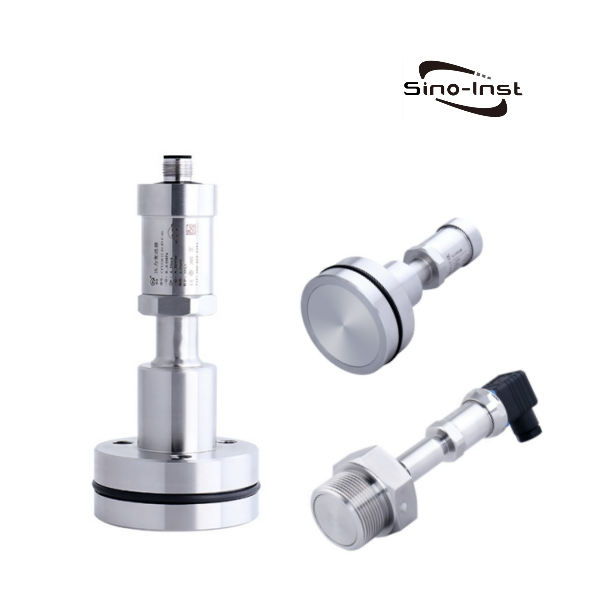
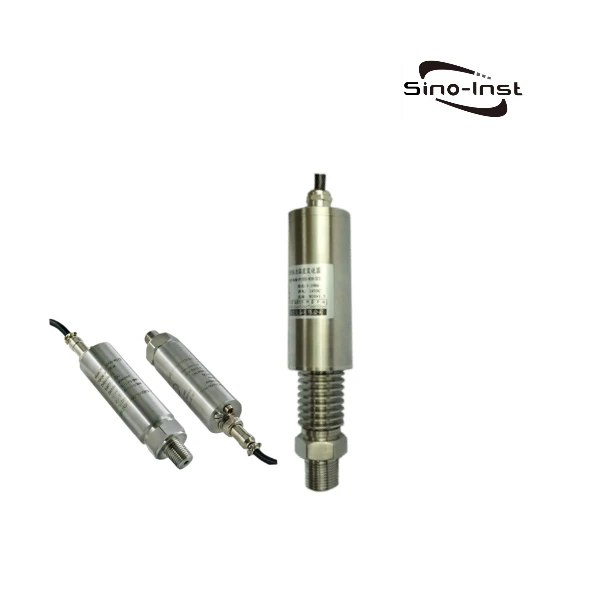
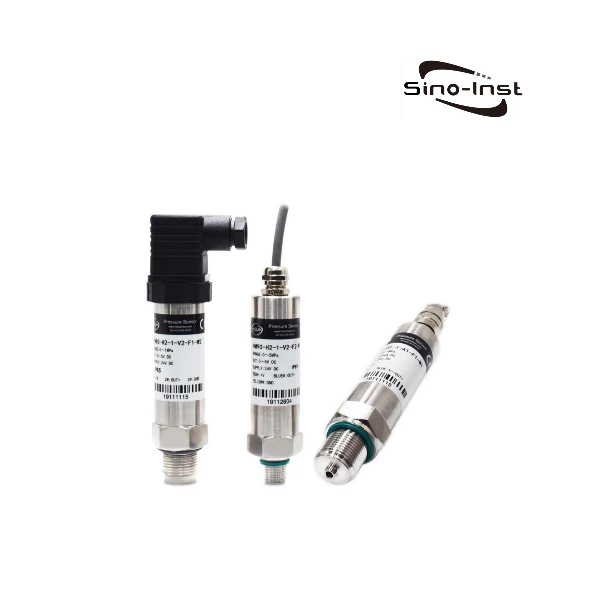
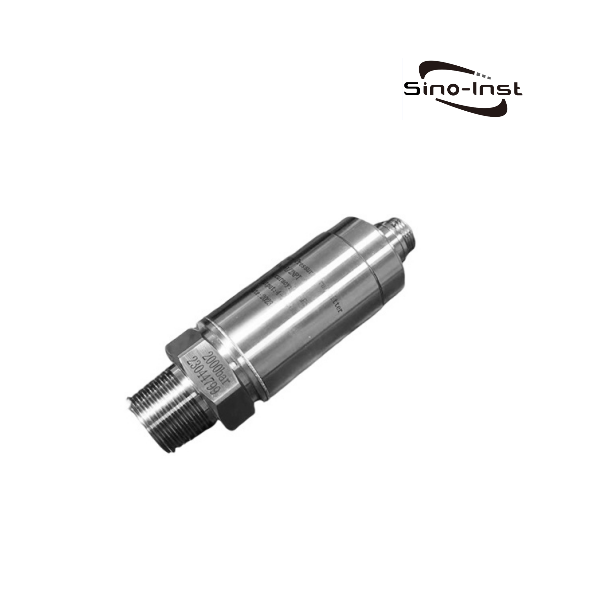
Featured Pressure Transmitters
Pressure Measurement Technology Support
4 Types of Manifolds for Pressure Transmitters
What Is Temperature Compensation in a Pressure Transmitter?
Vacuum Pressure Sensors | Vacuum-Negative Pressure Measurement
G Thread vs NPT for Pressure Transmitters
What is a Dynamic Pressure Sensor? Vs. Static
Pressure Switch vs Sensor What You Need to Know
Customized Case: High Temperature and High Pressure Pressure Measurement -100MPa-700℃
Industrial Analog Pressure Transducers | 4-20mA, 0-5/10V DC
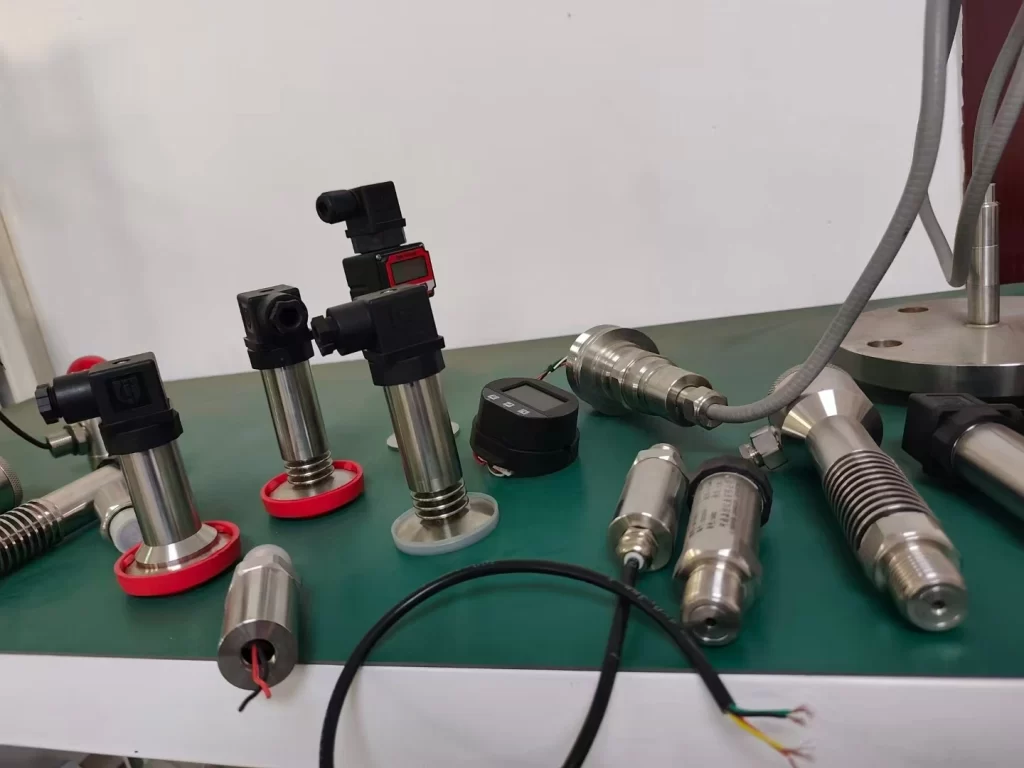
Strain gauge pressure transmitters play a crucial role in pressure measurement, widely used in various industrial equipment and scenarios. They can accurately measure large pressures, such as internal pipeline pressure, internal combustion engine gas pressure, differential pressure, and injection pressure. Furthermore, they are used for measuring pulsating pressure in engine and missile testing, as well as monitoring various fluid pressures.
Sino-Inst supports the customization of high-pressure and high-temperature strain gauge pressure transmitters. Please feel free to contact our sales engineers!

Wu Peng, born in 1980, is a highly respected and accomplished male engineer with extensive experience in the field of automation. With over 20 years of industry experience, Wu has made significant contributions to both academia and engineering projects.
Throughout his career, Wu Peng has participated in numerous national and international engineering projects. Some of his most notable projects include the development of an intelligent control system for oil refineries, the design of a cutting-edge distributed control system for petrochemical plants, and the optimization of control algorithms for natural gas pipelines.