Home > Blog > Sea Water Resistant Pressure Sensors
Sea Water Resistant Pressure Sensors
Pressure sensors are widely used in various fields such as ship systems, desalination plants, subsea equipment, and environmental monitoring. These fields are distributed in marine, offshore, and coastal areas. However, seawater is one of the most corrosive natural media because it contains a high concentration of sodium chloride, and chloride ions are highly corrosive. Therefore, traditional stainless steel materials perform poorly in marine environments. This article aims to introduce our pressure sensor, specifically designed for seawater corrosion resistance.
Case Sharing
A customer from Singapore previously used ordinary pressure sensors to measure seawater pressure. Due to the high salinity of seawater, the 316L stainless steel diaphragm was quickly corroded, causing the pressure sensor to fail. The customer then saw our pressure sensor on our website and contacted us. We customized a pressure sensor for him based on his measurement conditions, with the following specific parameters:
One of the pressure sensors uses the titanium alloy for both the housing and diaphragm. In seawater, titanium is much more corrosion-resistant than stainless steel. Titanium alloys possess characteristics such as high specific strength, excellent corrosion resistance, and good high-temperature performance.
In common perception, metals are highly susceptible to rusting and corrosion in humid environments, as if this were an inherent “destiny” for metals. However, titanium alloys break this convention. Titanium is almost unaffected by corrosion in seawater or acidic environments, and even after being buried underground for decades, it can still remain bright and shiny, as if “refusing to participate in the chemical reactions of nature.” The key to the titanium alloy’s excellent corrosion resistance lies in its unique protective oxide film mechanism. Furthermore, it is worth noting that although the density of titanium alloy is only 60% of that of steel, its strength is comparable to that of steel.
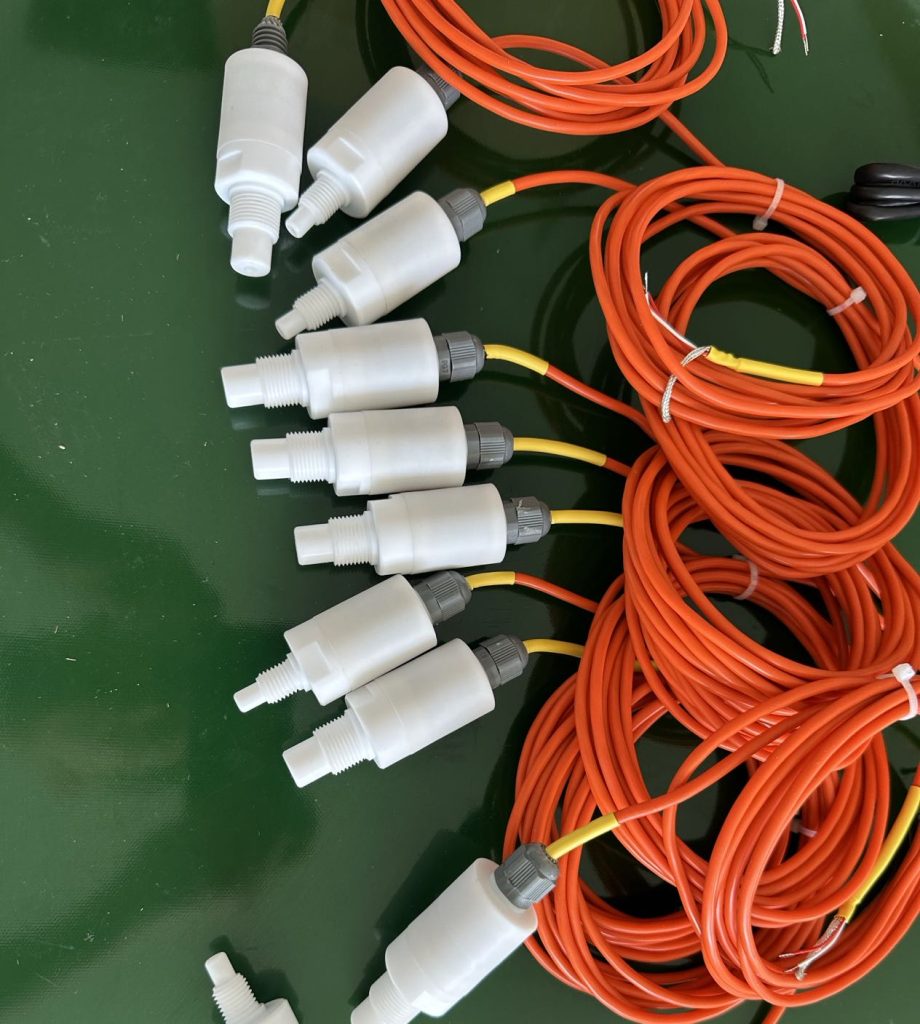
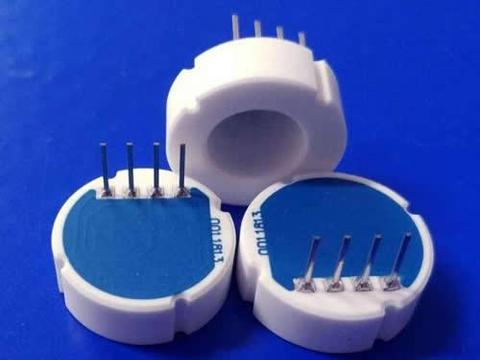
Another type of pressure sensor uses polytetrafluoroethylene (PTFE) for its casing and alumina ceramic as the diaphragm. PTFE is famously chemically inert – it’s virtually impervious to strong acids, strong bases, and organic solvents. The fundamental reason for this is the exceptional strength of its carbon-fluorine bonds, which are among the strongest single bonds in organic chemistry, making the entire molecule very stable.
Aluminum oxide ceramic (Al2O3) derives its corrosion resistance primarily from its unique physicochemical properties and structural characteristics. High-purity aluminum oxide hardly reacts with strong acids, strong bases, and organic solvents, and may only be corroded in hydrofluoric acid and high-temperature concentrated alkalis. Well-sintered aluminum oxide ceramics have extremely low porosity (<1%), effectively preventing the penetration of corrosive media and avoiding internal corrosion. Aluminum oxide ceramics are irreplaceable in combined “high corrosion + high temperature + wear resistance” working conditions, especially in industrial equipment requiring long-term stability. Although new materials (such as silicon nitride and silicon carbide) can replace it in some areas, aluminum oxide remains the mainstream choice for corrosion-resistant applications due to its cost advantage, mature technology, and comprehensive performance.
Applications
1. Seawater Desalination Entering the 21st century, the freshwater crisis is increasingly affecting the production and development of many countries. Solving the freshwater crisis, seawater desalination will be an effective way. Converting saltwater into freshwater is usually done through high-pressure reverse osmosis. These systems require continuous pressure from the pump system to maintain membrane health and maximize system efficiency. Therefore, continuous monitoring of pressure by pressure sensors is important in seawater desalination systems.
2. Marine Systems Pressure sensors are very useful in ship ballast water management, monitoring tank liquid levels, inflow and outflow rates, and system pressure, allowing crew members to adjust the draft in real time. They are equally crucial in seawater cooling systems for engines or industrial equipment—continuously monitoring pipe pressure to ensure stable operation of the main engine.
3. Subsea Equipment Control systems for aquaculture facilities require accurate water pressure data, and our sensors are perfectly suited for this purpose. They are even more critical in deep-sea oil and gas production: monitoring wellhead pressure 24 hours a day to ensure safe production and pipeline integrity.
Industrial smart pressure transmitters are microprocessor-based high-performance transmitters. With flexible pressure calibration function. Instrument equipment commonly used in industrial process control can convert fluid or gas pressure into standard analog signals (such as 4-20mA) or digital signals (HART, RS485) and output them to the control system. What is a smart pressure transmitter? Smart pressure transmitter … Read more
Previously, we discussed the differences and relationships between Gauge Pressure and Absolute Pressure. Some users have noticed that when purchasing pressure transmitters, there’s also the option of choosing between sealed gauge pressure and gauge pressure. So, what is the relationship between these two, and how should we choose? Gauge Pressure Gauge pressure is a pressure … Read more
Behind every aspect of industrial process monitoring and control lies an indispensable “invisible hero”—the pressure transmitter. The performance of a pressure transmitter determines safe operation and production efficiency. Chemical plants rely on pressure transmitters to prevent pipeline leaks, and automobile manufacturing depends on hydraulic systems for precise control of robotic arms. However, the densely packed … Read more
In industrial applications, there are many methods for measuring and monitoring liquid levels. For measuring liquid levels in open and pressurized tanks, engineers typically choose differential pressure level transmitters. This is a well-established technology. The liquid level is calculated by measuring the pressure difference between the liquid and gas phases of a fluid within a … Read more
What Is an Oil Pressure Transducer? Oil pressure transmitters are devices that measure the pressure of oil in pipes and engines. They play a vital role in keeping machines running smoothly by detecting any changes in oil pressure. A well-chosen oil pressure transmitter helps prevent damage to equipment, reduces downtime, and ensures safety. Picking the … Read more
What is a pressure transmitter 4-20mA? A 4-20mA pressure transmitter is an instrument that measures medium pressure and converts it into a 4-20mA current output signal. In industrial processes, the most common method for transmitting analog signals is using a 4-20mA current loop. The signal is transmitted to a remote control panel for pressure monitoring … Read more
A high-temperature pressure sensor is an instrument that accurately measures the pressure of high-temperature media. It converts pressure into an electrical signal and maintains stable operation even at high media temperatures. Industries like steelmaking, chemicals, and petroleum are essential, as a failure could lead to production halts. Therefore, it is crucial. Customized Case Sharing A … Read more
From extraction to use, natural gas undergoes long pipeline transportation, filtration, storage, and pressure regulation. Monitoring pipeline pressure during these processes is crucial to ensuring proper system operation. Natural gas pressure transmitters are designed to accurately measure a variety of gas pressures. Low and high pressures, gauge pressure, absolute pressure, and differential pressure can all … Read more
Gases are important raw materials in industrial production and laboratories. Such as oxygen, nitrogen, hydrogen, and natural gas. Gases are generally stored and transported in tanks and delivered through pipelines. Monitoring gas pressure during transportation and production helps ensure safe operations and reduce production costs. How do you measure gas pressure? What devices are needed … Read more
Hydraulic pressure sensors are used to monitor the pressure in hydraulic systems. They ensure the safe operation of the system and provide information for controlling valves. The function of a hydraulic system is to increase force by changing pressure. It uses oil as the working medium. By utilizing the pressure of the oil, it controls … Read more
Pressure measuring devices are industrial automation instruments used to measure the pressure of gases, liquids, or steam. They are widely used in various industrial production process control, machinery equipment status monitoring, scientific research, and other fields. Learning about common industrial pressure measuring devices can help you choose the most suitable product. Pressure Measuring Devices Types … Read more
Industrial liquid oxygen is a colorless and odorless liquid oxygen with low temperature and flammable properties. In the fields of petroleum, chemical industry, and medical treatment, liquid oxygen is widely used in the production process. Its leakage may cause serious harm to operators and equipment. Real-time monitoring of the pressure of liquid oxygen tanks and … Read more
Summary: Our pressure transmitters are custom-designed for marine environments. Simply put, they can withstand being submerged directly in seawater. Critical components can be made from titanium alloy, ceramic, PTFE, or Hastelloy – all proven materials resistant to seawater corrosion. Ordinary stainless steel is prone to pitting and crevice corrosion in seawater and will fail quickly. Our material selection avoids these problems, ensuring accurate and reliable long-term performance. The specific material depends on your actual operating conditions. Send an email to our technical team, and we’ll provide you with a tailored solution.