
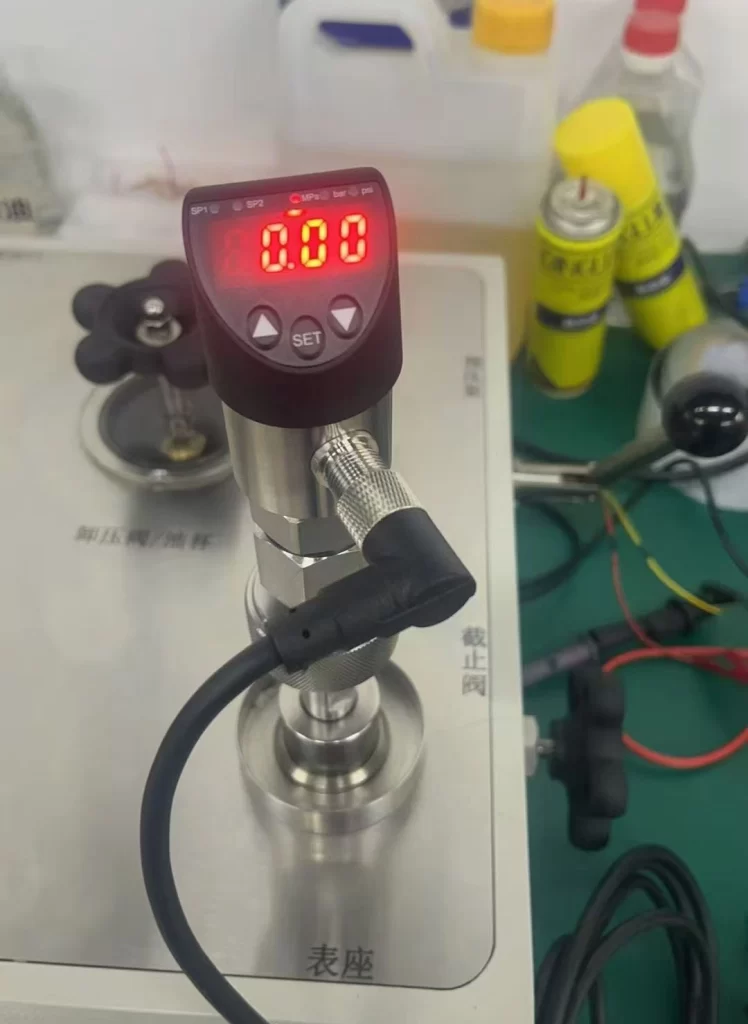
What Is a Pressure Switch?
A pressure switch is a specialized instrument for pressure measurement and control. Pressure switches can be electronic or mechanical. Based on a preset pressure value, they can open or close the corresponding switch contacts when the pressure is reached.
Pressure switches, like pressure transmitters, are essential instruments in industrial processes. However, the two should not be confused. Therefore, you may want to read this article before purchasing or using a pressure switch.
Pressure Switch Working Principle
Pressure switches operate mechanically or electronically and open or close switch contacts based on the measured medium pressure.
Pressure switches typically consist of a sensing element (such as a diaphragm, bellows, etc.), a switching element (such as a microswitch, magnetic switch, etc.), and an adjustment mechanism.
The sensing element is responsible for sensing changes in external pressure and transmitting these changes to the switching element to activate it; the adjustment mechanism is used to set the pressure values for activation and deactivation.
Mechanical pressure switches are based on mechanical measurement systems such as Bourdon tubes, diaphragm elements, or diaphragm piston systems. The measuring element triggers the mechanical switch contacts in the pressure switch. Upon switching, the mechanical pressure switch sends an electrical signal.
Electronic pressure switches convert the measured pressure into an electrical signal. When the preset pressure is reached, the circuit opens or closes. Functions such as delay, switching point, reset point, and hysteresis can be programmed. The switching point and output signal can be adjusted. Electronic pressure switches can also provide a continuous pressure display for monitoring the switch output, and can therefore also be used as a digital pressure gauge.
The symbol for a pressure switch typically includes a circular or rectangular frame containing wavy lines or arrows representing pressure, and a pair of normally open (NO) or normally closed (NC) contacts. These contacts represent the electrical connection state of the pressure switch under different pressure conditions.
Specifically, the wavy lines or arrows in the symbol usually point in one direction, indicating the direction of pressure application; while the normally open and normally closed contacts are labeled “NO” and “NC” respectively, to distinguish their initial state when no pressure is applied.

Pressure switches commonly use normally open (NO) and normally closed (NC) relay contacts, and PNP output.
Relay – The contacts are passive and non-polarized. The two contact wires can be connected arbitrarily; simply select either the normally open or normally closed contact.
PNP Output – This is an active output and is polarized. When the switch is activated, it outputs 24VDC; when the switch returns to its normal state, it outputs 0V. It can be directly connected to the coil of an intermediate relay.
Featured Pressure Switches
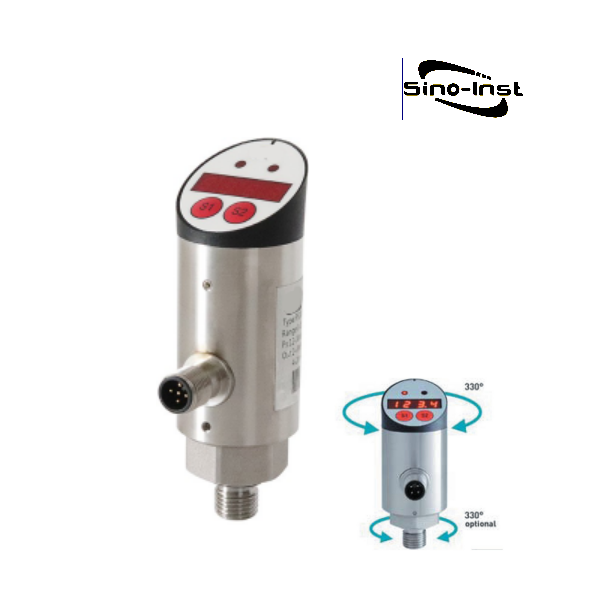
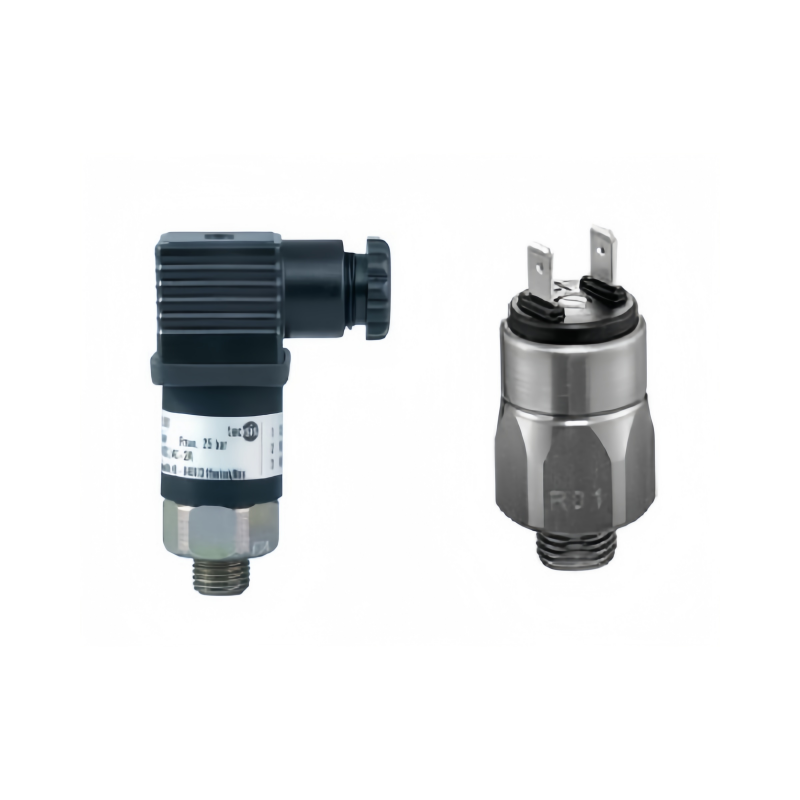
What Does a Pressure Switch Do?
The main functions of a pressure switch are protection, alarm, and control. When the pressure in a system or equipment reaches a preset value, the pressure switch automatically activates, ensuring the safety of pumps, compressors, and engineering machinery.
In air conditioning systems, pressure switches monitor refrigerant pressure to ensure the system operates within a safe range.
In automotive engines, pressure switches monitor oil pressure to prevent mechanical damage caused by insufficient oil pressure.
In air compressors, air is pumped into the system. When the pressure reaches the set value, the pressure switch closes the contacts, stopping the motor. When the pressure drops below the set value, the air compressor restarts, maintaining the pressure in the tank within the desired range.
Pressure vessels or pipelines have a maximum pressure limit. The pressure switch can act as a pressure limiting sensor, with its set point below the pressure vessel’s maximum allowable pressure. When the pressure is too high, the switch activates, opening valves or other pressure relief devices to provide protection.
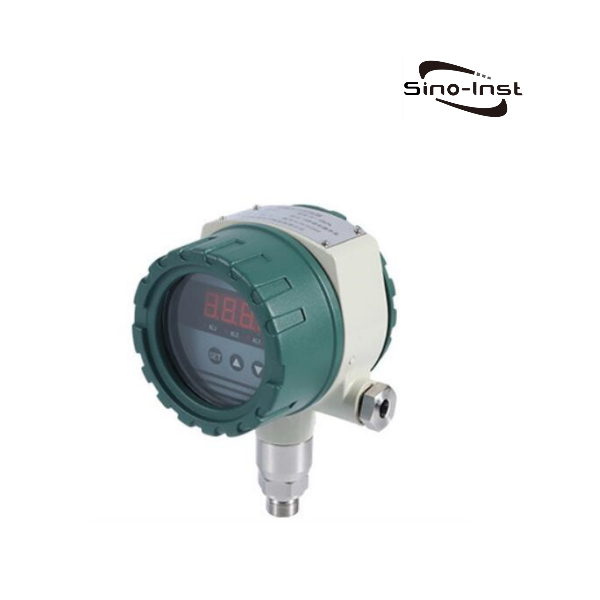
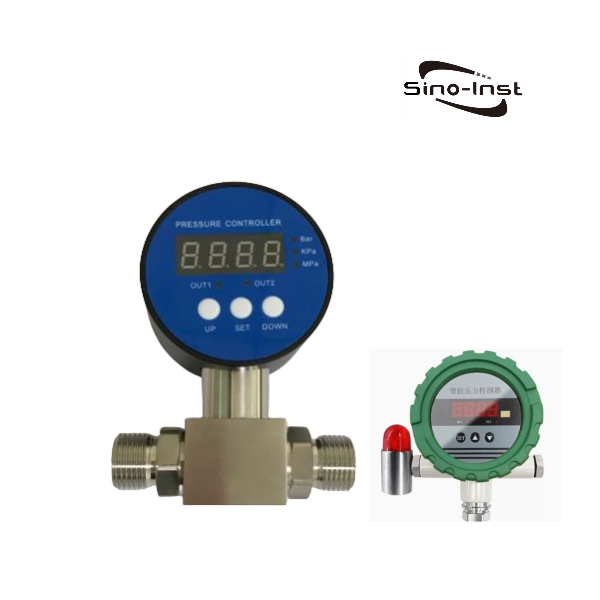
Pressure switches can be used in conjunction with on-site flashing alarms. When the pressure is too high or too low, the switch activates, and the alarm alerts on-site operators.
In fire protection systems, low-pressure switches monitor the pressure in the fire pump discharge manifold, triggering pump start and stop; wet alarm valve pressure switches activate alarm devices.
Industrial equipment (such as water pumps and boilers) uses pressure switches to achieve unattended start and stop, improving system reliability.
Pressure Switch Types
We classify and describe pressure switches based on their different operating principles and characteristics.
Based on different operating principles, pressure switches can be divided into mechanical and electronic types.
Mechanical Pressure Switches
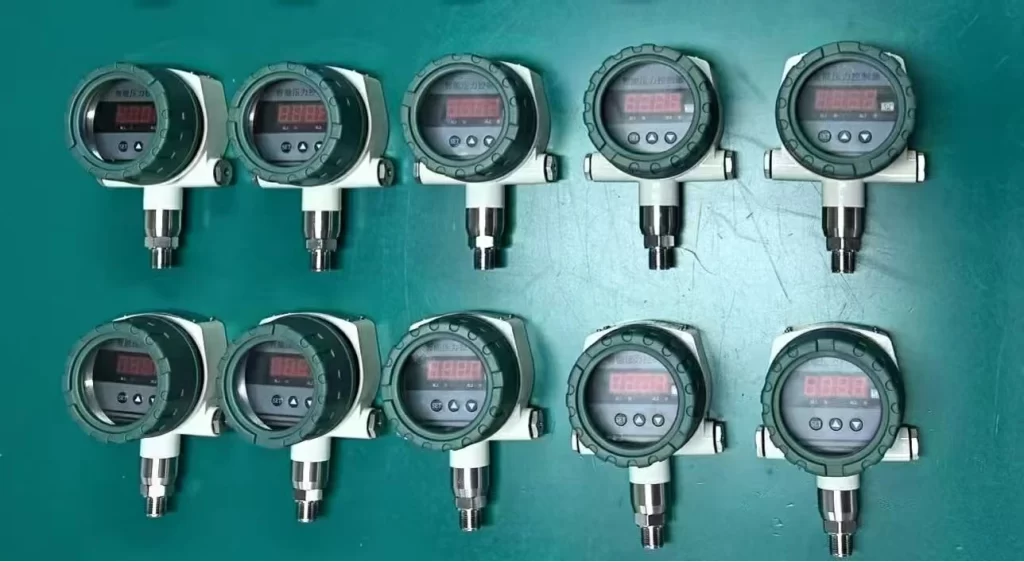
Mechanical pressure switches sense changes in the pressure of the measured medium and use a mechanical structure to activate and deactivate the switch. They typically offer high reliability and durability, making them suitable for harsh working environments.
Electronic Pressure Switches
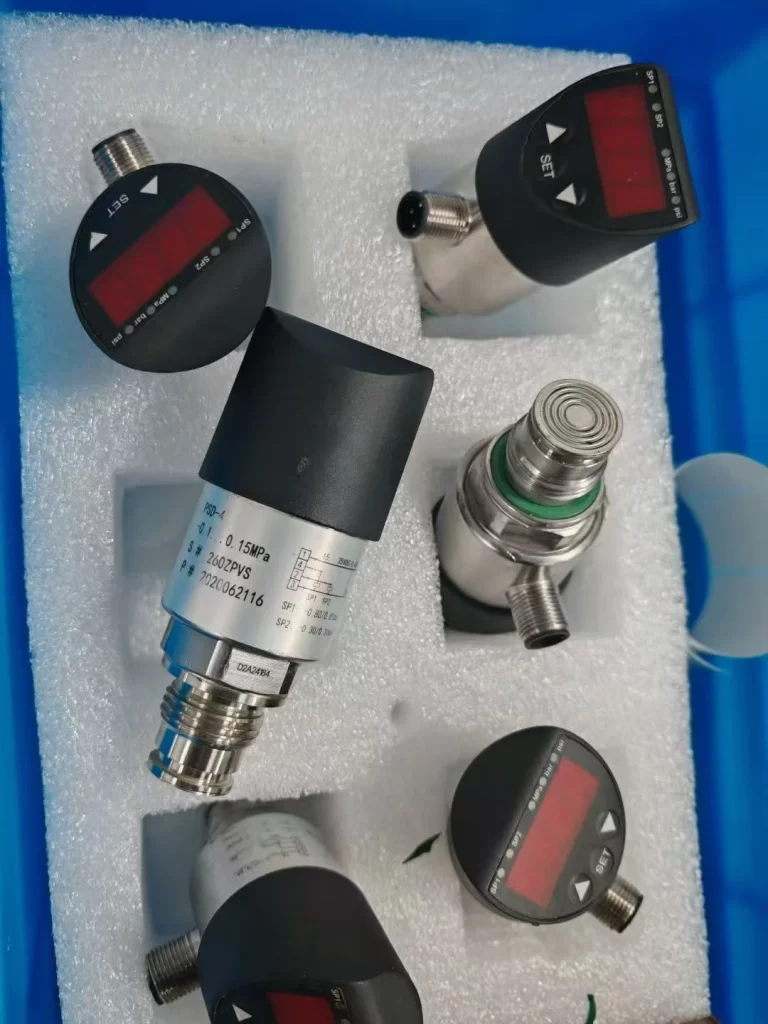
Electronic pressure switches use sensors to convert pressure signals into electrical signals, and then use circuitry to activate and deactivate the switch. They generally offer higher accuracy and sensitivity, making them suitable for applications requiring more precise control.
Digital Pressure Switches
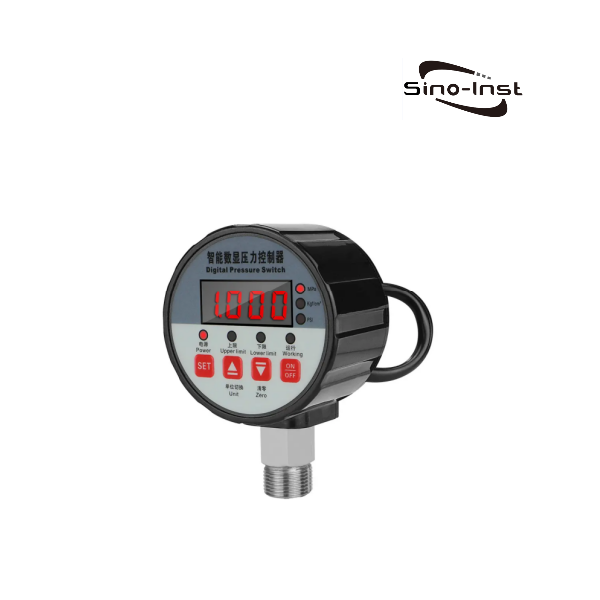
Digital pressure switches are a modern type of pressure switch that utilizes digital display and control. They provide more accurate pressure measurement and more precise control.
Digital pressure switches are available in adjustable and non-adjustable formats. They offer greater flexibility and the ability to program various functions, easily adapting to the requirements of any specific application.
Based on the type of pressure measured, we have standard pressure switches, differential pressure switches, and vacuum pressure switches.
Differential Pressure Switches
Differential pressure switches are a special type of pressure switch used to measure differential pressure in fluids. They determine the differential pressure by comparing the pressure at two different locations and control the switch state accordingly.
Vacuum Pressure Switches
Vacuum pressure switches are used to sense pressure changes in a vacuum. A preset point is determined, and once this point is reached or exceeded, the vacuum switch will open or close the electrical connection.
Similar to standard pressure switches, vacuum switches can be used in a variety of industrial environments. This includes typical applications such as manufacturing, processing, and automation control, as well as pneumatic and hydraulic systems. Digital vacuum switches and adjustable vacuum switches are also available.
Based on the reset method, there are manual reset and automatic reset pressure switches.
Manual Reset Switches
Manual reset pressure switches require manual restarting after the system is shut down. This safety feature prevents the equipment from starting automatically after a pressure shutdown. You must press a button to restart the equipment.
Automatic Reset Switches
Automatic reset switches automatically return to normal operation after the pressure returns to normal, without any human intervention. Some models allow you to switch between manual reset and automatic reset modes as needed.
Common Applications of Pressure Switches

Pressure Switch Selection
When adding or replacing a pressure switch, the following parameters need to be considered:
- The pressure range: When selecting a pressure switch, you need to determine the pressure range you will be measuring to ensure it operates correctly within the intended range.
- The operating temperature: Understand the temperature environment in which you will be using the pressure switch and select a product with an appropriate operating temperature range to ensure it functions correctly within the expected temperature range.
- The application type: Determine your application scenario; different application scenarios may require different types of pressure switches, such as vacuum pressure or differential pressure.
- The overload capacity: Select a pressure switch with sufficient overload capacity to handle potential pressure fluctuations or instantaneous pressure peaks.
- The sensitivity: Choose the appropriate sensitivity based on your needs; higher sensitivity results in a faster response time of the switch.
- The mounting method: Understand what type of mounting method your system requires. Common mounting methods include threaded mounting, flange mounting, and bracket mounting.
- Special parameters, such as explosion-proof requirements and digital display.
FAQ
More Pressure Measurement Solutions
Pressure switches are essential control instruments in many industrial processes. They are used to monitor and control fluid pressure, ensuring the safe and stable operation of the system.
We at Sino-Inst manufacture and supply a variety of mechanical and electronic pressure switches. If you require customized specifications, please feel free to contact us!

Wu Peng, born in 1980, is a highly respected and accomplished male engineer with extensive experience in the field of automation. With over 20 years of industry experience, Wu has made significant contributions to both academia and engineering projects.
Throughout his career, Wu Peng has participated in numerous national and international engineering projects. Some of his most notable projects include the development of an intelligent control system for oil refineries, the design of a cutting-edge distributed control system for petrochemical plants, and the optimization of control algorithms for natural gas pipelines.