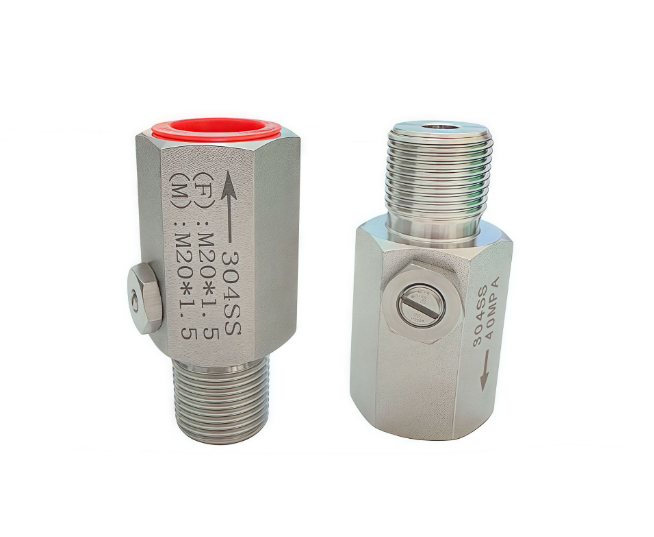
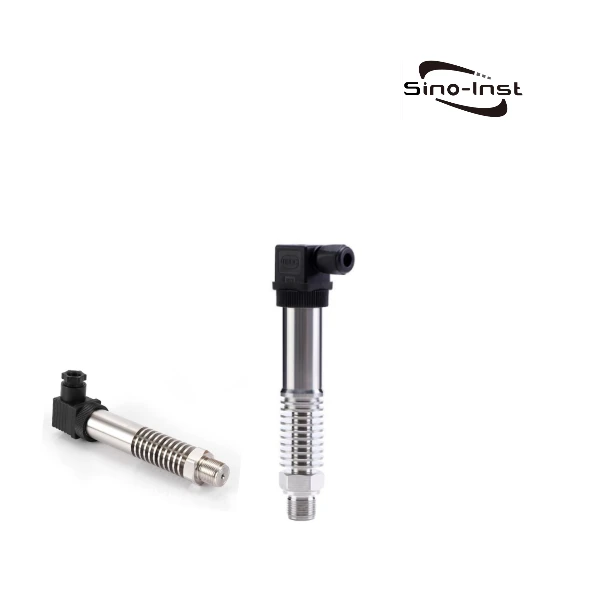
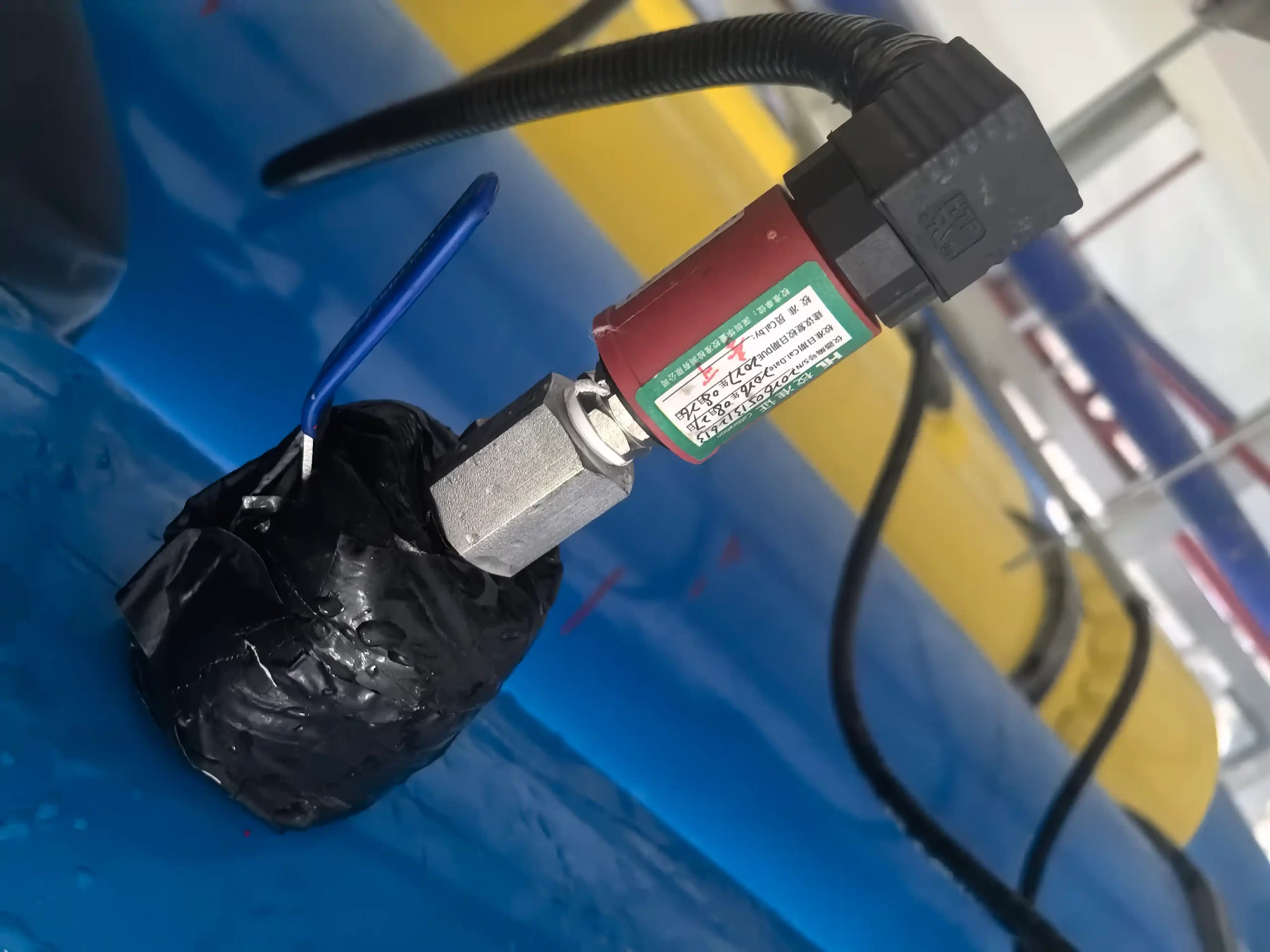
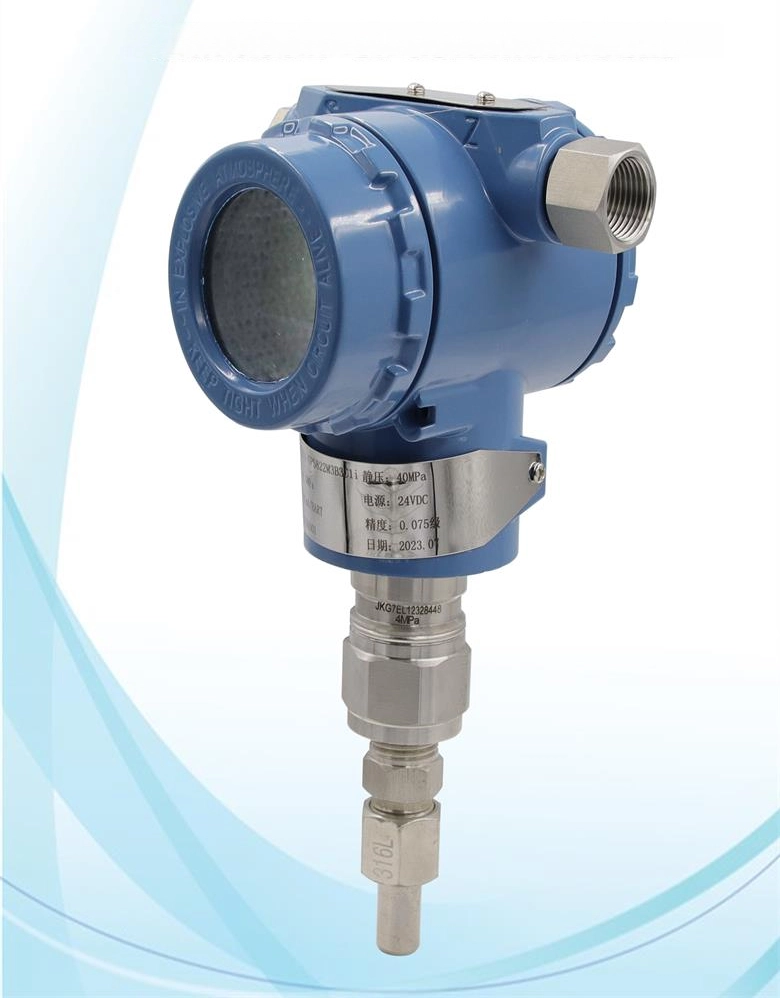
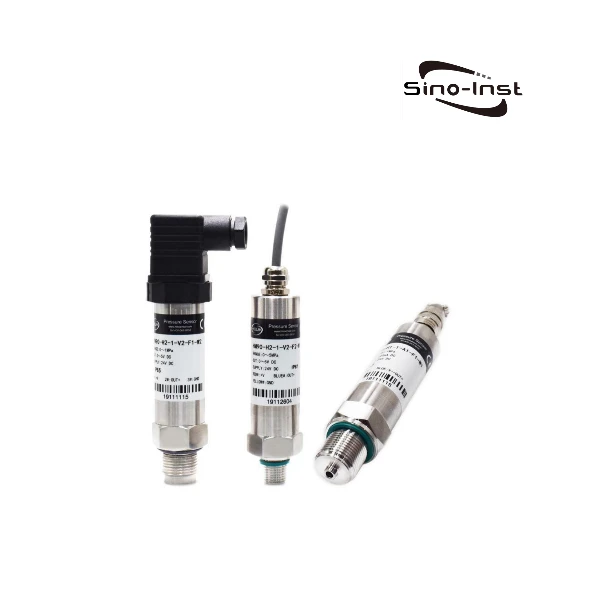
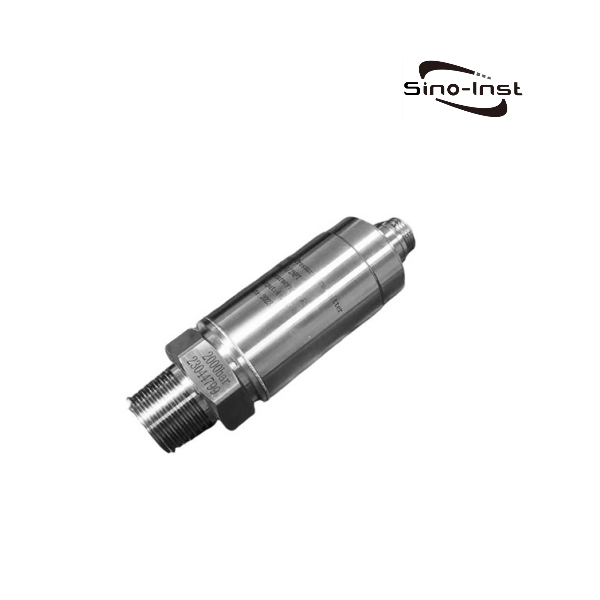
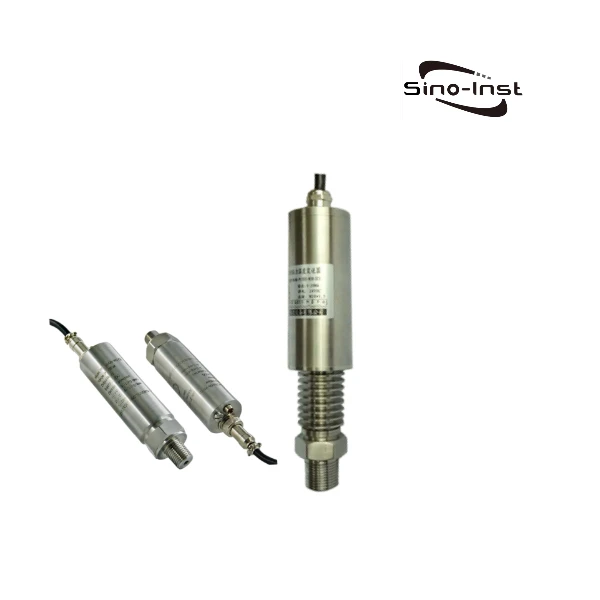
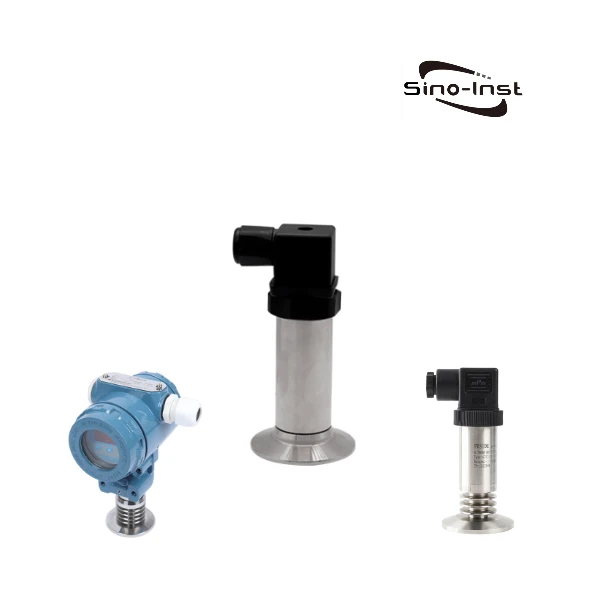
A pressure snubber, also known as a pressure buffer, is a device designed to prevent intense fluid pulses and protect pressure instruments from damage. It is suitable for pressure systems where the medium being measured experiences pressure spikes, intense pulses, and rapid fluctuations. It is often used in conjunction with pressure gauges, pressure sensors, and pressure transmitters.
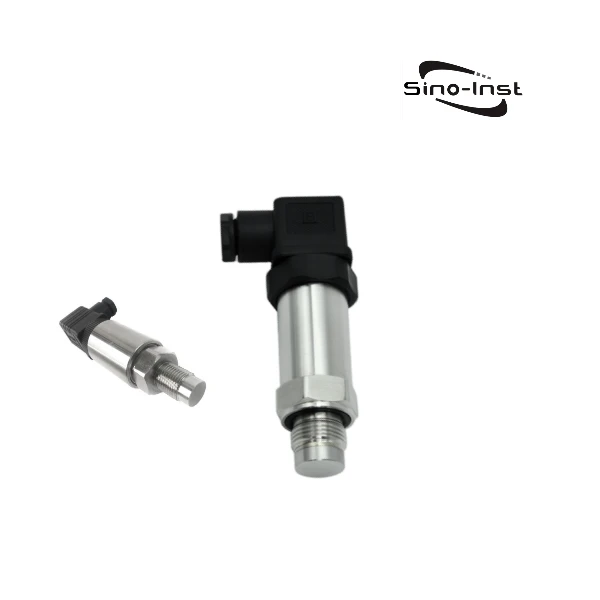
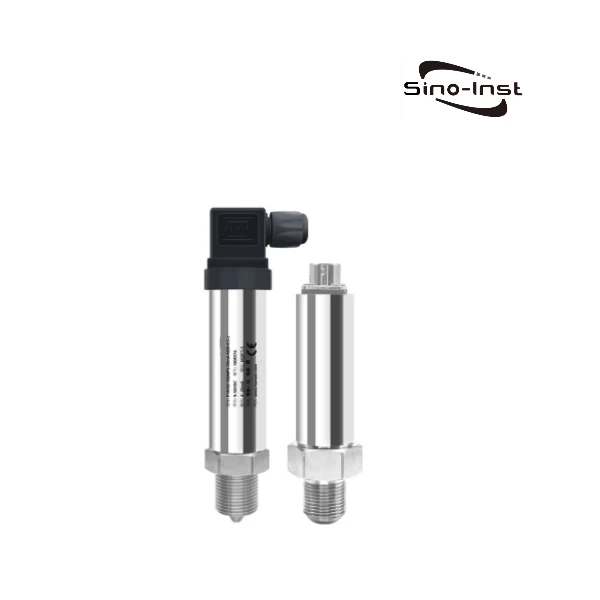
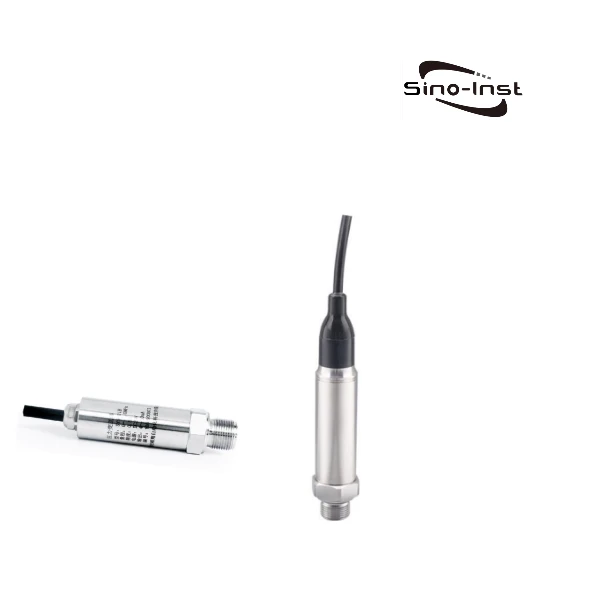
Sino-Inst pressure sensors and hydraulic sensors can be configured with damping structures as needed, making them suitable for applications prone to pressure surges, such as hydraulic stations, water supply and drainage pipelines, and fluid test benches. Damping structures are an effective means of protecting sensors from damage caused by instantaneous pressure spikes; however, damping comes at the cost of response speed.
When selecting a model, comprehensively evaluate the rate of pressure change and the cleanliness of the medium to choose the appropriate solution—either built-in damping or external buffering—that balances sensor service life with pressure measurement response performance.
The primary function of a pressure snubber is to protect pressure instruments from pressure transients or temperature spikes caused by rapid valve operation, water hammer, or pump operation.
Rapid directional changes in hydraulic circuits, valve opening and closing, and the start-up and shutdown of fluid flow in pipelines can generate water hammer effects, resulting in instantaneous high-pressure spikes. These transient pressure surges are very short-lived but reach extremely high peaks—far exceeding the system’s normal operating pressure—and can easily damage the sensor’s isolation diaphragm.
For a long time, intense pressure pulses have made pressure transmitters and pressure gauges highly susceptible to damage, resulting in very short service lives and significant waste.
Pressure Pulsations
Pressure transients in industrial process piping can occur at any time. Since we manufacture and calibrate pressure sensors under static conditions, pressure fluctuations exceeding the sensor’s measurement range are highly likely to occur.
Consequently, our pressure sensors are designed with an overload pressure rating. Typically, this overload pressure is set at twice the sensor’s measurement range. However, if pressure fluctuations occur frequently, the sensor diaphragm may still be damaged even within the overload pressure range.
Water Hammer Effect
Water hammer pressure in pipelines is a transient shock pressure caused by sudden changes in fluid velocity, which can reach 2–3 times the pipeline’s working pressure. Examples include rapid valve closure or pump shutdown. For instance, a DN200 pipeline flowing at 2 m/s can generate a shock pressure of approximately 1.6 MPa (based on the Zhukovsky formula: ΔP = ρcΔv).
Such impact pressure is likely to instantly strike the pressure sensor diaphragm, causing damage to the pressure sensor.
A pressure snubber primarily limits flow by controlling the cross-sectional area through which the medium flows, allowing pressure spikes to be smoothed out before they reach the sensor diaphragm.
The core of a snubber’s structure is typically a tiny damping orifice located between the sensor’s pressure inlet and the isolation diaphragm. When the medium enters the sensor, it must first pass through the tiny damping orifice before acting on the sensor diaphragm. When a steady, slowly changing pressure is present, the medium flows smoothly through the damping orifice, and the diaphragm pressure follows the changes in the pipeline pressure. When an instantaneous high-pressure surge occurs and the fluid impacts rapidly, the small orifice restricts the instantaneous flow velocity of the medium, thereby reducing the amplitude of the pressure spike, prolonging the pressure rise time, and reducing the impact energy transmitted to the diaphragm, thus protecting the sensing element.
The damping effect is directly related to the orifice diameter. The smaller the orifice, the stronger the damping and the better the shock-absorbing capability; however, pressure transmission slows down, and the sensor’s response time increases. The larger the orifice, the faster the pressure transmission and the more sensitive the dynamic response, but the shock-absorbing capability decreases.
Internal Snubbers vs External Snubbers for Pressure Sensors
There are two approaches to adding asnubber to a pressure sensor:
One involves welding a stainless steel snubber directly onto the pressure sensor, integrating itinto the sensor’s process connection. This provides protection while maintaining the sensor’s length and reliability.
The other approach uses an external snubber, which functions as an additional mounting accessory for the pressure gauge.
Different Pressure Snubbers can be selected based on the medium, operating conditions, and other factors. The advantage is flexibility in replacement.
Pressure snubber design involves trade-offs: For static pressure or slowly changing process pressure monitoring scenarios, a high-damping snubber can be selected to prioritize shock resistance. For high-speed dynamic pressure testing, where rapid pressure fluctuations must be captured, high damping cannot be used; otherwise, pressure change signals will be filtered out, resulting in the loss of transient pressure peak information. In such cases, an external snubber solution is generally adopted.
Types of Pressure Snubbers
Here, we will focus solely on external snubbers.
In terms of material, pressure snubbers are available in two types: stainless steel and brass. I
n terms of structure and operating principle, there are three main types: porous disc (filter-type) snubbers, piston-type snubbers, and adjustable snubbers.
Porous Disc Pressure Snubber
Porous disc pressure snubbers use metal discs with varying porosity to restrict pressure flow. The porous discs act as filters, limiting the velocity at which fluid flows through the snubber. This effectively reduces the impact of pressure spikes and shocks on the pressure sensor.
In addition to suppressing pressure fluctuations, porous disc snubbers also function as filters, removing contaminants and debris from the fluid. This helps prevent clogging and ensures the snubber’s long-term performance.
The porous disc elements are made of sintered metal materials, such as sintered copper or stainless steel. Flow resistance and the degree of damping can be controlled by varying the porosity of the discs.
The advantages of porous disc pressure snubbers are: low cost, easy installation, and the widest range of applications.
The disadvantage of porous disc pressure snubbers is that they are prone to clogging. Once clogging occurs, readings will be affected, and the snubber must be flushed with a solvent from the pressure gauge side to clean it.
Perforated disc pressure buffers are commonly used in applications with severe pressure fluctuations, such as: reciprocating pumps and compressors, hydraulic systems, pulsating flow pipelines, and systems with pressure fluctuations.
Piston-type Snubbers
Piston-type pressure snubbers limit fluid flow through a freely moving internal piston, thereby attenuating pressure pulsations and transient pressure surges to protect pressure gauges and pressure sensors. Continuous pressure pulsations also drive the piston’s reciprocating motion, reducing the buildup of internal contaminants. Compared to porous disc-type snubbers, they offer greater pressure resistance and pulsation damping capabilities, making them suitable for applications with more severe operating conditions.
The advantages of piston-type pressure buffers include high-pressure resistance and pulsation resistance, making them suitable for high-pressure conditions and environments with severe pressure fluctuations. Furthermore, the reciprocating motion of the piston helps reduce the buildup of impurities and prevent clogging.
The main limitations are their relatively complex structure and higher manufacturing costs. Additionally, for high-viscosity or abrasive media, the suitability of materials and design must be evaluated.
Piston-type pressure buffers are commonly used in high-pressure hydraulic systems, for outlet pressure measurement in pumps and compressors, and in industrial processes with significant pressure pulsations.
Adjustable Snubbers
The adjustable pressure snubber uses a needle valve to regulate the opening of the fluid passage, thereby controlling the transmission speed of pressure fluctuations and the damping effect. Its core component is the adjustable needle valve. Users can adjust the needle valve’s opening by turning the adjustment screw or knob according to actual operating conditions, thereby regulating fluid flow and pressure transmission speed. It is suitable for applications with significant pressure pulsations or where high measurement stability is required.
The Adjustable Pressure Snubber allows the damping level to be adjusted according to different operating conditions. It is suitable for measurement applications with varying degrees of pressure pulsation.
Of course, the Adjustable Pressure Snubber comes at a higher cost, and its installation and commissioning must be optimized based on actual operating conditions.
The Adjustable Pressure Snubber is commonly used for pressure measurement in industrial pipelines, pumps, and compressors where pressure pulsations vary significantly, as well as in applications with specific requirements for pressure reading stability and response speed.
Overload Protection for Pressure Sensors
In addition to the pressure buffers discussed here, there are other precautions that can help protect pressure sensors from overload impacts.
Select the appropriate model based on the pressure range of the actual application scenario. For example, if the normal operating pressure of a pipeline is 0–10 MPa, a sensor with a range of at least 15 MPa should be selected to account for possible instantaneous pressure fluctuations. Allow for sufficient margin to prevent the pressure from approaching or exceeding the upper limit of the sensor’s range.
Use overload protection mechanisms. Some pressure sensors are equipped with built-in overload protection mechanisms. For example, bellows-type pressure sensors utilize a specially designed bellows structure to protect the sensor’s core components. There are also buffer mechanisms. When pressure overloads occur, the buffer mechanism first absorbs part of the pressure, mitigating the impact on the sensitive elements.
Select an appropriate installation location. Ensure the pressure sensor is installed in an area with stable pressure and free from sources of shock.
When connecting the piping to the sensor, do not overtighten the connecting nuts to prevent damage to the sensor’s internal structure caused by excessive mechanical stress, which could indirectly affect its pressure-bearing capacity.
During equipment startup and shutdown, operate slowly to prevent sudden, drastic pressure changes from impacting the sensor.
In the control system, set a reasonable upper pressure alarm limit for the pressure sensor.
When Should Pressure Signals Not Be Damped?
Pressure pulsations do not always need to be eliminated. In certain industrial applications, pressure variations themselves constitute important information that needs to be monitored and analyzed. In such cases, using a pressure buffer or setting a high software damping value may actually mask the true pressure variations.
For example:
Pump and valve fault diagnosis. By analyzing the amplitude, frequency, and variation patterns of pressure pulsations, it is possible to assess the operating condition of pumps, identify valve abnormalities, and detect water hammer phenomena in the system.
Combustion oscillation monitoring. In combustion chambers or combustion systems, it is necessary to capture rapidly changing dynamic pressure data to analyze combustion instability and pressure oscillations.
Pulsating Pressure Studies. In equipment such as hydraulic systems and reciprocating compressors, pressure fluctuations may reflect the operational characteristics of the equipment; excessive damping can result in the loss of important dynamic information.
For such applications, it is not recommended to simply eliminate pressure fluctuations using pressure buffers or software damping. A more appropriate solution is to use a high-frequency dynamic pressure transducer and select an adequate sensor bandwidth and data sampling rate based on the actual frequency of pressure changes.
Simply put, if pressure pulsations are considered interference that needs to be eliminated, pressure buffers or signal damping may be considered; if the pressure pulsations themselves are the measurement target, their dynamic characteristics should be preserved by selecting appropriate dynamic pressure measurement equipment.
Flush Diaphragm Pressure Transducers are specifically designed for measuring the pressure of viscous, low-flow, or hygienically sensitive media. They utilize diaphragm isolation technology and a no-bore design to prevent media blockages and leakage of the measured medium. Sino-Inst offers pressure transducers with flush diaphragms, flush-mounted diaphragms, and sanitary clamp-on flush diaphragms, among others. We also … Read more
What Is a Differential Pressure Switch? A differential pressure switch is an instrument used to measure the pressure difference between two points. It is classified into mechanical types (such as bellows and diaphragms) and electronic types. When the pressure difference between the two sides reaches a preset value, the sensing element deforms or displaces, driving … Read more
Pressure transducers for ammonia refrigeration are designed to measure the pressure and vacuum of ammonia in both liquid and gaseous states. It is mainly used in refrigeration equipment to measure the pressure of liquid ammonia, gaseous ammonia, or mixtures thereof. It is used for pressure monitoring of ammonia media in refrigeration cycles of cold storage, … Read more
Sino-Inst supplies 10,000 psi pressure transducers, 1/4 NPT threaded mounting and a 1–5 VDC output. It is suitable for measuring the pressure of gases and liquids. 10,000 psi is equivalent to 68.95 MPa or 689.5 Bar. Benefits Technical Specifications Measuring range 0–10,000 psi Accuracy 0.1% FS, 0.25% FS, 0.5% FS (optional) Output 4–20 mA, 0/1–5/10 … Read more
Pressure sensors can operate with media temperatures of 450°C. It is important to clarify that this refers to the temperature of the medium itself, not the ambient temperature. Standard pressure sensors typically measure media temperatures in the range of -20°C to 80°C. Custom high-temperature pressure sensors can measure pressures in media at 450°C; however, the … Read more
China is the largest OEM and mass production base for industrial pressure sensors. Custom production is available for everything from standard 4-20 mA pressure transmitters to extreme operating conditions such as 1000 MPa ultra-high pressure, −252 °C cryogenic, and ATEX explosion-proof models. Standard pressure sensors can be shipped within 3-5 days. We also build digital-output … Read more
Zhang Wei, possesses 20 years of experience as an automation instrumentation engineer, specializing in the research, design, installation, commissioning, and maintenance of automation instruments.
Face to various instrument communication protocols (such as Modbus, Profibus, etc.), with solid hardware circuit design and software programming skills (proficient in C language and PLC programming). Has extensive project experience; projects he has led and participated in have all achieved outstanding results, improving product accuracy, reducing costs, and increasing production efficiency.
Possesses excellent communication and coordination skills and a strong team spirit, enabling him to quickly respond to customer needs and provide high-quality automation instrumentation solutions.
Want to see more of our engineering guides in Google Search? Add Sino-Inst as a preferred source.