
How Does a Differential Pressure Switch Work
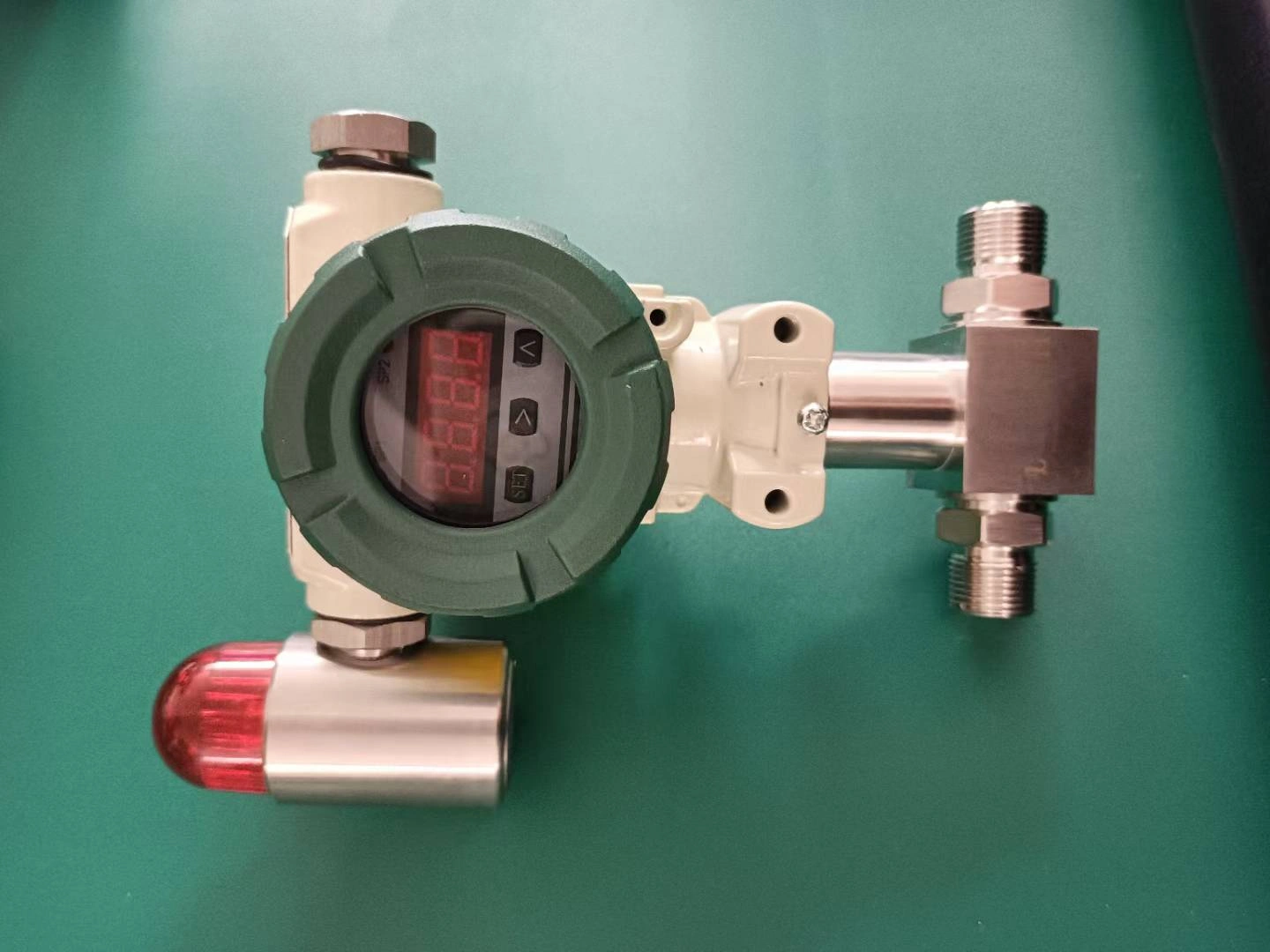
What Is a Differential Pressure Switch?
A differential pressure switch is an instrument used to measure the pressure difference between two points. It is classified into mechanical types (such as bellows and diaphragms) and electronic types. When the pressure difference between the two sides reaches a preset value, the sensing element deforms or displaces, driving a microswitch via a mechanical structure to output an electrical signal. This triggers various control operations in the circuit, such as opening, closing, or switching. They are widely used in industrial sectors such as chemical processing, synthetic fibers, metallurgy, power generation, and nuclear power, as well as in fields like HVAC, boiler systems, hydraulic systems, and pneumatic systems.
Differential Pressure Switch Working Principle
The working principle of a differential pressure switch is based on the concept of pressure differential. By monitoring the pressure difference between two points, the switch is triggered when the pressure difference reaches a preset value.
Based on their operating principles, they can be classified into mechanical differential pressure switches and electronic differential pressure switches.
Mechanical differential pressure switches utilize mechanical sensing elements, such as bellows, diaphragms, and pistons. The advantages of mechanical differential pressure switches include simple structure, low cost, and high reliability; however, their disadvantages are lower accuracy and slower response times.
Mechanical differential pressure switches can operate without an external power supply. Structurally, they primarily consist of four parts: a pressure-sensing diaphragm, a spring adjustment assembly, a microswitch, and high- and low-pressure measurement ports. Air pressure is collected from two different locations or pipelines through the two measurement ports, and the diaphragm senses the pressure difference between the two sides. Once the pressure difference exceeds or falls below the set threshold, the diaphragm undergoes displacement and deformation. This drives the spring assembly to actuate, thereby triggering the microswitch to output an on/off signal.
The electronic differential pressure switch uses an industrial-grade pressure/differential pressure sensor as its measuring element. The measurement results are amplified, processed, and temperature-compensated by a high-precision detection circuit; a precise setpoint circuit provides a stable setpoint, which is ultimately isolated and used to drive the output.
The advantages of electronic differential pressure switches include high accuracy, fast response times, and the ability to support remote monitoring and communication; however, their disadvantages are higher cost and stricter environmental requirements.
Based on the pressure-sensing element, they can be classified into diaphragm-type differential pressure switches and bellows-type differential pressure switches. Diaphragm-type differential pressure switches are characterized by high static pressure and low differential pressure, while bellows-type differential pressure switches, despite their low pressure rating, offer the advantages of high accuracy and a small deadband.
How to Select Setpoints and Hysteresis
Setpoints should be set within 30%–70% of the measurement range, with specific values determined based on the actual differential pressure measured on-site. The hysteresis should be sufficient to prevent relay chattering, but not so large that the protection cannot reset after activation.
Activation Point, Reset Point, and Hysteresis
The activation point is the differential pressure at which the contacts switch; the reset point is the differential pressure at which the contacts return to their original state; the difference between the two is the hysteresis. Filter alarms activate when the differential pressure rises, while flow interruption protection activates when the differential pressure drops; the reset directions for the two are also opposite.
How to Determine the Setpoint
First, read a reference differential pressure when the filter element is clean and the flow rate is normal, then set the setpoint. The setpoint should not be set too close to the upper or lower limits of the measurement range. For example, if an alarm is required at 40 kPa, a switch with a 0–100 kPa range will provide greater accuracy than one with a 0–1 MPa range.
Filter alarms should be set based on the allowable differential pressure provided by the filter element manufacturer and can be configured in two stages: a 75% pre-alarm and a 100% alarm.
One point to note regarding flow interruption protection: differential pressure is roughly proportional to the square of the flow rate. For example, if a heat exchanger has a rated pressure drop of 40 kPa, the differential pressure is approximately 14.4 kPa when the flow rate drops to 60%, and approximately 19.6 kPa when it returns to 70%. Set the former as the trip point and the latter as the reset point, with a hysteresis of approximately 5 kPa. This is only an estimate; it is best to calibrate the device after taking actual measurements with a flowmeter.
| Applications | Common Settings | Note |
| Hydraulic Return Oil Filter | Approximately 0.35 MPa | During a cold start, the oil temperature is low and the differential pressure is artificially high; do not send a signal at this time. |
| Self-Cleaning Water Filter | Backwash activates at 0.5 bar | Introduce a differential pressure delay to prevent accidental flushing. |
| Flow Interruption Protection for Chillers | Protection activates when the flow rate drops to 60% of the corresponding differential pressure | The hysteresis shall not exceed 5 kPa. |
Hysteresis and Delay
If the hysteresis is too small, the relay will chatter at the slightest pressure fluctuation; if it is too large, it will take a long time to reset after protection is triggered, preventing the equipment from starting up. The hysteresis of mechanical switches is usually fixed at the factory—for example, the Danfoss MP55 has a hysteresis of 0.2 bar—and it tends to increase at low temperatures or when the medium has high viscosity. Electronic switches can be configured according to operating conditions; for example, our 3081 digital differential pressure switch allows the high and low alarm points, as well as the hysteresis, to be adjusted separately on the panel.
When a pump starts or stops, instantaneous pressure spikes may occur; in such cases, hysteresis alone is insufficient, and a time delay is required. Electronic switches can be set with a damping time; compressor oil pressure differential protection typically includes a start-up delay of approximately 120 seconds.
Differential Pressure Switch Installation
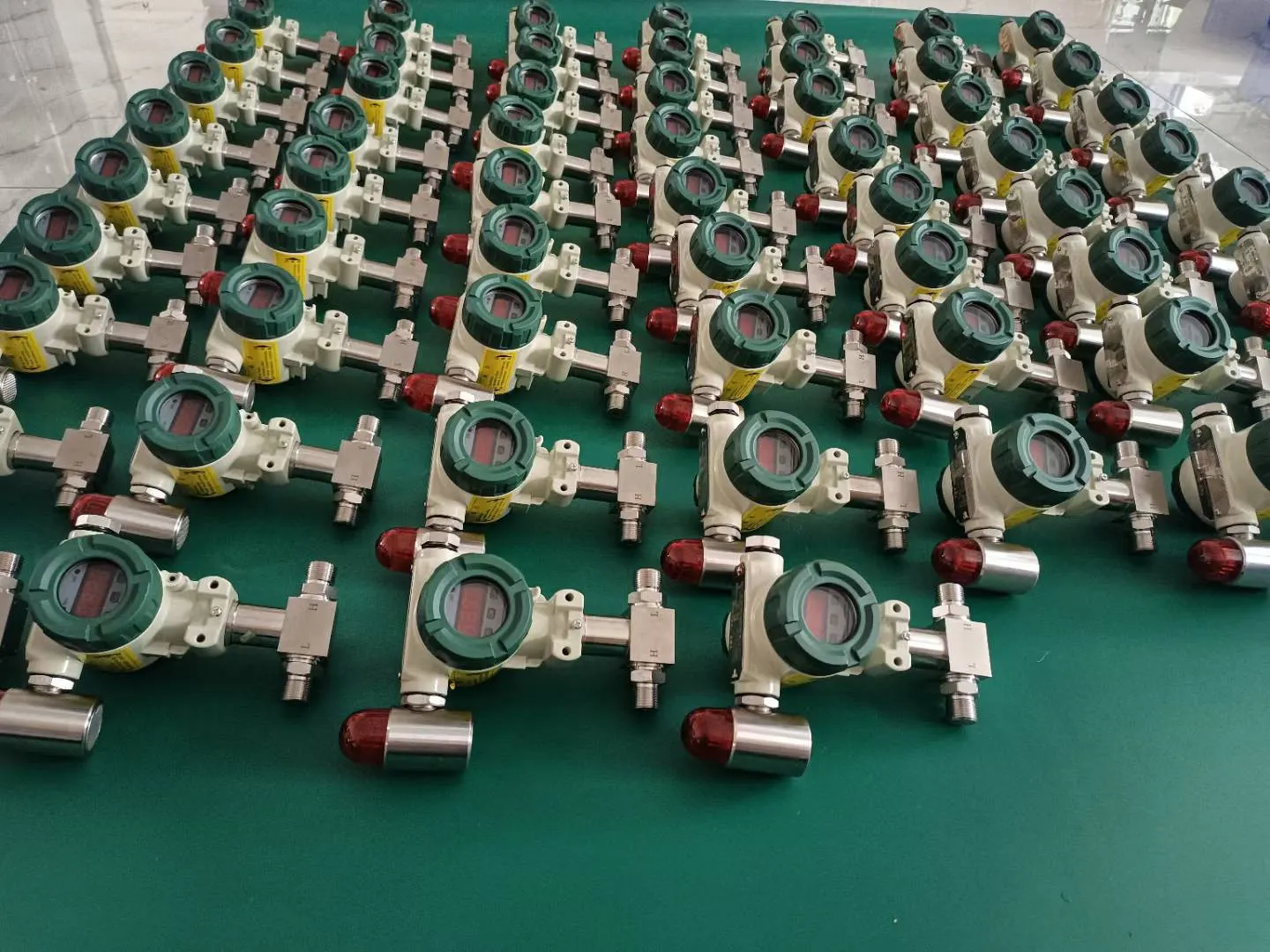
First, differential pressure switches, similar to differential pressure transmitters, have H/L ports—that is, high-pressure and low-pressure ports. Connect the H port to the high-pressure side and the L port to the low-pressure side. Do not reverse the connections. For example, monitoring air conditioning unit filters is the most common application for differential pressure switches. The standard practice is to install them on the air intake and exhaust sides of the air conditioning unit’s filter, with the high-pressure port connected to the air intake and the low-pressure port connected to the air exhaust.
During installation, it is essential to note that differential pressure switches must not be installed directly in the path of oncoming airflow, in vortex zones, or in dead corners of elbows. Airflow in these areas is highly turbulent, and air pressure fluctuates wildly, which can cause significant data fluctuations and frequent false alarms. They should also not be installed in locations subject to severe equipment vibration, as prolonged vibration can cause the internal diaphragm to shift and the spring to loosen, affecting both service life and monitoring accuracy.
If the site is in a humid or high-dust environment, it is recommended to use Sino-Inst’s waterproof and dustproof differential pressure switches to prevent moisture and dust from entering the device and causing malfunctions.
Normally Open vs. Normally Closed Differential Pressure Switches
Normally Open (NO):
- When the differential pressure has not reached the setpoint, the contact is open.
- When the differential pressure reaches or exceeds the setpoint, the contact closes and the circuit is energized.
Normally Closed (NC):
- The contact remains closed when the differential pressure has not reached the set point.
- When the differential pressure reaches or exceeds the set point, the contact opens, and the circuit is interrupted.
In the industrial sector, normally open and normally closed differential pressure switches are used in different application scenarios.
In chemical production, for tanks storing hazardous chemicals, normally closed differential pressure switches are commonly used to monitor the pressure differential between the inlet and outlet pipes of the tank in order to prevent leaks. Under normal conditions, fluid flow within the piping is stable, and the pressure differential switch’s contacts remain closed. If a tank leak occurs, the pressure differential between the inlet and outlet piping changes, causing the normally closed pressure differential switch’s contacts to open. This triggers the alarm system, alerting personnel to take immediate action to prevent safety incidents caused by hazardous chemical leaks.
In contrast, normally open pressure differential switches are widely used in industrial processes that require precise control of fluid flow.
For example, in petrochemical pipeline transportation systems, by installing a throttling device on the pipeline and using it in conjunction with a normally open differential pressure switch, the opening of the control valve can be adjusted based on changes in the differential pressure, thereby precisely regulating the fluid flow rate. When the flow rate within the pipeline changes, the differential pressure across the throttling device also changes accordingly. When the differential pressure reaches the set point of the normally open differential pressure switch, the switch closes and transmits a signal to the control system. The control system adjusts the opening of the control valve based on this signal to maintain the flow rate within the set range.
In the HVAC field, both normally open and normally closed differential pressure switches serve distinct purposes. On the water side of air conditioning systems, normally open differential pressure switches are typically used to monitor changes in resistance in equipment such as heat exchangers and water filters. When a heat exchanger or water filter becomes clogged, the differential pressure across it increases. When the differential pressure exceeds the set point of the normally open differential pressure switch, the switch closes and sends a signal, alerting maintenance personnel to clean or replace the equipment to ensure the normal operation of the air conditioning system.
In the ventilation systems of some high-rise buildings, normally closed differential pressure switches are used for pressure control in stairwells and vestibules. In the event of a fire, to ensure the safe evacuation of occupants, a certain pressure differential must be maintained between the stairwell and the vestibule to prevent smoke from entering the vestibule and stairwell. Normally closed differential pressure switches are installed on the ventilation ducts between stairwells and vestibules; under normal conditions, their contacts are closed. When a fire occurs and the positive pressure supply fan starts, once the pressure differential between the stairwell and the vestibule reaches the set value, the contacts of the normally closed differential pressure switch open, causing the bypass relief valve to open and relieve pressure, thereby maintaining the pressure differential within a safe range.
Comparison of Differential Pressure Switches, Pressure Switches, and Differential Pressure Transmitters
Differential pressure switches, pressure switches, and differential pressure transmitters are all commonly used pressure measurement and control instruments, but they differ significantly in terms of functionality, output signals, and application scenarios.
| Features | Differential Pressure Switch | Pressure Switch | Differential Pressure Transmitter |
| Key Functions | Monitors pressure difference and triggers a switching action (ON/OFF) at a set threshold | Monitors pressure and triggers a switching action (ON/OFF) at a set threshold | Continuously measures pressure difference and outputs a standard signal (e.g., 4–20 mA, 0–10 V, etc.) |
| Output Type | Switching output (relay contacts, NO/NC) | Switching output (relay contacts, NO/NC) | Analog (4–20 mA, 0–10 V, etc.) or digital (HART, RS485, etc.) output |
| Response Mode | Discrete action (changes state upon reaching the threshold) | Discrete action (changes state upon reaching a threshold) | Continuous, linear output (reflects changes in pressure difference in real time) |
| Application Scenarios | Safety protection, filter clogging detection | Primarily for safety protection | Used for differential pressure monitoring, as well as flow or liquid level monitoring |
| Accuracy | Lower (focuses on threshold-based action) | Lower complexity (focuses on threshold-based action) | High accuracy (0.1%–0.5% of full scale) |
| Setting Flexibility | Mechanical types require manual adjustment; electronic types are programmable | Mechanical types require manual adjustment; electronic types are programmable | Configurable measurement range and output |
| Installation Complexity | Simple (requires only connection to a switching circuit) | Simple (requires only a connection to the switching circuit) | Requires wiring and signal calibration |
FAQ
Differential pressure switches are widely used in sectors such as industrial automation, building HVAC systems, water supply, and cable installation. Their primary functions include flow detection, monitoring for pipeline blockages or the need for cleaning, energy conservation in steam systems, detection and alarming for gas or liquid filters, and air filtration control in ventilation systems.
Sino-Inst’s differential pressure switches are highly reliable, simple in structure, and easy to maintain, making them an essential control component in many industries. Please feel free to contact our engineers to discuss your specific installation conditions, required differential pressure ranges, control specifications, and other technical details.

Zhang Wei, possesses 20 years of experience as an automation instrumentation engineer, specializing in the research, design, installation, commissioning, and maintenance of automation instruments.
Face to various instrument communication protocols (such as Modbus, Profibus, etc.), with solid hardware circuit design and software programming skills (proficient in C language and PLC programming). Has extensive project experience; projects he has led and participated in have all achieved outstanding results, improving product accuracy, reducing costs, and increasing production efficiency.
Possesses excellent communication and coordination skills and a strong team spirit, enabling him to quickly respond to customer needs and provide high-quality automation instrumentation solutions.
Want to see more of our engineering guides in Google Search? Add Sino-Inst as a preferred source.