
Piezoelectric Pressure Transducer – Quartz, Threaded Mount

The SI-YD205 Piezoelectric Pressure Transducer is an M10 × 1 threaded-mount pressure transducer. Utilizing a quartz crystal as the piezoelectric element, it offers a wide frequency response and high rigidity, with a pressure sensitivity of approximately 100 pC/MPa. The SI-YD205 is well-suited for pressure measurements in high-frequency, transient, and harsh environments—such as monitoring pressure in … Read more
OEM 80GHz Radar Level Sensors for Private Labeling

During OEM business negotiations, the customer requested OEM private-label 80GHz radar level transmitters, with an annual purchase volume of approximately 2,500 units. As the original manufacturer, we offer two OEM product lines of 80GHz radar level transmitters for the customer to choose from. For standard operating conditions, the TSL300 low-cost 80GHz radar level transmitter is … Read more

Piezoelectric vs Piezoresistive Pressure Sensors: Which One for Your Application

Piezoelectric and piezoresistive pressure sensors are two commonly selected types of pressure sensors in industrial processes. Differences in their operating principles result in distinct advantages for each. Piezoelectric sensors have higher sensitivity and faster response times, enabling them to provide relatively precise pressure measurements. Therefore, piezoelectric pressure sensors are used to measure dynamic pressure. Piezoresistive … Read more

How to Adjust a Pressure Switch

How to Adjust a Pressure Switch? This is a common question among the vast majority of pressure switch users. Whether it’s a mechanical or electronic pressure switch, there are three adjustable parameters: the set point (cut-out), the reset point (cut-in), and the hysteresis—the difference between the two. Mechanical pressure switches have a simple structure and … Read more

Radar Level Control for Sump Pits: 80GHz Solution

In projects involving liquid level control in 12-foot-deep collection pits, float-type level switches are a common traditional solution. However, these contact-type devices are prone to becoming entangled with debris, silted up, or jammed in sewage applications, leading to frequent malfunctions. Based on our field experience, we highly recommend the 80 GHz radar level transmitter, which … Read more

Torque Transducer vs Torque Sensor vs Torque Meter: What’s the Difference?

Torque Transducer vs Torque Sensor

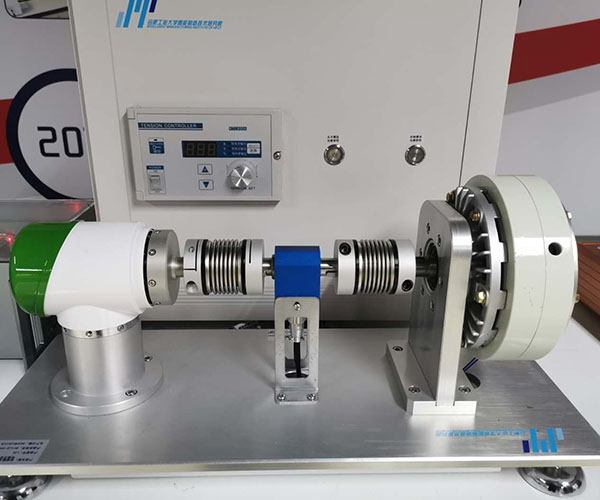
In most procurement communications and practical applications, we tend to use the terms “torque transducer,” “torque sensor,” and “torque meter” interchangeably. A torque transducer/sensor, torque cell, and torque meter all refer to a class of devices used to measure torque on various rotating or non-rotating mechanical components and convert it into a measurable electrical signal. … Read more

Inline Refractometer for Process Concentration & Brix Measurement

An inline refractometer is a real-time concentration measurement instrument based on the principle of optical refraction. When light passes from one medium into another, its path is deflected; this angle of deflection is directly related to the content of soluble solids in the liquid. The Inline Refractometer measures and displays parameters required by users, such … Read more

PSIG vs PSIA vs PSI: What They Mean and How to Convert

When purchasing or using pressure measurement equipment, you’ll often encounter units such as PSI, PSIA, and PSIG. Take air compressors, for example: they provide compressed air for a variety of industrial applications and needs, and the pressure measured in PSI indicates the maximum pressure generated by the air compressor. Simply put, PSI is the most … Read more