
Portable Intrinsically Safe Ultrasonic Level Sensor for Tank Trucks
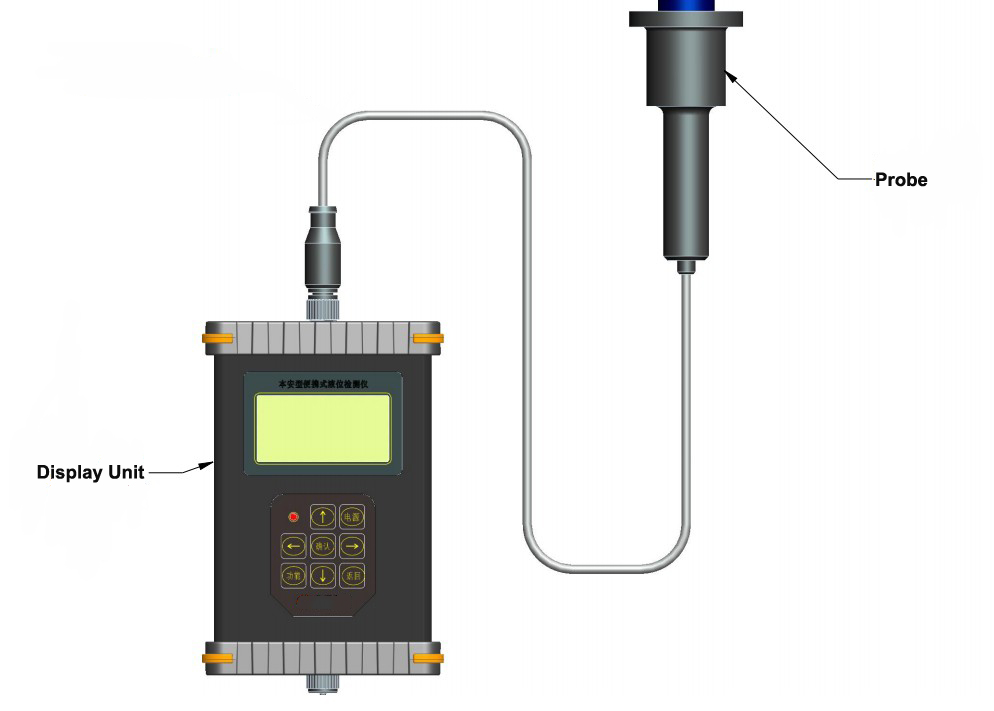
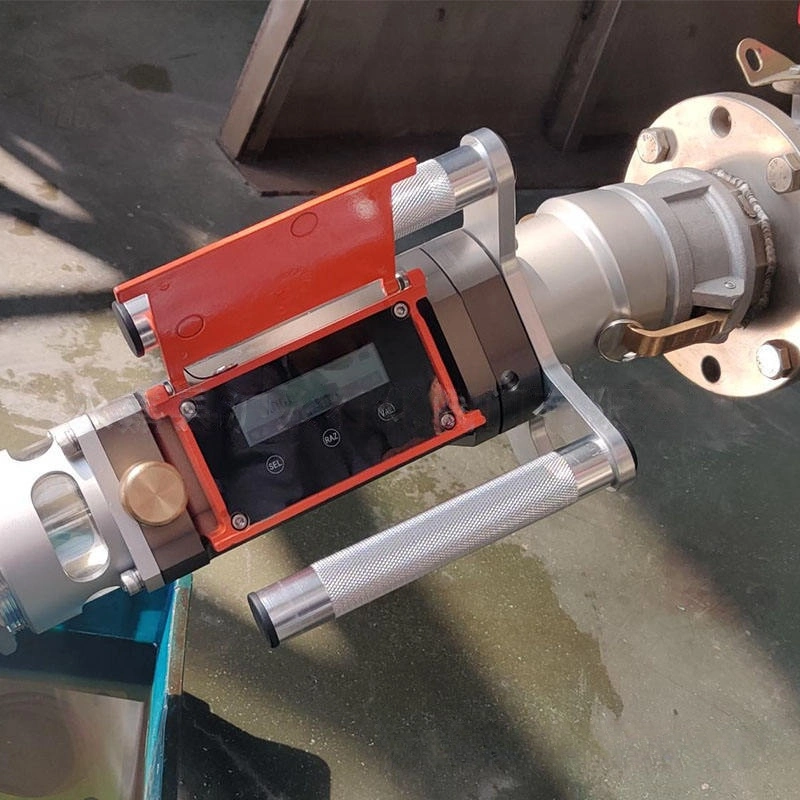
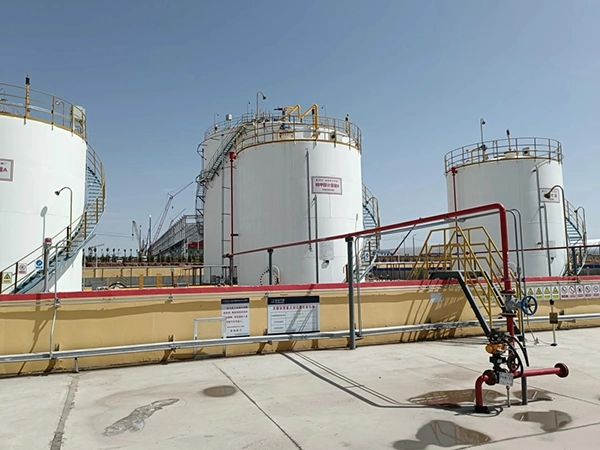
The Portable Intrinsically Safe Ultrasonic Level Sensor is a specialized instrument designed to measure the liquid level in tank trucks or monitor the presence of liquid at a specific location. It is specifically used by oil depot managers to check whether tank trucks contain residual liquid before they enter the tank farm to be filled with oil.
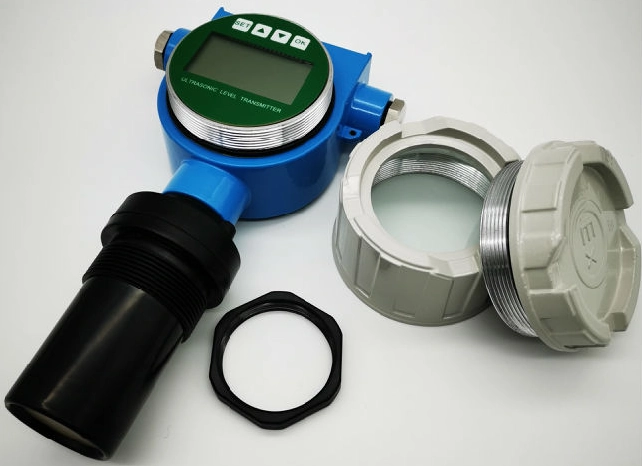
The Portable Intrinsically Safe Ultrasonic Level Sensor utilizes the principle of ultrasonic echo ranging. By employing advanced signal processing technology and high-speed signal processing chips, it achieves true non-contact measurement of liquid levels inside sealed containers and detects the presence or absence of liquid at a specific location.
Our Portable Intrinsically Safe Ultrasonic Level Sensor has passed testing in accordance with the GB3836.1-2021, GB3836.4-2021, GB3836.9-2021, with explosion-proof markings of Ex ib IIB T4 Gb (main unit) and Ex mb II T6 Gb (probe). It is suitable for Zone 1 and Zone 2 hazardous locations in industrial facilities containing explosive gas mixtures of Class IIA and IIB, Temperature Groups T1–T4.
Benefits
- Explosion-proof Type: Intrinsically Safe “i” (main unit) Encapsulated “m” (probe);
- Explosion-proof marking: Ex ib II B T4 Gb (main unit) Ex mb II T6 Gb (probe);
- Protection rating: IP65;
- Magnetic probe mounting for quick detection;
- No need to drill holes in the tank; the probe mounts directly to the bottom of the pipe; non-intrusive measurement;
- Direct measurement of liquid level;
- Can also detect and indicate the presence or absence of liquid;
Technical Specifications
| Repeatability Error: | ±2 mm |
| Measurable Wall Thickness: | 2–10 mm |
| Ambient Temperature: | –20°C to +50°C |
| Ambient Humidity: | 15%–100% RH |
| Rated Voltage: | 3.6 V |
| Battery Specifications: | Built-in potted lithium-ion battery pack, 18650/3500 mAh |
| Level Value or Status Display: | 6-digit OLED display |
| Continuous Operating Time: | >8 hours |
| Product Dimensions: | 106.5 × 43.5 × 156 mm (main unit) / φ57 × 61 mm (probe) |
| Product Weight: | 350 g (main unit) |
| Suitable Tank Types: | Horizontal tanks; |
| Measurable Media: | Gasoline, diesel, edible oil, LPG, etc. |
Suitable Container (Tank) Materials:
The container wall at the location where the ultrasonic probe is attached must be made of a hard material capable of effectively transmitting signals. Examples include carbon steel, stainless steel, various hard metals, fiberglass-reinforced plastic, epoxy resin, hard plastics, ceramics, glass, hard rubber, and other composite materials.
The inner and outer surfaces of the vessel wall at this location should be smooth. If the vessel wall consists of multiple layers, the layers must be in close contact, with no air bubbles or gas pockets. Examples include vulcanized hard rubber linings, epoxy resin linings, stainless steel linings, and titanium linings.
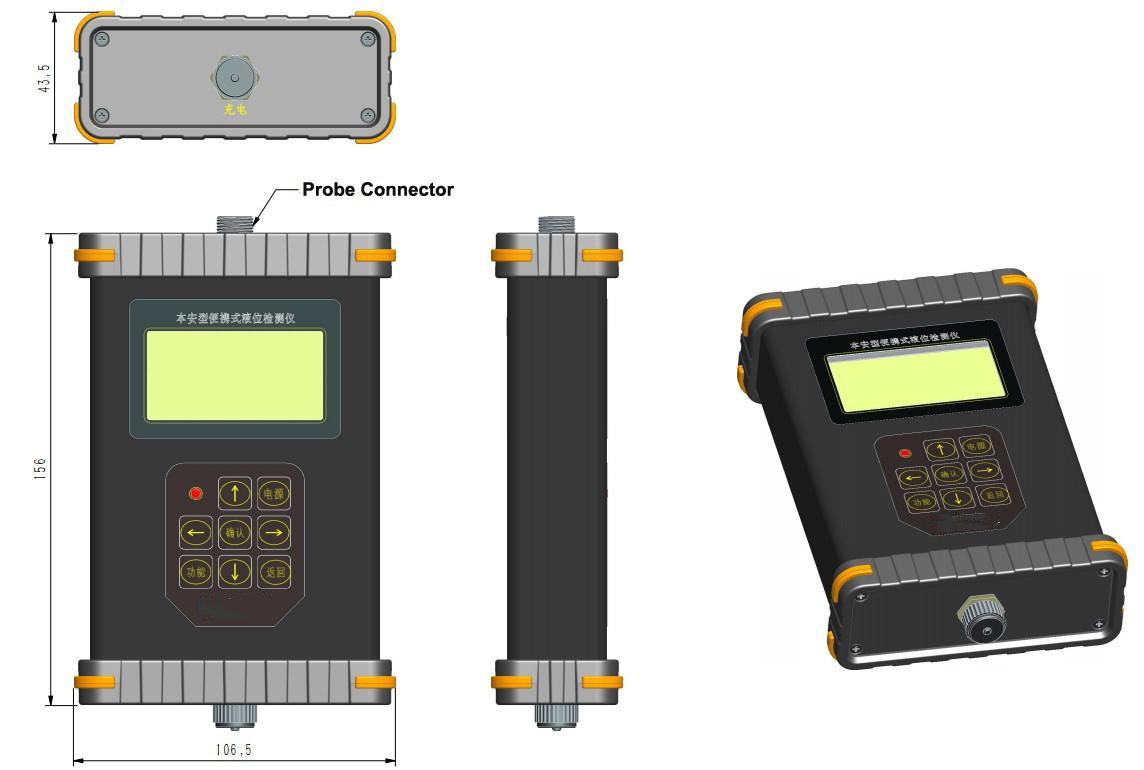
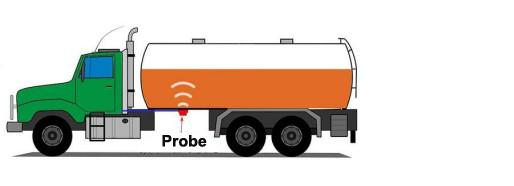
Checking Tank Trucks for Residual Fuel Before Loading
Our Portable Intrinsically Safe Ultrasonic Level Sensor is a liquid level detection device specifically designed for tank trucks. It is used to check whether there is any residual liquid in the tank truck before it enters the tank farm to be filled with liquid.
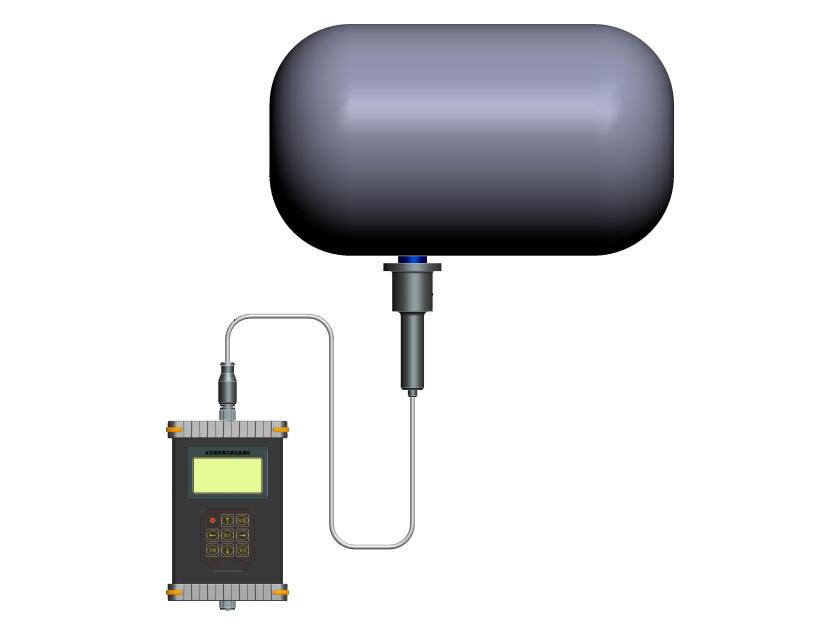
When using the portable level detector to measure the liquid level in a tank truck (or container), first connect the probe via the cable to the aviation connector socket on the top of the main unit, and tighten the nut on the connector plug. The operator holds the main unit in one hand and places the probe end flush against the bottom surface of the tank truck (or container) with the probe pointing vertically toward the liquid surface. Use the buttons to calibrate the device and measure the liquid level status.
Our Portable Intrinsically Safe Ultrasonic Level Sensor offers two liquid level measurement modes: liquid level value mode and liquid level status mode. In liquid level value mode, the probe is positioned against the bottom of the tank to measure the height of the liquid inside. In liquid level status mode, the probe is mounted on the side of the tank to detect and indicate whether liquid is present at the probe’s location.
Mode 1: Liquid Level Value Measurement Mode
In Liquid Level Value Measurement Mode, you must first ensure that the probe is installed at the bottom of the tank. Our main unit can display the liquid level value, liquid level percentage, and temperature. Our Portable Intrinsically Safe Ultrasonic Level Sensor is factory-calibrated. If the medium you are measuring matches the medium confirmed at the time of order, no further calibration is required. Simply press the function key on the main screen to measure the liquid level.
If the medium being measured changes, or if you press the function key and no liquid level value is detected for an extended period, you will need to enter the menu screen to calibrate the instrument.
- Confirm that the probe is properly attached;
- Set the measurement range: it should be greater than or equal to the tank’s capacity;
- Set the default sound speed: the sound speed of the medium being measured;
- Select “Automatic Calibration” and wait for the instrument to complete the process.
Mode 2: Liquid Level Status Measurement Mode
In liquid level status measurement mode, simply mount the probe on the side of the tank, against the outer wall at the point to be monitored. The main unit of our Portable Intrinsically Safe Ultrasonic Level Sensor will indicate whether liquid is present at the measurement location. Similarly, if the measured medium matches our factory calibration, no calibration is required.
If the medium changes or the measurement status is incorrect, you will need to access the menu interface to calibrate the instrument.
- Confirm that the probe is properly attached;
- Set the liquid level status: the liquid level status at the probe’s location;
- Perform calibration using the current calibration menu and wait for calibration to complete.
FAQ
Further Reading
Zhang Wei, possesses 20 years of experience as an automation instrumentation engineer, specializing in the research, design, installation, commissioning, and maintenance of automation instruments.
Face to various instrument communication protocols (such as Modbus, Profibus, etc.), with solid hardware circuit design and software programming skills (proficient in C language and PLC programming). Has extensive project experience; projects he has led and participated in have all achieved outstanding results, improving product accuracy, reducing costs, and increasing production efficiency.
Possesses excellent communication and coordination skills and a strong team spirit, enabling him to quickly respond to customer needs and provide high-quality automation instrumentation solutions.