
Tank Gauging Systems for Hazardous Areas: Sensors, ATEX and OEM Options
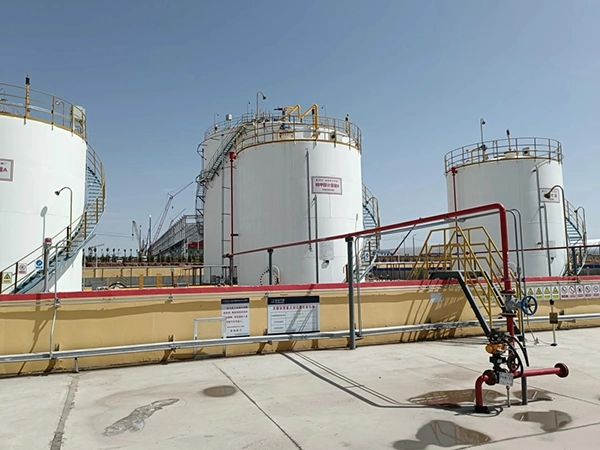
Tank gauging systems measure the liquid level, temperature, and, if necessary, pressure or density inside the tank, then convert the readings into storage volume or mass and send them to the control room. For tank gauging systems, customers not only requested OEM (original equipment manufacturer) cooperation but also required that the products have ATEX explosion-proof certification. Given the technical status of our existing products, we are fully capable of providing OEM services; however, our current level sensors have not yet obtained ATEX certification. We need to first assess the on-site operating conditions to determine whether the equipment will be used in areas with an explosion hazard, which will determine our subsequent response plan.
In the following chapters, we will first introduce the basic principles of tank gauging systems, discuss the specific operating conditions of tank farms (tank areas), and then analyze in depth the OEM cooperation model and explosion-proof compliance requirements of tank gauging systems.
What Is a Tank Gauging System?
A tank gauging system is an automated set-up used to acquire, process and monitor tank-stored product parameters, mainly liquid level, temperature, density, volume and weight. Widely adopted in petroleum, chemical, grain-and-oil tank farms, it serves as a practical alternative to traditional manual tank dipping operations.
Multiple sensors fitted on storage tanks collect real-time process data; pressure measurement may also be added for certain working scenarios. Collected signals are sent to field communication units and further transmitted to control-room software. Combined with tank strapping tables from on-site tank calibration and temperature-based volume compensation algorithms, the software supports continuous online inventory monitoring.
Unlike simple level switches or single-point level transmitters that only return liquid height readings, tank gauging systems deliver precise quantitative measurement for total stored volume or mass inside tanks.
Modern tank level measurement systems typically include:
- Level sensors (radar, servo, or hydrostatic types)
- Temperature probes (usually multi-point)
- Pressure transmitters
- Optional density or tank-bottom water detection
- Data acquisition units
- Control software
Types of Storage Tanks
Storage tanks commonly used in industrial tank farms can be classified based on their installation method and structural characteristics. Since different types of tanks entail variations in the selection of gauging solutions and explosion-proof design, this information must be established during the preliminary stages of setting up a tank gauging system.
1. Vertical Cylindrical Storage Tanks (Most Common)
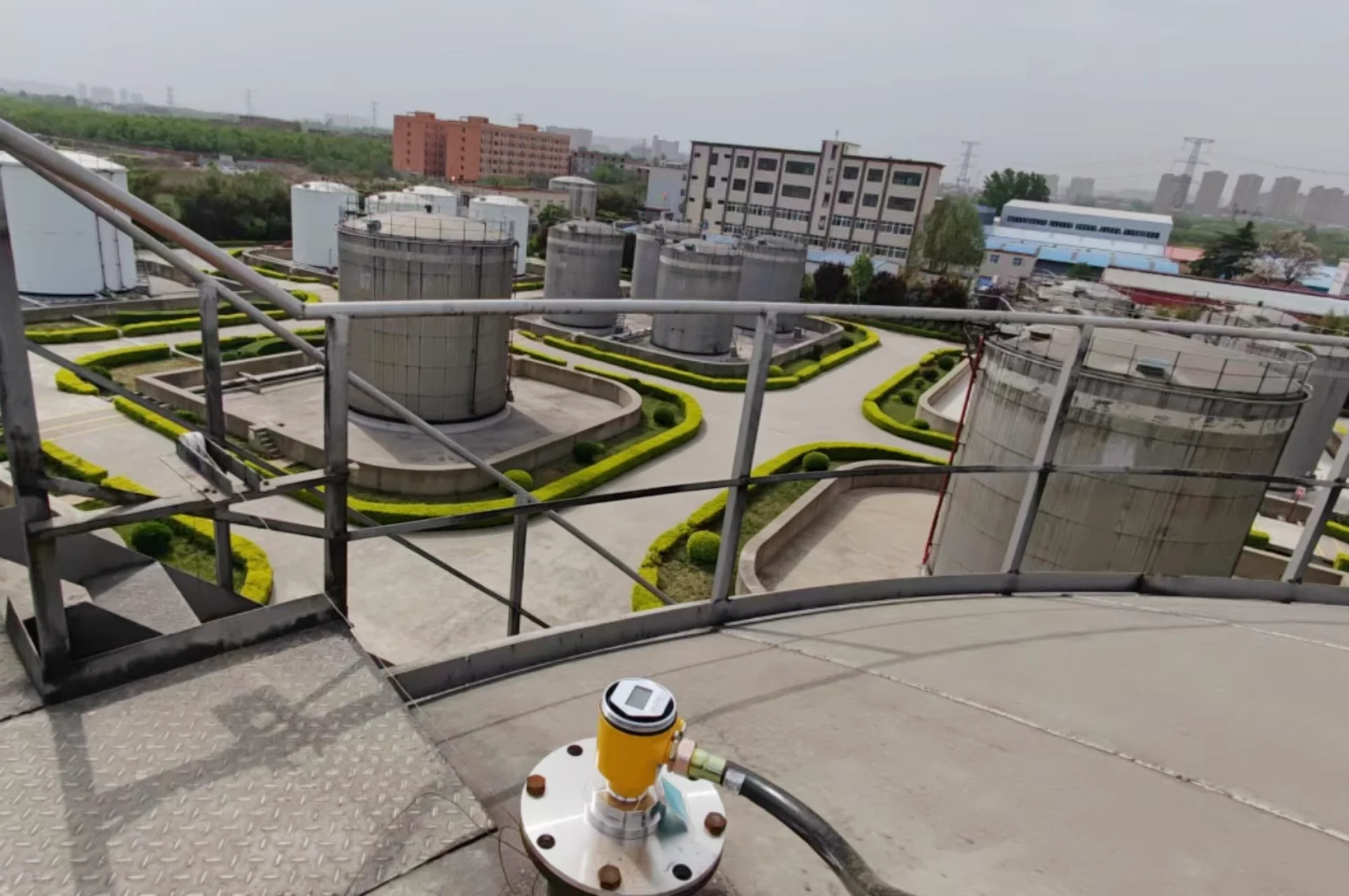
Vertical cylindrical tanks are the predominant type used in oil depots and chemical storage facilities. Installed vertically, these tanks offer a wide range of capacities—from small units of a few dozen cubic meters to large-scale oil storage tanks with capacities of tens of thousands of cubic meters. Typically, openings are provided on the tank roof for the installation of liquid-level measuring instruments; these tanks are the primary application for tank gauging systems. Tank farms are frequently designated as explosion-hazardous zones.
These are generally categorized into fixed-roof (dome-roof) tanks and floating-roof tanks (internal or external). Fixed-roof tanks are typically used for products with relatively low volatility. Suitable instrumentation includes servo-operated level gauges or non-contact radar level gauges, while magnetic-flap (float-and-flap) level indicators can be used for local on-site display.
Internal and external floating-roof tanks are designed to reduce evaporative losses of light petroleum products. For internal floating-roof tanks, we recommend servo-operated level gauges or radar level gauges installed in a stilling well.
2. Horizontal Cylindrical Storage Tanks
Horizontal storage tanks are positioned horizontally and generally have smaller capacities. They are commonly found in industrial process units, loading/unloading terminals, or as small intermediate storage tanks, typically used for holding small to medium quantities of liquid raw materials. Instruments are installed via openings on the side or ends of the tank.
Commonly used instruments include guided-wave radar level gauges and hydrostatic pressure-based level transmitters. Magnetic-flap indicators may be used for local on-site monitoring. These applications are generally focused on process monitoring and typically do not require the ultra-high measurement accuracy needed for custody transfer (trade-grade) applications.
3. Spherical Tanks (Spheres)
Spherical tanks feature high pressure resistance and are mainly used for high-pressure volatile media such as propane, propylene, liquid ammonia and LPG, where pressure working conditions are critical. Available instrument mounting points are limited. Sensors must satisfy strict pressure-withstand and explosion-proof criteria, so solution selection needs careful evaluation. For propane storage spheres, pressure-resistant guided wave radar is a common choice, often used together with differential pressure transmitters.
4. Small Pressure-Bearing Storage Tanks
Small pressure-bearing storage tanks have limited volume and are typically classified as pressure vessels; they are commonly used as process buffer tanks within production workshops. Given the complex range of media that may be contained and the limited space available, the level sensors selected for these storage tanks are typically compact models. Commonly used instruments include guided-wave radar level transmitters and differential pressure level transmitters.
Tank Gauging Sensors
Storage tank gauging sensors are core instruments used for the real-time, precise measurement of parameters such as liquid level, temperature, and pressure within storage tanks. Common types of storage tank gauging sensors include the following:
Guided Wave Radar (GWR) Level Gauges
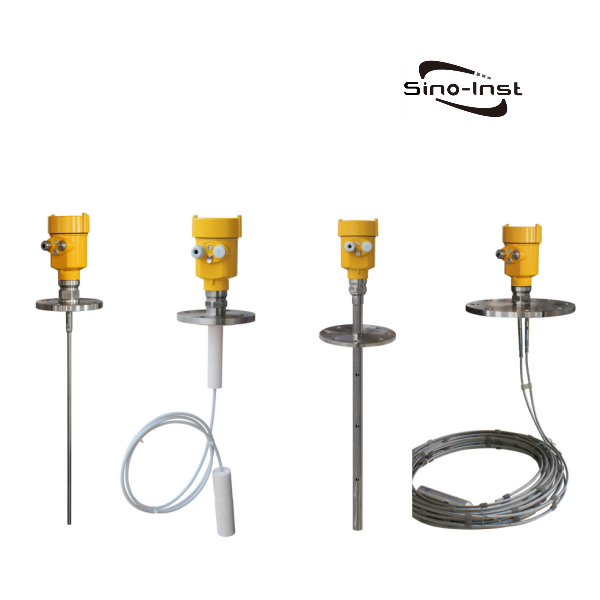
Guided wave radar uses probes or cables making direct contact with liquid surface. It reaches ±5–10 mm accuracy and shows strong anti-interference performance against foam and vapor phase.
This sensor fits horizontal tanks, spherical tanks and small pressure vessels. Pressure-resistant GWR variants are preferred for high-pressure spherical-tank service. It can measure water, oil, chemical fluids and wastewater; certain models even work for granular solids.
Magnetostrictive Level Gauges
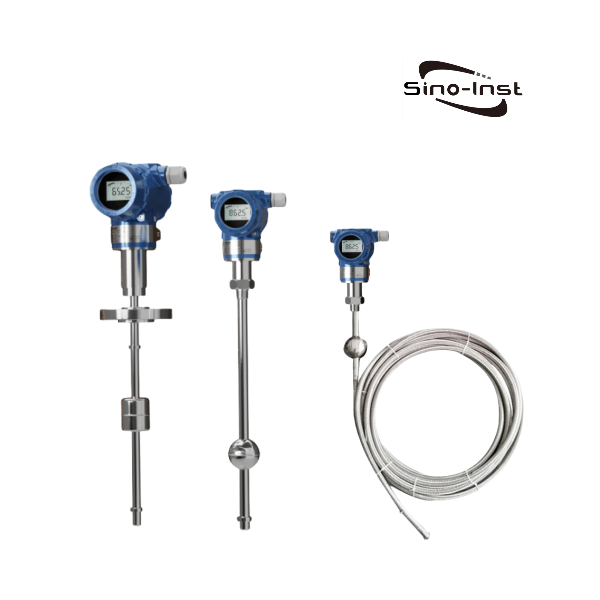
Magnetostrictive level gauges are a type of float-based measuring instrument that determines the position of a float through magnetic coupling and waveguide pulse positioning. They offer a level measurement accuracy of up to ±1 mm and are capable of simultaneously measuring both the liquid level and the interface (e.g., between two immiscible liquids). They are suitable for atmospheric vertical tanks and horizontal tanks, and can be used with corrosive, flammable, or explosive liquids.
Servo Level Gauges
Servo level gauges employ a servo motor to drive a float that tracks the liquid surface, ensuring stable performance. They are suitable for vertical tanks—including fixed-roof, internal floating-roof, and external floating-roof tanks—and are primarily used for high-precision inventory gauging in custody transfer applications, with a level measurement accuracy of up to ±0.5 mm.
Hydrostatic Level Transmitters
Differential pressure (DP) or hydrostatic level transmitters determine the liquid level by converting pressure readings. These are relatively low-cost devices typically used for horizontal tanks or process buffer tanks. They are generally intended for internal process monitoring and are not suitable for high-precision measurement scenarios such as custody transfer.
How to Choose the Right Tank Level Measurement System?
A tank gauging system is a complete solution assembled from sensors, temperature measuring parts, dedicated software and compliance certificates, instead of a single standalone level instrument.
First, confirm installation layout according to tank structure. Vertical fixed-roof tanks, internal/external floating-roof tanks, horizontal tanks and spherical tanks differ greatly in available installation space and nozzle requirements. For floating-roof tanks, interference caused by floating-roof movement needs consideration. For spherical high-pressure vessels, the quantity of reserved openings is strictly limited.
Second, analyze stored medium properties: flammability, volatility, corrosion resistance, density and viscosity. Zones storing flammable or highly volatile substances are normally classified as hazardous areas, calling for instruments complying with ATEX explosion-proof standards.
Besides, clarify application purposes and required accuracy grades. For ordinary process monitoring, ±5–10 mm accuracy from guided wave radar or hydrostatic transmitters is usually adequate. For custody transfer, bonded stock management or material loss auditing, high-precision performance with ±1 mm level accuracy becomes necessary.
Working parameters such as operating pressure and medium temperature also need checking, together with on-site conditions like foam inside tanks. High-temperature and high-pressure environments require properly-rated equipment with sufficient pressure safety margin. Where stirring or heavy-foam conditions exist, radar or guided wave radar technology is generally the better choice.
Finally, handle project compliance and commercial constraints, especially OEM branding and explosion-proof certification requirements. If OEM branding is required, clarify nameplate and certificate ownership in advance. If site is located within EU hazardous zones, all instruments shall hold valid ATEX certificates.
Level Instruments for Hazardous-Area Tank Gauging
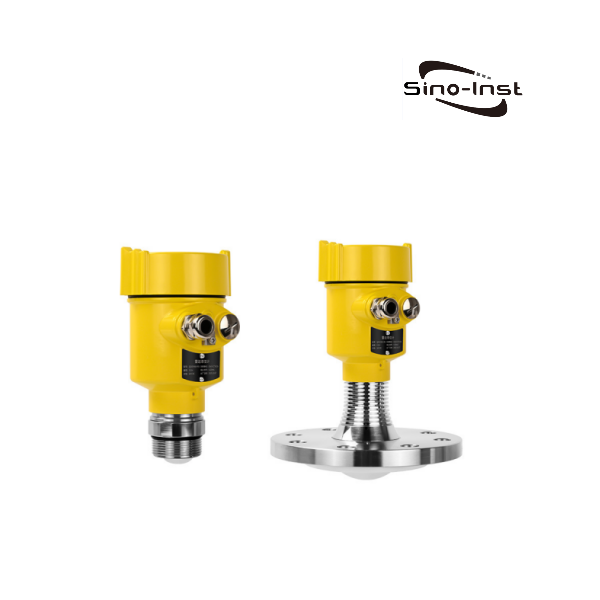
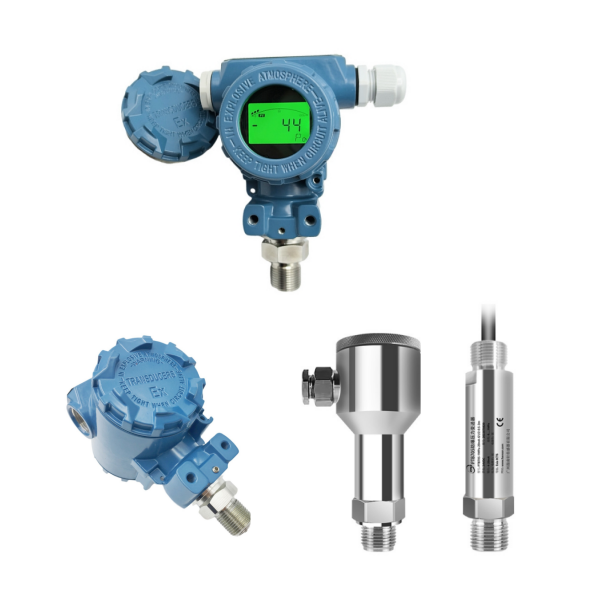
Comparison between ATEX and CNEX
ATEX is the European Union’s regulatory certification for equipment used in explosive atmospheres, while CNEX is one of China’s certification bodies for explosion-proof electrical products; since October 2020, such products sold in China also need CCC-Ex certification. Both systems share the same origins regarding test protocols, explosion-proof design principles, and safety assessment logic; they offer technically equivalent levels of explosion protection for identical explosion-proof ratings and temperature classes.
Scope of Application
ATEX: Applies to equipment and protective systems intended for use in potentially explosive atmospheres within the European Economic Area (EEA).
CNEX: Applies to explosion-proof electrical equipment sold and used within China.
Standards and Safety Levels
ATEX: Based on the EN series of European standards, which are highly aligned with—though not identical in every detail to—IEC standards.
CNEX: Based on the GB series of Chinese national standards (e.g., GB 3836 for electrical equipment in explosive gas atmospheres, and GB 12476 for electrical equipment in combustible dust environments).
Both systems are derived from the international IEC 60079 standard; the technical requirements of GB 3836 are essentially identical to those of EN 60079. Given the same parameters, there is no difference in the level of explosion-proof safety performance.
Markings and Certificates
ATEX: Products carry the CE mark and the hexagonal Ex symbol, along with the equipment group, category, protection type and temperature class (e.g., “II 2G Ex db IIC T4 Gb”).
CNEX: Products are marked with “Ex” followed by the explosion-proof rating and temperature class (e.g., “Ex d IIC T4”) and are accompanied by a CNEX certificate.
Our company’s liquid level instruments have obtained CNEX explosion-proof certification, fully meeting the design and acceptance requirements for explosion-proof installations in edible oil tank farms.
| Dimension | ATEX (EU) | CNEX (China) |
| Applicable Region | EU Economic Area | Within the territory of China |
| Legal Basis | EU Equipment / Workplace Directives | GB 3836 and other national standards |
| Standard System | EN Series | GB Series |
| Certification Body | EU Notified Bodies | CNCA-accredited organizations |
| Certification Focus | Notified Body type examination + production audit | Testing + Factory audit |
| Market Function | EU/EEA market access only | Domestic market access, import compliance |
Explosion-Proof Requirements
Tank gauging systems are typically deployed in storage areas for flammable liquids—such as gasoline, crude oil, propane, or organic solvents—where the evaporation of the stored media can create explosive gas mixtures.
Consequently, in accordance with standards such as GB 50160 and GB 50058, tank gauging systems installed in Zone 0 or Zone 1 hazardous (flammable/explosive) environments must utilize high-grade explosion-proof equipment and comply with requirements for complete sealing, anti-static protection, and explosion-proof wiring.
1. Hazardous Area Classification and Equipment Selection
Tank farm areas are classified as explosive gas environments, typically categorized as Zone 0 (where explosive gas mixtures are present continuously or frequently) and Zone 1 (where such mixtures may occur under normal operating conditions), with Zone 2 (where they occur only rarely and briefly) covering much of the area inside the bund. For projects exported to the European Union, equipment must comply with the ATEX directive, and all instrumentation must hold the corresponding ATEX certification.
Measuring instruments—such as radar level gauges, flowmeters, and transmitters—must carry an Ex rating that matches the zone: Zone 0 (inside the tank vapor space) requires EPL Ga, usually Ex ia intrinsically safe, while Zone 1 accepts EPL Gb, such as Ex d flameproof or Ex ib.
2. Electrical and Wiring Requirements
All electrical installations must be explosion-proof. Power lines must be routed via cables or installed underground/concealed. Furthermore, all electrical interfaces must be equipped with explosion-proof sealing fittings and flameproof cable glands to prevent the transmission of flames or sparks.
3. Installation and Construction Standards
Equipment mounting positions shall stay away from oil inlet-outlet points, stirring zones and physical obstructions. For floating-roof tanks, installation must take floating-roof movement into account to keep unobstructed measuring beam paths. Every device needs explosion-proof junction boxes and grounding components, complying with oil-depot explosion-proof construction standards.
4. Requirements for Specialized Components
Apart from instrument-level explosion-proof rating, overall system design matters equally. Intrinsically safe field hardware such as sensors and tank-side hubs must match with safety barriers to realize intrinsic-safety isolation. Cable type selection, routing layout and grounding work all need to follow explosion-proof standards, preventing electric sparks from igniting combustible vapors inside tank farms.
Explosion-proof compliance is not only about individual instrument certificates. It forms a complete compliance system covering instruments, supporting accessories and on-site installation & wiring. For OEM private-label projects, advance planning is required to ensure certificates and product nameplates match correctly.
FAQ
A tank level gauging system is a comprehensive assembly comprising sensors, integrated temperature-measuring components, tank gauging software, and compliance certification; it cannot be equated simply to an individual level instrument. Since different types of level sensors have distinct advantages and limitations, selection should be based on a holistic assessment of the tank structure, the characteristics of the stored medium, the required measurement accuracy, and the hazardous area classification (explosion-proof requirements) at the site.
Sino-Inst offers a full range of level measurement products—including radar, magnetostrictive, and float-type sensors—providing reliable, integrated measurement solutions for various types of storage tanks. For OEM and private-label projects, we supply complete instruments with your brand on the nameplate, housing label and packaging. Before ordering, tell us the destination country and the hazardous-area zone, so we can confirm which explosion-proof certificate applies to that model before production starts.
Further Reading


Zhang Wei, possesses 20 years of experience as an automation instrumentation engineer, specializing in the research, design, installation, commissioning, and maintenance of automation instruments.
Face to various instrument communication protocols (such as Modbus, Profibus, etc.), with solid hardware circuit design and software programming skills (proficient in C language and PLC programming). Has extensive project experience; projects he has led and participated in have all achieved outstanding results, improving product accuracy, reducing costs, and increasing production efficiency.
Possesses excellent communication and coordination skills and a strong team spirit, enabling him to quickly respond to customer needs and provide high-quality automation instrumentation solutions.