
IBC Tote Level Sensors and Alarms-Best Solutions
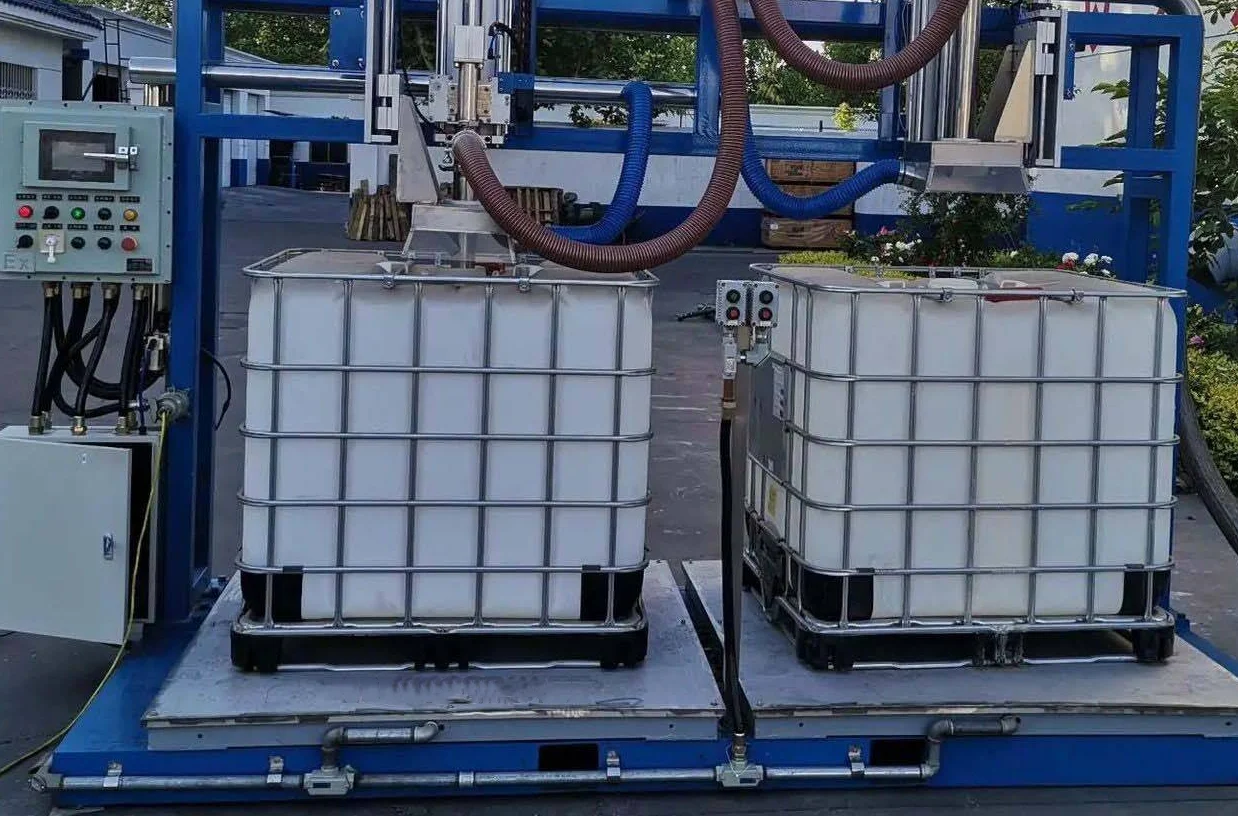
IBC totes are intermediate bulk containers for the storage and transportation of liquids, typically with capacities of 1,000–1,250 L (275–330 US gal). They are widely used in the chemical, coatings, food, and pharmaceutical industries. IBC totes are primarily classified by material into three categories: high-density polyethylene (HDPE), carbon steel, and stainless steel.
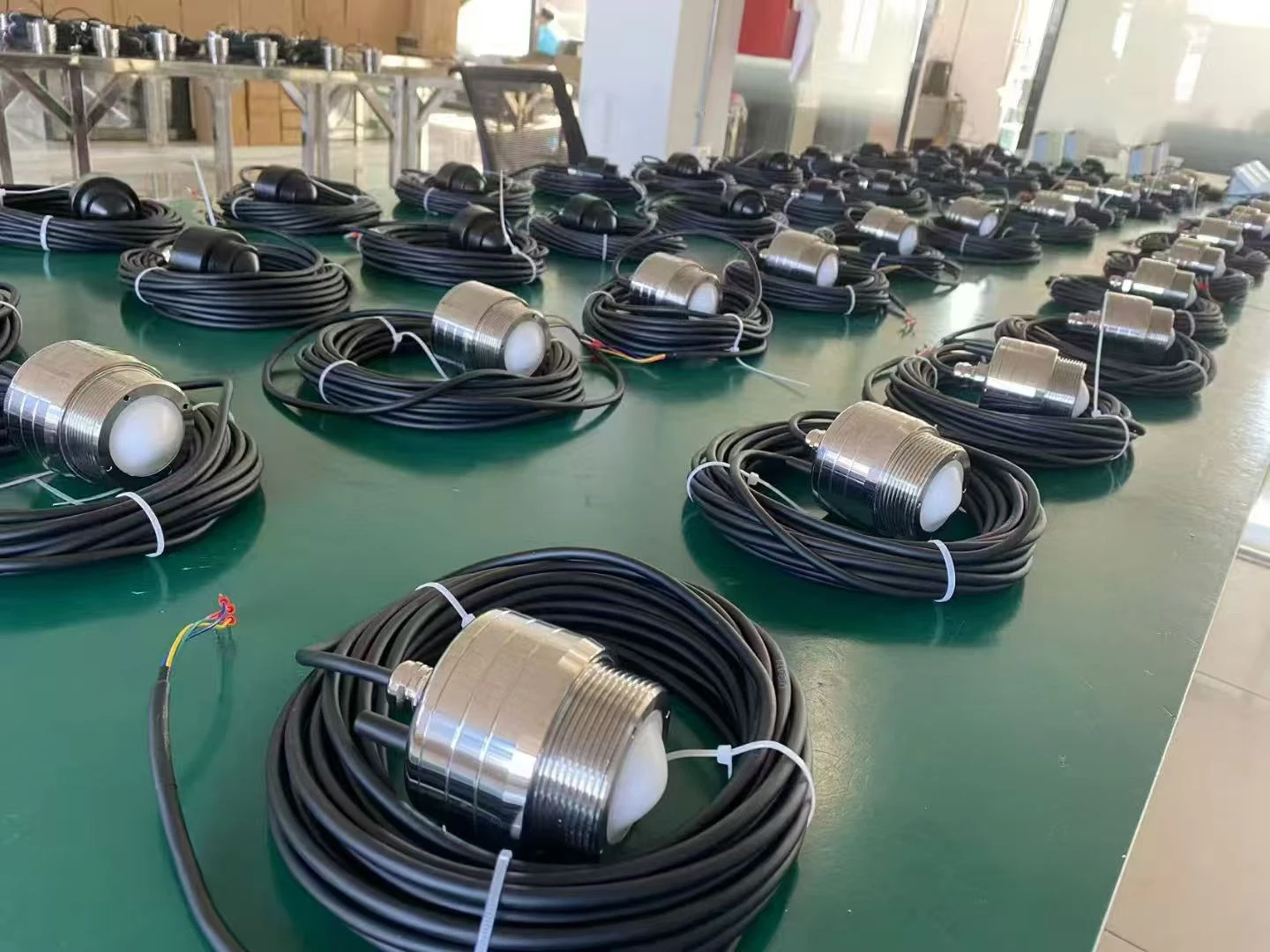
Since the liquid column in an IBC tote is only about 1 m high, selecting the appropriate IBC tote level sensors and alarms can be a challenge for users. When selecting a sensor, the focus should be on the dead zone, not the measurement range. Our Sino-Inst economical 80G radar level transmitter has a dead zone of 10 cm and can measure approximately 90% of the tote’s height. When mounted on a dedicated tote lid, it can be optionally equipped with two built-in relays for high/low level alarms.
Featured IBC Tote Level Sensors
Which Level Sensor Is Right for an IBC Tote? We recommend our 80 GHz radar level sensor. Of course, your choice should also be based on the actual dimensions of the IBC tote and your specific measurement requirements.
If the IBC tote is used as a reusable container requiring continuous level measurement plus high/low level alarms, choose our 80G radar level transmitter. If you have a limited budget, do not plan to refill the tote, and only need to monitor consumption, an ultrasonic level transmitter is a suitable option.
For fixed, non-replaceable totes, a submersible level transmitter is a good choice due to its low purchase cost and stable performance. If you only need high/low level alarms, a float-type level switch is recommended. Multi-point switch control is also available.
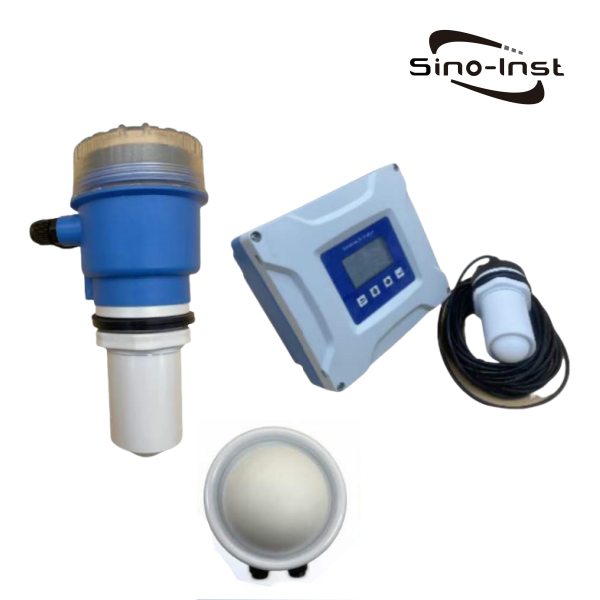
Best for: Rotating totes that need continuous level plus high/low alarms.
- Blind zone: 0.1 m
- Accuracy: ±3 mm or 3%, whichever is greater
- Output: 4–20 mA, RS485; 2 relays optional
- Connection: G2 thread; 2″ NPT on request
- Sensor material: ABS, PE or PTFE
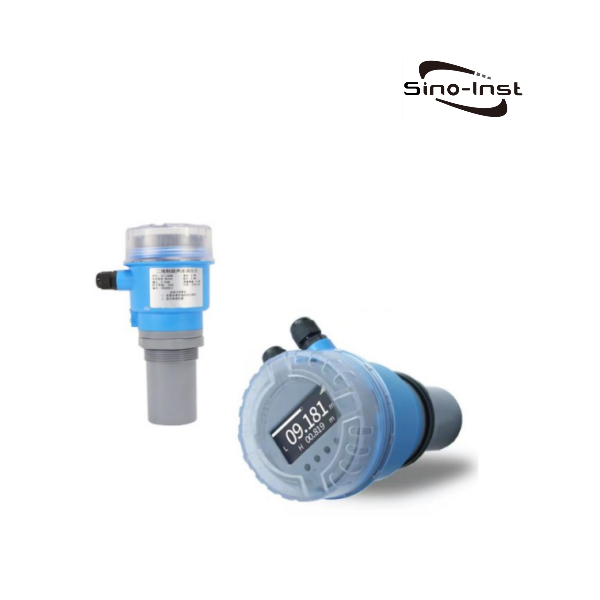
Best for: Consume-only totes where a low-level alarm is enough.
- Blind zone: ≤0.3 m (5 m range)
- Error: ≤1%
- Output: 4–20 mA; RS485 or relays optional
- Transducer: ABS or PVDF
- Process: −20 to 80 °C, atmospheric
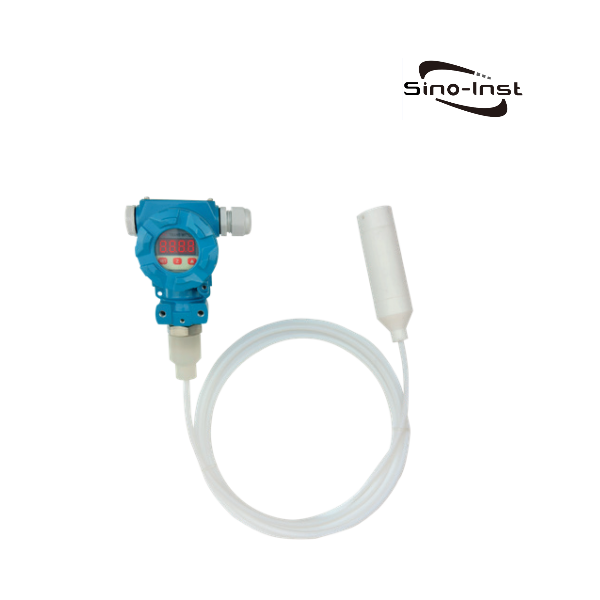
Best for: Fixed totes holding acids, caustics or other corrosive liquids.
- Range: from 0–1 m H₂O
- Accuracy: 0.5% or 0.2% FS
- Output: 4–20 mA, 0–5/0–10 V, RS485
- Power: 12–24 VDC
- Probe: PTFE; IP65/IP67
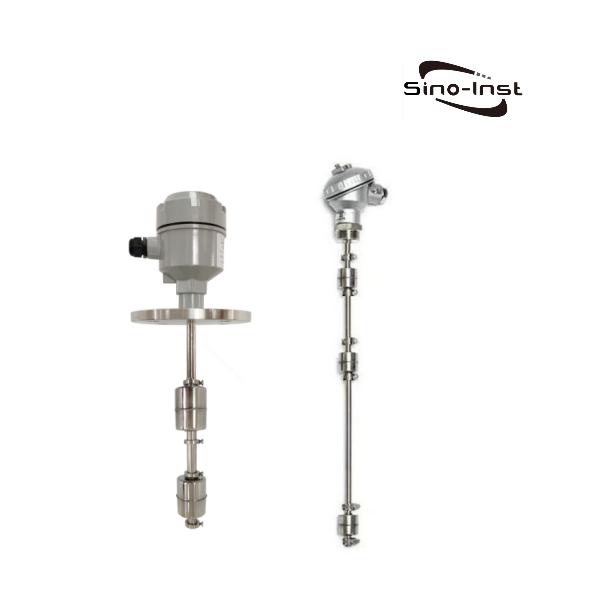
Best for: High/low alarms only, with no power supply needed.
- Switch points: 1–4
- Length: 100–5000 mm
- Material: 304 SS; 316L, PP, PTFE optional
- Contact: 50 W, 250 VAC
- Not for sticky or viscous media
6 Ways to Measure Level in an IBC Tote
Although we highly recommend our company’s 80 GHz radar level transmitter, it is not the only measurement technology available for measuring liquid levels in IBC totes. There are six common methods for measuring IBC tote liquid levels, and the main differences lie in whether the tote needs to be opened, how cumbersome it is to switch between totes, and how high up in the tote the level can be measured.
| Method | Contacts liquid | Tote swap | Measurable range (≈1 m column) | Foam / viscous media | Alarm output | Cost |
|---|---|---|---|---|---|---|
| Through-lid radar | No, mounted outside the lid | Easiest, just lift it off | Full height | Little effect | Depends on model | High |
| Cap-mounted 80GHz radar | No | Easy, swap the whole sensor cap | ≈90% (0.1 m blind zone) | Little effect | Two built-in relays | Medium |
| Cap-mounted ultrasonic | No | Easy, swap the whole sensor cap | ≈70% (0.3 m blind zone) | Foam and vapor absorb sound and affect the reading | Optional relays | Low |
| Submersible level transmitter | Yes | Pull out the wet probe and cable | Nearly full height | Not affected by foam; viscous media can coat the diaphragm | Needs an external display or controller | Low |
| Float switch | Yes | Must be removed | Single point only, no continuous reading | Sticky media can jam the float | It is the alarm switch | Low–medium |
| Weighing (load cells) | No | Easy, set the tote on the scale | Full height | Not affected | Needs an external indicator | High |
The Blind Zone Is Very Important
The distance from the sensor’s emitting surface to the highest liquid level must be greater than the blind zone. Once the liquid level enters the blind zone, readings become unreliable—they may fluctuate or lock onto an incorrect value.
On large tanks, a blind zone of several dozen centimeters has little impact. However, in IBC totes, where the distance from the sensor to the bottom of the container is only about 1 m, the blind zone accounts for a significant proportion of that distance.
The blind zone for an 80G radar level transmitter is approximately 0.1 m, while that for an ultrasonic level transmitter is approximately 0.3 m. Other differences between the two are covered in radar vs. ultrasonic level transmitters.
Therefore, when selecting IBC tote level sensors and alarms, you must clearly understand what the maximum liquid level you need to measure is.
High and Low Level Alarms
A low-level alarm prevents the pump from running dry, while a high-level alarm prevents overflow during filling.
A float-type level switch is a device that uses a float to trigger a reed switch as the liquid level changes, thereby enabling liquid level detection and control. To trigger alarms or control circuits at the high and low liquid levels required for IBC totes, a simple solution is to install a float-type level switch. It is cost-effective and provides reliable performance.
Of course, if you need to monitor the liquid level while triggering high and low level alarms, you can customize a radar level transmitter to include two relays. The relays can be directly connected to audible and visual alarms or a PLC.
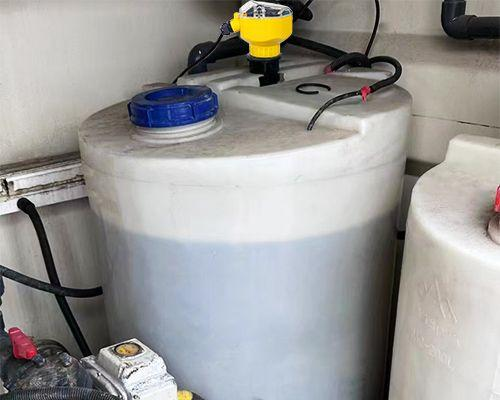
Case 1: High-Viscosity Adhesive in IBC Tanks Requiring Low-Level Audible and Visual Alarms
A European furniture manufacturer uses 1,000-liter Mauser IBC tanks to store SBS copolymer-based adhesives and needs to monitor the remaining liquid level in the tanks, triggering audible and visual alarms when the level falls below a preset value. Operating Conditions: No agitation; ambient temperature and pressure; the entire system must be explosion-proof.
- The adhesive is too viscous; float switches and paddle switches would become stuck and are therefore unsuitable. We see the same problem in viscous paste tanks.
- An 80GHz radar level transmitter was selected to measure non-contact from the top of the tote, unaffected by viscosity or material buildup. A low-level threshold was set using the transmitter’s built-in relay, which directly triggers an audible and visual alarm.
Case 2: IBCs Containing Dilute Phosphoric Acid and Urea-Formaldehyde Resin, Connected to ESP32
A user in the UK has several IBCs containing 3% phosphoric acid and 50% urea-formaldehyde resin, with a maximum temperature of 30°C, and uses an ESP32 to collect data. Since these tanks are stationary and not replaced, we recommend a PTFE submersible level sensor powered by 24 VDC.
Therefore, when selecting IBC tote level sensors and alarms, we must first confirm three factors: whether the medium is viscous or not, how corrosive it is, whether the tanks are reusable or stationary, and whether explosion-proof certification is required.
Further Reading
Zhang Wei, possesses 20 years of experience as an automation instrumentation engineer, specializing in the research, design, installation, commissioning, and maintenance of automation instruments.
Face to various instrument communication protocols (such as Modbus, Profibus, etc.), with solid hardware circuit design and software programming skills (proficient in C language and PLC programming). Has extensive project experience; projects he has led and participated in have all achieved outstanding results, improving product accuracy, reducing costs, and increasing production efficiency.
Possesses excellent communication and coordination skills and a strong team spirit, enabling him to quickly respond to customer needs and provide high-quality automation instrumentation solutions.
Want to see more of our engineering guides in Google Search? Add Sino-Inst as a preferred source.