
Non-Contact Radar Level for Viscous Paste (SLES) Tanks
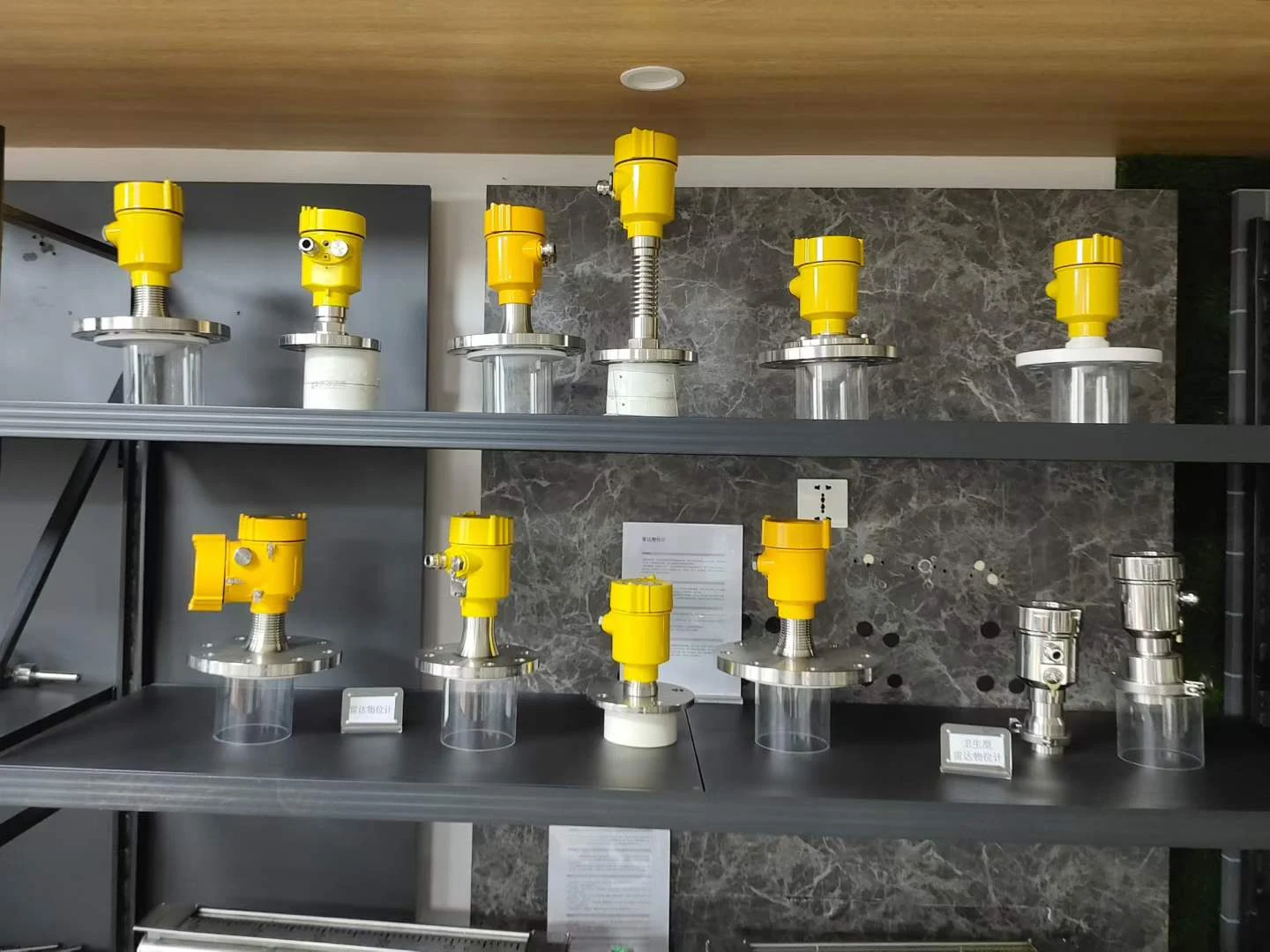
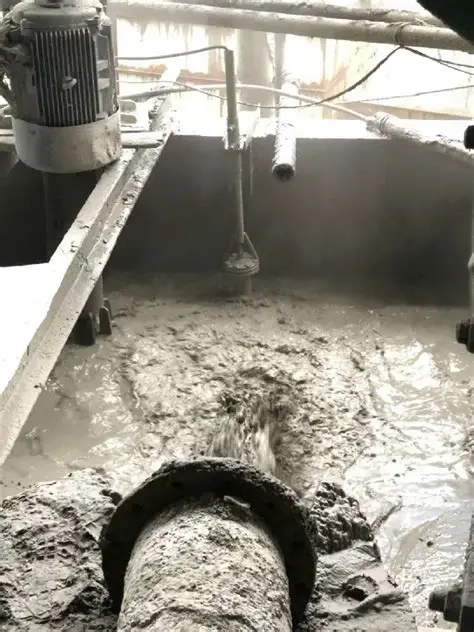
In production and storage tanks holding SLES paste, high material viscosity coupled with strong adhesive properties often results in heavy material build-up on tank inner walls. When contact-type level instruments are deployed, their probes commonly get coated with paste deposits. This causes inaccurate level readings and forces frequent offline shutdowns for instrument cleaning and maintenance work.
For these high-viscosity conditions, we recommend an 80GHz non-contact radar level sensor. Because it measures without contact, it delivers stable and continuous level monitoring inside the tank.
Operational Characteristics and Measurement Challenges for SLES Pastes
SLES (Sodium Laureth Sulfate) is a core raw material in the personal care and detergent industry. In its processed, paste-like form, it exhibits high viscosity, strong adhesion, and low fluidity. During storage—whether the substance is left to sit or is being stirred—it tends to adhere readily to the inner walls of the storage tank. The paste also clumps and forms strings, and quickly coats any sensor probe it touches.
Measuring the liquid level of such viscous, paste-like substances in storage tanks presents several long-standing challenges:
Sensor Envelopment and Signal Failure
Contact-based instruments—such as submersible level sensors or guided-wave radar—must be immersed in the medium. As the SLES paste continuously adheres to and accumulates on the probe or cable, it eventually obscures the sensing area, and the instrument can no longer measure.
Interference from False Echoes
Over time, uneven paste deposits build up on tank walls. Contact-based devices struggle to tell the real liquid surface apart from these wall accumulations. They may mistake wall-stuck deposits for actual liquid level, producing falsely elevated readings and unstable measurement data.
High Maintenance Burden
To restore measuring accuracy, site operators have to halt processes, open tank hatches, take out sensors and scrape off paste residues manually. Repeated cleaning consumes substantial manpower and raises operating costs.
Measurement Solution Comparison: Contact Instruments vs. 80GHz Non-Contact Radar
For SLES paste, with its high viscosity and strong adhesion, each common level measurement method has its own advantages and disadvantages.
However, 80GHz non-contact radar generally performs better than contact-type instruments. It is the preferred solution when paste coats sensors and builds up on tank walls.
Contact-type instruments
These instruments have one thing in common: the detection component must extend into the container and come into direct contact with the SLES paste.
| Instrument | How it measures | Problem with SLES paste | Result |
|---|---|---|---|
| Guided-wave radar (cable or rod type) | Electromagnetic waves are transmitted along a probe (rod or cable) to the liquid surface. | SLES paste readily adheres to and coats the probe. Anti-stick coatings only delay the adhesion rather than prevent it. | Waves are reflected prematurely by the buildup, creating false echoes. The level reading drifts. |
| Submersible hydrostatic level transmitter | A diaphragm senses pressure from the liquid column. | Paste coats the diaphragm and hardens, locking it in a fixed position. Stringy paste blocks pressure-sensing openings. | Pressure transmission is disrupted. The output signal freezes or stops responding. |
| Float or displacer-type level gauge | The float and connecting rod stay fully submerged in the paste. | Paste jams the float or seizes the rod. Build-up on the float changes its buoyancy. | The float fails to follow level changes and creates measurement errors. Not fit for continuous automatic monitoring. |
| 80GHz non-contact radar | The antenna emits radar waves downward from the tank top; they reflect off the surface back to the antenna. | The antenna does not contact the paste. No components are submerged in the medium. | No jamming or seizure. Signal output remains continuous. |
80GHz Non-Contact Radar Level Transmitter
The 80GHz radar level transmitter uses FMCW technology. Because it measures without contact, there is no probe for SLES paste to coat.
Its short wavelength gives a narrow beam angle (as small as 3°) and concentrated signal energy. With no moving parts, nothing can jam or seize, and the signal output stays continuous. Even in tanks with complex internals, it can lock onto the real material surface.
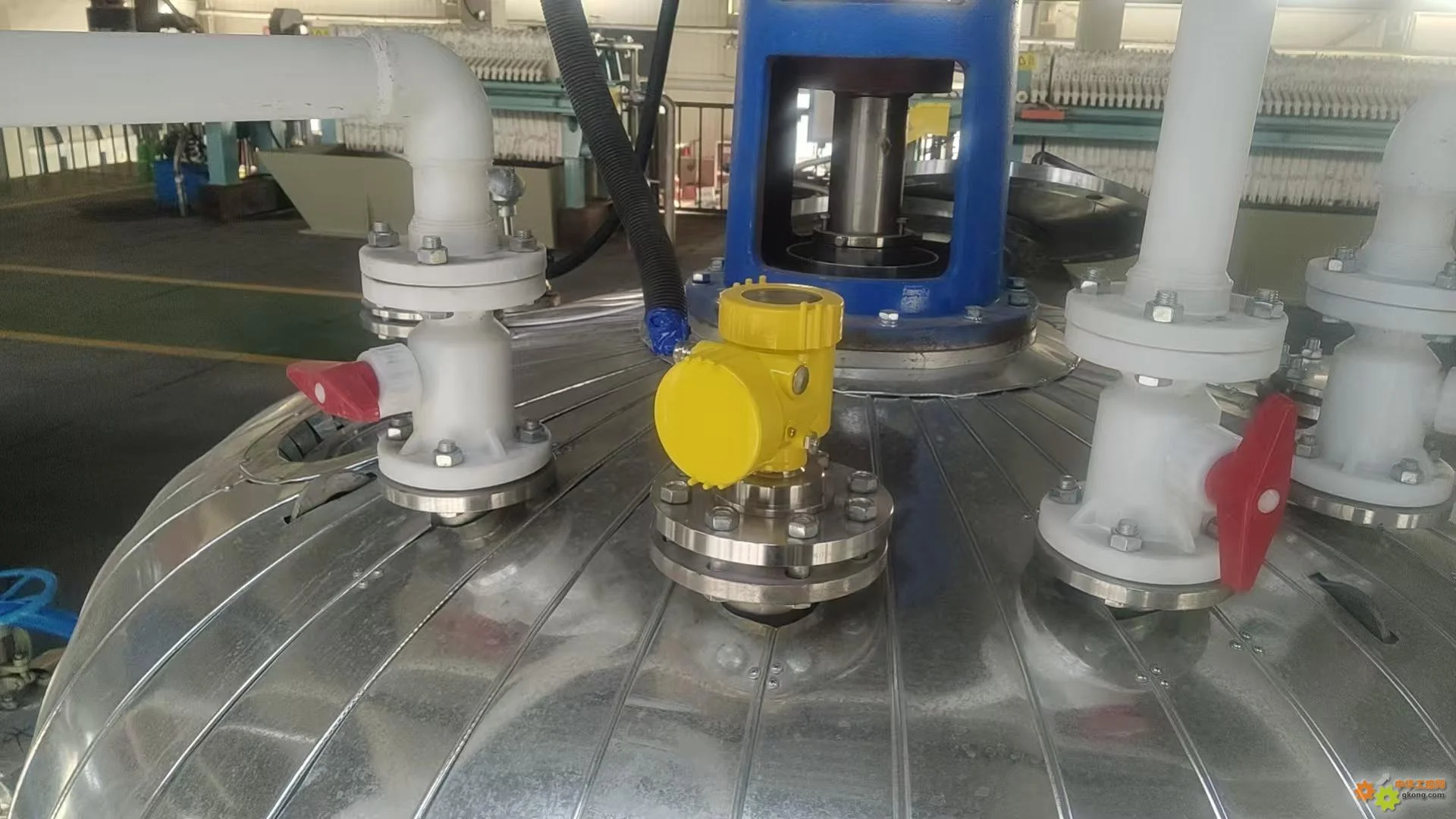
The antenna emits high-frequency radar waves downward from the top of the tank. These waves travel through the air space, strike the liquid surface, and reflect back to the antenna. The antenna does not come into contact with the SLES paste, and no components are submerged in the medium.
Therefore, there is no risk of probes, guided-wave rods, or diaphragms becoming coated or encrusted by the paste. If the device is installed correctly, paste on the tank walls will not block the antenna.
80GHz Radar Design Features for Viscous Paste
Four design features make 80GHz radar suitable for SLES paste tanks.
Narrow Beam Angle
With a lens antenna, the 80GHz beam angle can be as small as 3°. The energy is concentrated on the paste surface at the center of the tank and avoids tank walls, agitators and supports. Fixed echoes from these structures are learned in the empty tank and masked. If wall deposits keep growing, repeat this clutter mapping during a planned shutdown.
FMCW Signal Processing
While SLES paste is being stirred, the surface is uneven and the echo is weak. FMCW radar derives distance from continuous frequency modulation, which gives a higher signal-to-noise ratio than pulse radar. Dynamic filtering smooths out fluctuations caused by agitation, and echo-strength checks separate the paste surface from noise caused by material stuck near the antenna.
Lens Antenna and Air Purge
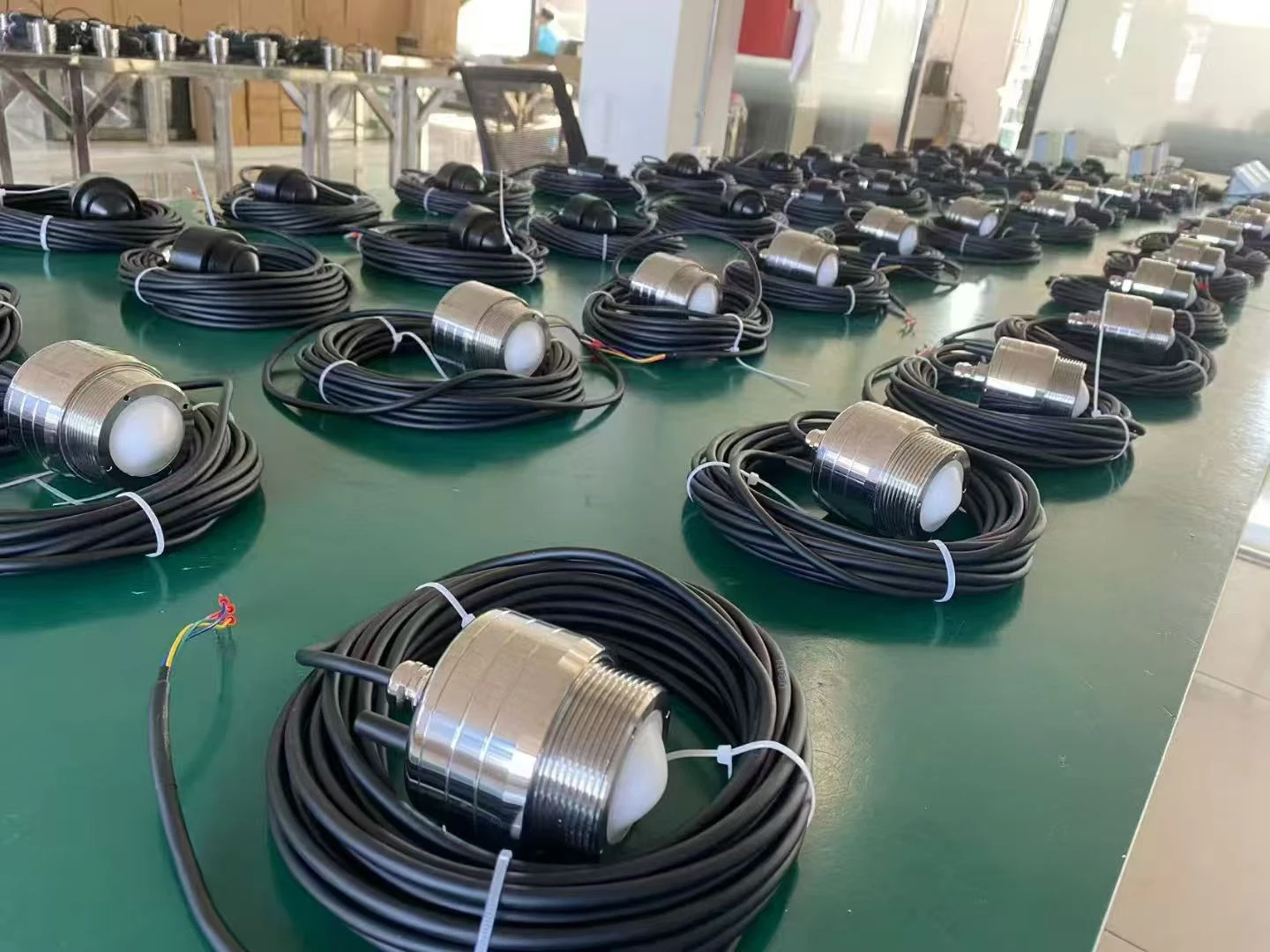
The lens antenna has a smooth surface with no grooves or gaps, so paste cannot string, accumulate or bridge on it as it does on a horn antenna. A PTFE face reduces sticking further. Dry, clean compressed air from the purge connection clears splashes from the antenna face before they harden. Run the purge on a timer and keep the airflow gentle so it does not disturb the paste surface.
Measurement Range and Accuracy
In high-precision mode, 80GHz radar reaches ±1 mm accuracy (depending on model), with a dead zone of about 0.1 m. This covers typical small and medium SLES storage tanks. SLES paste has a high water content and a high dielectric constant, so it gives a strong echo, and normal changes in viscosity do not affect the reading.
Recommended for SLES Paste Tanks
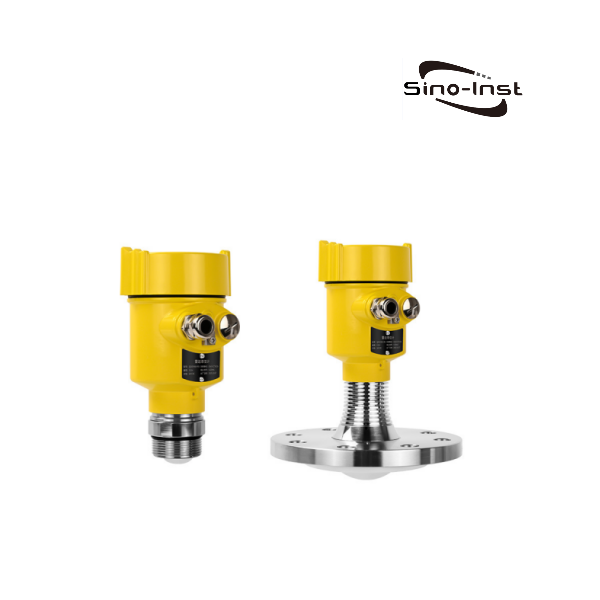
Lens antenna with a beam angle as small as 3° and accuracy up to ±1 mm. Our first choice for SLES paste tanks.
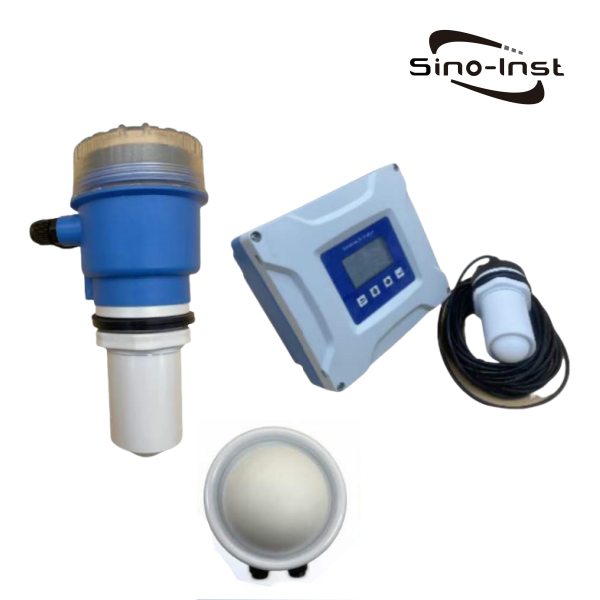
A lower-cost 80GHz radar for small paste tanks with simple internals.
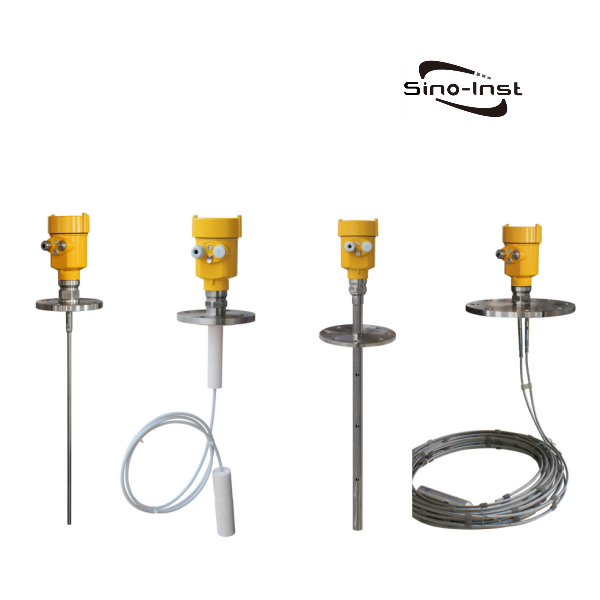
For tanks with heavy foam or a low-dielectric medium, where non-contact radar loses its echo.
Installation and Usage Guidelines
Correct installation matters as much as the instrument. Check the mounting position, nozzle design, purge set-up and false-echo settings below.
Selection of Installation Location
- Preferably, install the device in the central area of the tank roof. Avoid locations near the tank wall, feed inlets, agitator blades, structural ribs, or internal component supports.
- Ensure an appropriate offset distance from the tank wall; do not mount the device directly adjacent to a tank-wall nozzle.
- Keep away from feed inlets, where paste splashes onto the antenna face during feeding.
- Avoid the rotational path of the agitator shaft and blades.
Requirements for Nozzle Selection and Installation
- In many field applications, a nozzle (mounting pipe) is used for installation. Improper nozzle design is a frequent cause of abnormal radar signals in tanks containing viscous pastes.
- The inner wall of the nozzle must be smooth, and the upper opening should be free of burrs. The inner diameter of the nozzle should not be too small.
- The nozzle should not be excessively long, as this can easily cause signal ringing. Paste splashed onto the inner wall of the pipe will also keep generating clutter.
- Do not recess the antenna face deep inside the nozzle; keep it flush with or slightly below the nozzle end.
- Avoid tapered or stepped nozzles; use short, straight ones.
Purge Air Connection
Connect the purge port to dry, clean compressed air and purge at timed intervals. Purge more often during feeding, when splashing is heaviest.
Installation Tilt and Beam Orientation
- Point the antenna vertically down at the liquid surface; do not install it at an angle.
- Ensure the flange is level during installation and secure it firmly to prevent loosening.
FAQ
Contact instruments fail in SLES paste because their sensing parts must sit in the medium. 80GHz non-contact radar measures from the tank top and is the preferred solution for continuous level monitoring in viscous paste tanks.
Sino-Inst supplies 80GHz FMCW radar level sensors and can customize them to your site requirements. For a model recommendation, send our engineers your tank size, nozzle details and paste temperature.
Further Reading

Zhang Wei, possesses 20 years of experience as an automation instrumentation engineer, specializing in the research, design, installation, commissioning, and maintenance of automation instruments.
Face to various instrument communication protocols (such as Modbus, Profibus, etc.), with solid hardware circuit design and software programming skills (proficient in C language and PLC programming). Has extensive project experience; projects he has led and participated in have all achieved outstanding results, improving product accuracy, reducing costs, and increasing production efficiency.
Possesses excellent communication and coordination skills and a strong team spirit, enabling him to quickly respond to customer needs and provide high-quality automation instrumentation solutions.
Want to see more of our engineering guides in Google Search? Add Sino-Inst as a preferred source.