Home > Blog > Coriolis vs Thermal Mass Flow Meter: Accuracy, Cost, Which to Choose
Coriolis vs Thermal Mass Flow Meter: Accuracy, Cost, Which to Choose
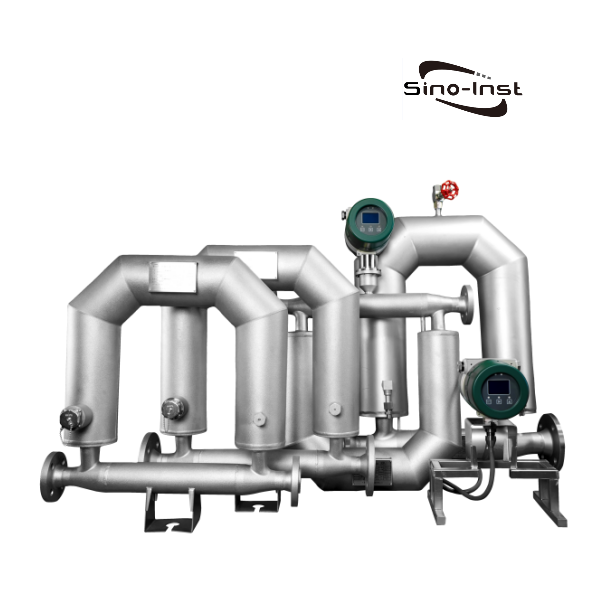
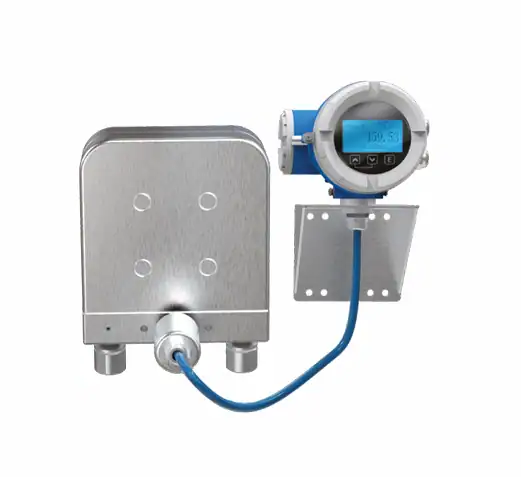
Coriolis mass flow meters and thermal mass flow meters are the two main categories of mass flow meters. They use different measurement technologies and are both undergoing continuous development and improvement. Coriolis mass flow meters are evolving to handle high-temperature, high-pressure, cryogenic, and ultra-low flow rate measurements. Thermal mass flow meters are being upgraded to improve measurement accuracy and to handle high-temperature and contaminated media.
How should you choose between a Coriolis mass flow meter and a thermal mass flow meter? If you are measuring liquids or slurries, or require a measurement accuracy of 0.1%, a Coriolis mass flow meter is the right choice. If measuring gas, a thermal mass flow meter is the preferred choice. Coriolis mass flow meters are only worthwhile for applications requiring high pressure, high precision, or where the composition of the gas may change. Examples include CNG and high-pressure hydrogen refueling systems, and high-pressure gas testing facilities.
We’ll analyze this in detail below. We hope this helps you choose the most suitable mass flow meter.
Quick Comparison: Coriolis vs Thermal Mass Flow Meter
Items
Coriolis Mass Flow Meter
Thermal Gas Mass Flow Meter
Media
Liquids, gases and slurries
Gases only (not steam)
Accuracy
±0.1%
Inline: ±1.5%; insertion: ±2.5%
Pipe size
DN1 to DN250
Inline: DN6 to DN100; insertion: DN25 to DN5000
Fluid temperature
−200 to +350°C
Standard version: −40 to +260°C; high-temperature version: up to 800°C
Pressure
Up to 96 MPa (high-pressure version)
Up to 2.5 MPa standard; up to 40 MPa (high-pressure version)
Pressure drop
Yes, and it gets large if the meter is undersized
Very low
Straight pipe run
Usually not required
Required: 10D upstream, 5D downstream
If the gas composition changes
Reading is not affected
Reading is affected; the meter must be calibrated for the actual gas
Also measures
Density and temperature
None
Installation
The pipe has to be cut
Insertion type can be hot-tapped without shutting down the line
Price
From about USD 2,000 for small sizes; rises with pipe size
Mostly a few hundred to just over USD 1,000; insertion price hardly changes with pipe size
Accuracy
A Coriolis mass flow meter is accurate to ±0.1%. A thermal mass flow meter is ±1.5% for inline models and ±2.5% for insertion models. That is a gap of more than ten times.
Insertion meters are less accurate than inline meters because they read one point in the pipe and work out the rest. Customers have asked us whether an insertion meter can be made more accurate. Our answer: if you need better accuracy, use an inline meter.
Coriolis accuracy also drops at low flow. Every Coriolis meter has a zero stability figure. On a DN25 meter it is 0.010 kg/min. At a flow of 2 kg/min, that alone is 0.5% of the reading. So size a Coriolis meter by the actual flow rate, not by the pipe diameter.
When do you need 0.1%? A customer in India builds test benches for household gas regulators and first asked about a rotameter. They needed to plot the regulator’s flow curve, and neither a rotameter nor a thermal meter was accurate enough, so we recommended a Coriolis meter. On test benches, in batching and in custody transfer, accuracy is a hard requirement. If you only need to track how much compressed air or nitrogen a plant uses, 1.5% to 2.5% is enough, and the meter costs far less.
Cost
Cost often decides between a Coriolis meter and a thermal meter. A thermal mass flow meter costs from a few hundred to just over a thousand US dollars. A Coriolis mass flow meter starts at about USD 2,000 for the smallest size, and the price goes up with pipe size. With an insertion thermal meter, the price changes little even on a large pipe.
Installation and maintenance cost money too. To install a Coriolis meter you have to cut the pipe and stop the process. An insertion thermal meter needs only one hole in the pipe and a ball valve. You can install it without a shutdown, and later pull it out for cleaning or calibration the same way.
One cost is easy to miss: the third-party calibration certificate. Our flow meters ship with a free factory calibration report, and thermal meters are calibrated with air. If you measure a gas mixture such as biogas and your project calls for a third-party certificate, the meter has to go to an outside lab and be calibrated for the actual gas composition. We once quoted a wastewater plant in Colombia: USD 925 for the meter and about USD 1,200 for third-party biogas calibration. The certificate cost more than the meter.
Coriolis or Thermal for Gas?
For liquids and slurries, a Coriolis mass flow meter is the only choice of the two. For gas, both can work. We suggest you look at a thermal mass flow meter first, because it covers most gas applications. You only need a Coriolis meter when the pressure is high and you also need high accuracy or the gas composition changes. Three questions will tell you which one fits.
1. Is the gas pressure high enough?
Coriolis mass flowmeters operate by measuring the force exerted by a fluid; the lower the gas density, the weaker this force becomes. Consequently, higher gas pressure facilitates measurement, while excessively low pressure renders it impossible.
We once received an inquiry regarding a hydrogen project: the pipe diameter was DN200, but the pressure was only 3–5 kPa. This pressure is far too low for a Coriolis mass flowmeter to function. To use one, the hydrogen pressure would need to be increased to 2 MPa and the pipe size reduced to DN40—and even then, the accuracy would only be 1%. For gas applications involving low pressure and large pipe diameters, it is better to use a thermal mass flowmeter instead.
2. Is the gas composition stable?
A thermal meter is calibrated for one gas. If the mixture keeps changing, the reading drifts. A process research customer in the US dropped the thermal meter for this reason: their gas composition changed over time. If the composition changes and the pressure is high enough, choose a Coriolis meter.
3. If both can do the job, look at accuracy and pipe size.
For custody transfer or test benches that need 0.5% or better, choose a Coriolis meter. For pipes above DN100, or where 1.5% to 2.5% is enough, choose a thermal meter.
When you use a Coriolis meter on gas, size it by flow rate and the pressure drop you can accept. A vacuum equipment company in the US was measuring cold nitrogen gas. The DN80 sensor gave a pressure drop of about 30 kPa, which they could not accept, so they moved to a DN100 sensor.
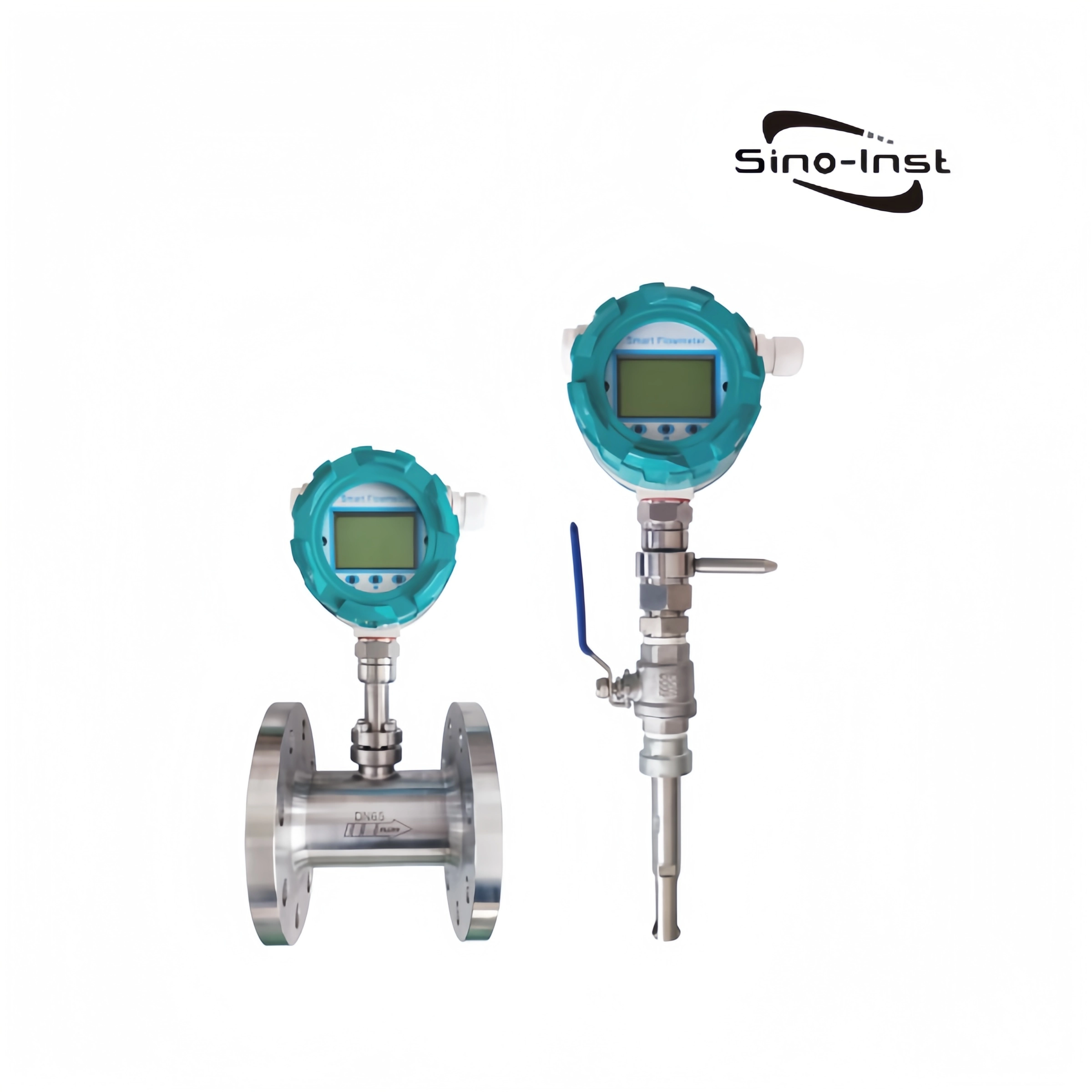
What Sino-Inst Thermal Mass Flow Meters Can Do
Many people think thermal meters only work on clean gas at ambient temperature and low pressure. Our current range goes much further:
Flow velocity from 0.1 to 130 m/s. It reads down to 0.1 m/s, so it can be used for leak detection.
A patented probe design that resists fouling and moisture, so it can measure humid and dusty gas.
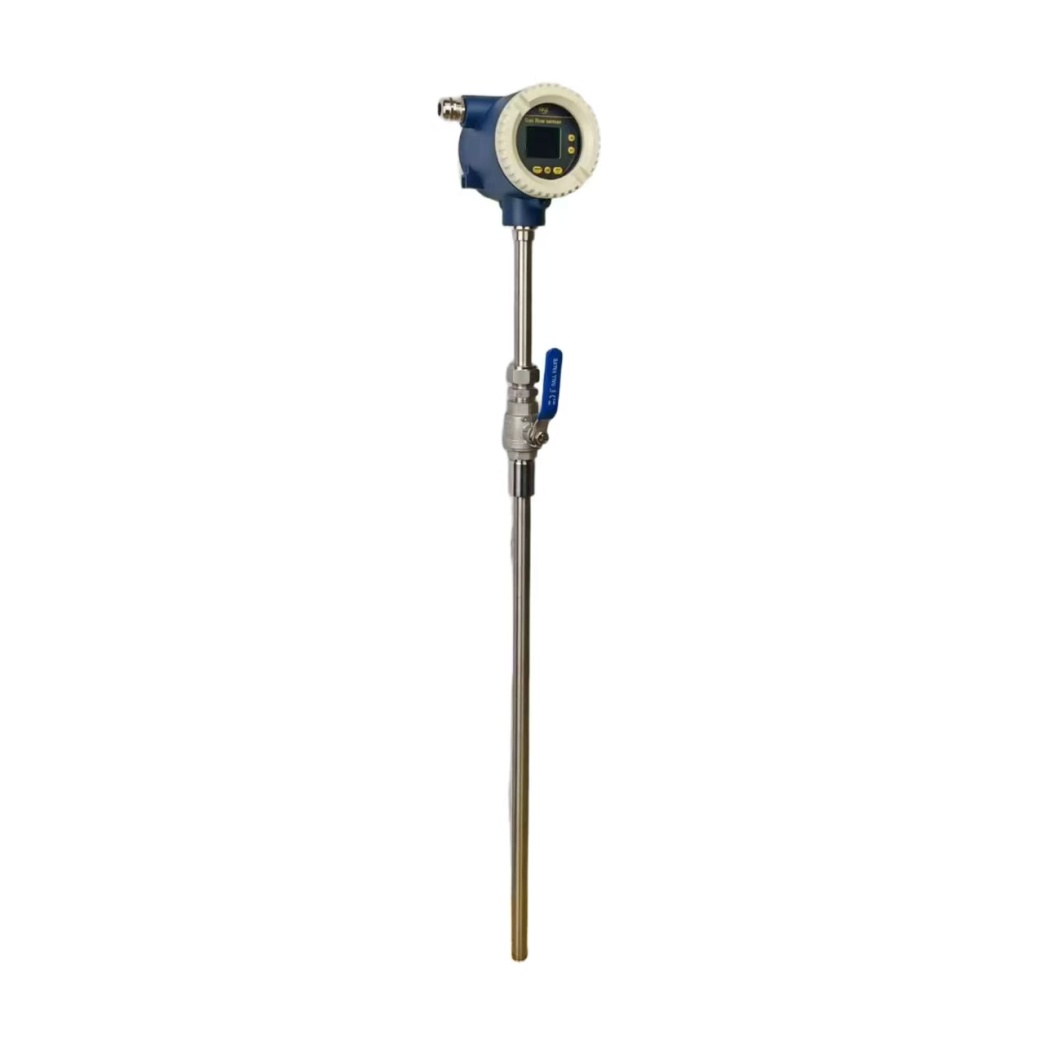
Insertion type for DN25 to DN5000, installed without a shutdown.
Explosion-proof rating Ex db IIC T6 Gb, enclosure IP66.
One thing to note: if there is condensed water in the pipe, put the meter after the water is removed. A biogas customer in Brazil first wanted to measure wet biogas directly. On our advice they moved the measuring point to after the dryer-cooler and used a DN100 insertion meter, which has now been delivered.
Choose Based on Operating Conditions
Of course, it’s not necessary to master all the theoretical knowledge; you can simply make a preliminary selection based on the operating conditions. Below are several common operating conditions we’ve compiled for your reference.
Application
Choose
Why
Compressed air
Thermal
Fixed composition, usually large pipes; 1.5% to 2.5% is enough to track consumption
Nitrogen
Thermal
Single gas, simple to calibrate; switch to Coriolis for high pressure, small pipes and high accuracy
Natural gas (furnaces, burners)
Thermal
Low pressure, wide flow range; go one size down for low flow
Biogas
Thermal
Large pipes, low pressure; install after water removal and calibrate for the actual composition
High-pressure hydrogen, CNG
Coriolis
High pressure and high accuracy
Liquid batching
Coriolis
Thermal meters cannot measure liquids; Coriolis gives mass directly and reads density as well
Custody transfer
Coriolis
0.1% accuracy; confirm which metrology approval the project requires before ordering
Slurries, high-viscosity liquids
Coriolis
Not affected by changes in viscosity or density; use a straight-tube meter if there are solids
Neither meter is the right choice for:
Steam. Thermal meters cannot measure steam. We usually recommend a vortex flow meter.
Gas above 800°C.
Reference meters for lab calibration. A sensor maker in Malaysia asked for 0.02% of reading. That is reference-standard level, beyond any industrial Coriolis meter, and we told them so.
FAQ
Sino-Inst thermal meters can measure humid gas, but we do not recommend installing them where there is condensed water. Water droplets hitting the probe carry away extra heat, so the reading goes high, and there is no way to tell by how much. Install the meter after a dryer or a gas-water separator.
Not as it is. Biogas is usually 60% to 65% methane, with the rest mostly CO2, and it conducts heat very differently from air. We calibrate thermal meters with air at the factory, then set a conversion factor for your gas composition. So please give us the approximate biogas composition when you order. If your project requires calibration on real biogas with a third-party certificate, the meter has to go to an outside lab, at extra cost.
Yes, but the higher the pressure, the better. Low-pressure gas has very little density, so the force on the measuring tube is weak. A smaller meter gives a stronger signal, but the pressure drop goes up.
We once had an inquiry for a hydrogen line: DN200, 3 to 5 kPa, up to 5,000 Nm³/h. A Coriolis meter cannot measure that. To use one, the hydrogen would first have to be regulated up to 2 MPa and the line reduced to DN40, and the accuracy would still only be 1%. For low-pressure gas in large pipes, use a thermal meter.
Our thermal meters carry a Chinese explosion-proof certificate, marked Ex db IIC T6 Gb. They do not have ATEX or IECEx. Our Coriolis meters have ATEX. Neither has a custody transfer approval such as OIML or MID. If your project needs a specific approval, tell us when you ask for a quote and we will check first.
Coriolis vs. Thermal Mass Flow Meter: Accuracy, Cost—Which One Should You Choose? The views and detailed discussions in this article are based on Sino-Inst’s product specifications and project experience. You can also provide your specific operating conditions directly, and our sales engineers will help you select the appropriate mass flow meter.
Coriolis Mass Flow Meter — Working Principle, Installation & Price. A Coriolis mass flow meter reads the Coriolis effect to measure mass flow directly — the same physics a fuel depot uses to prove a tanker’s load or a chemical plant uses to close a batch. Output is mass, density, and volume in one 4-20 … Read more
Best Technology Guide to Thermal Mass Flow Meters. A thermal mass flowmeter (TMF) is a gas flowmeter designed based on the principles of thermal diffusion or heat conduction. It directly measures the mass flow of gas without the need for additional temperature and pressure compensation. Sino-Inst’s Thermal mass flowmeters are the preferred flowmeter for gases. … Read more
There are three common types of mass flow meters: Coriolis mass flow meters, thermal gas mass flow meters and solid powder flow meters. Mass Flow Meters accurately measure the mass flow of liquids or gases within pipes. A mass flow meter is more accurate than a traditional volumetric flow meter because it is not affected … Read more
Coriolis flow meter calibration is performed to ensure the measurement accuracy of mass flow meters. Mass flow meters are high-precision measuring instruments, and maintaining high measurement accuracy is critical in applications such as industrial processes and trade settlement. Coriolis flow meter calibration involves comparing the meter’s readings with those of a standard meter to determine … Read more
Thermal mass flow meters are widely used to measure gas flow in industrial processes. They determine the mass flow rate by measuring the thermal changes in the fluid as it flows through the sensor. Sino-Inst’s thermal mass flow meters utilize a unique temperature differential measurement method to overcome the drawback of traditional thermal mass flow … Read more
Gas flow measurement is an essential technology in many industrial processes. For example, in the production of chemical products, accurate measurement of the flow of gases such as oxygen and nitrogen can ensure that the reactants are added to the reactor in the appropriate proportion to obtain high-quality products. Introduction: Why Gas Flow Measurement is … Read more
Zhang Wei, possesses 20 years of experience as an automation instrumentation engineer, specializing in the research, design, installation, commissioning, and maintenance of automation instruments.
Face to various instrument communication protocols (such as Modbus, Profibus, etc.), with solid hardware circuit design and software programming skills (proficient in C language and PLC programming). Has extensive project experience; projects he has led and participated in have all achieved outstanding results, improving product accuracy, reducing costs, and increasing production efficiency.
Possesses excellent communication and coordination skills and a strong team spirit, enabling him to quickly respond to customer needs and provide high-quality automation instrumentation solutions.
Want to see more of our engineering guides in Google Search? Add Sino-Inst as a preferred source.