Home > Blog > PSI to Feet of Head Conversion (Feet of Water to PSI): Formula, Chart & Calculator
PSI to Feet of Head Conversion (Feet of Water to PSI): Formula, Chart & Calculator
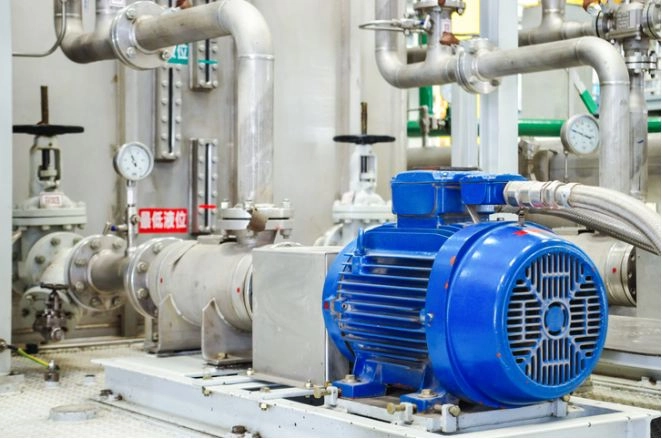
A water pump is a device used to transport or pressurize liquids. Pump head refers to the height to which the pump can lift water; pump head is directly proportional to pressure. Based on clear water at 4°C (39.2°F), density 1000 kg/m³: 1 psi = 2.31 ft H₂O = 0.703 m H₂O; 1 ft H₂O = 0.433 psi; 1 m H₂O = 1.422 psi = 9.81 kPa = 0.0981 bar. For other liquids, divide by the specific gravity (SG).
Next, let us examine in detail the relationship and conversion between head (feet or meters) and pressure (psi, bar, or kg/cm²).
Definition of “head”: The pressure exerted by a column of liquid at its base, expressed in terms of the column’s height. Pump head characterizes the kinetic energy generated by the pump; specifically, it is a measurement of the height of an incompressible fluid column that would result from the kinetic energy imparted to the liquid by the pump.
In the pump and liquid level industries, “head” is commonly used instead of psi. This is because, for a given pump, the head remains constant even when handling different liquids, whereas the pressure varies.
Avoiding Confusion: Head vs. Pressure
Head is sometimes confused with pressure simply because the two parameters are closely related; however, there is a fundamental difference between them.
Head is independent of the fluid; in other words, a pump will lift a fluid to the same height regardless of the fluid’s specific gravity. Therefore, the head remains the same whether the fluid is water or a heavier substance like sludge.
Pressure, on the other hand, depends on the fluid and is influenced by gravity. Consequently, the same head will generate different pressures depending on the specific gravity of the fluid.
Feet of Head to PSI Formula
The pressure at the bottom of a liquid column is determined solely by the liquid’s density, the acceleration due to gravity, and the height of the column; it is independent of the container’s shape:
P = ρ × g × H
P: Pressure (Pa)
ρ: Liquid density (kg/m³)
g: Acceleration due to gravity (9.80665 m/s²)
H: Liquid column height/head (m)
To express pressure in bar: P (bar) = ρ × g × H × 10⁻⁵
Using Imperial units, the conversion for clear water at room temperature is:
psi = feet of head × 0.433 × SG
SG is the liquid’s specific gravity (liquid density ÷ water density); for clear water, SG = 1.
Example 1: What is the pressure in psi for a 100-foot column of water?
100 ft × 0.433 × 1 = 43.3 psi
Example 2: What is the pressure in psi for a 100-foot column of diesel?
The density of diesel is approximately 0.85 g/cm³, so SG = 0.85.
100 ft × 0.433 × 0.85 = 36.8 psi
At the same height of 100 feet, the pressure exerted by diesel is lower than that of water. This is because the pressure of a liquid column is directly proportional to its density.
PSI to Feet of Head Formula
Calculating liquid column height (head) from pressure:
H = P ÷ (ρ × g)
Here, ρ × g represents the specific weight of the fluid.
In Imperial units, the conversion for clear water at ambient temperature is:
Feet of head = psi × 2.31 ÷ SG
Example: What head (in feet) corresponds to a pump discharge pressure of 60 psi?
60 psi × 2.31 ÷ 1 = 138.6 ft
Where does the factor 2.31 come from?
1 psi = 6894.757 Pa. Substituting this into H = P ÷ (ρ × g) and using a water density of 1000 kg/m³ (at 4°C):
H = 6894.757 ÷ (1000 × 9.80665) = 0.7031 m = 2.307 ft ≈ 2.31 ft
Conversely, 1 foot of water column = 0.433 psi.
The Effect of Water Temperature on the Conversion Factor
The density of water decreases as the temperature rises, reaching its maximum at 4°C. Therefore, for the same pressure of 1 psi, hot water can support a taller column of water:
Water temperature
Water density (kg/m³)
1 psi is equivalent to
1 ft of water column is equivalent to
4℃
1000
2.307 ft(0.703 m)
0.4335 psi
20℃
998.3
2.311 ft(0.704 m)
0.4328 psi
60℃
983
2.347 ft(0.715 m)
0.4262 psi
80℃
972
2.373 ft(0.723 m)
0.4214 psi
100℃
958
2.408 ft(0.734 m)
0.4153 psi
The commonly used values of 2.31 and 0.433 apply to clear water at ambient temperature. If calculations are based on ambient-temperature density when the water temperature rises to 80°C, the liquid level error is approximately 2.7%. The value 2.31 can be used directly when temperature fluctuations are minimal; however, when high precision is required, calculations should be based on the density at the actual temperature.
PSI to Feet of Head Conversion Chart
Calculation basis: water density 1000 kg/m³, gravitational acceleration 9.80665 m/s²; 1 psi = 6894.757 Pa, 1 ft = 0.3048 m.
Table 1: Conversion of psi to feet of head and meters of water column (1–100 psi)
psi
ft H₂O
m H₂O
1
2.31
0.703
2
4.61
1.406
3
6.92
2.109
4
9.23
2.812
5
11.53
3.515
6
13.84
4.218
7
16.15
4.921
8
18.45
5.625
9
20.76
6.328
10
23.07
7.031
11
25.37
7.734
12
27.68
8.437
13
29.99
9.14
14
32.29
9.843
15
34.6
10.546
16
36.91
11.249
17
39.21
11.952
18
41.52
12.655
19
43.83
13.358
20
46.13
14.061
25
57.67
17.577
30
69.2
21.092
35
80.73
24.607
40
92.27
28.123
45
103.8
31.638
50
115.33
35.153
55
126.87
38.669
60
138.4
42.184
65
149.93
45.7
70
161.47
49.215
75
173
52.73
80
184.53
56.246
85
196.07
59.761
90
207.6
63.276
95
219.13
66.792
100
230.67
70.307
Table 2: Conversion of feet of head to psi and bar (1–300 ft)
The height of a water column supported by 1 standard atmosphere
Approx. 10 m
10.33 m
1 MPa
Approx. 145 psi
145.04 psi
1 psi
Approx. 6.9 kPa
6.8948 kPa
1 mmH₂O
Approx. 9.8 Pa
9.8067 Pa
“1 MPa ≈ 100 m” and “1 kg ≈ 0.1 MPa” are both engineering approximations with an error of approximately 2%, suitable for rough estimates; precise values should be used when creating conversion tables or calculators.
Correcting for Specific Gravity and Temperature
The formula for liquid pressure is P = ρ × g × H; to determine the height of the liquid column from the pressure, use H = P ÷ (ρ × g). Here, ρ represents the density of the liquid being measured; calculations must use the specific density of the liquid in question.
Densities of Common Liquids (20°C)
Liquid
Density (g/cm³)
Water
0.9983
Seawater
1.025 (commonly used value for engineering calculations)
Diesel
0.85
Gasoline
0.76~0.78
Milk
1.03
Hydrochloric acid (37%)
1.19
Sulfuric acid (98%)
1.84
Pure ethylene glycol
1.1135
Seawater density depends on salinity and has no fixed value; a standard figure of 1.025 × 10³ kg/m³ is generally used. It increases gradually from the surface to greater depths.
Aqueous ethylene glycol solution: concentration, density, and freezing point (at 20°C)
Ethylene glycol content (vol%)
Density (g/cm³)
Freezing point (°C)
34.2
1.048
−18
40.4
1.056
−24
45.6
1.063
−30
50
1.0671
−35
51
1.07
−38
The freezing point of an aqueous ethylene glycol solution reaches its minimum (approximately −48°C) at a volumetric concentration of about 56%; beyond approximately 59%, the freezing point actually rises. The freezing point of pure ethylene glycol is −13°C.
Aqueous propylene glycol solution: variation of density with concentration and temperature (kg/m³)
Temp
30%
40%
50%
60%
0℃
1036.24
1045.12
1052.71
1059
20℃
1028.35
1036.24
1042.87
1048.25
40℃
1018.42
1025.3
1030.98
1035.47
60℃
1006.44
1012.3
1017.04
1020.66
80℃
992.42
997.25
1001.05
1003.81
Concentration refers to concentration by volume.
Precautions for Ethylene Glycol Systems
In systems using an ethylene glycol solution as the heat transfer fluid, the solution’s concentration and viscosity must be strictly controlled to prevent changes in the freezing point and increases in the power required for circulation.
Temperature Correction
Temperature fluctuations alter the density of the medium: as temperature rises, volume expands and density decreases.
The density of water is 998.20 kg/m³ at 20°C and 971.79 kg/m³ at 80°C. If calculations are based on the density at 20°C, the liquid level measurement error would be 2.7%.
Temperature compensation is unnecessary if only monitoring the liquid level and temperature fluctuations are minimal; however, for precise measurements, calculations should be based on the actual density corresponding to the real-time temperature.
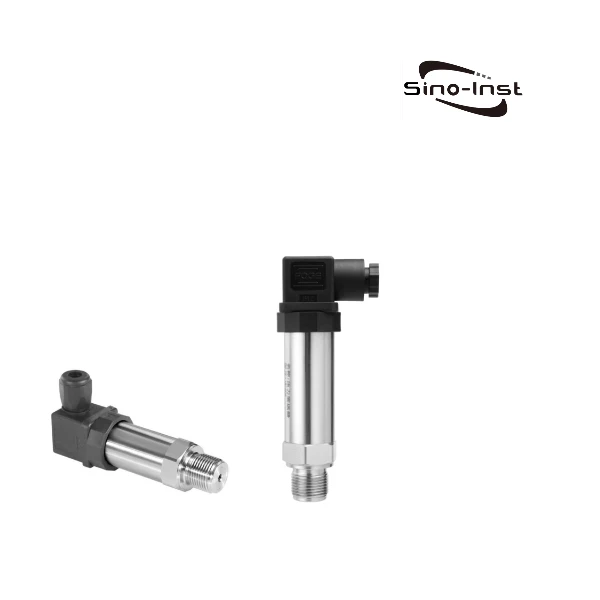
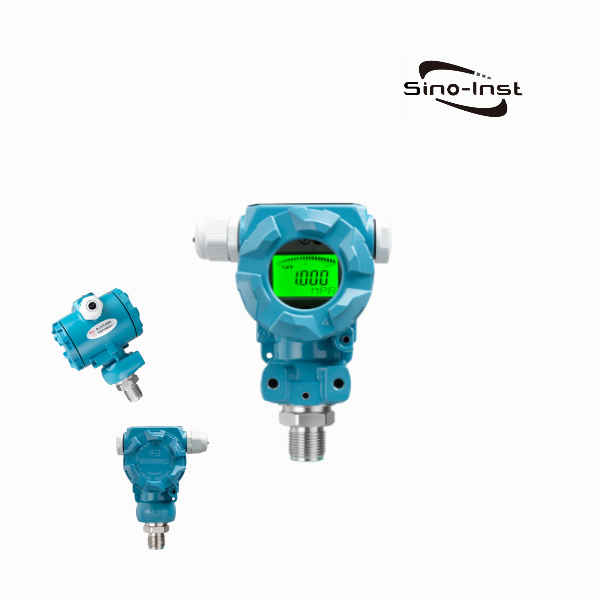
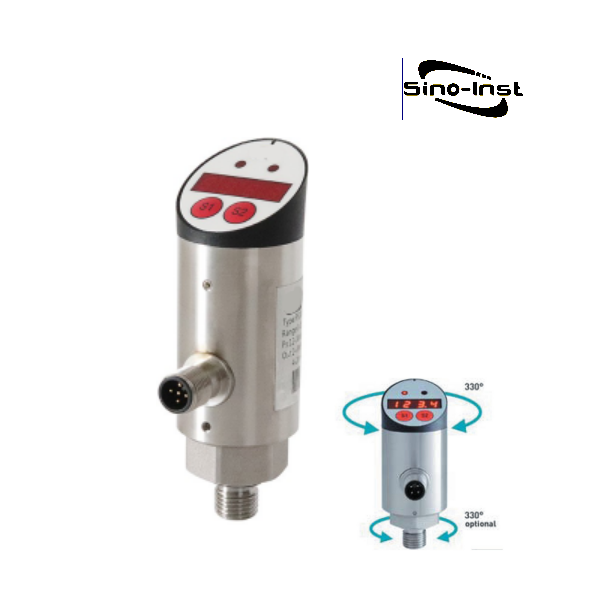
The pressure transmitter is installed upstream of the check valve. This location offers stable pressure with minimal turbulence and vibration, allowing for accurate monitoring of pump pressure. The transmitter outputs a 4–20 mA signal, which is connected to the VFD’s current input terminal.
Pressure setpoint and feedback signals are fed into the controller; following PID processing, a speed control signal is sent to the VFD to regulate pump speed and maintain constant pressure. The pump stops automatically when the pressure reaches the upper limit and starts automatically when it drops to the lower limit.
A liquid level sensor installed in the water reservoir or collection sump automatically starts and stops the pumps based on the water level. Pumps are shut down sequentially according to preset levels as the water level drops; to prevent the same pump from undergoing frequent start-stop cycles, the pumps are operated in a rotating sequence (first-in, first-out).
Pressure transmitter for level measurement is a relatively inexpensive and stable solution. Proper selection and configuration of pressure transmitters can effectively save on measurement costs. On CAN-based machinery, a CAN bus pressure transmitter reports level-related pressure straight onto the network…
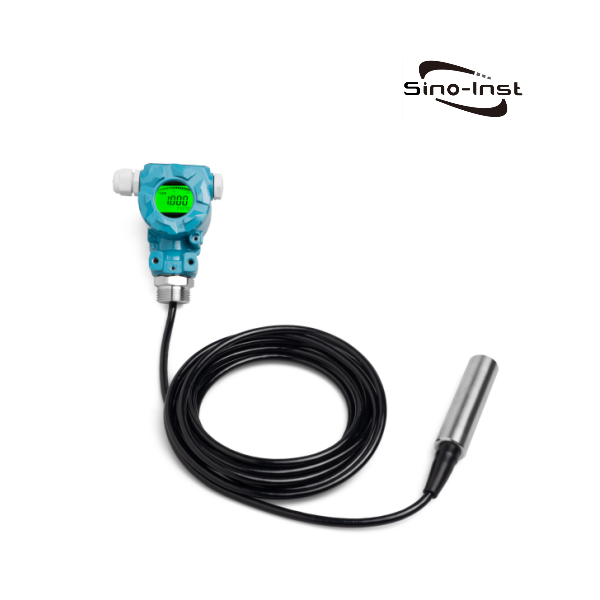
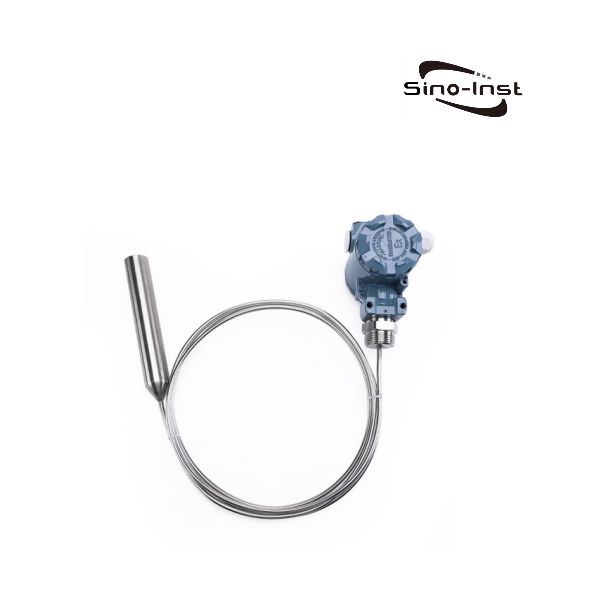
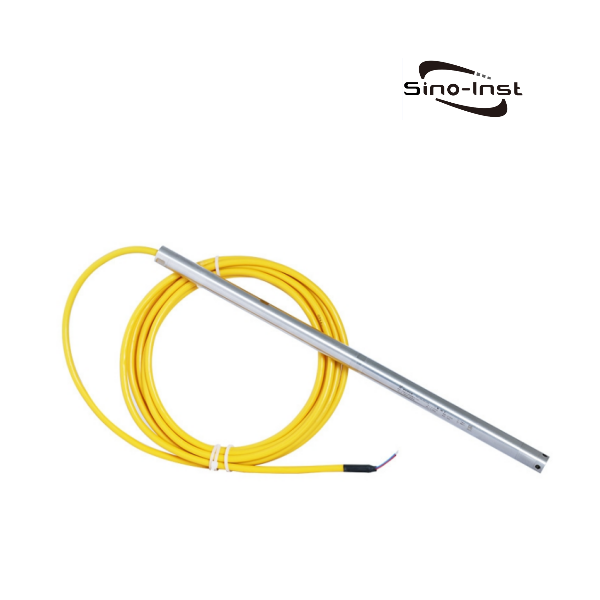
Many wells are between 10 and 60 feet deep, while some can reach depths of 1000 feet. Therefore, deep well level sensors are the best choice when customers need to measure water levels in deep wells. Sino-inst deep well level…
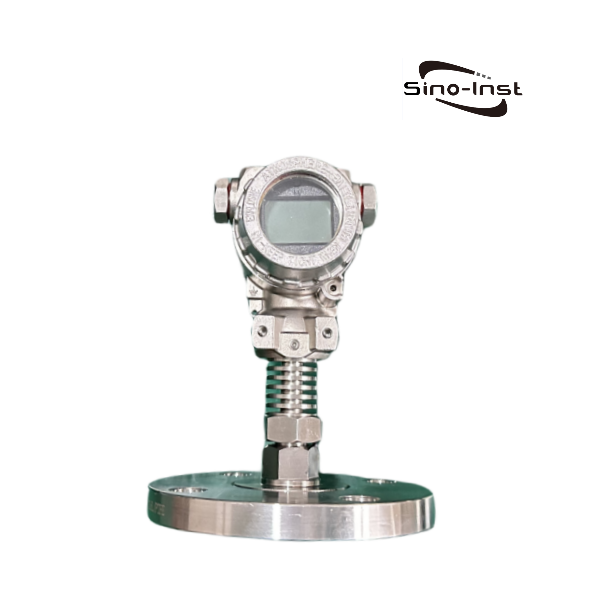
Pressure transmitters and differential pressure transmitters can be used to measure the level of liquids such as water or fuel in vented or sealed tanks. And in many special working conditions, it has advantages that other liquid level transmitters cannot…
Selecting the appropriate pressure reference—gauge or absolute—is crucial for accurate pressure measurements. An incorrect choice may result in errors of around 1 bar, especially for low range devices. In this article, we aim to clarify the differences between gauge and…
Water pressure sensors play a crucial role in managing water flow and levels in various industrial applications. These sensors can be analog or digital, with some even offering wireless capabilities for easier integration. They help monitor water levels, control pumps,…
A water pressure switch is a device used to monitor and control the pressure of a water system. Commonly found in domestic and industrial water treatment systems, it is used to start or stop water pumps and ensure that the…
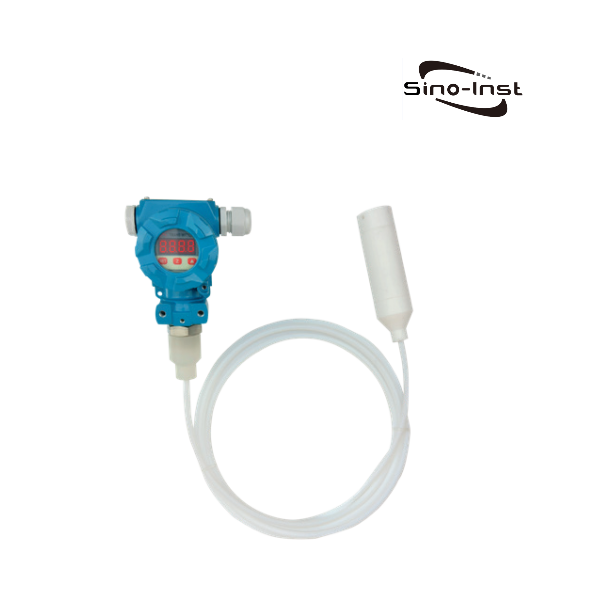
Sino-Inst is a professional manufacturer of liquid level and pressure transmitters. Our submersible level transmitters offer measurement ranges from 0–1 m to 0–200 m (water column), making them suitable for applications such as pools, tanks, and deep wells; we can even customize specialized transmitters for deep wells reaching depths of up to 2,000 m. Additionally, our pressure transmitters are ideal for monitoring pump outlet pressure and for use in variable-frequency constant-pressure water supply systems. They support 4–20 mA or RS485 output signals, with fully customizable measurement ranges and materials.
If you require liquid level measurement or pump pressure monitoring, please provide us with details regarding the tank height or well depth, the medium, and the operating temperature, and our sales engineers will recommend the most suitable model for your needs.
Zhang Wei, possesses 20 years of experience as an automation instrumentation engineer, specializing in the research, design, installation, commissioning, and maintenance of automation instruments.
Face to various instrument communication protocols (such as Modbus, Profibus, etc.), with solid hardware circuit design and software programming skills (proficient in C language and PLC programming). Has extensive project experience; projects he has led and participated in have all achieved outstanding results, improving product accuracy, reducing costs, and increasing production efficiency.
Possesses excellent communication and coordination skills and a strong team spirit, enabling him to quickly respond to customer needs and provide high-quality automation instrumentation solutions.