
High Temperature Differential Pressure Transducers for Steam, Hot Oil & Furnace ΔP
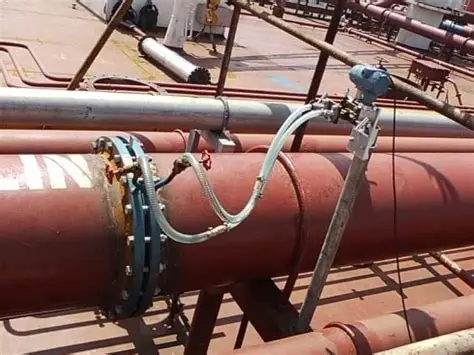
In specialized applications such as power generation, high-temperature reactors, and metallurgical smelting, process pressure measurement often faces extreme conditions of “high temperature” + “differential pressure,” with the temperature of the measured medium reaching 300℃~600℃. Differential pressure measurement of high-temperature media can be used in important processes such as flow calculation, liquid level monitoring, and differential pressure alarms, Even used for density measurement. Sino-Inst’s high-temperature differential pressure transmitter is specifically designed for high-temperature media, integrating a high-temperature isolation device, a high-precision differential pressure sensor, and a stainless steel structure to achieve differential pressure measurement of high-temperature media.
The short version: the right solution depends on your medium temperature.
- 85-150°C: a standard DP transmitter with extended impulse piping is usually enough. SI-3151DP covers this without extra cost.
- 150-400°C: use remote diaphragm seals with capillary. SI-3151DP or the 9051 multivariable if you also need static pressure and temperature.
- 400-600°C: SI-804DP with special fill fluid measures these media directly.
- Above 600°C: this needs a water-jacketed process connection. Talk to our engineers first.
If you tell us the medium, temperature and ΔP range, we will come back with a model and price within one working day.
What Is a High Temperature Differential Pressure Transducer?
High-temperature differential pressure transmitters are a type of differential pressure transmitter specifically designed for measuring high-temperature media (liquids, gases, and steam). Conventional differential pressure transmitters can directly measure media temperatures ranging from -20°C to 100°C. For media temperatures exceeding 100°C, a custom-designed high-temperature differential pressure transmitter is required. Compared to conventional differential pressure transmitters, high-temperature differential pressure transmitters primarily achieve high-temperature isolation and protection through methods such as heat sinks, capillary transmission, and high-temperature medium filling. They are compatible with media temperatures up to 600°C.
Featured High Temperature Differential Pressure Transducers
Quick Comparison: Which Model for Your Temperature?
| Model | Max Medium Temp | Range | Accuracy | Output | Best For |
|---|---|---|---|---|---|
| SI-8051DG | 800°C *with cooled impulse line | -0.1~10 MPa | 0.075% FS | 4-20mA + HART | Highest accuracy (DP flow) |
| SI-804DP | 600°C (custom fill fluid) | -0.1~10 MPa | 0.2/0.3/0.5% FS | 4-20mA / 0-5V / RS485 | Highest direct temp, compact |
| SI-3151DP | 400°C (remote seal) | 0.1 kPa~41 MPa | 0.1/0.25/0.5% FS | 4-20mA | Widest ΔP range, Ex-proof |
| 9051 | 400°C (remote seal) | 100:1 turndown | 0.04/0.075/0.1% FS | 4-20mA + HART / RS485 / LoRa | DP + static P + temp in one |
| SI-3151LT | 304°C | 4 kPa~10 MPa | See datasheet | 4-20mA + HART | Flange mount, hot tank level |
All models come with 316L wetted parts as standard. Hastelloy C, Tantalum and Monel are optional, and ranges and process connections can be customized. Typical lead time is 7-15 working days. Request a quote here.
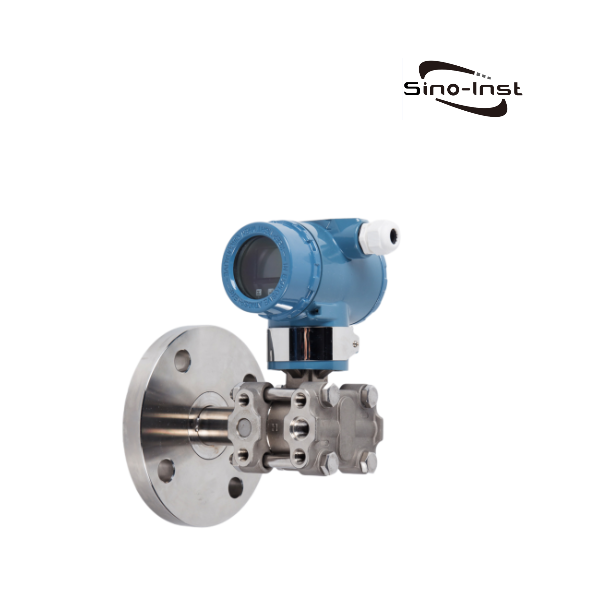
SI-3151LT Flange Mount Pressure Level Transmitter
Flange-mount diaphragm, medium temperature -40 to +304°C. Range 4 kPa to 10 MPa, 4-20 mA + HART. Diaphragm in 316L / Hastelloy C-276 / Monel / Tantalum. For hot-oil tanks, reactors, viscous-media level. Full datasheet and specs.
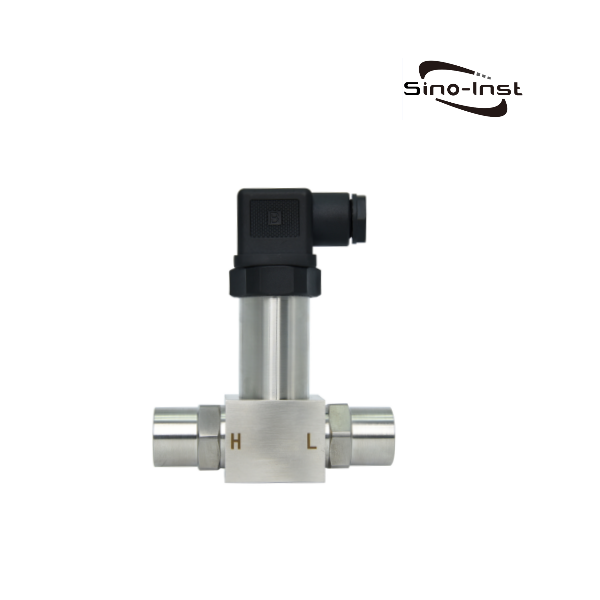
SI-804DP Small Differential Pressure Sensor
Compact DP sensor with custom medium temperature up to 600°C (-196°C also available). Range -0.1 to 10 MPa, accuracy 0.2 / 0.3 / 0.5%, zero drift ±0.03% FS/°C. Output 4-20 mA / 0-5 V / RS485. IP65. Full datasheet and specs.
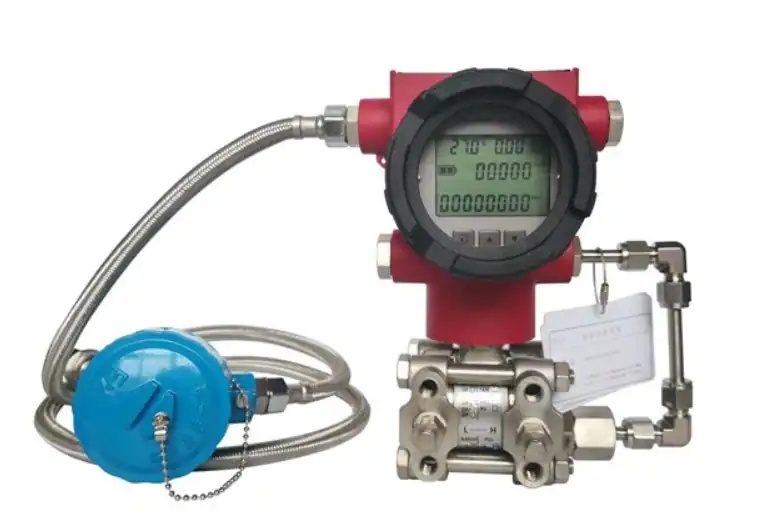
9051 Multivariable Transmitter
Integrated DP + static pressure + process temperature with automatic compensation. 100:1 turndown, 0.04% / 0.075% / 0.1% accuracy. 4-20 mA + HART + RS485 + LoRa output. Full datasheet and specs.
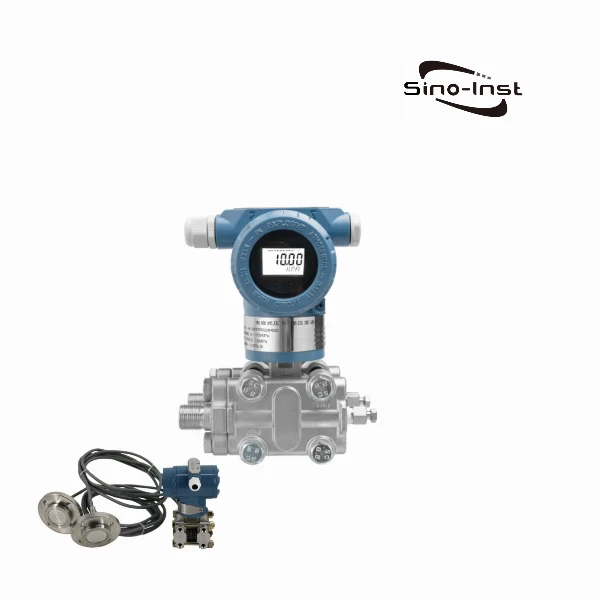
SI-3151DP Capacitive DP Transmitter
Classic capacitive DP transmitter. Range 0.1 kPa to 41 MPa, accuracy 0.1% / 0.25% / 0.5%. With remote diaphragm seals it extends to 400°C process. 4-20 mA output, dIIBT4 / iaIICT6. Full datasheet and specs.
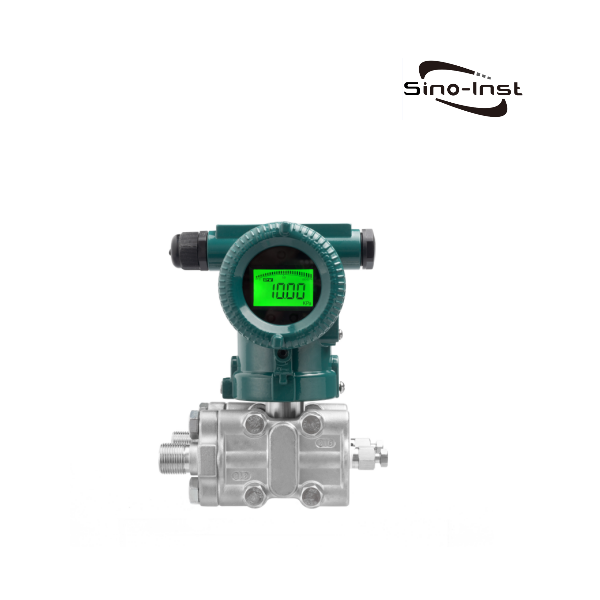
SI-8051DG Monocrystalline Silicon DP Transducer
Monocrystalline silicon DP transducer. Range -0.1 to 10 MPa, accuracy 0.075% FS. 316L stainless steel housing, 4-20 mA + HART, IP65. For precision-critical DP applications. Note: for media above 85°C it requires a cooled impulse line. Full datasheet and specs.
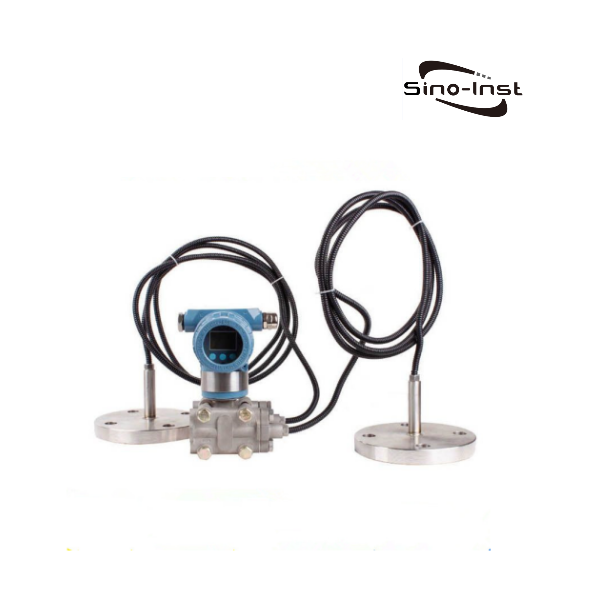
SI-3151 DLT Differential Pressure Level Transmitter
DP level transmitter with silicone-oil fill. Range 4 kPa to 10 MPa, accuracy ≤(0.0029r + 0.071)%. Process temperature -40 to +100°C. 4-20 mA + HART, Ex iaIICT6, IP67. Note: medium temperature up to 100°C, for DP level service rather than hot media. Full datasheet and specs.
Operating Principle: Differential Pressure at High Temperature
Differential pressure transmitters measure the pressure difference ΔP = P_high − P_low between two measurement points of the same medium, outputting a 4-20 mA HART or RS485 Modbus signal. The sensing element is a capacitive or silicon piezoresistive diaphragm filled with silicone oil on both sides. This design resists high-temperature corrosion while accurately capturing the pressure difference between the two measurement points.
When the process temperature exceeds 85°C, the sensor’s electronic module, the insulating diaphragm, and the filling fluid all begin to be affected. Silicone oil expands more rapidly above 110°C, causing zero-point drift; the sensitivity of the silicon piezoresistive strain gauge decreases above 125°C; and the dielectric constant of the capacitive chip drifts with temperature. In engineering contexts, “high-temperature DP” typically refers to a medium temperature ≥85°C, with a maximum of 400°C for remote diaphragm solutions and up to 600°C for special filling fluids.
Therefore, the core design principle of high-temperature differential pressure measurement solutions is simple: keep the electronic module away from the process end. There are three methods:
- Extend the pressure tap or heat sink to allow the medium to cool naturally to below 85°C before entering the meter;
- Add a capillary tube to the remote transmission diaphragm box to move the sensor from the process piping to a location easily accessible for maintenance;
- Select high-temperature resistant process connectors (brazed stainless steel diaphragm box);
Cooling Strategies for Hot Process Connection
Select the solution according to the process temperature range: ≤200°C use an extended pressure tap; 200~400°C use a remote transmission diaphragm box; >400°C requires a water jacket or remote transmission diaphragm.
Extended Pressure Tap / Condensation Loop
The cheapest and most commonly used. Add a horizontal pressure tap of ≥500 mm between the process piping and the transmitter, making a downward U-bend. Steam condenses at the bend, forming a water column that isolates the transmitter from the process. Covers steam and hot water piping ≤300°C. The length and direction of the pressure taps on both sides must be symmetrical; otherwise, zero-point offset will occur.
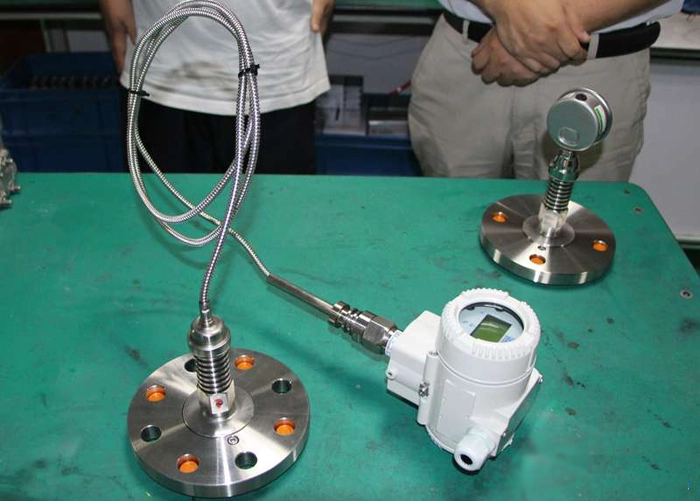
Remote Diaphragm Seal + Capillary
The diaphragm seal directly connects to the process flange. The capillary transmits the pressure from the silicone oil to the transmitter. The upper limit for silicone oil filling is 400°C, and the upper limit for the filling fluid is 540°C. Standard capillary tubes are 1.5~10 m long; the longer the tube, the greater the zero-point drift. The capillary tubes on both sides are of equal length and symmetrically oriented, and are wrapped with rock wool insulation to reduce the influence of ambient temperature.
Water-Jacketed Adapter
A circulating cooling water jacket is added to the process connection to lower the flange temperature to below 80°C before it enters the transmitter. This covers high-temperature flue gas and molten media at 500~700°C and is standard equipment for aero-engine test benches and glass furnaces. An external cooling water system is required, with requirements for water quality and flow stability.
Heat Dissipation Fin
A section of stainless steel finned tube is added between the transmitter and the process, relying on natural convection for cooling. Its capacity is limited; when used alone, it only covers temperatures below 200°C. It can be used alone or as a supplement to the three solutions mentioned above, for example, by adding fins to the end of the remote transmission diaphragm box.
Industrial High-Temperature Differential Pressure Measurement Applications
Steam Flow Measurement
Using orifice plates, venturi tubes, or wedge flow meters as primary elements, ΔP is converted into steam flow rate. Saturated steam process temperature is 150~200°C, superheated steam 250~400°C. Pressure taps on both sides are of equal length and slope downwards to facilitate condensate reflux, with a condenser added to stabilize the water column. Pressure tap locations comply with GB/T 2624 / ISO 5167.
High-Temperature Reactor and Distillation Column Differential Pressure
Pressure drops across the entire column are measured at pressure taps at the top and bottom of the column. Process temperatures are typically 100~300°C. This ΔP signal is used to assess tray efficiency, blockage, and coking. A 5-valve assembly facilitates online zero-point calibration and isolated maintenance. Differential pressure monitoring within the reactor is used to track catalyst bed blockage and temperature gradients.
Hot Oil Filter Pressure Drop Monitoring (ΔP)
The operating temperature of the heat transfer oil system is 250~350°C. DP transmitters are installed at the filter inlet and outlet. A filter replacement alarm is triggered when ΔP > 50 kPa. A remote diaphragm capsule with a 1.5 m capillary tube is standard to prevent hot oil coking and clogging of the pressure tap.
Furnace Draft Control
The industrial furnace is maintained at a slight negative pressure of -50 ~ -200 Pa to prevent hot gas leakage. One end is connected to the furnace sampling port (with a heat dissipation pipe), and the other end is connected to atmospheric pressure. The transmitter uses a 0~±1 kPa differential range, and the heat dissipation pipe lowers the process temperature to below 100°C. EN 12952 boiler standard lists furnace pressure as a mandatory safety monitoring point.
Hot Tank Level
The level of hot liquids (desalination towers, oil storage tanks, chemical reactors) in closed tanks is calculated using ΔP = ρ·g·h, with pressure taps at the top of the tank compensating for the gas phase pressure. For media ≥200°C, remote-reading diaphragms are used on both sides to avoid false level readings caused by condensate accumulation in the gas phase.
Aircraft Engine/Gas Turbine Test Bench Pressure Differential
Turbine blade, combustion chamber, and afterburner test benches require monitoring multiple pressure differentials to determine the gas flow state. For media temperatures of 600~1100°C, water-jacketed cooling joints and remote-reading diaphragms are mandatory. Response time requirement is ≤100 ms; a 0.075% FS accuracy class with HART output is commonly used for connection to the test data acquisition system.
Case Study: Hot Oil Filter ΔP at 320°C
A specialty chemical plant in Thailand asked us about filter pressure drop monitoring on their thermal oil system. The oil runs at 320°C with 1.6 MPa static pressure. They had tried two standard DP transmitters before contacting us. Both failed within weeks because the fill fluid degraded at that temperature.
We supplied an SI-3151DP fitted with dual remote diaphragm seals, 316L diaphragms and high temperature silicone fill. The two capillaries were cut to the same 2 m length and wrapped with insulation jackets. Range was set to 0-100 kPa, output 4-20 mA with HART.
Six months in, zero drift is still under 0.1% FS and the filter change alarm at ΔP > 50 kPa has not produced a false trip. Delivery took 12 working days including the calibration certificate.
Medium: heat transfer oil (Therminol type). Temperature: 320°C. Static pressure: 1.6 MPa. ΔP range: 0-100 kPa.
Installation Notes for High-Temperature Service
Pressure Tap Arrangement
For gas or steam processes, the pressure tap should originate from the top of the pipeline, run upwards in a U-shape, and then descend to the transmitter. For liquid processes, it should originate horizontally from the centerline of the pipeline side to prevent air bubbles from entering. Both sides should have the same pipe diameter (Φ14×2 mm 316L stainless steel is standard), with a length difference controlled within 50 mm.
Valve Assembly Selection
For high-temperature services, a 5-valve assembly (two blocks + one equalizer + two vents) is recommended for convenient online zero-point calibration, isolation, and blowdown. The process pressure rating of the 5-valve assembly should be ≥ 1.5 times the transmitter’s rated value. A 3-valve assembly is suitable for normal temperature and pressure applications; however, in high-temperature scenarios, the lack of a vent hinders venting after diaphragm replacement.
Zero-Point Drift Compensation
For process static pressure > 2 MPa or process temperature > 150°C, static pressure zero-point calibration is mandatory. Record the zero-point output by shorting the high and low pressure sides. Retest monthly; recalibrate if drift >0.1% FS.
Grounding and Lightning Protection
The transmitter housing must be reliably grounded with a grounding resistance ≤4 Ω. Intrinsically safe circuits in hazardous areas should be equipped with Zener safety barriers according to IEC 60079-25. In areas prone to thunderstorms, add an SPD surge protector in parallel with the 4-20 mA signal circuit.
High Temperature Differential Pressure Transducers Selection Checklist
We recommend you check the following 7 items in order, as each item will affect the quotation we provide:
- Maximum process medium temperature (°C): Determines whether remote transmission is required and the type of filling fluid;
- Medium type: Gas, liquid, steam, slurry; specifies the filling fluid (silicone oil / high-temperature oil / NaK) and membrane material (316L / Hastelloy C / Tantalum / Monel);
- Measurement range ΔP: Allow 1.5 times the actual value under operating conditions. Micro-differential pressure 1~5 kPa, large differential pressure 5~25 MPa;
- Static pressure / Working pressure (MPa): Affects diaphragm rating and flange PN;
- Accuracy class: 0.04% / 0.075% / 0.1% / 0.2% FS; Long-term stability ≤0.1%/year;
- Output protocol: 4-20 mA HART / RS485 Modbus / Profibus PA / FF; Select according to DCS interface;
- Explosion-proof and protection: Ex d/ia IIC T4-T6 / IP65-IP67; Select according to zone level and field environment;
Simplified decision based on temperature range:
- ≤85°C: Standard DP transmitter is sufficient
- 85~150°C: Extended pressure tube
- 150~400°C: Remote transmission diaphragm
- >400°C: Water jacket or remote transmission diaphragm
Frequently Asked Questions
How much does a high temperature differential pressure transmitter cost?
A standard DP transmitter for media up to 150°C starts around US $250-400. Adding remote diaphragm seals with capillaries for 150-400°C service usually brings the total to US $600-1,200. The main cost drivers are flange size, diaphragm material (316L is standard, Hastelloy C and Tantalum cost more) and accuracy class. For 400-600°C with high temperature fill fluid, budget US $800-1,500. Explosion-proof certification adds roughly 10-20%. Send us your specs and we will quote the exact price within one working day.
Can a high-temperature DP transducer use a standard 5-valve manifold?
Yes, provided the manifold pressure rating is at least 1.5× the transmitter rated working pressure. Confirm the seal material at the same time: graphite withstands 540°C, PTFE caps at 200°C, Viton at 230°C. With remote diaphragm seals, the 5-valve manifold sits between the seal and the process, not between the capillary and the transmitter.
How long should the remote seal capillary be?
Shorter is better. Zero drift and ambient-temperature drift both scale with capillary length. Indoor environment: 1.5–3 m is typical. Outdoor with direct sunlight: keep within 5 m and add a reflective insulation jacket. Beyond 10 m is generally avoided unless both sides are perfectly matched in length, slope and insulation.
How should I read the accuracy spec of a high-temperature DP transmitter?
Field accuracy = base error + static-pressure effect + temperature effect. A base error of ±0.075% FS is the 20°C calibration value. Per IEC 61298 each 28°C ambient swing adds ±0.05% FS, and every 10 MPa of static pressure adds ±0.1% URL. A nominal “±0.075%” spec can become ±0.25% combined at 300°C / 10 MPa operating conditions. Always check combined error at your actual operating point.
Related Reading
High Temperature Pressure Transducers & Cooling Elements
Gauge / absolute side of the high-temp sensor family. Cooling element types and selection.
4 Types of Manifolds for Pressure Transmitters
2-valve, 3-valve, 5-valve, and integrated manifolds compared for DP service.
Pressure Transmitter with Diaphragm Seal & Capillary
How remote diaphragm seals and capillary tubing extend transmitters to 400°C+.
Orifice Plate Tapping Guide
Flange, corner, and D/D-2 tap arrangements per GB/T 2624 / ISO 5167.
Temperature Compensation in a Pressure Transmitter
Why temperature drift matters and how compensation works on modern transmitters.
Smart Pressure Transmitters: 4-20mA, HART, RS485 Modbus
Output protocol options for DCS integration and field instrumentation.

Zhang Wei, possesses 20 years of experience as an automation instrumentation engineer, specializing in the research, design, installation, commissioning, and maintenance of automation instruments.
Face to various instrument communication protocols (such as Modbus, Profibus, etc.), with solid hardware circuit design and software programming skills (proficient in C language and PLC programming). Has extensive project experience; projects he has led and participated in have all achieved outstanding results, improving product accuracy, reducing costs, and increasing production efficiency.
Possesses excellent communication and coordination skills and a strong team spirit, enabling him to quickly respond to customer needs and provide high-quality automation instrumentation solutions.
Want to see more of our engineering guides in Google Search? Add Sino-Inst as a preferred source.