Home > Blog > Guided Wave Radar Level Transmitters: Alternative to Other GWR Brands
Guided Wave Radar Level Transmitters: Alternative to Other GWR Brands
In industrial tank level measurement applications, high-performance guided-wave radar level transmitters—such as the Eclipse 706-512B-320—have become the ideal choice for many high-precision operations due to their stable measurement performance. The 316 stainless steel model, in particular, meets the measurement requirements for the majority of standard industrial media.
Unlike the simple selection process for general-purpose instruments, accurately selecting a guided-wave radar level transmitter requires a comprehensive assessment based on actual on-site operating conditions. Four key factors must be considered: medium characteristics, measurement range, operating pressure, and operating temperature.
Approx. 1s (depends on parameter settings)Display resolution 1mm
Accuracy
±10mm (see accuracy diagram below)
Storage/transport temperature
-40 to 80°C
Process temperature (probe)
701, 704(-40 to 250°C) 702(-40 to 200°C) 703( -40 to 130°C) 705(-200 to 400°C)
Relative humidity
<95%
Pressure
Max. 40MPa
Vibration resistance
Mechanical vibration 10m/s² (10 to 150Hz)
Working Principle of Guided Wave Radar Level Transmitters
The operating principle of guided-wave radar level transmitters is based on Time Domain Reflectometry (TDR) and Equivalent Time Sampling (ETS).
Time Domain Reflectometry (TDR)
TDR utilizes electromagnetic (EM) pulses to measure distance or liquid level.
The pulse generates an initial echo at the process interface (flange) due to a sudden change in the medium. The pulse propagates down the probe rod. When the pulse encounters the surface of the medium, a portion of the energy is reflected to form an echo, driven by the abrupt change in dielectric constant between the air and the medium (the higher the dielectric constant, the stronger the reflection).
By measuring the time difference (Δt) between the initial echo and the level echo—and factoring in the propagation speed of electromagnetic waves in the medium (the speed of light)—the liquid level height can be calculated.
The formula is: L = (c × Δt) / 2
Equivalent Time Sampling (ETS)
Equivalent Time Sampling (ETS) is used to measure high-speed, low-power electromagnetic energy. ETS is key to applying Time Domain Reflectometry (TDR) technology to vessel-level measurement.
Since the time difference between the two echoes is typically in the nanosecond range (<10 ns), direct measurement requires picosecond-level precision, which is difficult to achieve using conventional methods. ETS technology captures samples of the high-frequency echo signal at a lower sampling rate and reconstructs them systematically, effectively increasing the sampling rate.
Four Key Factors for Selecting Guided Wave Radar (GWR) Level Transmitters
When selecting a guided-wave radar level transmitter, one should not focus solely on measurement range and output signals; several other key factors must be considered.
1. Medium
First, consider the medium being measured. Guided-wave radar transmitters can measure water, oils (e.g., crude oil, lubricating oil, diesel), chemical solvents (e.g., ethanol, acetone), acidic or alkaline solutions (e.g., sulfuric acid, sodium hydroxide), emulsions, paints, and inks.
Second, determine whether the medium is prone to buildup, crystallization, or adhesion. For media prone to adhesion, evaluate the material compatibility of the probe rod or cable and assess whether stable measurement can be maintained after months of operation.
Third, consider the dielectric constant. Media with low dielectric constants (e.g., light oils, organic solvents) produce weak echoes; therefore, high-frequency (80 GHz) or guided-wave radar technology should be selected to enhance echo recognition.
Finally, check if the medium is corrosive or abrasive. Highly corrosive media require corrosion-resistant materials such as Hastelloy or PTFE coatings.
2. Measurement Range
Regarding the measuring range of guided wave radar level transmitters, the following factors must be considered:
1. Measurement Range. Determine the maximum height to be measured. A margin of 10% to 20% should be allowed between the reference point and the tank bottom.
2. Dead Zone (Blind Zone). The size of the dead zone directly affects the ability to measure levels near the top of the tank (e.g., near the inlet). Typically, high-performance guided wave radar units can achieve a dead zone of less than 100 mm.
3. Range Matching. Different models are required for small tanks (a few meters high) versus large tanks (tens of meters high). Rod probes are suitable for short ranges, while cable probes are appropriate for tall storage tanks. Coaxial probes are best suited for clean liquids with low dielectric constants or turbulent surfaces.
3. Pressure
Process pressure. The maximum operating pressure within the tank that the instrument can withstand (e.g., -1 to 40 barg).
Critical safety requirement. For high-pressure applications, a model with a pressure-resistant design must be selected to prevent probe deformation or leakage.
Connection compatibility. Flange or threaded connections must match the tank opening.
4. Temperature
When selecting a guided wave radar (GWR) level transmitter, factors such as the environment, process conditions, and material compatibility must be considered.
Select the appropriate temperature rating based on the maximum temperature of the medium and ensure the instrument’s electronic components are compatible with the ambient temperature. For instance, if the medium reaches a maximum of 200°C, a high-temperature-resistant probe is required.
Ambient temperature: The permissible operating temperature range for the instrument’s electronic housing (e.g., -40°C to +80°C).
Process temperature: The maximum medium temperature that the electronic components and probe rod can withstand over the long term (e.g., -196°C to +200°C / +400°C).
Material compatibility: High-temperature alloys or coatings are required for high-temperature applications.
Storage tank temperature: Standard GWR units (rated for -50 to 250°C) are suitable for conventional storage tanks (≤200°C); high-temperature GWR models are required for high-temperature tanks (200–300°C); and ultra-high-temperature radar units featuring ceramic isolation or specialized designs are necessary for extreme temperatures (>300°C, with some models capable of withstanding up to 1200°C).
Benchmarking Against Other Brands Guided Wave Radar Level Transmitters
The coaxial version offers a maximum measuring range of 30m and can measure liquids, slurries, and liquid-liquid interfaces. Its baseline measurement accuracy rivals standard imported models, ensuring stability across the vast majority of typical industrial tank farm applications.
Comparable Capability for Low-Dielectric Media
The dual-cable model measures media with a dielectric constant ≥1.6 (or ≥1.3 when installed in a stilling well).
This places it on par with E+H (>1.6) and Magnetrol (≥1.4).
Flexible Power Supply Options
Three options available: 2-wire 24V DC, 4-wire 220V/110V AC, and RS485 Modbus.
While foreign brands primarily offer 2-wire systems, our options provide greater convenience for sites where only AC power is available.
Comprehensive Housing and Explosion-Proof Configurations
Housing materials include aluminum (single/dual-chamber), plastic, and 316L stainless steel—offering a range of choices comparable to VEGA.
Explosion-proof ratings include Ex ia IIC T6 Ga and Ex d IIC T6 Gb; ingress protection is rated at IP67, with marine certification available as an option.
(2) Probe Selection and Application Suitability
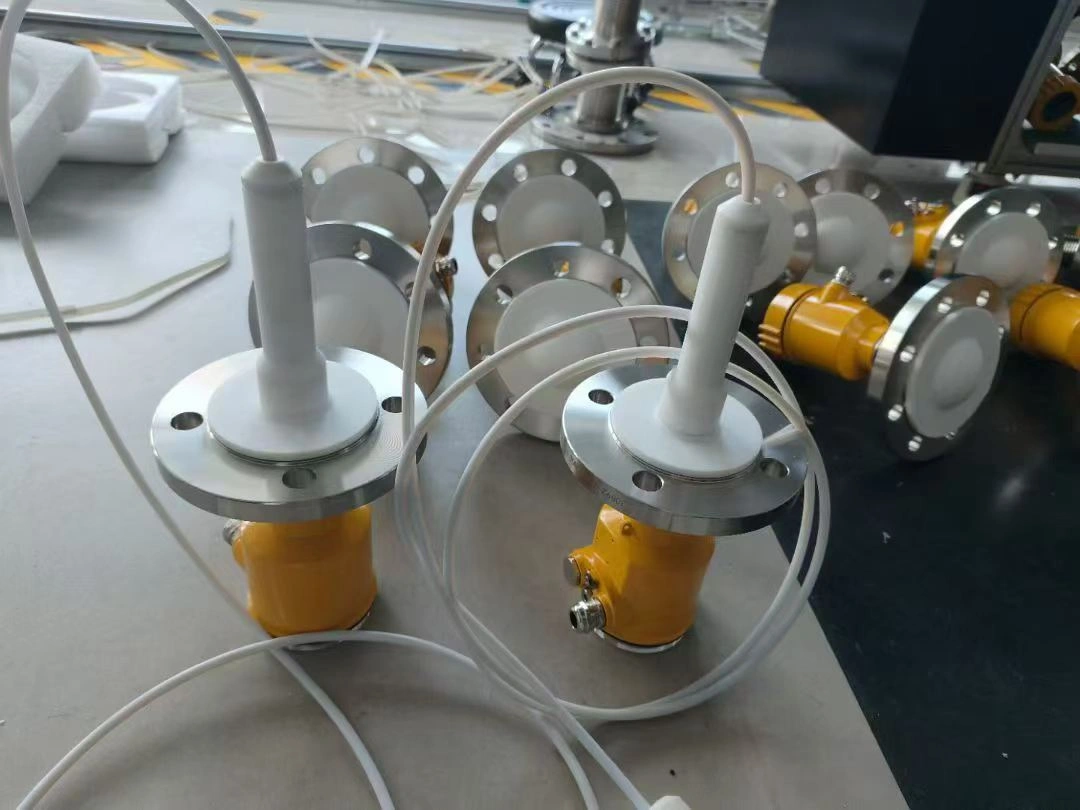
Sino-Inst offers 316L, PTFE-coated, and coaxial probes suitable for ambient temperatures, high temperatures, and corrosive media, covering applications in water treatment, the chemical industry, and oil storage tanks.
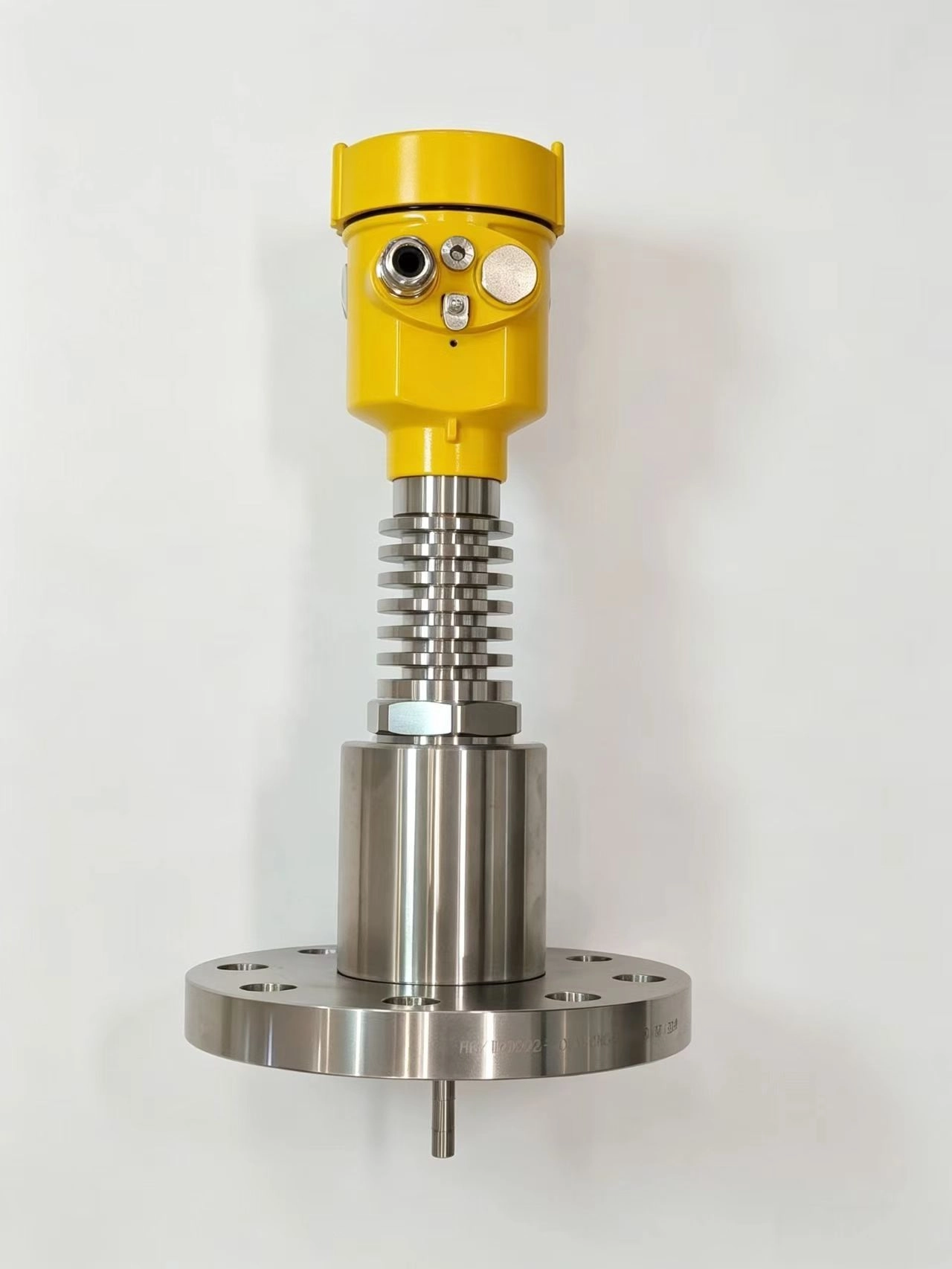
1. Model 705 High-Temperature/High-Pressure Type: Parameters Rivaling International Flagship Models
Temperature range: -200 to 400°C. Pressure rating: 40 MPa (400 bar). Compared to the Emerson Rosemount 5300 high-temp/high-pressure model (-60 to 400°C, 345 bar): Sino-Inst leads in both low-temperature and pressure capabilities.
Compared to E+H FMP54 and VEGA VEGAFLEX 86 (400 bar): Pressure ratings are on par. Capable of covering operating conditions ranging from cryogenic LNG applications to high-temperature, high-pressure environments.
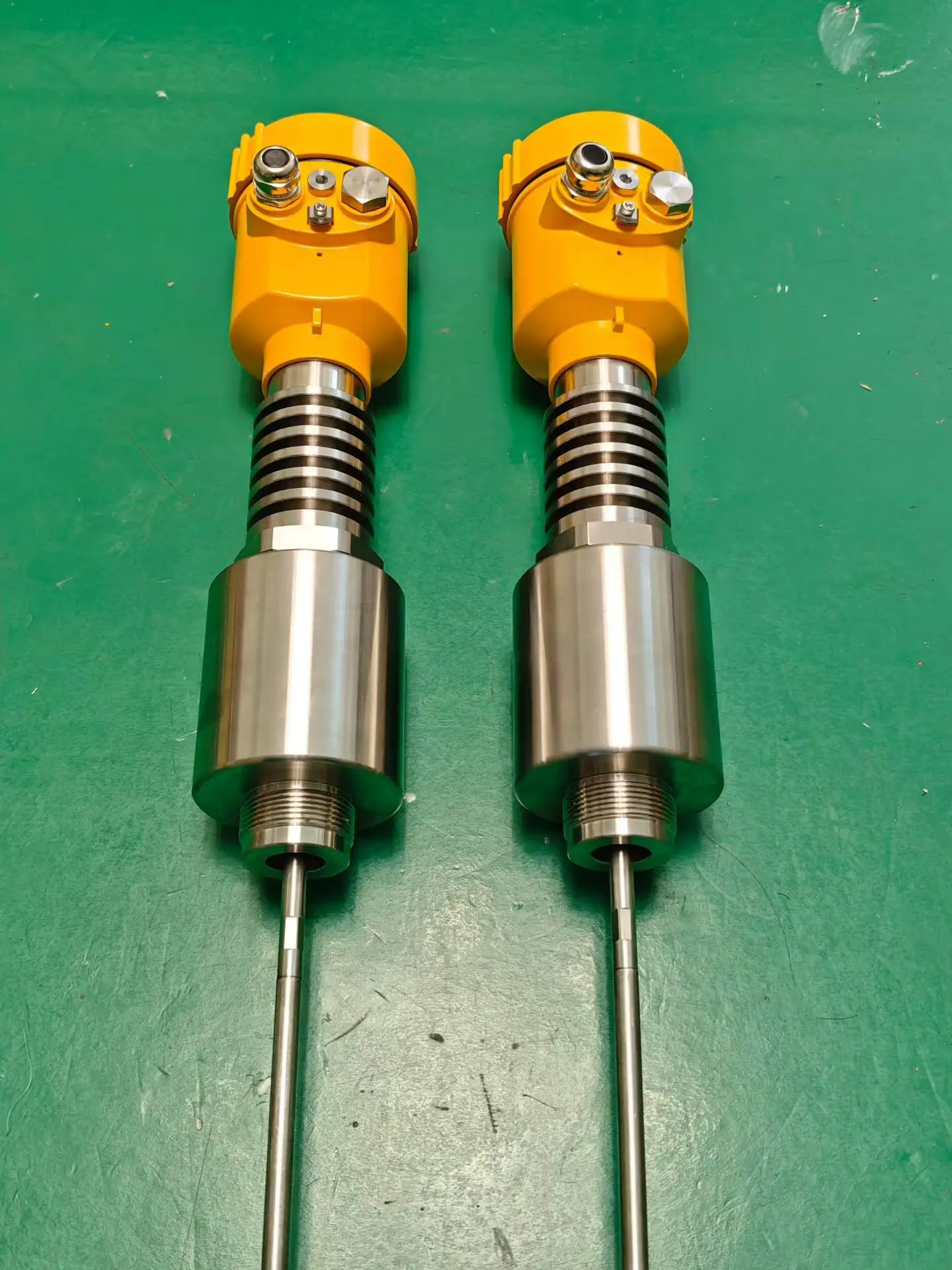
2. Model 701 (General Purpose): Temperature and measurement range specifications exceed those of standard models from foreign competitors.
Standard configuration: 250°C, 4 MPa, 30m range. Temperature limits of standard foreign models: Rosemount 5300 (150°C); E+H FMP51, VEGAFLEX 81, and Siemens LG250 (200°C). Measurement range exceeds the 23.5m of the Rosemount 3300 and the 20m of the KROHNE OPTIFLEX 1100.
3. 704 Coaxial Type:
Accuracy matches the Rosemount 3300. Accuracy is ±5 mm, identical to the Rosemount 3300. Temperature resistance is 250°C, exceeding the 150°C rating of the standard Rosemount 3300.
(3) Cost, Delivery, and After-Sales Service
This is a core advantage of Sino-Inst. Compared to imported instruments, delivery times are shorter and procurement costs are lower. We provide rapid local technical support and on-site services. In contrast, imported brands generally have longer lead times and higher costs for spare parts and on-site maintenance.
(4) Communication and Configuration
Sino-Inst supports the HART protocol, facilitating integration with DCS control systems. Imported instruments offer more extensive advanced features, such as diverse digital communication options, echo analysis software, and remote predictive maintenance capabilities.
Featured Applications
Petroleum and Petrochemical Industry
Level measurement for crude oil or refined product storage tanks.
Level measurement for oil-water separation tanks.
Chemical Industry
Level measurement for fertilizer dosing and metering tanks.
Process control for reaction vessels involving lithium-ion battery cathode/anode materials and electrolytes.
Level measurement for storage tanks containing acids, alkalis, or highly corrosive media.
Level measurement for tanks containing low-dielectric-constant solvents.
Power Generation Industry
Material level measurement for coal bunkers in coal-fired power plants.
Level monitoring for cooling water storage tanks in nuclear power plants.
Level measurement for slurry and fly ash.
Material level measurement for salt storage silos in coal-fired power plants.
Food and Pharmaceutical Industry
Level monitoring for materials such as syrup, milk, and liquid pharmaceuticals.
Level monitoring for viscous or highly foaming fermentation media.
FAQ
A guided wave radar level transmitter measures material level by emitting high-frequency microwave pulses along a physical probe and measuring the time it takes for the pulses to reflect off the material surface.
To calibrate a GWR level transmitter, use a handheld communicator or the local display unit to set the 4 mA (0%) and 20 mA (100%) loop outputs to match known reference points on the probe.
No moving parts.
Direct contact measurement.
Interface measurement capability.
High accuracy.
Strong process adaptability.
Guided wave radar (GWR) is the preferred solution for applications requiring extremely high accuracy and reliability.
GWR should be selected for applications involving narrow tanks, stilling wells, or significant obstructions.
Pressure transmitter for level measurement is a relatively inexpensive and stable solution. Proper selection and configuration of pressure transmitters can effectively save on measurement costs. On CAN-based machinery, a CAN…
By Li Rui, Senior Process Engineer at Sino-Inst | Published 2026-03-24. If you’ve ever had an ultrasonic level sensor fail prematurely, there’s a good chance the probe material was wrong…
The Magnetic Float Level Gauge continuously measures the liquid level in a tank based on the principles of buoyancy and magnetic coupling. It indicates changes in liquid level by utilizing…
Powder/Dry Material Level Switches are devices used to detect when material reaches a preset level. When the material reaches or exceeds the set position, the level switch sends a signal,…
In the rapidly developing industrial sector, liquid level measurement is becoming increasingly important. Capacitive level transmitters are an important solution. They have no moving parts and are unaffected by water…
What is a Radar Level Sensor? A radar level sensor is an instrument that uses microwave echo ranging to measure liquid levels non-contactly. It can measure both liquid and solid…
Understanding the different Guided Wave Radar Level Transmitter Types can help you choose a more suitable model. Since the electromagnetic waves emitted by guided wave radar level transmitters are mostly…
Only a reasonable Guided Wave Radar Level Transmitter Installation can ensure long-term reliable and accurate measurement. And paying attention to the details during installation can avoid many troubles during use…
Radar and Guided Wave Radar Level Transmitter are often used in tank level measurement. Radar Level Transmitter and Guided Wave Radar Level Transmitter both use the principle that electromagnetic waves…
Due to its unique non-contact measurement capabilities, this intelligent radar level/liquid level meter accurately measures contaminants and corrosive media. Its 4-20mA and RS-485 output signals enable remote control. Its pulse operation…
Guided wave radar level meters have become a reliable level measurement technology in modern industrial facilities. Thanks to their high accuracy, rapid response, and high reliability, they are widely used for level monitoring in sectors such as petrochemicals, food processing, and wastewater treatment.
Sino-Inst is a manufacturer specializing in radar level meters and guided wave radar level meters. If you are looking for reliable level measurement solutions, the advanced guided wave radar level meters offered by Sino-Inst can meet your needs.
Zhang Wei, possesses 20 years of experience as an automation instrumentation engineer, specializing in the research, design, installation, commissioning, and maintenance of automation instruments.
Face to various instrument communication protocols (such as Modbus, Profibus, etc.), with solid hardware circuit design and software programming skills (proficient in C language and PLC programming). Has extensive project experience; projects he has led and participated in have all achieved outstanding results, improving product accuracy, reducing costs, and increasing production efficiency.
Possesses excellent communication and coordination skills and a strong team spirit, enabling him to quickly respond to customer needs and provide high-quality automation instrumentation solutions.