Home > Blog > Metal Tube Rotameter for Glycerol Flow — Low-Flow Viscous Liquid
Metal Tube Rotameter for Glycerol Flow — Low-Flow Viscous Liquid
In industries such as fine chemicals, pharmaceuticals, and food processing, there is often a need to accurately measure and control small flow rates of glycerol liquids. As a viscous fluid, accurate flow measurement of glycerol is crucial for ensuring product quality and process control. Therefore, selecting the appropriate flow meter is key to ensuring measurement accuracy and efficiency. We at Sino-Inst offer metal rotor flow meters, gear flow meters, and mass flow meters for glycerol flow measurement.
Glycerol Flow Measurement Is Tricky
Glycerol (or glycerol/glycerin) is a colorless, odorless, viscous liquid with high solubility and stability.
As a viscous liquid, its high viscosity places special demands on flow measurement. Therefore, when selecting a flow meter, its physical properties, such as viscosity, temperature range, and chemical stability, must be considered.
Extremely High Viscosity, and Drastic Changes with Temperature
Pure glycerol has a viscosity of approximately 1410 mPa·s at 20°C, which is 1400 times that of water. However, as soon as the temperature rises to 40°C, the viscosity drops to around 280 mPa·s; and at 60°C, it is only 80 mPa·s.
Low Reynolds Number
Due to its high viscosity and generally low flow rates in industrial applications (mostly low-flow applications), the Reynolds number (Re) in glycerol pipelines is often only tens to hundreds, far below the operating lower limit of electromagnetic flow meters, turbine flow meters, and vortex flow meters (these instruments generally require Re > 10000).
Poor Conductivity
Pure glycerol is almost non-conductive (conductivity < 0.1 μS/cm), far below the 5 μS/cm requirement for electromagnetic flow meters. Even in aqueous glycerol solutions, conductivity is insufficient at high concentrations. Electromagnetic flow meters are directly obsolete.
High Hygroscopicity, Concentration Drift
Glycerol readily absorbs moisture from the air; the concentration of glycerol in storage tanks changes after a few days. This change in concentration alters the density and viscosity, requiring a corresponding change in flow rate conversion factors—causing problems for any instrument based on volume or mass conversions.
Low flow rate + small pipe diameter scenarios are common.
Glycerin is not cheap (food grade and pharmaceutical grade are especially expensive), so in actual processes, small pipes of DN15~DN50 and low flow rates of 400~4000 L/h are frequently used.
Ultrasonic flow meters: The pipe is too thin, the flow rate is too slow, and the sound wave propagation signal is weak.
Vortex flow meters: Stable vortices cannot be formed.
Mass flow meters (Coriolis force): Accurate enough but very expensive.
Custom Case Study
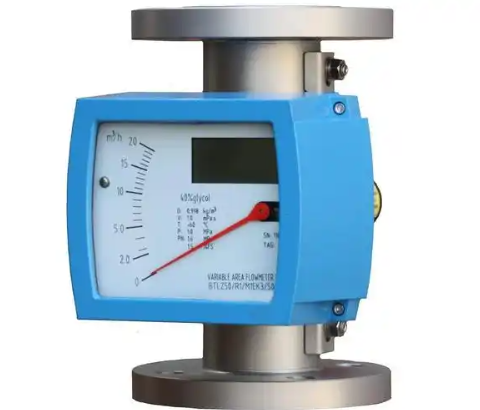
A customer from Singapore wanted to measure the flow of glycerol water, but the flow rate was relatively low. We recommended a metal tube float flowmeter with the following parameters:
Metal Tube Float Flowmeter
DN25mm
Medium: glycerol water
Flow range: 400-4000 L/h
Pressure: normal pressure
Temperature: normal temperature
Output: 4-20 mA + HART
DC24V
ANSI 1″ 150LB flange
Material: 304 stainless steel
Vertical installation, bottom inlet and top outlet
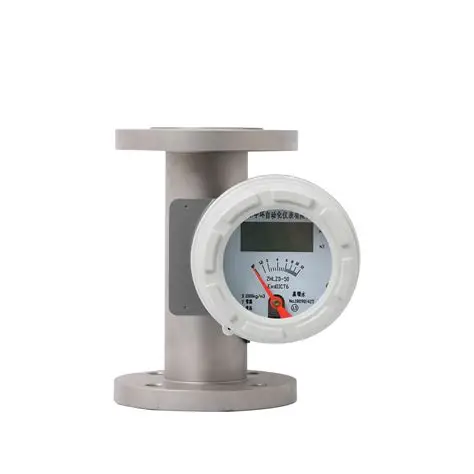
Pointer indicates instantaneous flow
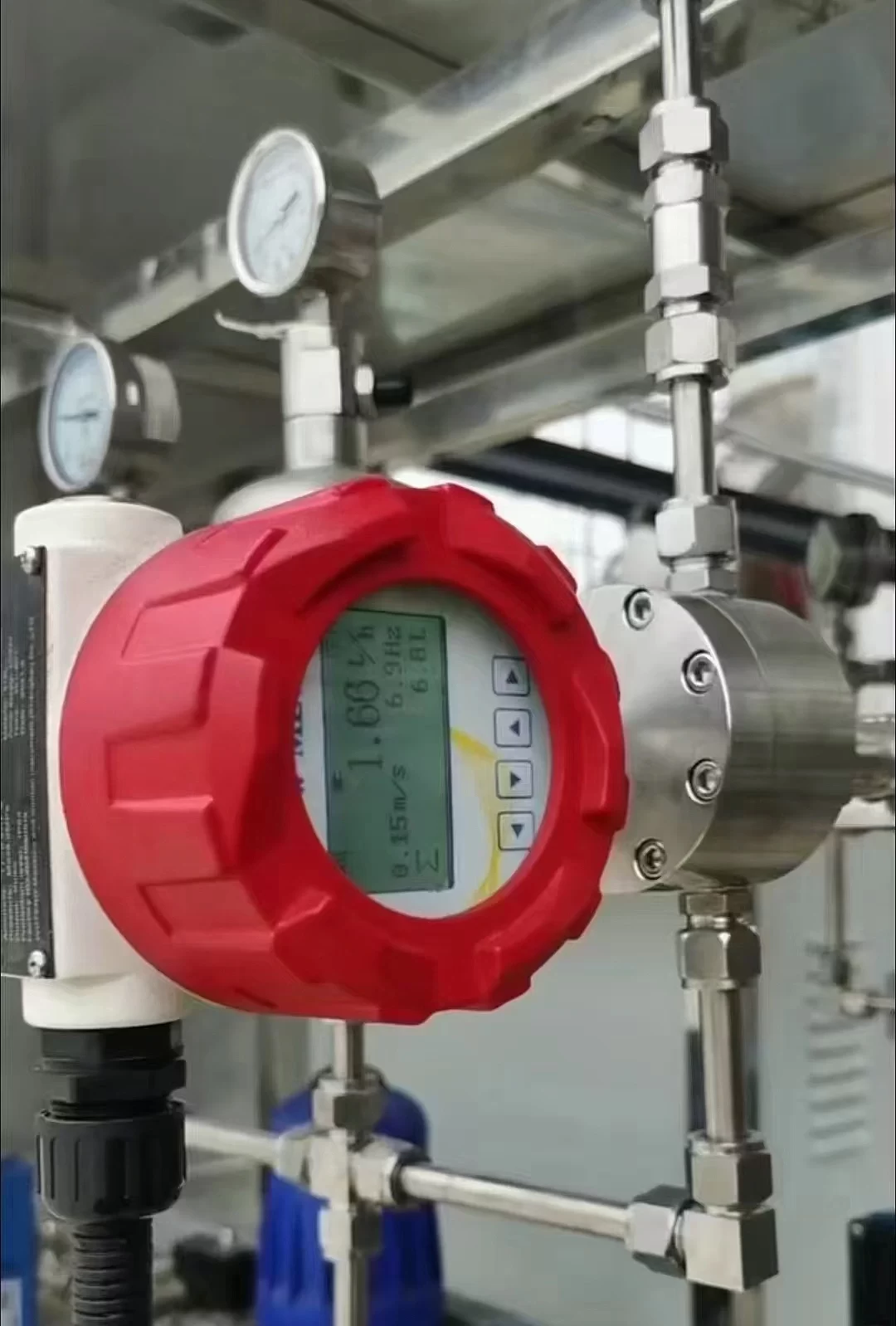
LCD displays instantaneous flow and cumulative flow Total
Glycerol water is a mixture of glycerin and water. Its characteristics and applications stem from glycerin’s inherent physical and chemical properties: strong moisturizing, high viscosity and lubricity, antifreeze properties, broad solubility, and stability. Glycerol water has a wide range of applications, primarily in the cosmetics industry and personal care. It can also be used as an antifreeze in automotive cooling systems or aircraft wings. It can also be used in the medical and food industries.
Working Principle — Metal Tube Rotameter for Viscous Fluids
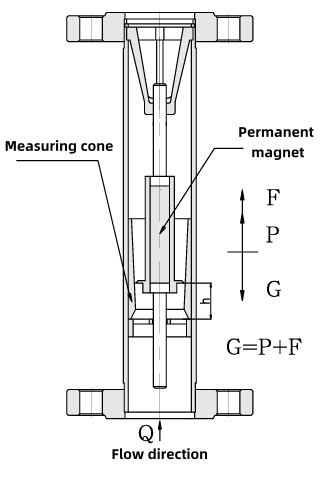
A metal tube float flowmeter consists of two main components: a sensor and an indicator. The sensor consists of a connecting flange, a measuring cone, a float, and upper and lower guides; the indicator consists of a housing, a magnetic drive system, a dial, and an electrical remote transmission system.
A float moves up and down within a vertical, tapered measuring tube. As fluid flows upward through the annular gap formed by the conical tube and the float, the float is affected by the combined forces of buoyancy, gravity, and fluid dynamic pressure. When these three forces reach equilibrium, the float stabilizes at a certain height. At this point, the annular gap area is linearly related to the flow rate. Based on the Bernoulli equation in fluid dynamics, the principle of force balance, and the law of fluid continuity, the instantaneous fluid flow rate through the annular area can be calculated. Therefore, the metal tube float flowmeter utilizes the variable area flow measurement principle.
A high-performance permanent magnet is located inside the float. When the float is in equilibrium, it creates a uniform and stable magnetic field around the float. A magnetic sensor is mounted on the outside of the conical tube, which transmits the linear displacement of the float within the measuring tube to an indicator via a non-contact method. After detection and processing, the resulting displacement is displayed on the indicator scale or outputs a corresponding standard 4-20 mA current signal.
Features Of Metal Tube Rotameter
Float flowmeters have low Reynolds number requirements. As long as a float shape is insensitive to viscosity, the flow coefficient remains stable even at Reynolds numbers above 40 or 500, unaffected by changes in fluid viscosity. This allows them to provide accurate measurements even at low Reynolds numbers.
Float flowmeters do not require strict straight pipe sections, increasing installation flexibility.
Float flowmeters have a wide flow range. The output of the flow sensing element is nearly linear, and pressure loss is relatively small, making them advantageous in a variety of applications.
Most float flowmeter structures can only be installed in vertical pipes from bottom to top.
Glass tube float flowmeters are popular for their simple structure and affordable price, but glass is fragile, especially when used with gases in unguided configurations. Metal tube float flowmeters eliminate the risk of cone tube rupture, offer a wider operating temperature and pressure range, and are more durable.
Float flowmeters are primarily suitable for small and medium-sized pipe diameters. Full-flow float flowmeters are not suitable for large pipe diameters. For larger pipe diameters, split-flow meters are a better choice. Furthermore, if the fluid used differs from the factory calibration fluid, such as if the fluid was calibrated with water but the actual fluid properties differ, flow indication correction may be necessary.
Other Viscous / Low-Flow Liquid Applications
The measurement approach used for glycerin is not an isolated case. In industry, there are many other liquids that are “viscous, slow-moving, and require narrow pipes,” for which metal tube float flow meters are generally the default choice. We have worked with the following categories, and the selection logic is consistent with that used for glycerin and water:
Glyceryl esters and vegetable oils (food/pharmaceutical grade)
Monoglycerides, diglycerides, and triglycerides are downstream products of glycerin, and their viscosity is often significantly higher than pure glycerin, sometimes requiring heat treatment to prevent condensation. Food-grade pipelines are more material-sensitive, generally using 316L + PTFE sealing. For details on selecting these liquids, please refer to our industrial oil flow meter viscosity selection guide, which clearly explains which flow meter should be used for different viscosity ranges.
Cosmetic emulsions and skincare bases
The intermediate phase viscosity of emulsions and creams is generally between 500 and 3000 mPa·s, and they contain surfactants, fragrances, and organic particles, requiring finer flow meters for the liquid contact surface and seals.
For pipe diameters mostly between DN15 and DN40, flow rates are typically between tens and hundreds of liters per hour. For liquids in this volume range, refer to our high-viscosity liquid monitoring solution page, which summarizes a complete solution for online monitoring of flow rate, level, and viscosity.
Syrups, Fructose Syrup
The most significant characteristic of syrups is that their viscosity is highly temperature-dependent: HFCS-42 syrup has a viscosity of approximately 100 mPa·s at 40°C, which doubles when cooled to 20°C. Therefore, syrup pipes are generally jacketed for insulation, DN25~DN50, and have very low flow rates. When selecting a metal tube float flow meter, it is crucial to choose the float based on the actual viscosity at the operating temperature, not based on room temperature calibration. More details are available in the syrup flow meter selection guide, which provides a viscosity comparison of common grades.
Adhesives and Polyurethane Raw Materials
Materials with concentrations exceeding 10,000 mPa·s, such as white glue, PU glue, and hot melt adhesives, are beyond the operating range of metal tube floats. In such cases, volumetric floats (elliptical gears, rotary lobes) are generally preferred – you can refer to our case study on oval gear flow metering for paint; paint and adhesives follow the same selection criteria.
However, for branch line metering of catalysts, curing agents, and small-proportion additives in PU systems, where the flow rate is extremely low and the viscosity is moderate, metal tube floats are actually the most suitable and cheapest solution, representing typical low-flow, low-volume applications.
Ethylene Glycol and Propylene Glycol Antifreeze
Ethylene glycol/propylene glycol antifreeze used in refrigeration plants, air conditioning secondary water, photovoltaic thermal media, and solar thermal collector systems has a viscosity of 16~25 mPa·s at 20°C with a 50% concentration, very similar to glycerin-water. Metal tube floats are basically standard equipment for these applications, especially on branch lines in refrigeration plants. The selection logic can be seen in the selection of heating oil/heat medium flow meters, as the pipeline characteristics of antifreeze and heat medium oil are almost identical.
More Glycerol Flow Meters
Of course, in other operating conditions, we can also select other types of glycerol flow meters based on the actual parameters.
Positive Displacement Flow Meter – Oval Gear
Positive displacement flow meters determine flow rate by measuring the fixed volume passing through their interior. This type of flow meter is ideal for measuring high-viscosity fluids such as glycerol because it is unaffected by changes in fluid viscosity. They provide high-accuracy measurements and are particularly suitable for low-flow-rate applications.
Gear Flow Meter – GF Series
Gear flow meters are suitable for even smaller flow rate measurements, down to 0.6 L/H. Custom parameters can be provided for high pressures up to 40 MPa and high temperatures up to 200°C.
Coriolis Mass Flow Meter
Coriolis flow meters utilize the Coriolis effect of fluid in a vibrating pipe to measure flow rate. This type of flow meter can simultaneously measure mass flow rate and density and is suitable for a variety of fluids, including high-viscosity liquids. They offer high accuracy and fast response, making them suitable for demanding low-flow-rate measurements.
In the arena of flow measurement, metal tube rotameters hold a salient position for their durability, precision, and suitability for difficult environments. Whether you’re in the process industry, water management, or petrochemicals, knowing these devices can heighten your flow measurement…
Solvent flow meters: This term may sound complex, but they are crucial tools in many industries. The chemical industry, in particular, requires precise solvent addition. In this guide, we’ll delve deeper into the meaning and importance of these devices. Sino-Inst’s…
Syrup is a higher viscosity liquid solution that is made from sugar, generally fructose and sucrose. Syrup can be derived from many types of raw materials, including sugar cane juice, fruit juice, vegetable juice, agave nectar, tree sap, and cornstarch…
Soy sauce is probably man’s oldest prepared seasoning. Soy sauce is a dark-brown liquid extracted from the fermented mixture of soybeans and wheat. Due to its salty taste and sharp flavor, it is served as an all-purpose seasoning for thousands…
Although digital oil flow meters are constantly being innovated, Mechanical Oil Flow Meters still occupy a large proportion of industrial oil flow measurement, including flow measurement of crude oil, fuel oil, diesel, edible oil, and other oils. Positive displacement flow…
In the realm of industrial flow measurement, mechanical flow meters stand as a testament to engineering precision and reliability. These devices have played a pivotal role in gauging the flow of various liquids, notably water and diesel. The mechanical flow…
Hydraulic flow meters, also called hydraulic oil flow meters, monitor and control hydraulic system oil flow continuously or intermittently. To check the performance of hydraulic pumps and the settings of flow control valves. Hydraulic oil is the medium that transmits…
Summary
Accurate flow measurement ensures stable production. Metal float flowmeters are most commonly used for flow measurement in small and medium-diameter pipes: their tapered tube rises and falls with flow, and their metal material can withstand high temperatures and high pressures. This Sino-Inst model allows you to select the pipe material based on the medium, select between pointer and remote transmission, and offer output options of 4-20 mA, RS485, and relay alarms. It can be used with both liquids and gases. Need to select a model? Contact our technical team directly to provide you with a tailored solution.