Home > Blog
2026.8.5

Dynamic vs Kinematic Viscosity

When purchasing an online viscometer, do you often encounter this situation: you specify the viscosity in cSt at 50°C, but the manufacturer provides the value in cP, leaving you confused? Dynamic viscosity (μ) is a fluid’s internal resistance to shear, measured in centipoise (cP = mPa·s). Kinematic viscosity (ν) is that value divided by density, in centistokes (cSt = mm²/s): ν = μ / ρ. Water is about 1 cP and 1 cSt at 20 °C — which is why the two get confused. Most inline viscometers output cP; cSt requires a density input. RFQ Table of ContentsDynamic vs Kinematic ViscosityWhat is dynam......

2026.6.16

How to Verify Fuel Tanker Delivery Volume at a Gas Station

Accurate monitoring of unloading volume is crucial for tanker truck deliveries to gas stations, as well as trade transfers and distribution. Data from before, during, and after delivery should be precisely correlated, at least within permissible margins. So, how do you calculate the delivery volume of tanker trucks to gas stations? Where do gaps typically occur? We’ll share three methods for checking unloading volume and why temperature is often the cause of most “shortfalls.” RFQ Table of ContentsDynamic vs Kinematic ViscosityWhat is dynamic viscosity? (μ)What is kinematic v......

2026.5.21

Pressure Sensor Manufacturers in China: Buyer’s Guide

China is the largest OEM and mass production base for industrial pressure sensors. Custom production is available for everything from standard 4-20 mA pressure transmitters to extreme operating conditions such as 1000 MPa ultra-high pressure, −252 °C cryogenic, and ATEX explosion-proof models. Standard pressure sensors can be shipped within 3-5 days. We also build digital-output instruments such as the CAN bus pressure sensor / transducer for CANopen and custom CAN 2.0B networks. Compared to North American and European brands, Chinese manufacturers have three core advantages: more competitive ......

2026.5.18

High Temperature Differential Pressure Transducers for Steam, Hot Oil & Furnace ΔP

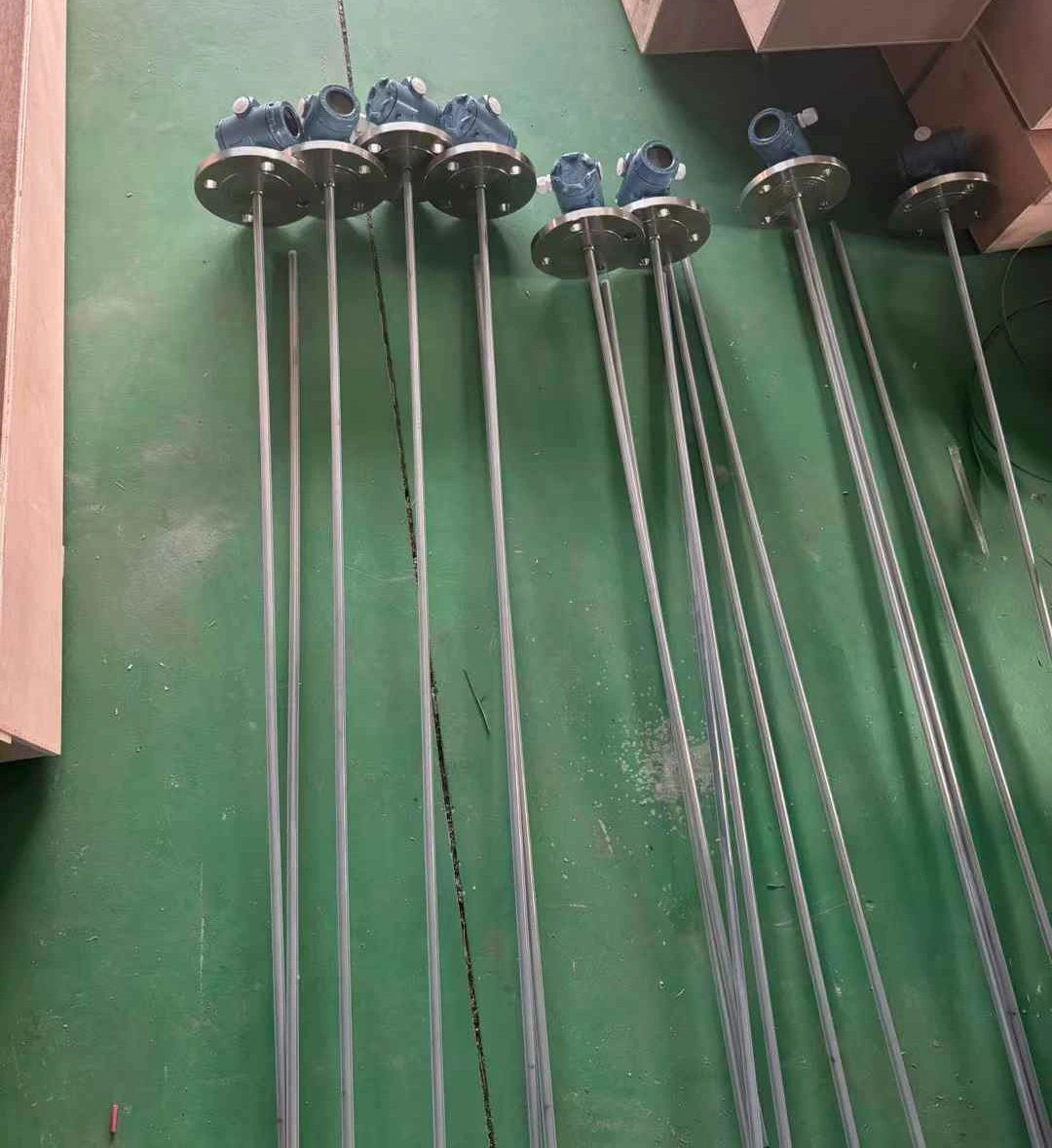
In specialized applications such as power generation, high-temperature reactors, and metallurgical smelting, process pressure measurement often faces extreme conditions of “high temperature” + “differential pressure,” with the temperature of the measured medium reaching 300℃~600℃. Differential pressure measurement of high-temperature media can be used in important processes such as flow calculation, liquid level monitoring, and differential pressure alarms, Even used for density measurement. Sino-Inst’s high-temperature differential pressure transmitter is specifi......

2026.5.17

Inline Pressure Transducer Guide: Types, Selection & Featured Products

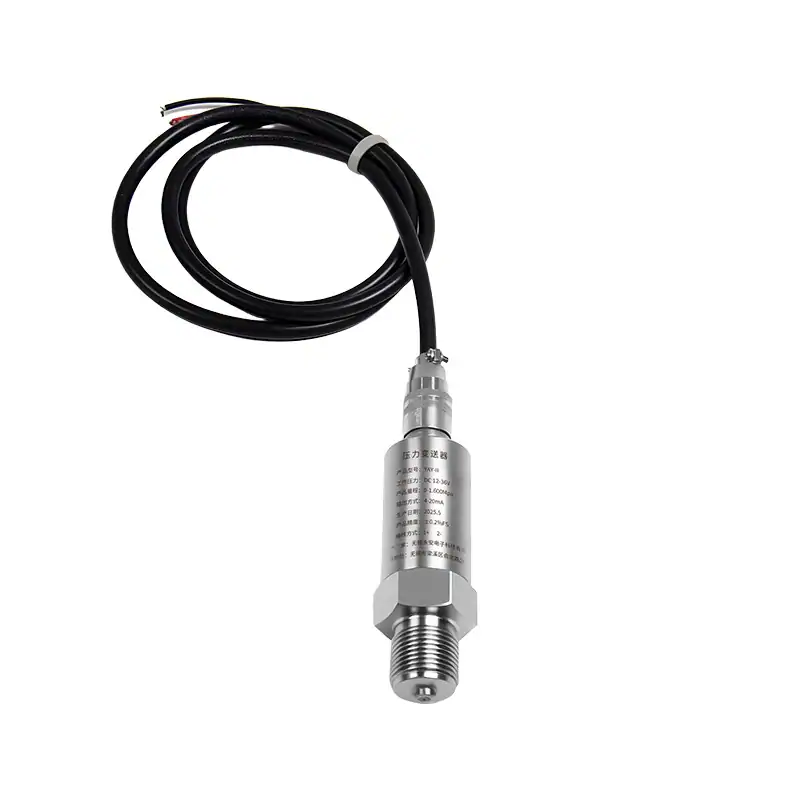
An inline pressure transducer is a compact pressure transmitter that screws directly onto the pipeline via a single threaded interface. The sensitive diaphragm is in close contact with the medium, without manifolds or remote transmission diaphragms. This form factor is most commonly found in hydraulic systems, compressed air mains, cooling water circuits, HPLC process lines, and OEM equipment. For systems built on a fieldbus rather than an analog loop, consider a CAN bus pressure transducer that outputs CANopen or a custom CAN 2.0B protocol. Sino-Inst manufactures and supplies 10 models of its......

2026.5.6

How to Use Pressure Transmitter for Level Measurement

Pressure transmitter for level measurement is a relatively inexpensive and stable solution. Proper selection and configuration of pressure transmitters can effectively save on measurement costs. On CAN-based machinery, a CAN bus pressure transmitter reports level-related pressure straight onto the network. Pressure transmitters for level measurement can be broadly categorized into two types: one for measuring liquid levels in pipes, and the other for measuring liquid levels in wells and rivers. Next, we will take a detailed look at their differences and how to choose the right one. RFQ Table o......

2026.4.30

Magnetic Flow Meter Calibration Procedure – User Guide

After a period of use, electromagnetic flow meters may experience a decrease in accuracy. Magnetic flow meter calibration eliminates systematic errors inherent in the instrument, ensuring the reliability of its measurement results. This meets the needs of process control, cost accounting, and trade settlement. Electromagnetic flow meters are suitable for measuring the flow rate of conductive liquids in closed pipelines and are widely used in various industries such as chemical engineering, wastewater treatment, agricultural irrigation, and urban water management. Therefore, electromagnetic flo......