
80GHz Radar Level Sensors: Siemens LR110/LR120 Alternative
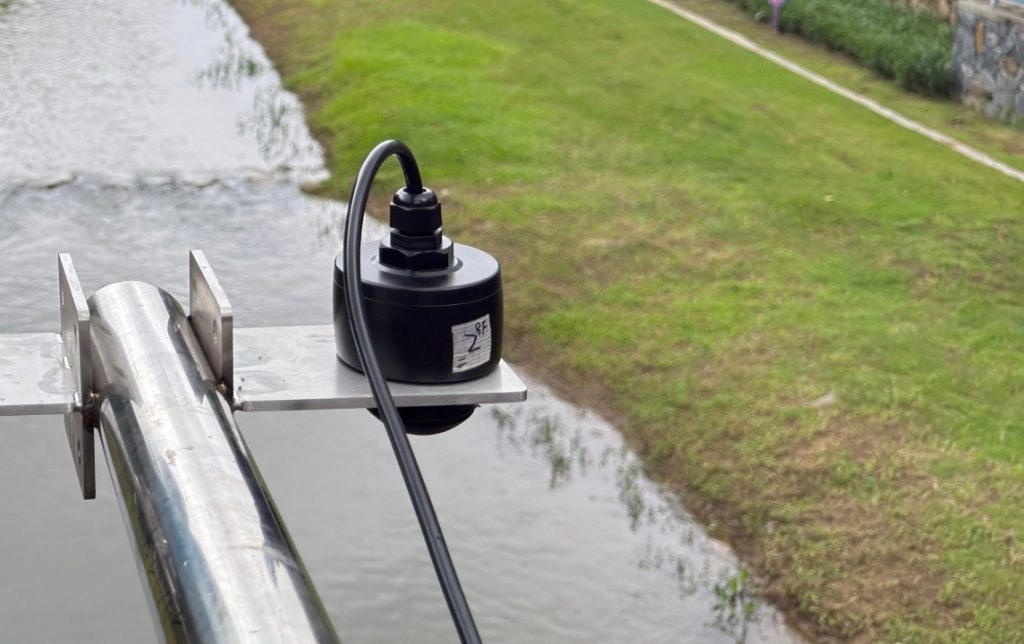
For measurement sites such as wastewater facilities and small-size storage tanks, 80 GHz radar level sensors are widely adopted. Their narrow beam angle, short blind zone, plus good resistance against dust and lens condensation make them well-suited for these locations. This project calls for forty units of 80 GHz radar level transmitters as drop-in alternatives to Siemens LR110 / LR120, with a firm requirement for IP68 ingress protection.
Off-the-shelf radar level sensors on the market typically top out at IP67, which cannot withstand submerged conditions. Only purpose-built radar level transmitters are engineered to deliver genuine IP68 performance.
Next, we will analyze this requirement by comparing the original manufacturer’s specifications for the LR110/LR120 and the differences in IP protection ratings, providing a reference for similar benchmarking and replacement projects.
Can 80GHz Radar Replace Siemens LR110/LR120?
The answer is yes, but only if the selected model matches the specific operating conditions and interface requirements. The Siemens LR110/LR120 are 80 GHz frequency-modulated continuous-wave radars. Technically, domestically produced instruments operating in the same frequency band are already capable of serving as substitutes.
The Siemens LR110 and LR120 are primarily used in municipal wastewater treatment, small storage tanks, and collection wells. They also serve as the benchmark for domestic substitution projects. The LR110 has a slightly wider beam angle (8°) and a maximum range of 15 meters, making it suitable for shallow tanks and wells. The LR120 has a narrower beam angle (4°) and a maximum range of 30 meters, making it suitable for deep wells and tanks.
Both products share the design philosophy of the same-generation hardware platform. Their most notable feature is that a single instrument natively supports both conventional tank-top measurements and overflow/submersion conditions, with IP68 protection as standard. This is also the primary reason many customers directly adopt these IP ratings when selecting equipment.
The LR110/LR120 feature native IP68 enclosures. Conventional 80 GHz radar level transmitters typically have a maximum protection rating of IP67, making them suitable only for applications with no risk of submersion. When there is a risk of the probe being submerged by overflow at the site, an IP68-rated radar level transmitter must be selected for comparison. At the same time, installation dimensions, communication protocols, and explosion-proof certifications must be verified.
| Comparison Items | LR110 | LR120 |
| Beam Angle | 8° | 4° |
| Maximum Range | 15 m | 30 m |
| Interference Resistance | Moderate; suitable for simple tank configurations | Strong; suitable for complex tank configurations with numerous pipes and brackets |
| Submersion Protection | IP68 (standard) | IP68 (standard); optional submersion shield |
| Lens Material | PVDF | PVDF |
| Communication | 4–20 mA + HART / Modbus | 4–20 mA + HART / Modbus |
| Typical Equivalents Among Domestic Models | 8° beam IP67 level radar 8° beam IP68 level transmitter | 4° narrow beam IP67 level radar 4° narrow beam IP68 level transmitter |
What 80GHz Radar and LR110/LR120 Share
Both the 80 GHz radar level sensor and the Siemens SITRANS LR110 and LR120 are high-frequency radar level transmitters. They utilize the non-contact microwave measurement principle. Furthermore, the LR110 and LR120 are themselves 80 GHz (W-band) frequency-modulated continuous-wave (FMCW) radar transmitters.
The two share many similarities in terms of technical principles, installation methods, applicable operating conditions, and communication configurations. However, the LR110 and LR120 are specific products within the Siemens product line, whereas 80 GHz radar is a technical category that encompasses multiple brands and models.
Measuring Principle
- Non-contact measurement: Both devices calculate liquid level by emitting high-frequency electromagnetic waves and receiving echoes reflected from the surface of the medium, then calculating the time difference. No probe needs to be immersed in the medium.
- Frequency-Modulated Continuous Wave (FMCW) technology: The LR110/LR120 use W-band FMCW radar. 80 GHz radar sensors are generally based on the FMCW architecture.
- Advantages of the High-Frequency Band: The 80 GHz band features a narrow beam and minimal blind spots. It is suitable for collection wells with small openings and close-proximity well walls. Condensation on the lens can attenuate the signal.
Performance
- Applicable Operating Conditions: Both are suitable for continuous level measurement of liquids, slurries, and solid particles. They can handle complex operating conditions such as vacuum and high-dust environments.
- Accuracy and Measurement Range: The 80 GHz radar has a maximum range of 120 meters, a minimum blind zone of just 0.08 meters, and an accuracy of ±1 mm. The LR110 has a range of 15 meters and an accuracy of ±2 mm. It is a different product within the same technological framework.
- Small Dead Zone and Near-Field Measurement: The dead zone for the 80 GHz high-frequency band can be as low as 8 cm. The LR110 emphasizes a “zero near-field dead zone.” Both devices offer advantages in close-range measurement and installation in confined spaces.
Configuration and Commissioning
- Lens Material: For wastewater and mildly corrosive applications, PVDF lenses are the preferred choice. PP lenses may also be used for simple clean water applications.
- Supported Communication Protocols: Both models support industrial standard protocols such as HART and Modbus RTU, facilitating integration with DCS or PLC systems.
- Remote commissioning capability: The LR110/LR120 models do not have a local HMI but support wireless commissioning via Bluetooth. 80 GHz radar sensors generally support configuration via Bluetooth or commissioning software.
Choosing a Replacement by Installation Site
Scenario 1: Tank Top, No Flooding Risk
Standard IP67-rated 80 GHz radar level transmitters can deliver functional replacement for LR110 / LR120. Still, these points need thorough checking:
- Beam angle: Pick 8° beam angle to match LR110 for minimal signal interference. Where tanks contain many internal obstructions, select 4° narrow beam matching LR120.
- Communication: Verify HART / Modbus register mapping and 4–20 mA signal consistency.
- Material choice: PVDF lens is critical for wastewater and mild corrosion; PP lenses show poor anti-corrosion capability.
- Commissioning channel: Confirm Bluetooth configuration support.
Important limitation: Hardware cannot endure submersion; overflow flooding will cause unit failure.
Scenario 2: Wet Wells and Overflow Basins
Standard IP67 80 GHz radar level sensors cannot be used as a substitute!
Reason: The LR110/LR120 features a native IP68 submersible housing. Standard radar level sensors are only sealed to IP67 and do not support continuous submersion.
Feasible Solution: Switch product lines and select an IP68 radar level sensor, then ensure full compatibility in terms of beam angle, measurement range, communication, corrosion-resistant materials, and algorithms.
Scenario 3: Agitated Tanks with Foam or Dust
- Benchmark: Prioritize LR120.
- Operating Conditions: Continuous agitation inside the tank, severe liquid level fluctuations, and persistent thick foam.
- Priority Assessment: Determine whether there is a risk of submersion.
- No risk of submersion: IP67, 4° narrow-beam, PVDF-lens radar level transmitter.
- Risk of overflow and submersion: IP68 narrow-beam radar level transmitter.
Note: These operating conditions place the highest demands on the algorithm. It is recommended to first submit samples for on-site comparison testing rather than proceeding directly with bulk replacement.
Scenario 4: Beyond LR110/LR120 Limits
Select a flanged 80 GHz model (such as the high-temperature FMW13G) directly; do not follow the LR specifications.
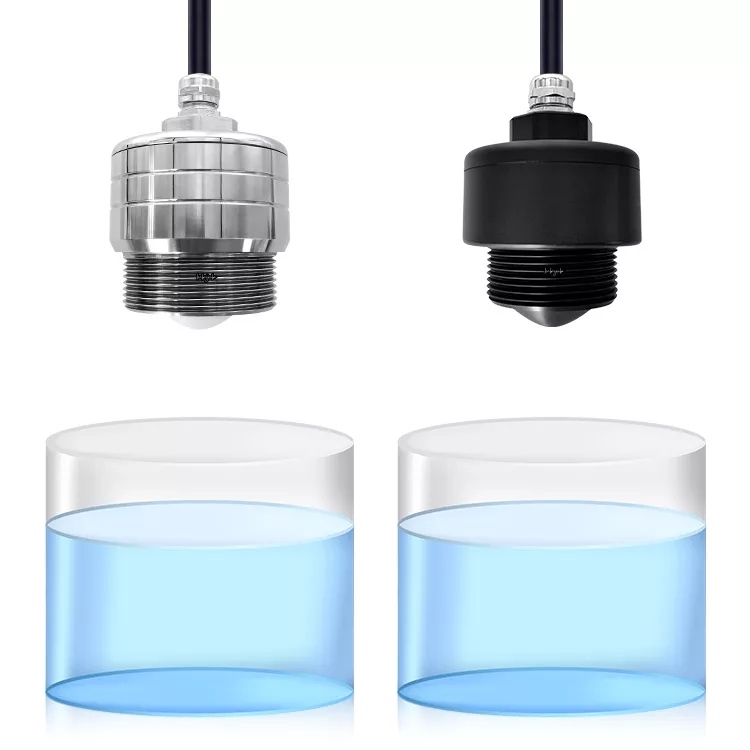
Recommended LR110/LR120 Replacements
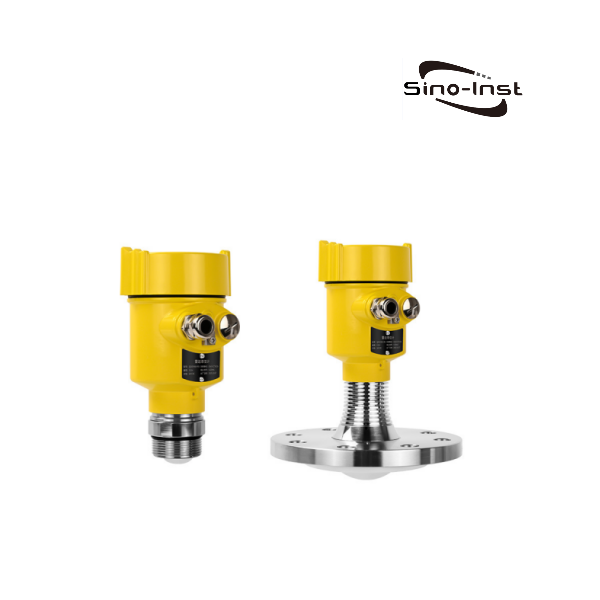
For tank-top and dry mounting. Lens antennas 3°/6°/8°, dead zone from 0.08 m, ±2 mm accuracy, IP67, 4–20 mA/HART.
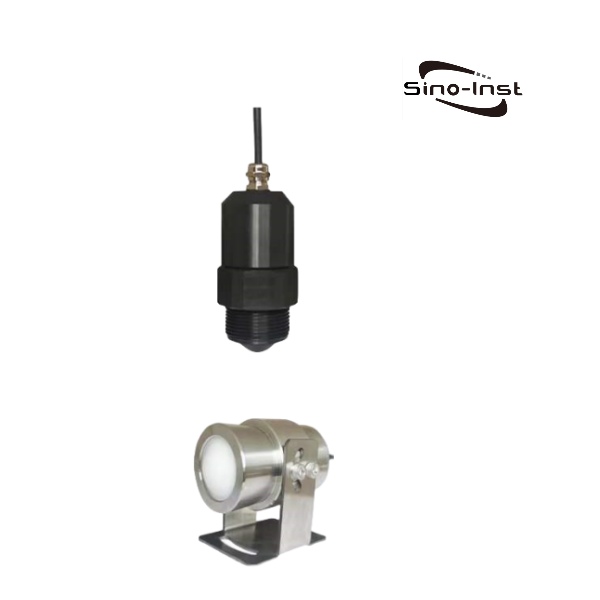
For wet wells and overflow basins where the sensor can be flooded. IP68 submersible version, 4–20 mA or RS485 output.
Replacement Checklist
No Local Display: Commissioning and LT500
The LR110/LR120 does not have local buttons or a display; it is configured via a Bluetooth app, SIMATIC PDM, or HART. If an LT500 is used on-site for display and relay control, verify that the new 4–20 mA/HART meter can be connected to the LT500 when replacing it.
Hazardous-Area Approvals
The LR110/LR120 are available in explosion-proof versions (for dust and gas). When replacing them, you must verify that the new meter has equivalent IECEx and ATEX certifications; otherwise, it cannot be used in hazardous areas.
Accuracy, Range and Beam Angle
Generational Technology Gap: The LR110/LR120 utilize W-band FMCW radar. Replacement models must also be 80 GHz FMCW; 26 GHz pulse radar cannot be used for comparison, as the beam angles and blind zones differ significantly.
Range and Blind Zone: The LR110/LR120 have an accuracy of ±2 mm. The LR110 has a range of approximately 15 meters, while the LR120 has a range of 30 meters.
80 GHz products have a standard accuracy of ±2 mm and a custom accuracy of ±1 mm. The beam angle is 3°, 6°, or 8°, depending on the lens size (78/44/32 mm). To match the LR120’s 4° beam angle, you must confirm that the installation space can accommodate a larger lens.
Materials
Antenna Lens Material: The Siemens LR110/LR120 comes standard with a one-piece PVDF lens antenna. For domestically manufactured 80 GHz radar level transmitters, the antenna lens is available in three materials: PP, PVDF, and PTFE.
Process Connection: The Siemens LR110/LR120 features a PVDF threaded process connection (1″/1½”), typically mounted on a bracket.
When using domestic alternatives, verify that the thread specifications and bracket are interchangeable in the same installation location. Domestic 80GHz radar level transmitters come standard with 304 stainless steel process connections, with 316L stainless steel available as an option.
Housing Material: The Siemens LR110/LR120 housing is a sealed PVDF housing. There are two versions of the 80GHz radar level transmitter housing. The standard IP67 liquid level model typically uses an aluminum alloy housing. The IP68 water level model uses a stainless steel or PVDF housing.
Seals: The LR120 also offers an optional submersion protection cover. Most 80GHz radar level transmitters come standard with EPDM seals. For applications involving oils, please confirm separately whether FKM (fluorocarbon rubber) seals are required.
IP Rating
Siemens LR110 and LR120 models come standard with an IP68 protection rating. The original design supports long-term submersion. They are suitable for applications with a risk of submersion, such as sewage wells and overflow basins, and come with official third-party IP68 test reports.
Domestically produced 80GHz radar level transmitters are divided into two product lines.
The standard liquid level models have a maximum protection rating of IP67, supporting only short-term submersion in 1 meter of water for 30 minutes. They are designed to withstand rain spray and splashing water but cannot withstand prolonged submersion.
Only dedicated radar level transmitters, which feature reinforced sealing structures and specialized waterproof cable connectors, possess the IP68-rated capability for long-term submersion. Standard IP67 level transmitters cannot be upgraded to IP68 simply by replacing the O-ring. They are not suitable for the submerged operating conditions required by this customer.
Communication and Power
Communication Protocols: The Siemens LR110/LR120 comes standard with the full 4–20 mA + HART 7 protocol; Modbus RTU is optional. The 80 GHz radar level transmitter primarily uses the 4–20 mA signal. HART is mostly a simplified version, generally capable of reading only the level value. Digital communication is primarily via Modbus RTU.
Power Supply Specifications: The Siemens LR110/LR120 is powered via a two-wire circuit. The 80 GHz radar level transmitters primarily use a two-wire system, though some models are four-wire.
Commissioning Methods: The Siemens LR110/LR120 handheld programmer can read parameters, echo curves, and alarm diagnostic information, and supports commissioning via a Bluetooth app. 80 GHz radar level transmitters support commissioning via Bluetooth, infrared, and local buttons.
IP67 vs IP68 for Radar Level Sensors
The IP protection rating, defined by the international standard IEC 60529, consists of two digits: the first digit represents the dust protection level, and the second represents the water protection level.
- First digit (0–6): Dust protection level, indicating the ability to prevent the ingress of solid foreign objects. The highest rating is 6, which indicates complete protection against dust ingress (dust-tight).
- Second digit (0–9): Water protection rating, indicating the ability to prevent water ingress. Common ratings include 5 (low-pressure water jets), 6 (powerful water jets), 7 (short-term immersion), and 8 (continuous immersion). IEC 60529 includes IPX9, while the commonly referenced IP69K is defined in ISO 20653.
The first digit, “6”: Complete dust protection; dust cannot enter the instrument housing. There is no difference in dust protection between IP67 and IP68. The difference between the two lies entirely in the second digit, which indicates the level of water protection.
IP67: Short-Term Immersion (1 m, 30 min)
- Standard definition: Brief submersion in clear water, depth 1 m, duration 30 min. No permanent equipment damage from water ingress within these limits.
- Typical deployment: Outdoor installations, tank-top mounting, rain-exposed locations.
- Design traits: Housing sealing works against rain and splashing. Almost always fitted with vent valve to balance internal-external air pressure. This vent valve must never stay submerged for extended time periods.
- Limitations: Not built for continuous submersion, flooded manholes or flood events. Under prolonged underwater conditions, water will gradually penetrate via vent valve and cable-gland pathways.
Most common domestic-market 80 GHz radar level transmitters are IP67 rated.
IP68: Continuous Submersion
- Standard Definition: The manufacturer specifies a designated water depth at which the device can be continuously submerged for an extended period. It remains watertight and fully functional during prolonged submersion.
- Applications: Stormwater wells, canals, and operating conditions with a risk of submersion.
- Design Features: No standard vent valve; instead, a pressure-balancing diaphragm or fully sealed pressure-resistant structure is used. Multiple reinforced seals are applied at the housing seams, cable glands, and antenna locations.
Siemens LR110/LR120 models come standard with IP68 protection from the manufacturer. Among domestically produced models, only the dedicated radar water level transmitter series features IP68 protection.
| Comparison Items | IP67 | IP68 |
| Dust Protection Rating | Dust-tight (Completely Dust-proof) | Dust-tight (Completely Dust-proof) |
| Water Resistance | Short-term submersion (1 m/30 min) | Continuous submersion (as specified by the manufacturer) |
| Can be rinsed | Not suitable for high-pressure rinsing; low-pressure wiping only | Not suitable for high-pressure rinsing; low-pressure wiping only |
| Design Purpose | Rain-splash-resistant level gauge | Submersible water level gauge |
| Typical Applications | Outdoor equipment and exposure to rain | Underwater measurement and prolonged exposure to moisture |
In the context of this LR110/LR120 replacement project, Siemens LR110 and LR120 units are factory-rated IP68 and designed for submersion. This is why the customer explicitly specified the IP68 requirement during the benchmarking process.
If a conventional domestic 80 GHz radar level transmitter (IP67) is selected for comparison—even if the measurement range, beam angle, and communication parameters all match—its protection rating will not meet the level of the original instrument. It will be damaged by water ingress after submersion, constituting a selection failure. Only domestic radar level transmitters specifically designed for water level measurement, with a native IP68 design, can match the LR110/LR120 in terms of protection ratings.
FAQ
Higher IP rating does not always equal better fit. The best solution matches real-world site operating conditions. When using domestic 80 GHz radar level sensors to replace Siemens LR110 / LR120, clearly tell apart splash-proof IP67 versus submersible-capable IP68. Base your model selection on whether submersion risk exists on-site, so instruments deliver stable long-run performance within industrial environments.
Sino-Inst supplies full-series radar level sensors plus dedicated radar water level transmitters as alternatives for Siemens LR110 / LR120. Available protection grades span IP65 through IP68, supporting flexible selection responding to on-site realities.
Should you have procurement plans for 80 GHz radar level sensors or require technical consultation, reach out to our engineering team.
Further Reading

Zhang Wei, possesses 20 years of experience as an automation instrumentation engineer, specializing in the research, design, installation, commissioning, and maintenance of automation instruments.
Face to various instrument communication protocols (such as Modbus, Profibus, etc.), with solid hardware circuit design and software programming skills (proficient in C language and PLC programming). Has extensive project experience; projects he has led and participated in have all achieved outstanding results, improving product accuracy, reducing costs, and increasing production efficiency.
Possesses excellent communication and coordination skills and a strong team spirit, enabling him to quickly respond to customer needs and provide high-quality automation instrumentation solutions.
Want to see more of our engineering guides in Google Search? Add Sino-Inst as a preferred source.