
80GHz Radar for High Temperature Tank and Reactor Levels
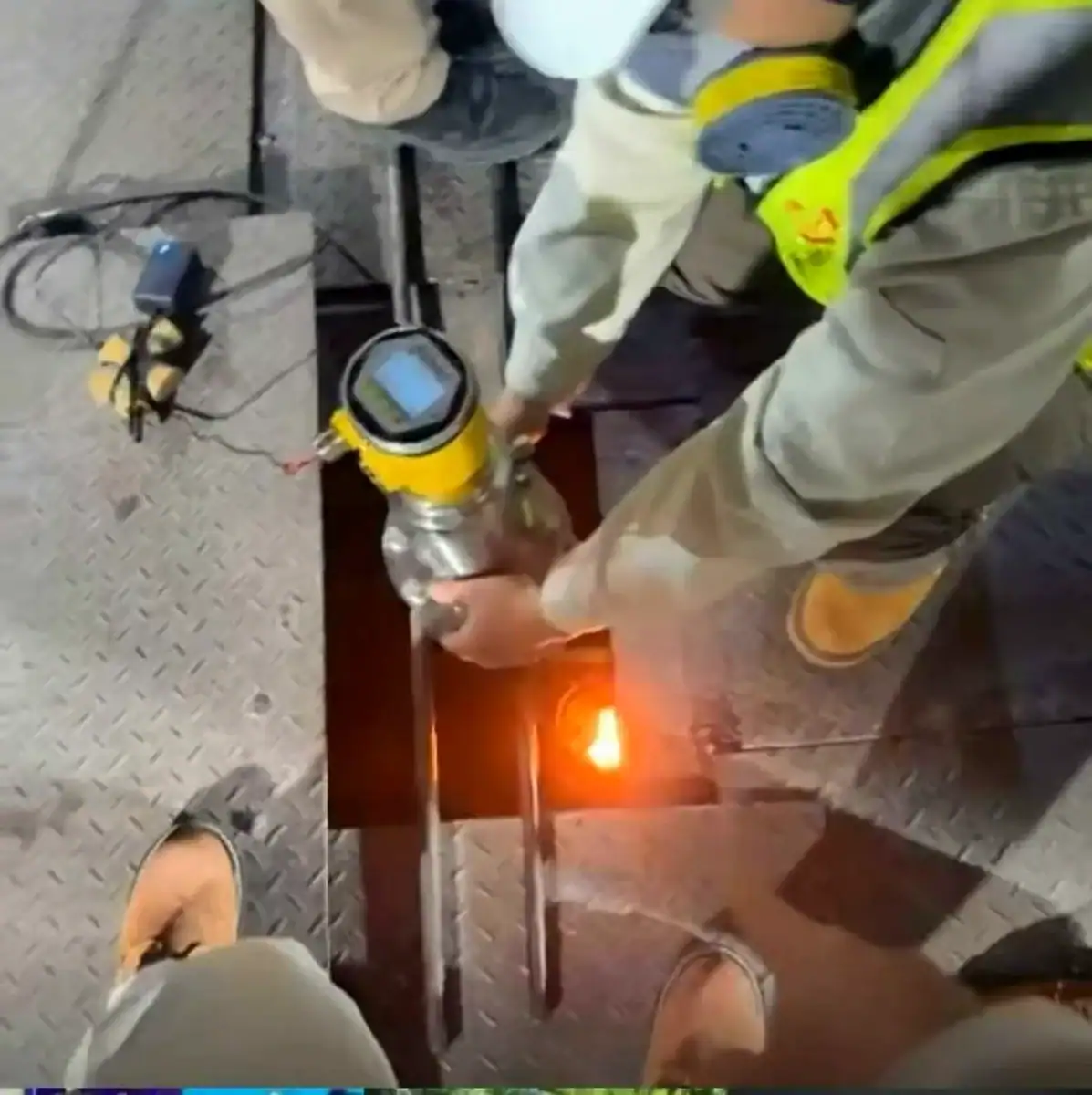
For reactors, buffer knockout tanks and similar process equipment, operating temperatures tend to run high, and steam together with condensate commonly appear within the vessel gas space. When carrying out level measurement for such units, our preferred instrument option is the 80 GHz radar level transmitter.
Regular grade 80GHz radar devices cover process temperatures from -40°C up to +200°C. Custom high-temperature variants can handle process temperatures as high as 1000°C, making them well-suited for hot-wall vessels where steam and condensation occur simultaneously.
Below we go through the practical strengths of 80 GHz radar level transmitters for level measurement on high-temperature reactors.
Why Choose 80GHz Radar?
In applications such as reactors and buffer tanks, traditional level measurement technologies often face challenges due to extreme temperatures, vacuum environments, steam accumulation, agitation, and foam interference.
80GHz radar significantly outperforms traditional 26GHz technology and other level sensing products. It is specifically designed for highly challenging high-temperature reactor applications.
Let’s take a look at the advantages of 80GHz radar level transmitters.
1. Narrow Beam Angle and High Resolution
80GHz radar utilizes a 3° antenna beam angle, allowing the signal to focus directly on the material surface. This narrow beam effectively avoids interference from reflections off internal structures such as tank walls, agitators, and cooling coils.
Additionally, it offers millimeter-level spatial resolution (±1mm) and a minimal dead zone (50–80mm), making it suitable for small-range vessels and close-range measurements.
2. Frequency Modulated Continuous Wave (FMCW) Technology
80GHz radar level transmitters employ FMCW technology. They are suitable for measuring the level of various liquids and bulk solids. With high signal penetration, they perform well in environments with heavy steam or dust.
3. High Precision and Minimal Dead Zone
Compared to 26GHz systems, 80GHz radar features a smaller measurement dead zone, yielding superior results in small vessels. These transmitters offer a maximum measuring range of up to 120 meters, a minimum dead zone of just 0.08 meters, and a measurement accuracy of ±1 mm.
4. Immunity to Environmental Factors
Compared to low-frequency radar, 80GHz radar offers superior signal focusing capabilities and greater resistance to interference from process steam.
The radar is unaffected by temperature, pressure fluctuations, steam, humidity, or the presence/accumulation of dust. It maintains stable measurement performance even in demanding conditions like those found in reactors and buffer tanks.
5. High-Temperature Resistance
80GHz radar is suitable for ambient temperatures ranging from -40°C to 150°C (or up to 200°C). Our Sino-inst 80GHz radar level meters can be customized for a maximum operating temperature of up to 1000°C.
Working Principle
High temperature radar level gauges share the basic working concept with ordinary radar instruments. An antenna sends out high frequency microwave pulses (either 26GHz or 80GHz) toward the medium surface. Microwaves travel at the speed of light and bounce back as echoes once they hit the liquid surface.
The antenna picks up returning echo signals. The signal processing unit works out liquid level height based on the time gap Δt between signal transmission and reception, together with light speed value.
Calculation formula: h = (c × Δt) / 2
Based on high-temperature radar technology, the 80G series radar level meters utilize high-frequency millimeter-wave and FMCW (Frequency Modulated Continuous Wave) technologies. During the sweep cycle, the device emits a continuous wave with a linearly changing frequency; the reflected echo generates a frequency difference relative to the transmitted signal, enabling high-resolution distance measurement.
The frequency difference (Δf) between the received echo and the transmitted signal is directly proportional to the distance (R) to the material surface. The system analyze this frequency difference using Fast Fourier Transform (FFT) to determine the position of the liquid surface and, consequently, the liquid level height.
The relationship is expressed as:
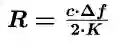
- R: Spatial distance from the antenna reference plane to the liquid surface (ullage/empty space, m) c: Speed of light in a vacuum
- Δf: Difference frequency obtained by mixing the transmitted signal and the echo
- K: Frequency modulation slope (sweep rate)
Compared to classic pulse radar devices, the 80G series provides stronger signal processing capacity under complex echo field conditions. It effectively suppresses false echo disturbance and guarantees measurement continuity and accuracy.
Deeply optimized for high-temperature operating conditions—80GHz radar level transmitter
1.High temperature resistant antenna and thermal isolation structure to withstand thermal radiation and conduction
Antenna hardware is selected according to actual process temperature: corundum ceramic or silicon carbide antennas are deployed for molten metal applications above 1200°C; Hastelloy or superalloy antennas are used for liquid media service from 300°C to 800°C. Antenna impedance is fine tuned for 80GHz high frequency microwaves so transmitted and received signals maintain good efficiency.
Thermal isolation construction: antenna connects to instrument main body by high temperature resistant thermal isolation flange, which is filled with ceramic fiber insulation material. This setup blocks heat conduction and thermal radiation, protecting the sensitive electronic modules inside the 80GHz radar and allowing core components to run under near ambient temperature conditions.
2.Optimized signal processing to counter interference from high temperature volatile vapors and smoke (leveraging 80GHz high frequency penetration)
Equipped with high temperature vapor filtering algorithm. It analyzes echo amplitude and frequency properties to separate strong real liquid surface reflections from weak disturbance echoes caused by vapor or smoke. Reliable liquid level readings can still be acquired even when vapor concentration stays very high.
Combined with high gain 80GHz antenna design and raised pulse signal energy, microwave penetration performance against vapor and smoke gets improved. Signal scattering gets restrained, clean and valid liquid surface echoes are captured, thus preventing incorrect level outputs.
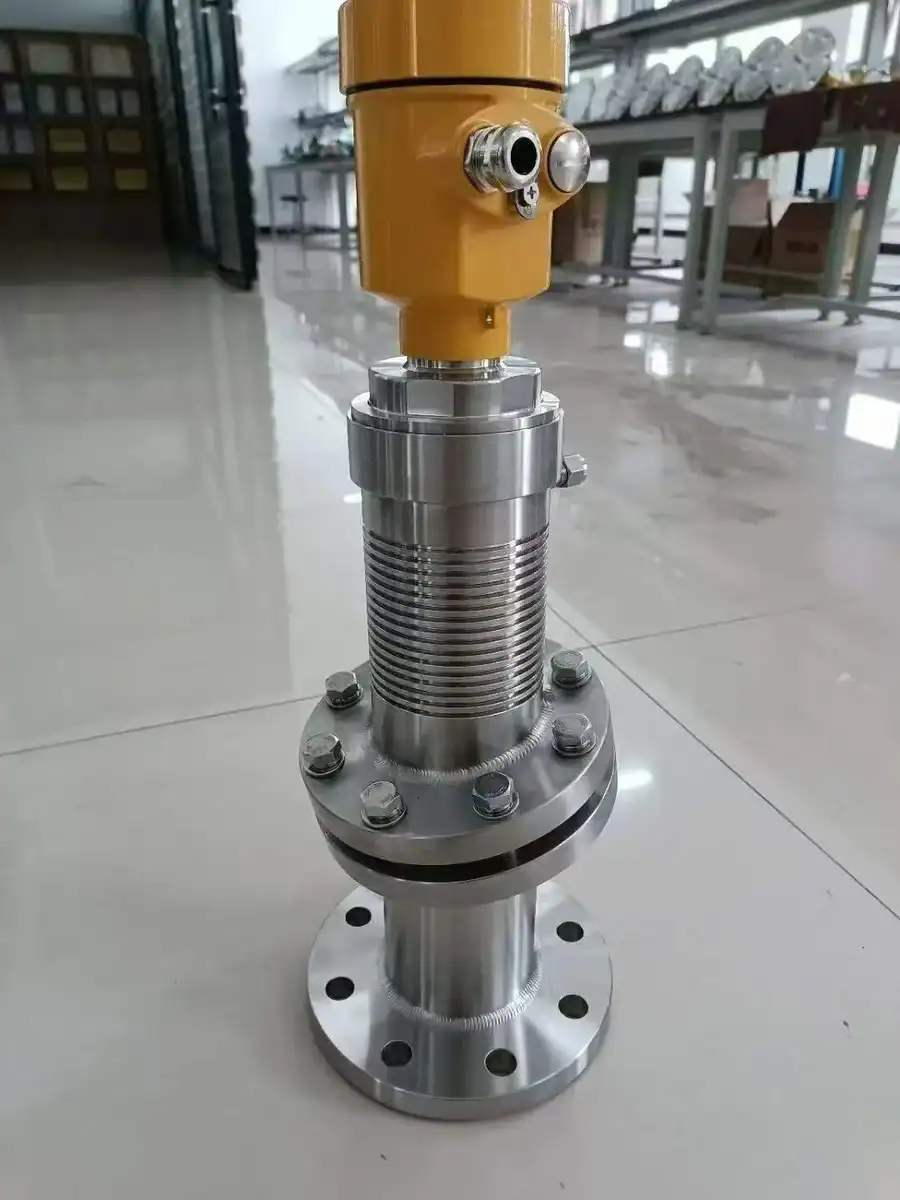
3.Thermal compensation mechanical structure for enhanced sealing and structural reliability under fluctuating high temperature conditions
Thermal compensation mechanical layout is adopted; connection parts are built from low expansion Invar alloy material to offset deformation brought by thermal expansion and contraction. Flange joints are fitted with high temperature graphite gaskets as well as metallic sealing rings, keeping sound sealing performance when temperature swings violently.
For high temperature plus high pressure working scenarios such as reaction kettles, reactors and buffer tanks, integrally forged stainless steel instrument housings are selected. Its pressure rating reaches ≥40bar, preventing medium leakage and securing long term mechanical stability for 80GHz radar hardware.
4.Explosion proof protection combined with liquid level linked early warning to mitigate safety risks in high temperature processes
Supports flameproof (Ex d II C T4) and intrinsically safe (Ex ia II C T4) explosion proof grades. The housing material features fire retardant properties and fits high temperature flammable explosive process media. Three fold circuit protection (over current, over voltage and over temperature protection) is integrated to avoid circuit failure triggered by high temperature factors.
Supports interlock actions responding to abnormal liquid level events. Audible visual alarms will activate once liquid level hits safety threshold values (for preventing dry heating or overflow incidents). It can automatically cut off heating sources and feed pumps, building a closed loop safety mechanism. This function is well suited for hazardous high temperature process equipment including reactors and buffer tanks.
Technical Specifications
| Transmit frequency | 76 81GHz, FM sweep frequency width 5GHz |
| Measuring Range | (0.08~ 120) m |
| Measurement Accuracy | ± 1mm |
| Beam Angle | 3° 、8° |
| Constant Range of Used Dielectric | >=2 |
| Power Supply Range | (18~28) VDC (<1W) 、220VAC |
| Methods ofCommunication | HART/ MODBUS bus |
| Signal Output | 4~20mA/HART bus or RS485/MODBUS bus |
| Fault Output | 3.6mA, 22mA, hold |
| On siteOperation/ Programming | 128×64 dot matrix display/four buttonsConfigurable host computer setting software |
| AmbientTemperature/ Humidity | (-40~85)℃/≤95%RH |
| Housing Material | Aluminum alloy or stainless steel are optional |
| Antenna Type | Lens antenna, can be equipped with lens antennashield/ anti corrosion antenna/ antenna heat sink/ quartz isolation flange |
| Process Pressure | (-0. 1~4)MPa |
| Product Dimension | φ100*270mm |
| Cable Entry | M20* 1.5 / NPT1/2 “ |
| Recommended Cables | AWG18 / 0.75mm² |
| Protection Level | IP68 |
| Install Method | Threads or Flanges |
| Net/ Gross Weight | 2.480Kg/2.995Kg |
| Package Dimension | 282832cm |
| Medium temperature | -40~150℃/200℃ Customizable up to 1000°C |
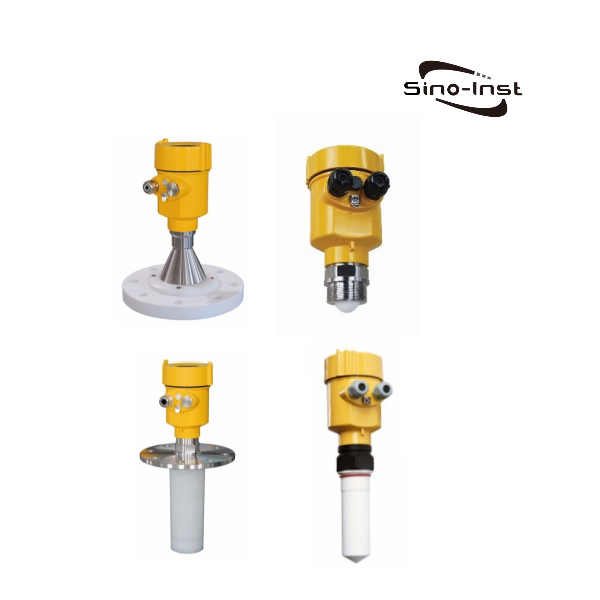
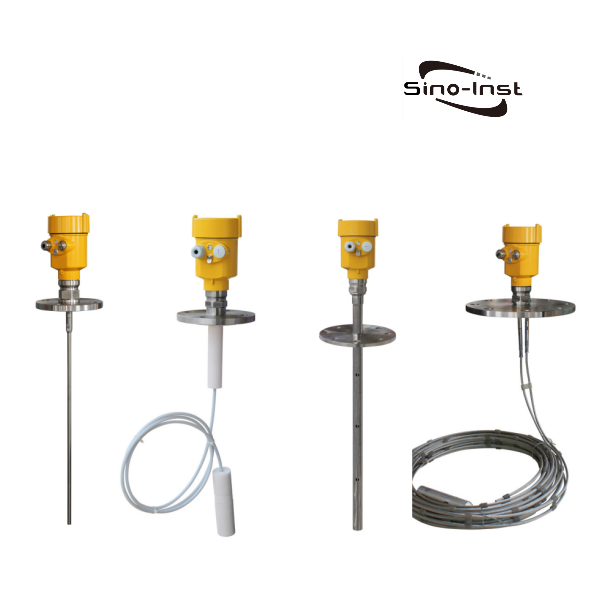
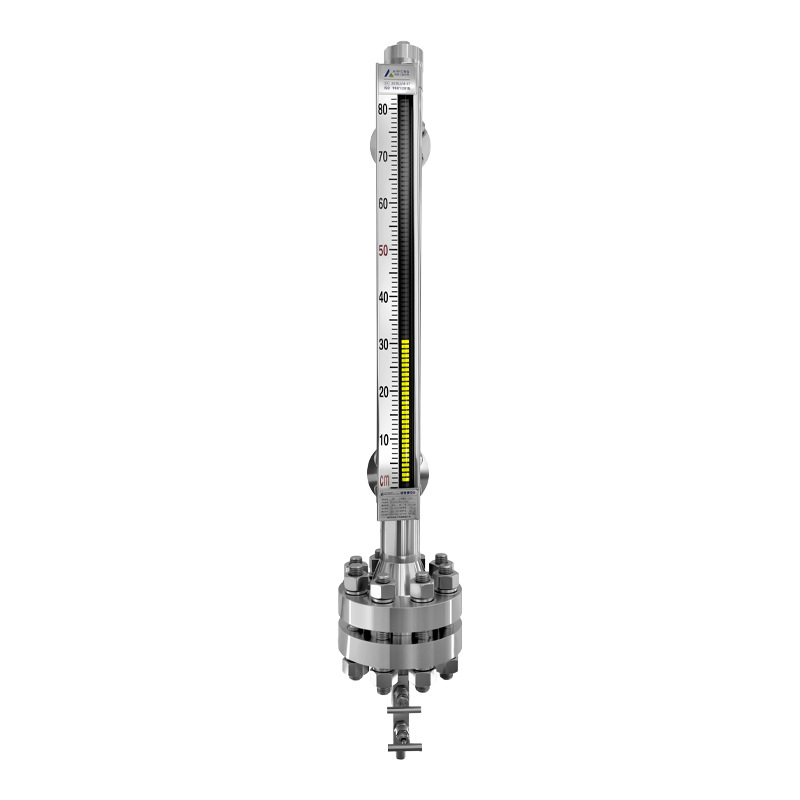
High-Temperature Level Transmitters for Hot Vessels
Installation Guidelines
Installation quality directly determines real world measuring performance and service life for high temperature radar level gauges. Installation work under high temperature circumstances must strictly follow specification requirements, focusing on four key areas: instrument type selection, installation point confirmation, assembly method and high temperature protection measures.
Equipment Selection
When picking high temperature radar level gauges, make sure its temperature rating matches process requirements (for instance for medium temperature higher than 150°C) and thermal compensation function is available. Check also whether measuring range, dead zone parameter and antenna style (horn type or parabolic type) can adapt to process conditions.
Actual field conditions also need evaluation. Before installation, clean up vessel top nozzles and confirm flange or threaded mounting surfaces are flat and free from corrosion. Evaluate on site factors such as high heat, vibration and dust. Where needed, fit heat shield parts or vibration damping support brackets.
Installation Location
Mounting points shall stay away from intense heat sources and interference sources while taking heat dissipation and later maintenance work into consideration.
First, keep away from positions with strong local heat or severe liquid turbulence, such as tap holes on molten metal ladles, feeding nozzles on high temperature reactors and outlets of heating coils. These spots have far higher local temperature and risk medium splashing. A minimum 1.5 meter clearance should be kept.
For high temperature tanks fitted with agitators, mount the instrument at a distance equal to 1.5 times tank diameter away from agitator shaft; alternatively choose narrow beam high frequency 80GHz radar units.
Second, ensure unobstructed microwave beam path at installation position; stay clear of internal obstructions such as ladders, support frames and heating coils. Maintain no less than 300mm clearance from antenna to surrounding obstacles.
For large scale high temperature storage tanks, roof center mounting is preferred so microwave beam can fully cover liquid surface. For vessels with complicated internal layout, carry out site survey and draw beam path sketch to optimize mounting position.
Last of all, the position shall allow good heat dissipation and convenient maintenance. For outdoor installation, avoid long time direct sunlight exposure; for indoor setup, guarantee proper ventilation and reserve enough operating space for calibration and antenna cleaning in future work.
Installation Method
Connection design must satisfy requirements of high temperature resistance, pressure endurance and sealing performance.
When adopting flange connection, select flange material matching vessel body; 316L stainless steel or high temperature alloy flanges are recommended. Pick gaskets according to working temperature range: fluoroelastomer gaskets apply for 150°C 300°C; graphite gaskets for 300°C 600°C; metal spiral wound gaskets for working temperature over 600°C. During assembly, tighten fasteners evenly in diagonal sequence so high temperature medium leakage will not occur.
For high temperature process equipment without ready made nozzle (e.g. molten metal ladles), bracket mounting approach can be used. Fabricate brackets from high temperature resistant angle steel or stainless steel profiles. Confirm bracket height based on maximum liquid level height of equipment, to make full measuring range covered and guarantee proper dead zone distance (generally 0.3 0.5m).
The instrument must be installed vertically. The deviation between antenna axis and liquid surface vertical line cannot go beyond ±1°. If deploying guided wave high temperature radar, probe rod or cable shall be manufactured with high temperature alloy material and kept vertical; maintain 100 150mm gap from equipment bottom to prevent contact with high temperature slag or coking deposits.
High Temperature Protection
High temperature protection and safety measures are essential during installation. Fit thermal isolation flange at joint position between instrument and process equipment. Fill ceramic fiber or high temperature rock wool insulation material, insulation thickness should not be less than 50mm.
For extreme high temperature service above 1000°C, add water cooling or air cooling accessories around instrument housing, ensuring instrument body temperature stays below 60°C.
Use high temperature rated field cables (minimum temperature rating 200°C). Cable termination points need explosion proof sealed connectors; galvanized steel conduits shall be fitted and well sealed, stopping high temperature steam and dust entering instrument housing through wiring conduits.
For sites exposed to lightning risk, reliable grounding work is required; grounding resistance should be ≤4Ω. Install lightning protection modules to protect internal electronic components against lightning surges.
Once installation work finishes, run heat up test. Monitor instrument reading and working status in real time while temperature rises from ambient level to normal process value. Formal commissioning can only start after echo curve is verified stable and measurement data shows no obvious drift.
Field Cases: 80GHz Radar on Hot Process Vessels
Below, we share some application cases we have previously customized for clients.
Case 1: Estonia – Vessel for Pyrolysis Oil and Gas Mixture
An industrial supplier in Estonia required continuous level measurement for a vessel containing a mixture of pyrolysis oil and process gases. The vessel operates at temperatures between 0°C and 150°C with pressure peaks up to 10 bar (PN10), and the headspace contains high-temperature hydrocarbon vapors.
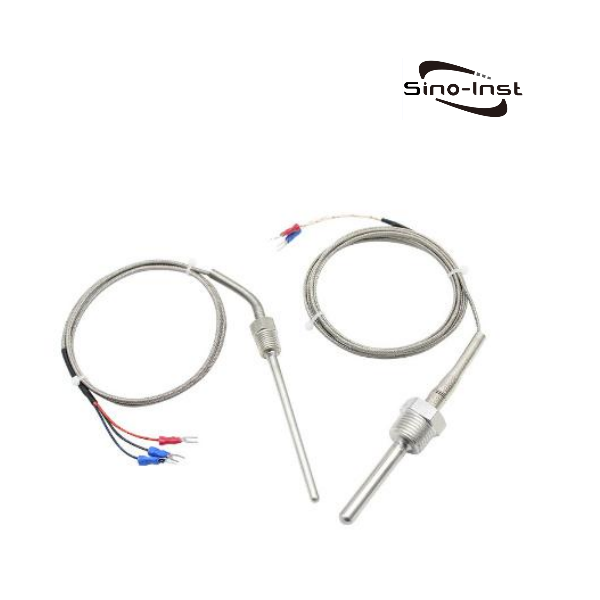
We supplied two 80GHz radar level transmitters, each equipped with a PT100 RTD (0–150°C, 100 mm probe, 1/2″ NPT) for temperature measurement. Radar technology is suitable for this application thanks to its narrow beam and FMCW signal processing: while vapors in the headspace can attenuate signals from low-frequency non-contact instruments, the 80GHz radar allows for clear separation between the echo reflected from the oil surface and the interference echoes caused by the vapors. These units have already been delivered to the client’s project site.
Case 2: Malaysia – 200°C Bitumen Tank
An IoT solutions company in Malaysia was preparing a pilot project to monitor the level and temperature of bitumen tanks. The tanks operate at temperatures up to 200°C and pressures of 1 MPa, with a measuring range of up to 30 meters, DN50 flange connections, and dual outputs (4–20 mA and RS485) connected to their monitoring platform.
We initially recommended an 80GHz radar rated for 200°C. The client pointed out that this rating matched the tank’s maximum operating temperature exactly, leaving no safety margin. Consequently, we switched to the FMW13G high-temperature model (rated for -40°C to 260°C) with a 3-meter flexible temperature probe and DN50 flange mounting. This lesson applies to all high-temperature vessels: the radar’s rated medium temperature should be significantly higher than the maximum operating temperature, rather than just meeting the upper limit. Bitumen tanks and asphalt mixture tanks are among the most common applications for which we receive high-temperature radar inquiries.
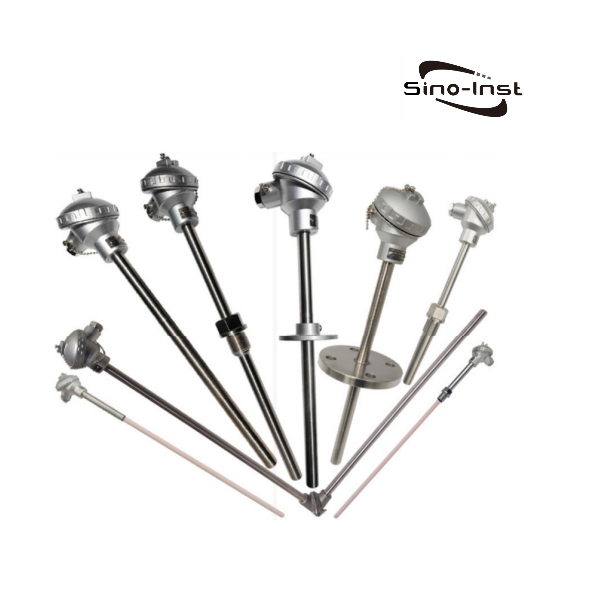
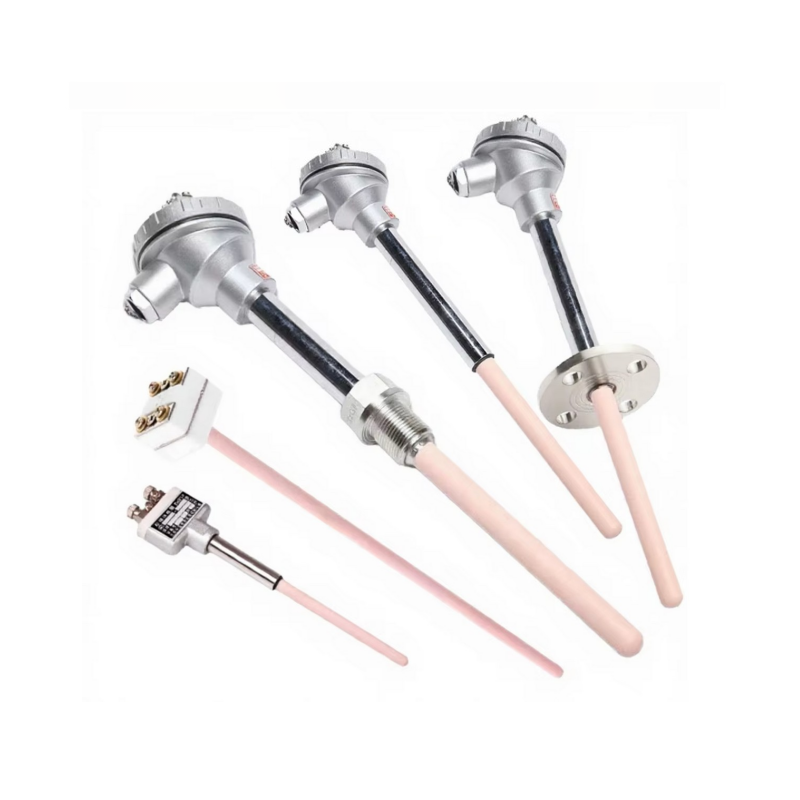
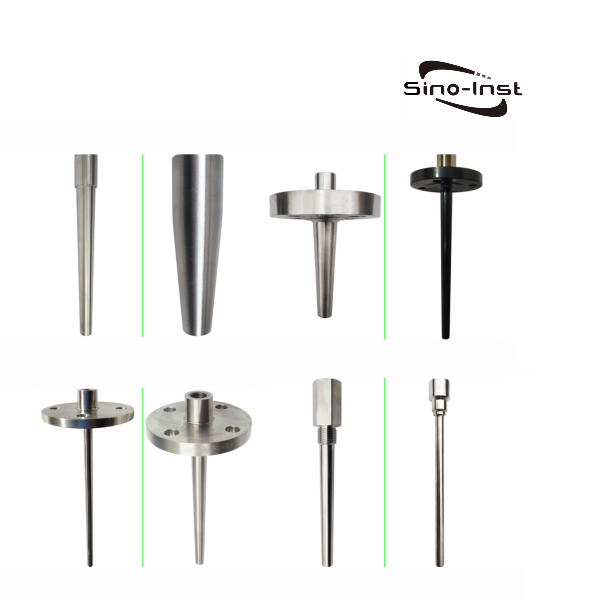
Temperature Sensors for Hot Process Vessels
Applications of 80GHz Radar Level Gauges
Apart from reactor and buffer tank applications, 80GHz radar level transmitters fit the below application scenarios:
Petrochemical Industry
Continuous level monitoring for crude oil tanks, refined product tanks, liquefied gas vessels, benzene, asphalt and heavy oil storage units. Process vessels running under high temperature, high pressure, strong corrosion or agitation conditions, including reaction kettles, distillation columns and absorption towers.
Fine Chemicals and Pharmaceuticals
Acid, alkali and organic solvent storage tanks; polymerization reactors. Situations calling for high precision or sanitary grade measurement: WFI (water for injection) tanks, purified water tanks and fermentation vessels.
Mining and Building Materials
Level monitoring for powder silos and material bins under heavy dust working conditions.
Water Treatment and Environmental Protection
Sewage tanks, clean water tanks, sedimentation tanks, chemical dosing tanks and sludge thickening tanks. It can work through foam and sludge overlay.
Small Sealed Storage Tanks
Small diameter, low headroom or non metallic tanks require short dead zone performance and strong anti interference capacity.
FAQ
Reactor and buffer tank high temperature level measurement faces real world difficulties caused by in vessel steam and condensation. With FMCW architecture, narrow beam properties and solid anti interference capability, 80GHz radar level meters mitigate measurement disturbance brought by steam and condensation, and deliver stable, dependable level monitoring solutions for this category of high temperature process equipment.
Sino Inst supplies a full lineup of FMCW based 80GHz radar level meters, offering high precision level measurement solutions for both liquid and solid media. We support customized product development according to customer specific requirements such as measuring range, process temperature, pressure rating, installation dimension and signal output mode.
Get in touch with our engineering team if you have purchase demands for 80GHz radar level meters or any technical consultation requirements.
Zhang Wei, possesses 20 years of experience as an automation instrumentation engineer, specializing in the research, design, installation, commissioning, and maintenance of automation instruments.
Face to various instrument communication protocols (such as Modbus, Profibus, etc.), with solid hardware circuit design and software programming skills (proficient in C language and PLC programming). Has extensive project experience; projects he has led and participated in have all achieved outstanding results, improving product accuracy, reducing costs, and increasing production efficiency.
Possesses excellent communication and coordination skills and a strong team spirit, enabling him to quickly respond to customer needs and provide high-quality automation instrumentation solutions.