
ATEX Gear Flow Meters for Hazardous Area Chemical Dosing
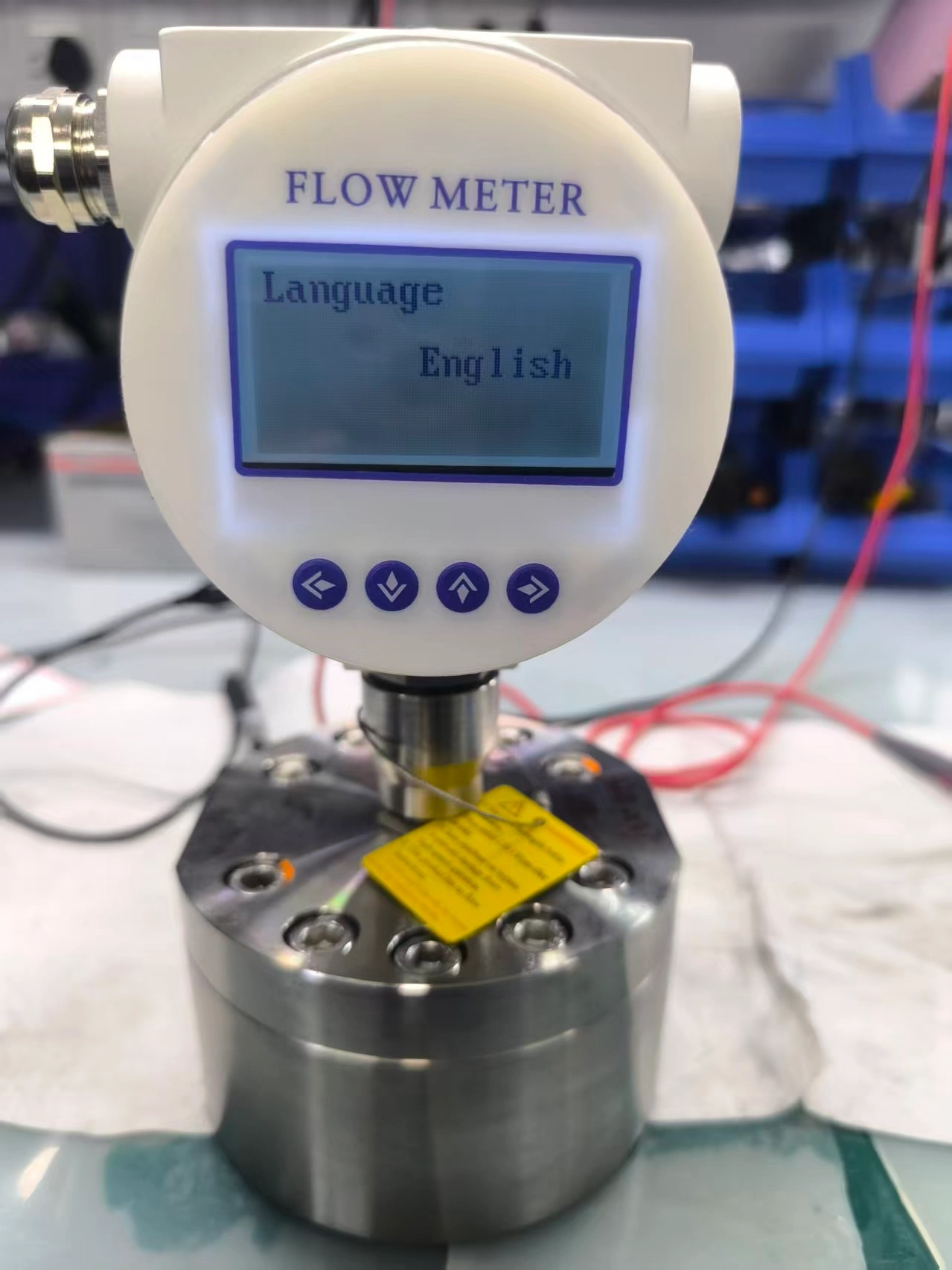
Many customers working with hazardous chemicals often have low-flow measurement requirements of 7–10 L/h, while also requiring instruments that comply with the ATEX intrinsically safe explosion-proof standards.
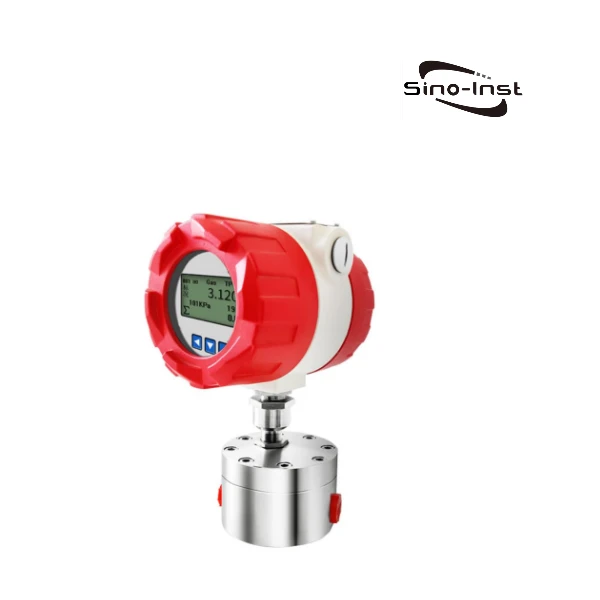
For these applications, we primarily recommend the GF-02 Ex ia/d explosion-proof gear flowmeter, which covers a measurement range of 0.6–50 L/h and features a built-in local digital display and a 4–20 mA output. The explosion-proof design of our product meets the safety requirements of the corresponding ATEX classification.
Measurement Challenges: Metering Chemicals in Hazardous Areas
Flow measurement of flammable chemicals in hazardous areas is a typical challenge in chemical batching and transfer processes. At the same time, it presents challenges related to explosion-proof safety, medium characteristics, and low-flow stability.
1. Explosion-Proof Safety Constraints: Combustible vapors are present on-site. The instrument’s electrical circuits and enclosure structure must meet explosion-proof requirements and intrinsically safe standards, and must not generate any ignition sources. Zone 0, 1, and 2 have different requirements for explosion-proof types. Incorrect selection can lead to significant safety risks.
2. Complex and Variable Media: Many of the chemicals being measured are corrosive. Some are prone to crystallization or are highly volatile. The media can corrode wetted parts and seals, causing jamming or leaks, which affect measurement reliability.
3. Low-Flow Measurement: When doing micro-dosing work such as 7-10 L/h, low flow speed makes the system vulnerable to flow pulsation, pressure shift and bubble disturbance. Common flowmeters will suffer degraded accuracy and poor repeatability under these conditions.
4. Signal and Integration Limitations: Intrinsically-safe circuits impose strict rules for wiring, safety isolation barriers and field cables. Ordinary power supplies cannot be wired in directly; power must pass through a certified barrier or isolator. Output signals have to remain stable, and the instrument also needs to support local readout for field operators.
5. Stringent Maintenance and Control Requirements: It is inconvenient to perform maintenance and calibration for instruments installed in hazardous zones, so frequent disassembly for servicing is not practical.
Therefore, to address the above measurement challenges, we recommend the GF-02 Ex ia/d Explosion-Proof Gear Flowmeter. This is a low-flow gear flowmeter (positive displacement type). It is designed primarily for low-flow liquid metering. With a measurement range of 0.6–50 L/h, it is ideally suited for typical feed rates of 7–10 L/h.
This explosion-proof gear flowmeter comes in two explosion-proof versions: intrinsically safe (ia) and flameproof (d). Local display plus 4-20 mA remote signal output are provided, and it is purpose-built for low-flow metering of flammable chemicals in hazardous environments.
Recommended Gear Flow Meters
What Is an Explosion-Proof Gear Flow Meter?
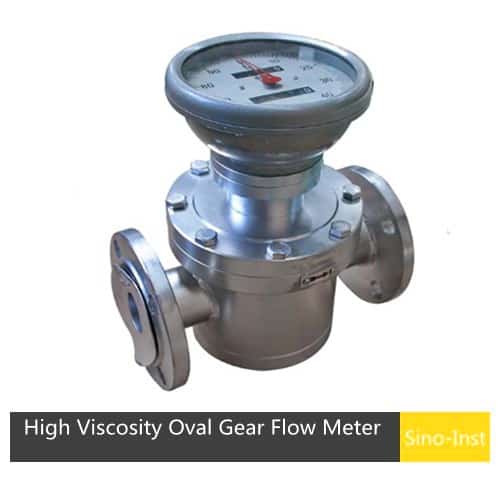
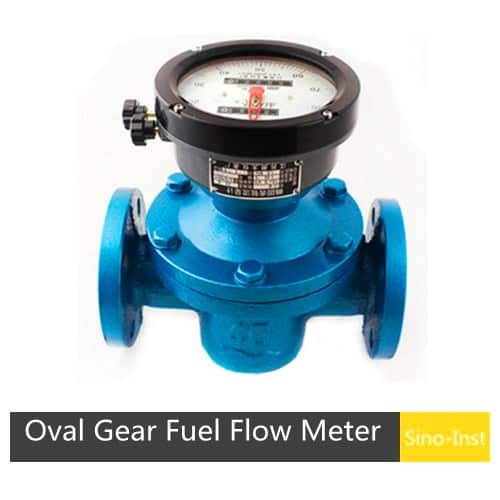
An explosion-proof gear flow meter is a positive-displacement liquid flow meter. It comes with explosion-proof capability and remote signal output, and can measure flammable liquids including diesel, kerosene, gasoline, alcohol and more.
Common gear flow meters have no explosion-proof structure or relevant certification, so they should never be deployed in locations filled with flammable vapors. For explosion-proof gear flow meters, electric parts, housing assemblies, sealing structures and wiring sections are all re-designed for explosion protection. Valid explosion-proof certificates are supplied, to meet acceptance standards across chemical sites.
Key Performance Features
- High measurement accuracy. The GF02 reaches ±0.5% of reading with 0.1% repeatability; larger GF models are rated at ±1.0%.
- Exceptional viscosity adaptability. Capable of measuring highly viscous media with viscosities up to 400,000 cP, such as asphalt, resin, syrup and glue.
- Turndown ratio. The GF02 covers a 1:10 range (0.6–50 L/h); larger GF models reach up to 1:100.
- Strong low-flow detection capability. Can measure flows as low as 0.6 L/h (10 mL/min).
- Wide temperature range. Aluminum-alloy bodies handle -15°C to 80°C; stainless steel bodies handle -196°C to 200°C, including liquid nitrogen and liquid oxygen.
- Remote output. Supports pulse, 4–20 mA, RS485 and HART output. Can be integrated into control systems for flow monitoring and recording.
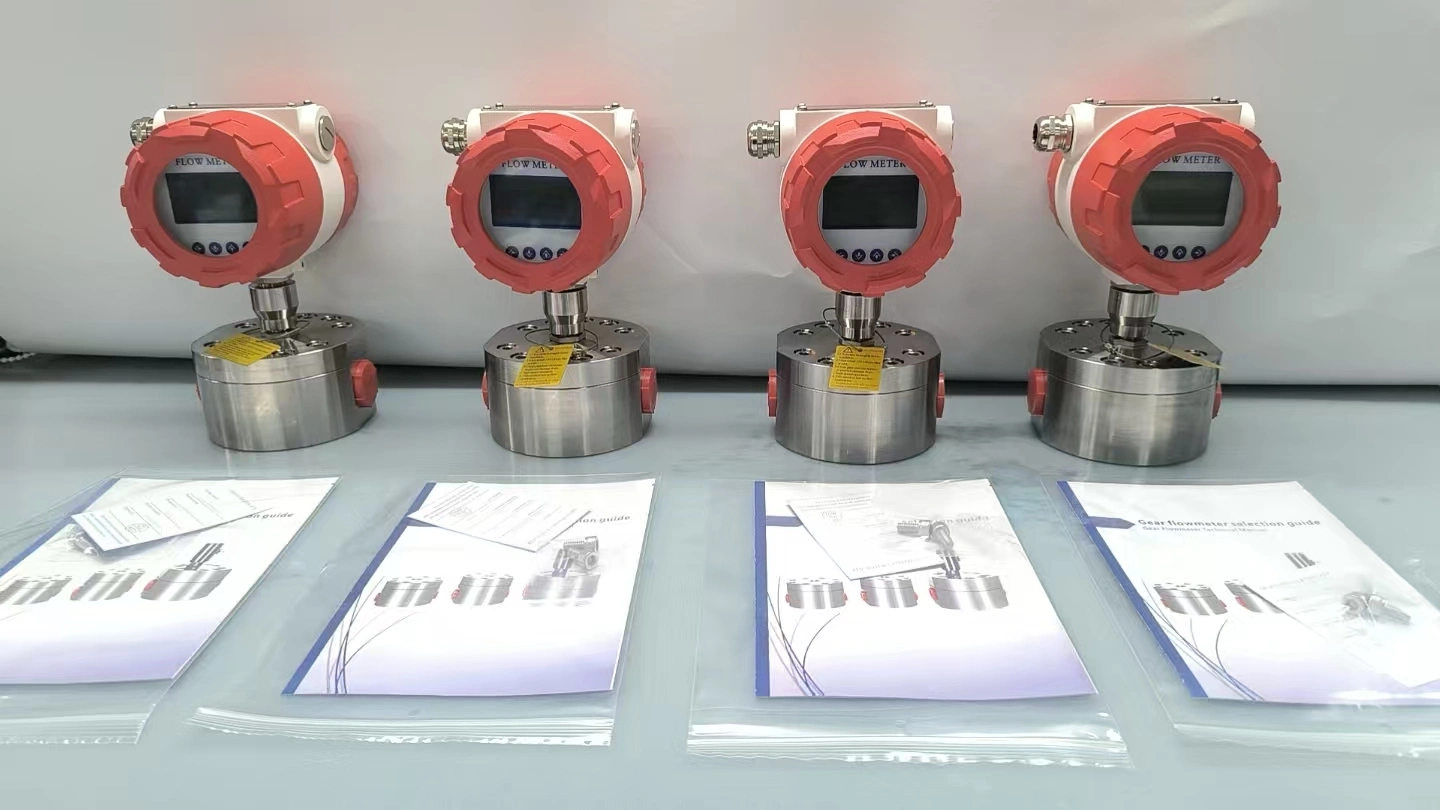
How Explosion-Proof Gear Flow Meters Work
Explosion-proof gear flow meters are essentially positive-displacement flow meters. The term “explosion-proof” simply means that their housing, circuitry, and wiring are designed in accordance with explosion-proof standards; their measurement principle is identical to that of standard gear flow meters. The explosion-proof design does not alter the mechanism of flow measurement.
The core operating principle of the explosion-proof gear flowmeter is positive displacement measurement.
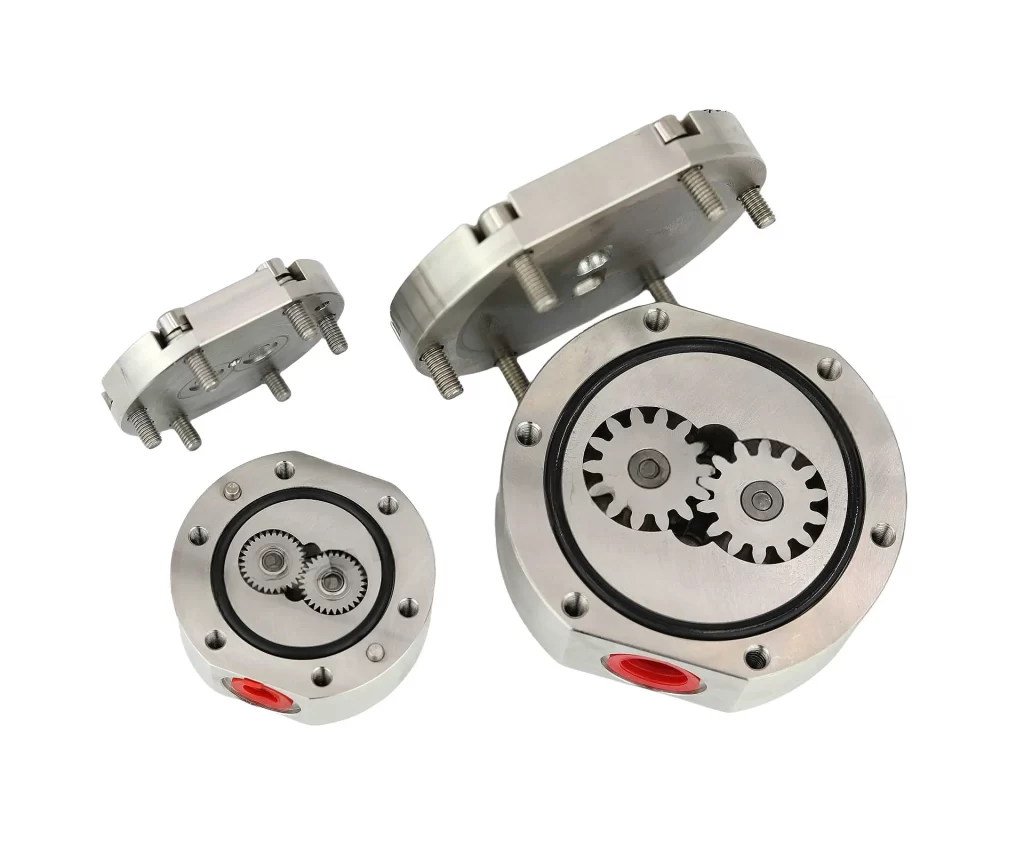
1. A pair of precision-meshed gears is mounted inside the housing; the pressure difference generated by the flowing fluid drives the gears to rotate.
2. The gears form a series of sealed, fixed-volume chambers against the inner walls of the measuring chamber. With each full rotation of the gears, a fixed number of volumes of the medium are dispensed.
3. A built-in pulse sensor (non-contact detection) captures the gear rotation signal, with each pulse corresponding to a specific volume of medium.
4. The transmitter unit processes the pulse signals to calculate instantaneous flow rate and cumulative flow; it can display local digital readings and simultaneously output a standard 4–20 mA signal to a PLC/DCS.
Due to the nature of volumetric measurement, good repeatability is maintained even at low flow rates (7–10 L/h). Changes in fluid viscosity have only a limited effect on accuracy, but gear and seal materials must be matched to the specific fluid.
Applications and Advantages
Explosion-proof gear flow meters have a very wide range of applications, primarily in industries with high requirements for safety and measurement accuracy.
- Petrochemical industry: Meter crude oil, refined petroleum products and chemical raw materials, widely used for tank storage and transfer pipeline projects.
- Coal gas and natural gas transmission: Monitor gas flow on natural gas pipelines and coal‑gas plant facilities, helping prevent leakage and fire hazards.
- Transportation of hazardous materials: Real‑time flow monitoring during loading, unloading and shipment of liquid hazardous goods to secure site operation.
- Pharmaceutical production facilities: Regulate small‑volume solvent dosing when handling flammable solvents such as ethanol and acetone.
- Custody transfer of high-viscosity liquids: Complete flow metering, batch filling and custody transfer for lubricant oil, thermal oil, hydraulic oil, resin, syrup and similar products.
Compared to other types of flow meters, explosion-proof gear flow meters offer several distinct advantages:
Outstanding Low-Flow Measurement Capability
Built upon positive-displacement principle, it maintains steady accuracy and repeatability under low-flow circumstances. This makes it well-suited for micro-dosing operations within fine-chemical manufacturing.
Explosion-Proof Compliance for Hazardous Environments
Both Ex ia intrinsic safety and Ex d flameproof versions are available to satisfy chemical-plant hazardous-area acceptance specifications. The rotating gears themselves do not create sparks; the ignition risk lies in the electronics.
Wide Viscosity Compatibility
It works well with low- and medium-viscosity chemical solvents and oil products. When viscosity shifts slightly, the resulting error is much smaller than with meters based on other measuring principles.
Flexible Material Options and Chemical Resistance
Wetted parts are available in 316L stainless steel, with PEEK gears and FFKM perfluoroelastomer seals as options. These combinations handle a wide range of highly penetrating and corrosive chemical solvents.
Simple Design and Stable Long-Term Operation
There are few moving components and no throttling elements inside the meter, so fine impurities seldom lead to blockage. Once material selection matches process medium, maintenance workload stays low, cutting down servicing frequency inside hazardous zones.
Explosion-Proof Types and Zone Classification
The explosion-proof type, explosion-proof group, and temperature class of explosion-proof gear flow meters must correspond one-to-one with the classification of hazardous areas on site and the characteristics of the flammable media.
Ex ia Intrinsically Safe: Limits circuit energy by keeping the circuit voltage, current, and stored energy below the energy required to ignite flammable gases. Even in the event of a short circuit or component failure, no sparks or high temperatures capable of igniting a gas mixture can be generated. Suitable for Zones 0, 1, and 2.
System Requirements: Must be used in conjunction with intrinsically safe isolators (safety barriers) with corresponding specifications; intrinsically safe cables have upper limits on capacitance and inductance, and cable length is restricted. Intrinsically safe circuits and non-intrinsically safe circuits must be laid separately and shielded and grounded independently.
Advantages: High safety rating; maintains intrinsically safe characteristics even in the event of a fault. Inspections can be performed while the system is energized (provided regulations are followed).
Ex d Flameproof Type: Features a high-strength flameproof enclosure. In the event of an internal explosion within the enclosure, the enclosure can withstand the explosion pressure. The flameproof gap at the enclosure’s joint surfaces is sufficiently narrow; as the flame passes through the joint and cools, it will not ignite the explosive gas outside the enclosure. Suitable for Zone 1 and Zone 2; not permitted for use in Zone 0.
Installation Requirements: All enclosure fasteners must be securely tightened. The power supply must be disconnected before opening the enclosure. The wiring compartment seal and cable gland must be compatible to prevent flammable gases from entering the enclosure.
Advantages: Few restrictions on power supply and signals, greater expandability, and simple wiring; widely used in existing plants.
Gas Groups and Temperature Classes
Gas Groups (IIC / IIB): Indicate the ease with which the medium can be ignited. IIC gases (such as hydrogen and acetylene) are more hazardous and require stricter explosion-proof design standards for instruments. Most common solvents and alcohols fall under Group IIB. The instrument’s group classification must be ≥ the on-site medium’s group classification.
Temperature Class (T4 / T6): Indicates the maximum surface temperature of the instrument enclosure. The maximum surface temperature for T6 is ≤85°C, and for T4, it is ≤135°C. The ignition temperature of the medium must be higher than the maximum surface temperature of the instrument. T6 should be selected as the priority for applications involving flammable solvents.
Wetted Materials and Seal Selection for Corrosive Chemicals
The main wetted parts of an explosion-proof gear flowmeter include: the metering chamber, gears, bearings, and seals (O-rings / face seals). These components can be combined in various ways; it is not necessary for the entire set to be made of the same material.
316L stainless steel offers outstanding value for money and is suitable for alcohols, light oils, neutral solvents, and mildly corrosive media. However, it is not resistant to strong organic acids, concentrated alkalis, or chlorine-containing media.
PEEK gears are wear-resistant, have good dimensional stability, and are lightweight. They are suitable for aromatics, ketones, and esters.
Hastelloy C is primarily used for chloride-containing and weakly oxidizing corrosive fluids where 316L is insufficient. It is relatively more expensive.
Seals are the components most prone to failure.
FKM (fluoroelastomer) is resistant to oils and most solvents, but there is a risk of swelling when exposed to certain ketones and esters.
FFKM (perfluoroelastomer) offers a broader range of chemical resistance and is suitable for the vast majority of hazardous solvents used in the fine chemicals industry.
EPDM (ethylene propylene diene monomer) is not recommended for use in applications involving hydrocarbons or oil-based solvents.
Typical Application Examples
- Ethanol, ethylene glycol: 316L housing + 316L gears + FKM seals
- Highly penetrating solvents such as toluene, ethyl acetate, and acetone: 316L housing + PEEK gears + FFKM seals
- General oils/water-based fluids: 304 housing + hardened steel or copper alloy gears + NBR/FKM seals; sufficient for standard operating conditions.
- Corrosive media (dilute acids, solvents, methanol, etc.): 316L housing + 316L gears + PTFE/FKM seals. Use NBR/EPDM with caution in methanol, as they may swell.
- Highly Corrosive Conditions (hydrochloric acid, strong acids, strong alkalis): Select Hastelloy or PEEK materials.
- Food/Pharmaceutical Industries: 316L electropolished housing with a dead-space-free design, equipped with food-grade seals to meet hygiene compliance requirements.
FAQ
In applications involving the metering of flammable chemicals in hazardous areas, the proper selection, installation, material choice, and explosion-proof rating are all essential. Based on the positive displacement measurement principle, explosion-proof gear flow meters reliably meet the stringent requirements of low-flow chemical dosing, strictly comply with explosion-proof regulations, and balance measurement accuracy with production safety.
Sino-Inst offers explosion-proof gear flow meters in a variety of materials, for chemical metering in Zone 0, 1 and 2 hazardous areas. We are always ready to provide you with customized solutions based on your specific on-site conditions. Please feel free to contact our team at any time; we will assist you in resolving your flow measurement challenges.
Further Reading
Zhang Wei, possesses 20 years of experience as an automation instrumentation engineer, specializing in the research, design, installation, commissioning, and maintenance of automation instruments.
Face to various instrument communication protocols (such as Modbus, Profibus, etc.), with solid hardware circuit design and software programming skills (proficient in C language and PLC programming). Has extensive project experience; projects he has led and participated in have all achieved outstanding results, improving product accuracy, reducing costs, and increasing production efficiency.
Possesses excellent communication and coordination skills and a strong team spirit, enabling him to quickly respond to customer needs and provide high-quality automation instrumentation solutions.
Want to see more of our engineering guides in Google Search? Add Sino-Inst as a preferred source.