
Radar Level in Agitated Vacuum Reactors: What Works
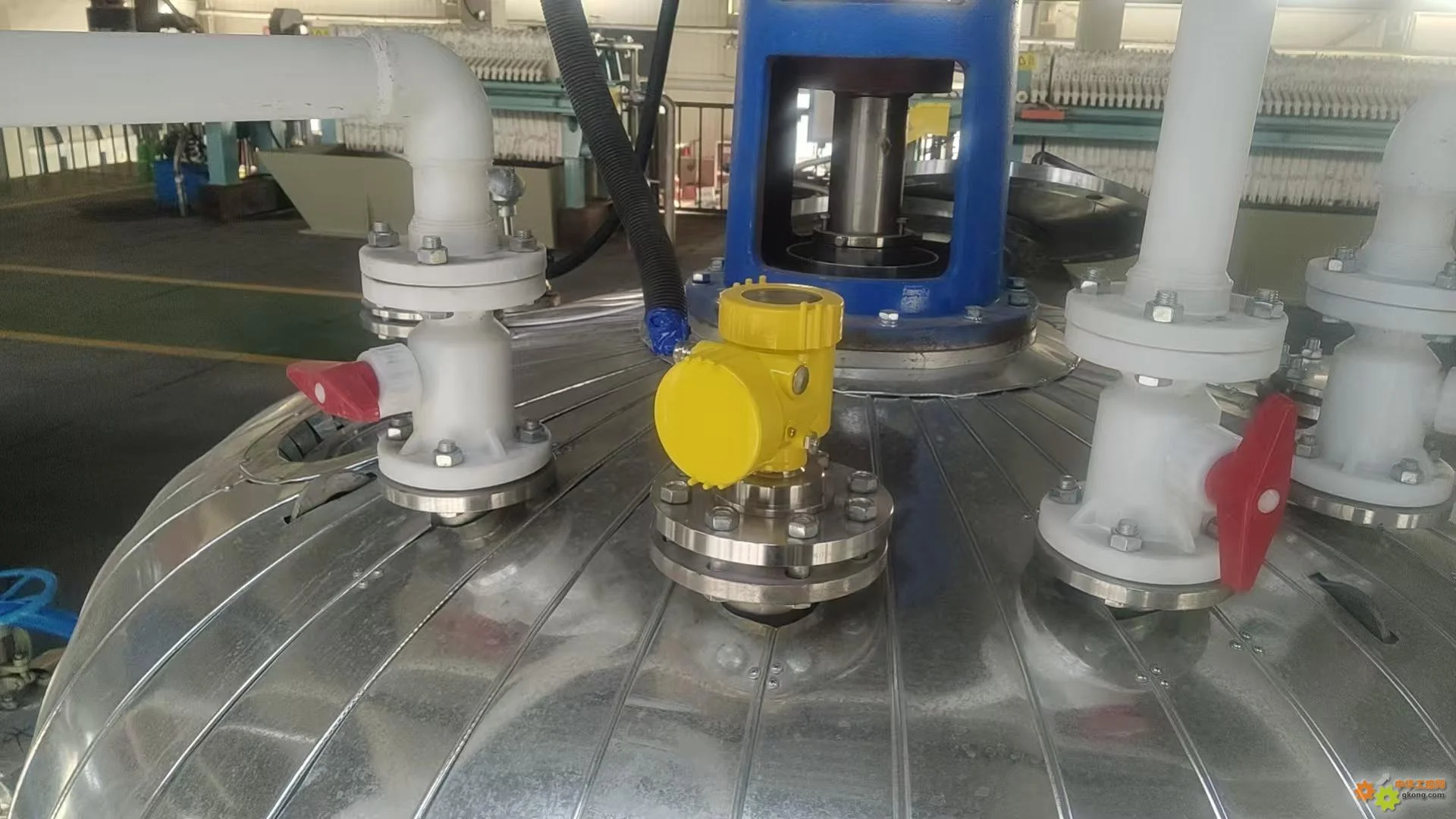
In a vacuum reactor with a stirrer, the stirrer blade is mounted on the central axis of the vessel; for most of a batch run, the gas phase space remains under vacuum. Many reactors of this type were originally equipped with submersible (hydrostatic) level probes. Under vacuum conditions, these probes present a fundamental problem: common vented probes use atmospheric pressure as a reference, so the vacuum level inside the reactor is directly subtracted from the liquid level reading. When the pressure inside the reactor is −0.09 MPa (gauge pressure), this deviation is approximately equal to −9.2 m water column—enough to cause a liquid level reading of 2 m to become negative.
For these reactors we recommend an 80GHz radar level transmitter on the vessel head. It measures the distance to the liquid surface, so vessel pressure never enters the reading, and nothing hangs in the path of the impeller.
Challenges in Level Measurement for Vacuum Reactors with Agitators
Two things make level hard to measure in these reactors: a rotating agitator and a vapor space under negative pressure.
Turbulence and vortex
The impeller throws up waves and splash, and the vortex pulls the center of the surface down. A hanging probe or cable can be hit by the blades and torn off.
Fouling and corrosion
Viscous or crystallizing batches coat anything immersed in them. A coated diaphragm drifts, and the probe has to come out for cleaning.
Leak paths under vacuum
A submersible probe needs a cable entry through the vessel head, and every entry can leak under vacuum. If the cable jacket is damaged, the vent tube inside it lets air straight into the reactor.
False echoes from internals
Blades, baffles and heating coils all reflect radar energy, so antenna choice and mounting position matter as much as the instrument.
80GHz Radar Level Sensors vs. Submersible Probes
| Comparison Item | 80GHz Radar Level Transmitter | Submersible Level Probe |
| Measuring principle | Non-contact FMCW radar on the vessel head; nothing touches the liquid. | Hydrostatic pressure measured by a probe immersed in the liquid. |
| Effect of vacuum on the reading | None. Radar measures distance; vessel pressure is not part of the calculation. | Gauge type reads zero or negative and drifts with vacuum (−0.09 MPa ≈ −9.2 m water). Absolute type needs a second transmitter for compensation. |
| Agitation | Narrow beam aimed between the blades; echoes from internals are mapped out. | Cable can tangle or be cut by the impeller. |
| Vacuum tightness | One flange connection; our 80GHz models are rated down to −0.1 MPa. | Cable entry and vent tube are both possible leak paths. |
| Maintenance | Electronics outside the vessel; only lens cleaning needs a shutdown. | Pulling the probe for cleaning means breaking vacuum. |
| Best suited for | Agitated reactors, vacuum vessels, fouling or corrosive batches. | Vented tanks with clean, still liquid at atmospheric pressure. |
80GHz Radar Specs That Matter in a Reactor
80GHz vs 26GHz Radar for Agitated Reactors
Most reactor retrofits we quote come down to 80GHz versus an older 26GHz radar. The difference that matters is beam width.
| Comparison Item | 80GHz FMCW Radar | 26GHz FMCW Radar | 26GHz Pulse Radar |
| Beam angle | 3°–8° with lens antenna | Wider; depends on horn size | Wider; depends on horn size |
| Dead zone | 0.08–0.1 m | Moderate | Approx. 0.3 m |
| Agitator and splash interference | Narrow beam is easy to aim between blades | Beam may hit blades | Most prone to false echoes from blades |
| Accuracy | ±2 mm (standard models) | Approx. ±3–5 mm | Typically ±3–10 mm |
| Small nozzles | 44 mm lens fits DN50 | Needs a large horn for a narrow beam | Needs a large horn for a narrow beam |
| Cost | Higher | Moderate | Lower |
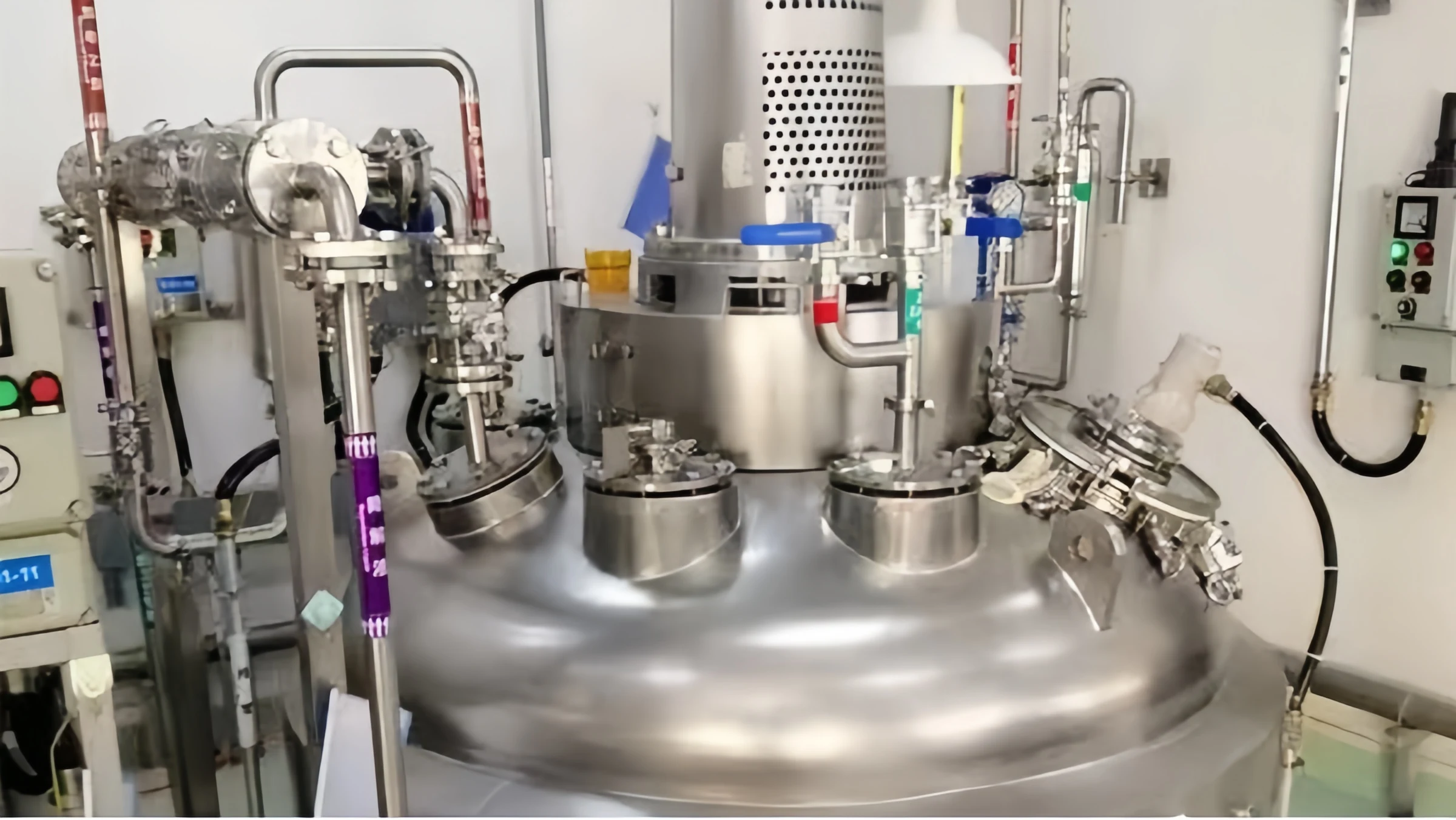
Three Problems Radar Must Handle in a Vacuum Reactor
Moving echoes from the agitator
Run false-echo mapping with the vessel empty and the agitator turning, so the transmitter learns where blades, baffles and coils sit. Add a few seconds of damping to smooth the ripple.
Foaming under vacuum
Solvents boil at lower temperatures under vacuum, so evacuation and heat-up often bring foam. Thin, breaking foam rarely troubles 80GHz radar, but a thick, dense layer absorbs the signal and the echo can be lost. For heavy foamers, plan antifoam dosing or a DP backup; our foam level measurement guide covers the options.
Condensation on the lens
On a jacketed reactor the head runs cooler than the batch, so solvent condenses on the lens. Keep the lens at the inner end of the nozzle and insulate the nozzle. Never purge with air; it breaks vacuum and brings in oxygen. A small nitrogen purge works if the vacuum pump can take the load.
Essential Considerations for Selection and Installation
The points below are specific to agitated vacuum reactors. For general sizing steps, see our radar level sensor selection guide.
I. Key Considerations for Model Selection
1. Antenna and nozzle
A 3° beam needs the 76 mm lens on DN80 or larger; on DN50 use the 44 mm lens (6°). Insist on false-echo mapping and echo tracking.
2. Pressure rating
Cover full vacuum and the vessel design pressure. Our 80GHz models run from −0.1 MPa up to 0.3–2.5 MPa, depending on model.
3. Wetted materials
PTFE lens up to 200 °C or PEEK (FMW13G) up to 280 °C, with a 316L flange. Check that the lens seal is compatible with every solvent in the batch.
4. Output and hazardous area
4–20 mA/HART is standard. With flammable solvents the vapor space is usually Zone 0; specify Ex ia or Ex d to match your area classification.
5. Dead zone margin
The distance from the lens to the highest level must exceed the dead zone, plus 0.1–0.2 m for splash.
II. Key Installation Considerations
Mounting position
Mount off-center, away from the vortex but not tight against the wall; about 1/4 to 1/3 of the radius in from the wall suits most vessels. Keep blades, baffles and feed pipes out of the beam cone.
Nozzle length
The lens should reach at least the inner end of the nozzle. If the nozzle is longer than its diameter, expect weaker echoes; use an extended antenna or a larger nozzle.
Process connection sealing
Radar has no cable entry into the vessel. The only seals are the flange gasket and lens O-ring; choose both for vacuum and leak-test after installation.
Recommended for Agitated Vacuum Reactors
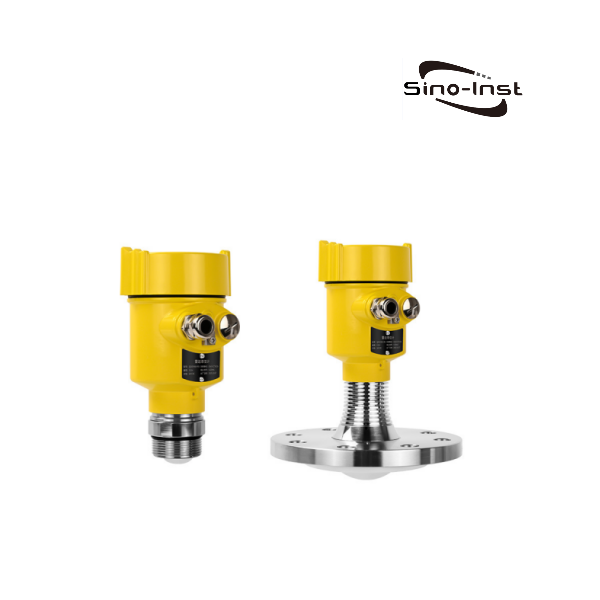
Lens antennas from 14° down to 3°, dead zone 8–10 cm, rated from −0.1 MPa. Our first choice for agitated vacuum reactors.

Absolute and negative-gauge ranges with 4–20 mA or voltage output, for monitoring reactor vacuum alongside level.
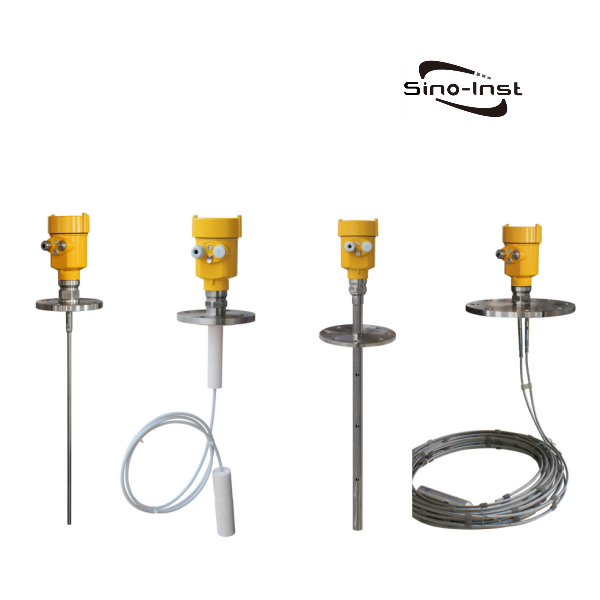
For unstirred vacuum receivers and condensate pots with heavy foam. Rated from −0.1 MPa, Ex ia / Ex d.
FAQ
A submersible probe fails in an agitated vacuum reactor because it measures pressure, and the vessel pressure keeps changing. An 80GHz radar on the head avoids that, provided the nozzle, beam angle and echo mapping suit the agitator.
To size a radar for your reactor, send us the vessel diameter and height, nozzle size and length, operating vacuum and design pressure, temperature, medium, whether the batch foams, and the hazardous-area classification. Our engineers will recommend a model and mounting position.
Further Reading
Zhang Wei, possesses 20 years of experience as an automation instrumentation engineer, specializing in the research, design, installation, commissioning, and maintenance of automation instruments.
Face to various instrument communication protocols (such as Modbus, Profibus, etc.), with solid hardware circuit design and software programming skills (proficient in C language and PLC programming). Has extensive project experience; projects he has led and participated in have all achieved outstanding results, improving product accuracy, reducing costs, and increasing production efficiency.
Possesses excellent communication and coordination skills and a strong team spirit, enabling him to quickly respond to customer needs and provide high-quality automation instrumentation solutions.
Want to see more of our engineering guides in Google Search? Add Sino-Inst as a preferred source.