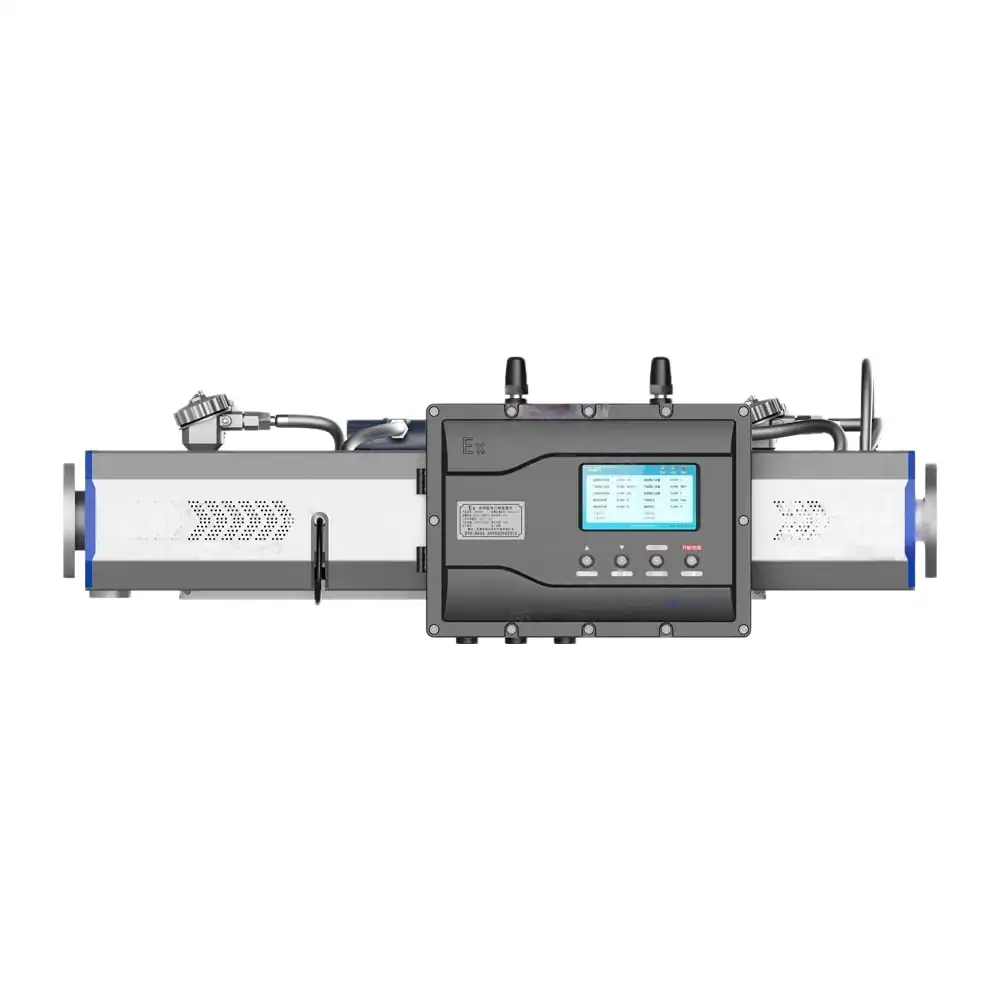
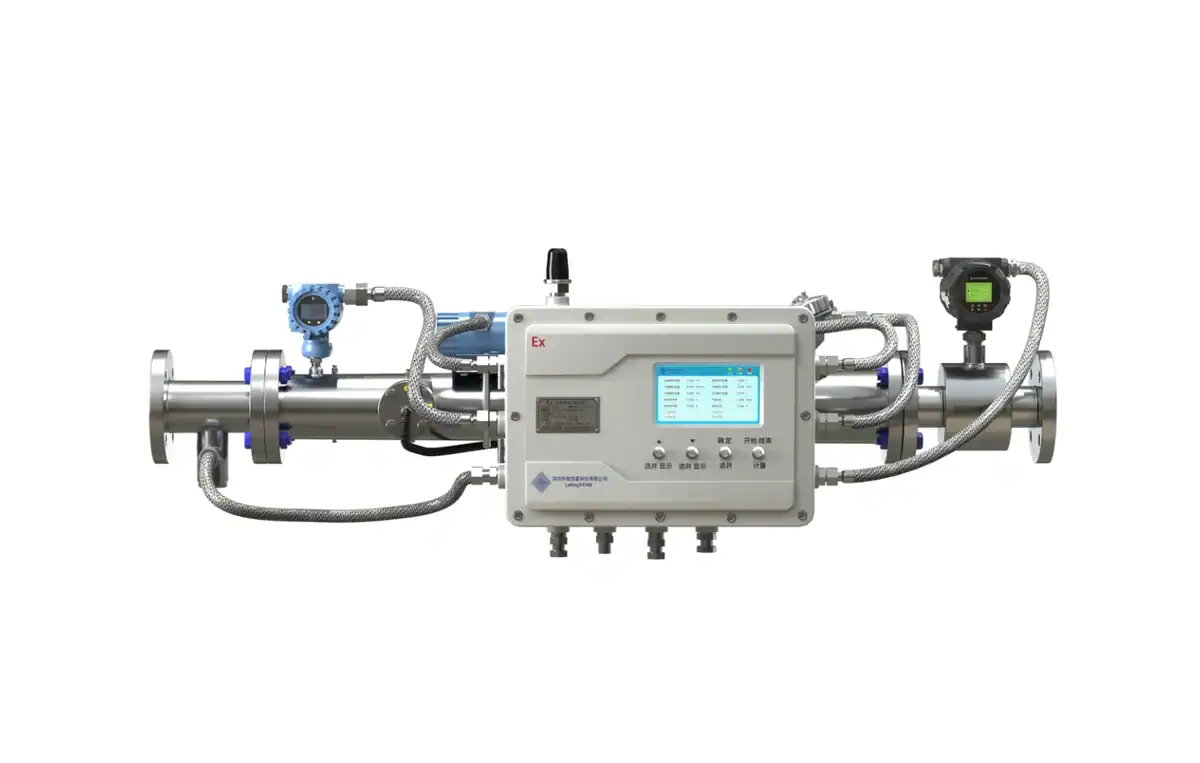
A multiphase flow meter is a metering device capable of providing instantaneous and cumulative production data, as well as key indicators such as water cut, gas cut, and gas-liquid (oil) ratio, for oil, gas, water, and liquid phases.
Multiphase flow meters are primarily used for online metering of the flow rates of each phase of crude oil produced in upstream oil and gas production processes at the wellhead. They can replace traditional separate metering tanks and complex metering processes involving transfer of flow through multi-port valves. They effectively support the construction of a smart oilfield oil and gas production IoT system and are suitable for single-well and manifold well environments both onshore and offshore.
Multiphase Flow Meters (MPFM) can clearly understand the production patterns of oil, gas, and water during oil well production, providing real-time and accurate quantitative data for oilfield production decisions.
Based on non-separate multi-sensor fusion technology, its main features include:
Real-time and accurate metering of multiphase flow rates (liquid, oil, gas, and water)
Electrical tomography (ECT) flow pattern and flow regime analysis
Second-level high-frequency real-time online analysis result output
Support for single-well and reverse-well metering
Multiple industrial-grade data interfaces for seamless integration with existing equipment and systems
Modular design, no internal components, easy maintenance
All-weather local digital display, offline operation, and power outage resume capability
Support for historical data query and data report saving
Support for client software and interface with oilfield big data platforms
Replaces metering rooms, reduces manual labor, and simplifies surface engineering
Metering method applicable to various extraction methods
Real-time early warning and on-site manual fault reporting
Assistance for production decision-making and refined management
Technical Parameters
Application and performance
Measuring Medium
Single-phase transmission and mixed transmission of oil, gas, and water:
Moisture Content Applicable Range
0~99.9%
Volume Gas Content Applicable Range
0~95%
Flow Rate Range (For detailed flow rate ranges, please refer to Appendix 1)
DN50: • Liquid phase flow rate: 15-600 cubic meters/day; • Gas phase flow rate: 0-22000 standard cubic meters/day; DN80: • Liquid phase flow rate: 30-900 cubic meters/day; • Gas phase flow rate: 0-51000 standard cubic meters/day; The above is for well conditions at 0.75MPa and 30℃. For detailed flow rate ranges for other well conditions, please refer to Appendix 1.
Medium Temperature Range
10~80℃
Operating Temperature
-40~85℃. When the ambient temperature is below 10℃, it is recommended to select original insulation accessories.
Operating Humidity
5%~95% Non-condensing
Design Pressure
0~2.5Mpa 0~4Mpa (optional) High pressure can be customized
Resolution
• Oil/water/liquid flow rate: 0.001 tons/hour
• Gas flow rate: 0.001 cubic meters/hour
• Moisture content: 0.01%
Pressure Loss
≤21kpa
Category
Parameter
Specification
Electrical
Operating Voltage
220 VAC
Rated Power
< 30 W
Data Output
Data Update Rate
1 Hz (1/sec)
Output Interface
RS485, Ethernet
Data Protocol
Modbus RTU, Modbus TCP
Mechanical
Process Connection
Flanged (flange standard per customer requirements)
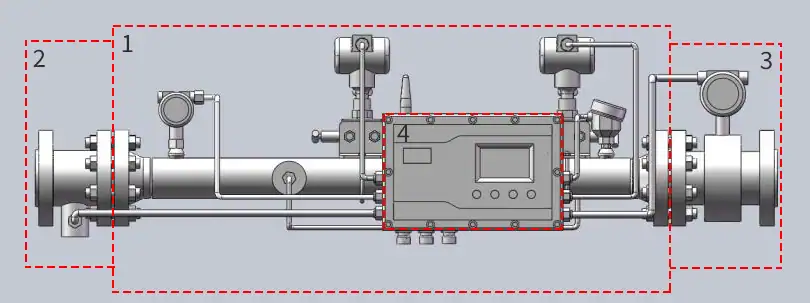
The Multiphase Flow Meter employs multiple core technologies for real-time multiphase flow metering and features a modular design, including an electrical tomography module, a real-time online microwave component measurement module, a dual-differential-pressure Venturi flow measurement module, and a multi-sensor high-speed data acquisition module.
Furthermore, when paired with an oil and gas production big data management and analysis system, it not only provides a clear understanding of oil, gas, and water production patterns, offering real-time and accurate quantitative data for production decisions, but also facilitates cost reduction and efficiency improvement in oil and gas fields, operational condition diagnosis, streamlined surface engineering, and optimized production management.
This module employs an advanced dual differential pressure sensor design to obtain the fluid characteristics flowing through the Venturi structure. It uses real-time corrections based on temperature and pressure sensors to achieve preliminary measurement of gas and liquid flow rates, enabling high-precision measurement of the total gas-liquid two-phase flow rate under a wide flow range and various well conditions.
This measurement technology can promptly respond to minute well condition fluctuations and flow pattern changes, featuring wide flow range applicability, high-precision measurement, and high real-time acquisition.
This module is based on a high-frequency microwave design. By detecting the power attenuation and phase angle shift of microwaves in the fluid, combined with a water cut calculation model, it obtains the liquid’s water cut. Unlike traditional radio frequency admittance sensors, this module offers more accurate measurements and is less affected by salinity.
Simultaneously, thanks to a specially designed antenna structure, it can perform stratified fluid detection, providing partial flow pattern information.
Electromagnetic Tomography Module
This module uses electromagnetic tomography (EMT) technology to apply electrical excitation to the pipeline in a non-invasive manner and detect changes in its boundary values.
It uses an electromagnetic model to inversely deduce the distribution of electrical characteristic parameters inside the pipeline, thereby achieving a qualitative judgment of the internal flow pattern and providing a decision-making basis for sensor data fusion and model calculation.
Classical Model + AI Algorithm Engine
This module includes a multi-sensor fusion submodule, a classical fluid dynamics model submodule, an AI-assisted decision engine submodule, and a communication module.
The AI-assisted decision engine submodule employs a convolutional neural network (CNN) algorithm from deep learning to autonomously learn data features directly from raw data and find deep-level correlation rules with the target. It is trained and generated based on various sensor data from different well conditions in the laboratory and field oilfields. It is mainly responsible for flow pattern and well condition judgment, providing decision-making references for the classical model branch.
Multiphase Flow Data Analysis Tool
The multiphase flow data analysis tool (MFMTool) provided with the multiphase flow meter can receive and display various sensor data collected by the multiphase flow meter, and display various real-time and cumulative metering results, including instantaneous three-phase flow, instantaneous water cut, instantaneous gas cut, cumulative three-phase flow, cumulative average water cut, and cumulative average gas-oil ratio. It also provides real-time imaging of the flow pattern inside the pipeline, allowing users to monitor the flow state and well conditions within the pipeline in real time.
Oil and Gas Applications
Intelligent oil well multiphase flow meters are used for online metering of the flow rates of each phase of oil-gas-water multiphase flow crude oil produced at the wellhead during upstream oil and gas production. This effectively supports the construction of a smart oilfield oil and gas production IoT system and is suitable for environments such as single wells, reverse wells, block/manifold mixed transportation, offshore platforms, and subsea production systems in onshore and offshore environments.
Flowing Wells,
ESP Wells,
Oil Transfer Stations,
Pumping Unit Wells,
Skid-Mounted Mobile Metering,
Metering Station Reverse Well Metering
Technical Support
In addition to multiphase gas flow meters, Sino-Inst also provides single-phase flow meters and pressure, level, and temperature measurement products for the oil and gas industry.
Why Natural Gas Flow Measurement is Pivotal? Natural gas is a vital energy source, providing electricity to industries, homes, and businesses worldwide. High-precision natural gas flow measurement is essential for…
From extraction to use, natural gas undergoes long pipeline transportation, filtration, storage, and pressure regulation. Monitoring pipeline pressure during these processes is crucial to ensuring proper system operation. Natural gas…
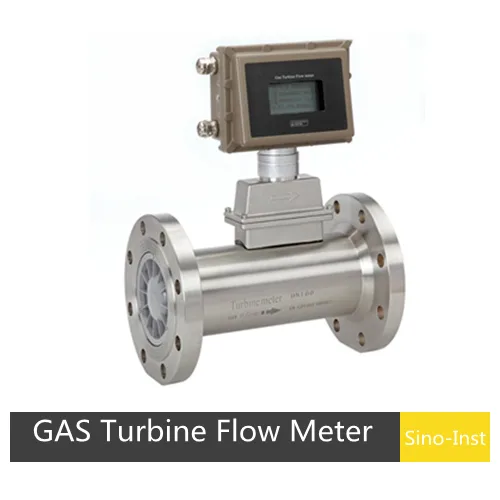
Gas turbine flow meter is a precision metering instrument used for gas flow measurement. Especially in natural gas transportation and trade settlement, the gas turbine flow meter is even more…
Natural gas is a clean energy. The proportion in the energy structure is increasing year by year. The coverage of natural gas is also becoming more and more extensive. Therefore,…
Natural gas is a colorless and odorless hydrocarbon and an important energy source. In the production, transportation, storage, distribution, trade, and factory applications of natural gas, natural gas flow measurement…
Analog gas flow meters specifically refer to a type of flow meter that outputs analog signals. The main function of a flow meter is to measure volumetric flow rate or…