Home > Pressure Sensor > High Sensitivity Piezoelectric Pressure Sensor – 5000 pC/bar, 50 Pa to 1 MPa
High Sensitivity Piezoelectric Pressure Sensor – 5000 pC/bar, 50 Pa to 1 MPa
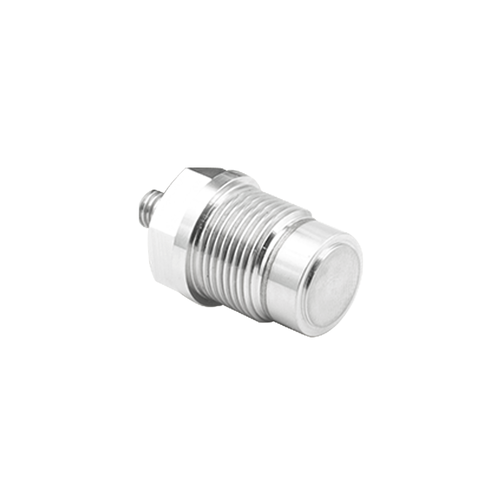
The SI-YD211 is a passive, charge-type piezoelectric pressure sensor. It features extremely high pressure sensitivity: 50,000 pC/1 MPa ±20%, or 5,000 pC/bar. It has a lower measurement limit of 50 Pa and a 500% overload capacity. It can detect very small pressure fluctuations. It is commonly used for pipeline leak detection (negative pressure waves), micro-pressure pulsations in gases and liquids, and sound pressure.
Measurement of micro-pressure pulsations in gases and liquids
Capable of pipeline leak monitoring
Wide frequency response and high stiffness
500% overload capacity
M14×1 thread, stainless steel housing
L5 connector with 2 m low-noise cable; calibration certificate included.
Limitations
Can only measure dynamic pressure; cannot measure static pressure;
Requires a charge amplifier for operation;
Natural frequency >50 kHz. Sufficient for measuring pulsations, but insufficient for measuring explosions or shock waves.
Operating temperature: -40 to 80 °C. Cannot be used in high-temperature environments such as engine combustion chambers.
Capacitance: approximately 4000 pF; insulation resistance: >10⁹ Ω. Users must ensure the connector remains clean.
Specifications
Pressure Sensitivity (20±5°C)
50000pC/1MPa±20%
Pressure Measurement Range
50Pa~1 MPa
Overload Capacity
500%
Non-linearity
<5%FS
Hysteresis
<5%FS
Repeatability
<5%FS
Insulation Resistance
>109Ω
Capacitance (1000 Hz)
~4000pF
Natural Frequency
>50 kHz
Operating Temperature
-40℃~+80℃
Housing Material
Stainless steel
Weight
25g
Mounting
M14*1
Piezoelectric Material
PZT-5
Output
Charge (PE)
Connector
L5 / Microdot
Included Accessories
Sensor Certificate of Conformity
(Calibration parameters)
Protective Cap
1 unit
Sealing Gasket
1 unit
Double-ended L5 STYV-1 Cable
1 piece (2m)
How Does a Piezoelectric Pressure Sensor Work
Piezoelectric pressure sensors measure pressure by utilizing the property of piezoelectric materials to generate surface charges proportional to the applied pressure. This is known as the piezoelectric effect.
The SI-YD211 piezoelectric pressure sensor uses lead zirconate titanate (PZT) as its piezoelectric element.
When pressure is applied to the piezoelectric element, the crystal lattice structure inside the piezoelectric material deforms, causing a charge to accumulate on its surface. The amount of this charge is proportional to the applied pressure. The element generates a charge proportional to the pressure change—a pressure change of 0.1 MPa (1 bar) corresponds to a charge of approximately 5,000 pC.
These charges are collected via electrodes connected to the piezoelectric element, generating an electrical signal proportional to the pressure.
This electrical signal is typically very weak and must be processed through an amplification circuit before it can be used in practical applications.
Piezoelectric vs Quartz vs Piezoresistive
First, piezoresistive pressure sensors are quite different. Piezoresistive pressure sensors utilize the piezoresistive effect of semiconductor or metallic materials; when subjected to pressure, their resistance changes, which is then converted into an electrical signal via a Wheatstone bridge. They output 4–20 mA, 0–5 V, or RS485 signals and can be directly connected to a PLC. They are primarily used for static pressure measurement in industrial processes but can also be used for dynamic pressure measurement.
Next are piezoelectric pressure sensors and quartz crystal pressure sensors. In fact, quartz pressure sensors are a type of piezoelectric pressure sensor.
Piezoelectric pressure sensors operate based on the piezoelectric effect. Their sensing elements are made of piezoelectric materials. Common piezoelectric materials include quartz and lead zirconate titanate (PZT).
Quartz crystal piezoelectric pressure sensors have a piezoelectric constant of 2.3 pC/N, offering high stability and high accuracy. However, they have relatively low sensitivity.
PZT piezoelectric pressure sensors have a piezoelectric constant of 150–700 pC/N, featuring high sensitivity and a strong output signal. However, they have relatively poor temperature stability and are susceptible to environmental influences.
Therefore, if you need to detect minute pressure fluctuations, choose a PZT piezoelectric pressure sensor (this product). Negative pressure waves from pipeline leaks and pulsations ranging from tens of pascals to thousands of pascals in gases or liquids produce inherently weak signals, so sensitivity is paramount. An output of 5,000 pC/bar ensures that small signals remain clearly distinguishable above the amplifier’s noise.
If long-term stability is required, or if the measurement point is at high temperatures, choose a quartz piezoelectric sensor. Examples include engine combustion pressure and test benches requiring comparable data over many years. Quartz sensors have lower sensitivity but exhibit virtually no drift and are not affected by temperature changes.
A passive PE charge-output pressure sensor is a piezoelectric pressure sensor that operates without an external power source. The term “passive” means that the sensor itself does not consume electrical power; instead, it generates an electrical charge signal directly from the measured pressure.
Differences from Active IEPE Sensors:
PE (Charge Output Type): Passive; outputs a charge signal; requires an external charge amplifier; suitable for dynamic pressure, quasi-static pressure, and extremely low/high temperature applications.
IEPE (Voltage Output Type): Active; features built-in electronic circuitry that converts the charge into a voltage signal; requires a power supply; suitable for dynamic pressure and fixed-range measurements.
This product is a passive PE (charge-output) type and does not contain any internal electronic circuits. Therefore, an external charge amplifier must be connected between the sensor and the data acquisition system. If it is connected directly to an IEPE/ICP input interface, it will not function properly.
The L5 STYV-1 dual-ended cable is a room-temperature, low-noise coaxial cable designed specifically for transmitting weak signals. It features low noise, high shielding, and is flexible and durable, making it commonly used in sensors, precision instruments, and similar applications.
The signal between the piezoelectric pressure sensor and the amplifier is a high-impedance signal. Ordinary coaxial cables generate electrical charges when bent or vibrated, which creates noise. Therefore, the sensor comes with a 2-meter-long L5 dual-ended STYV-1 low-noise cable.
When using the sensor, keep the cable as short as possible and secure it to prevent movement; and keep both connectors clean and dry. If a longer cable is required, please inform us of the specific length, and we will recommend a suitable cable and amplifier configuration.
No. Our SI-YD211 High Sensitivity Piezoelectric Pressure Sensor uses PZT-5 as the piezoelectric material, not quartz.
Quartz and lead zirconate titanate (PZT) are two common types of piezoelectric materials. PZT generates an electric charge in response to temperature changes, whereas quartz does not produce an output due to temperature changes when in its free state. Therefore, quartz is the better choice when long-term stability, low drift, or high-temperature operation are required.
Master dynamic pressure sensor technology. We’ll guide you through the piezoelectric principle, fast response characteristics, and industrial applications. What is a Dynamic Pressure Sensor? Dynamic pressure sensors are specifically designed to measure dynamic pressure with high frequency variations and steep pressure waveform rise times. They measure instantaneous pressure changes, not “average” pressure. Dynamic pressure sensors … Read more
Piezoelectric and piezoresistive pressure sensors are two commonly selected types of pressure sensors in industrial processes. Differences in their operating principles result in distinct advantages for each. Piezoelectric sensors have higher sensitivity and faster response times, enabling them to provide relatively precise pressure measurements. Therefore, piezoelectric pressure sensors are used to measure dynamic pressure. Piezoresistive … Read more
In fields such as military engineering, explosive testing, oil and gas exploration, materials and geotechnical mechanics, trauma medicine, and hydraulic power testing, the precise measurement of high-frequency transient pressure waveforms places stringent demands on the dynamic performance of sensors. The SI-90 high-frequency dynamic pressure transmitter is designed specifically for these applications. Through micromachining technology, it achieves … Read more
Zhang Wei, possesses 20 years of experience as an automation instrumentation engineer, specializing in the research, design, installation, commissioning, and maintenance of automation instruments.
Face to various instrument communication protocols (such as Modbus, Profibus, etc.), with solid hardware circuit design and software programming skills (proficient in C language and PLC programming). Has extensive project experience; projects he has led and participated in have all achieved outstanding results, improving product accuracy, reducing costs, and increasing production efficiency.
Possesses excellent communication and coordination skills and a strong team spirit, enabling him to quickly respond to customer needs and provide high-quality automation instrumentation solutions.