Home > Blog
2025.12.8

More Powerful Pressure Transmitter with Diaphragm Seal and Capillary

Diaphragm seal is used to prevent media from directly entering the sensor assembly in the pressure transmitter/differential pressure transmitter. Remote split pressure measurement can be achieved by connecting the fluid-filled capillary tube to the transmitter. Diaphragm seals effectively broaden the application range of pressure transmitters. It makes the measurement of pressure transmitter and differential pressure transmitter safer and more reliable. Diaphragm seal and capillary are ideal choices for protecting pressure instruments and process transmitters even under extreme working conditi......

2025.12.8

What Is the Flow Rate? Velocity vs Flow

What Is the Flow Rate? Is the flow rate the same as Flow? When we choose a flowmeter, we often know the fluid parameters of the pipeline. Including flow range, pressure, pipe diameter, etc. Flow rates and flow ranges are different. Flow is divided into volume flow and mass flow. So what is the relationship and difference between them? Let’s take a look. Table of ContentsWhat is Diaphragm Seal?Why use a diaphragm seal?Benefits of Diaphragm Seal for Pressure Measurement SystemsWhat is a capillary tube?Benefits of Capillary Tube for Pressure Measurement SystemsFeatured remote seal pressure ......

2025.12.8

Level Measurement: Why & When Is a Stilling Well Needed?

Stilling Wells are ingeniously designed to suppress liquid surface fluctuations and turbulence, ensuring high-precision level measurements. Surface disturbances are a problem in level measurement, whether using contact or non-contact methods. By isolating a calmer liquid column, Stilling Wells provide the sensor with a clear and stable target, eliminating misreads. Sino-Inst has assisted customers in applying Stilling Wells to various scenarios, from wastewater lifting stations to food processing tanks. RFQ Table of ContentsWhat is Diaphragm Seal?Why use a diaphragm seal?Benefits of Diaphragm ......

2025.12.5

Sea Water Resistant Pressure Sensors

Pressure sensors are widely used in various fields such as ship systems, desalination plants, subsea equipment, and environmental monitoring. These fields are distributed in marine, offshore, and coastal areas. However, seawater is one of the most corrosive natural media because it contains a high concentration of sodium chloride, and chloride ions are highly corrosive. Therefore, traditional stainless steel materials perform poorly in marine environments. This article aims to introduce our pressure sensor, specifically designed for seawater corrosion resistance. Case Sharing A customer from S......

2025.12.5

Industrial Smart Pressure Transmitters 4-20mA, HART, RS485 Modbus

Industrial smart pressure transmitters are microprocessor-based high-performance transmitters. With flexible pressure calibration function. Instrument equipment commonly used in industrial process control can convert fluid or gas pressure into standard analog signals (such as 4-20mA) or digital signals (HART, RS485) and output them to the control system. RFQ Table of ContentsWhat is Diaphragm Seal?Why use a diaphragm seal?Benefits of Diaphragm Seal for Pressure Measurement SystemsWhat is a capillary tube?Benefits of Capillary Tube for Pressure Measurement SystemsFeatured remote seal pressure t......

2025.12.5

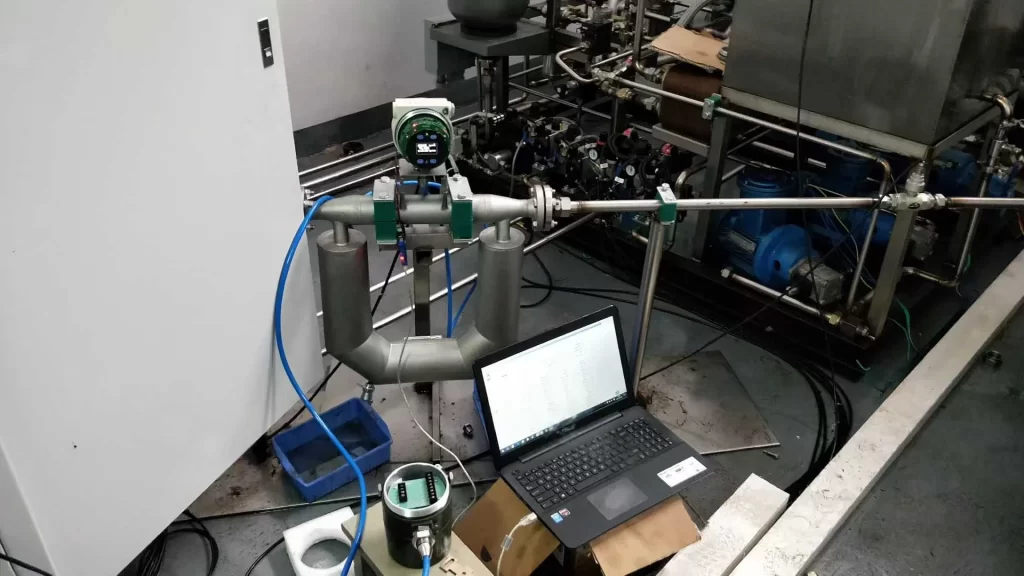
What Is a Density Meter? And Guide to Types

What Is a Density Meter? We are discussing industrial density meters here, not laboratory densitometers. Industrial density meters are devices specifically designed to measure fluid density, performing real-time online density detection and displaying data such as density and temperature. They also support outputs of 4-20 mA, 0-1000Hz, RS485 Modbus RTU, HART, and other signals, facilitating industrial process control. RFQ Table of ContentsWhat is Diaphragm Seal?Why use a diaphragm seal?Benefits of Diaphragm Seal for Pressure Measurement SystemsWhat is a capillary tube?Benefits of Capillary Tub......

2025.12.4

Pressure Sensor Selection: Gauge Pressure vs. Sealed Gauge Pressure

Previously, we discussed the differences and relationships between Gauge Pressure and Absolute Pressure. Some users have noticed that when purchasing pressure transmitters, there’s also the option of choosing between sealed gauge pressure and gauge pressure. So, what is the relationship between these two, and how should we choose? RFQ Table of ContentsWhat is Diaphragm Seal?Why use a diaphragm seal?Benefits of Diaphragm Seal for Pressure Measurement SystemsWhat is a capillary tube?Benefits of Capillary Tube for Pressure Measurement SystemsFeatured remote seal pressure transmittersFeature......