Home > Blog > OEM 80GHz Radar Level Sensors for Private Labeling
OEM 80GHz Radar Level Sensors for Private Labeling
During OEM business negotiations, the customer requested OEM private-label 80GHz radar level transmitters, with an annual purchase volume of approximately 2,500 units.
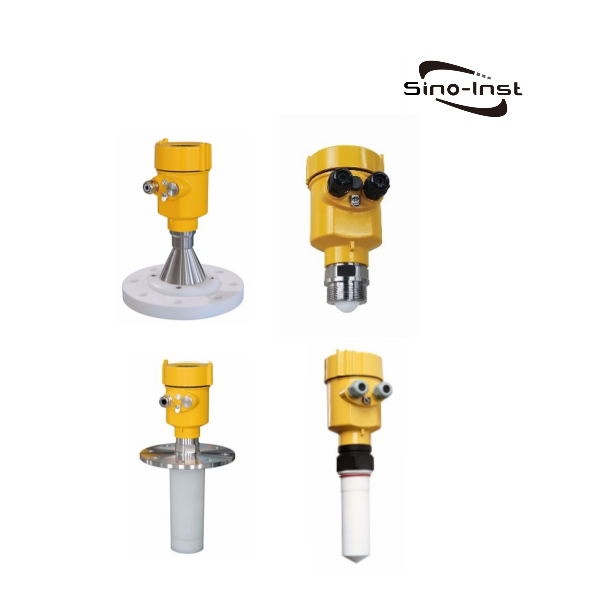
As the original manufacturer, we offer two OEM product lines of 80GHz radar level transmitters for the customer to choose from. For standard operating conditions, the TSL300 low-cost 80GHz radar level transmitter is the preferred choice. For conditions involving high temperatures, high pressure, or heavy dust, the FMCW series of high-precision 80GHz radar level transmitters is recommended. Both product lines support standardized OEM branding partnerships.
What is an 80GHz Radar OEM Private Label Partnership?
OEM manufacturing involves our company, as the manufacturer, completing all production processes for the 80GHz radar level transmitter, including hardware assembly, antenna tuning, radar signal calibration, and final unit testing.
After the finished products leave the factory, we print the customer’s own brand logo and model number on the nameplate according to their requirements. We provide the customer with the corresponding user manual and packaging, and deliver the products to them so they can sell them under their own brand or use them for project applications.
Unlike ODM (Original Design Manufacturing) development and customization, this collaboration model does not modify the product’s core hardware design. Adjustments are limited to peripheral elements such as nameplate markings, packaging materials, factory calibration parameters, and accompanying documentation.
Main Areas of Collaboration
Brand Customization: Printing or engraving logos and brand names on products. The appearance is also customized according to the customer’s design.
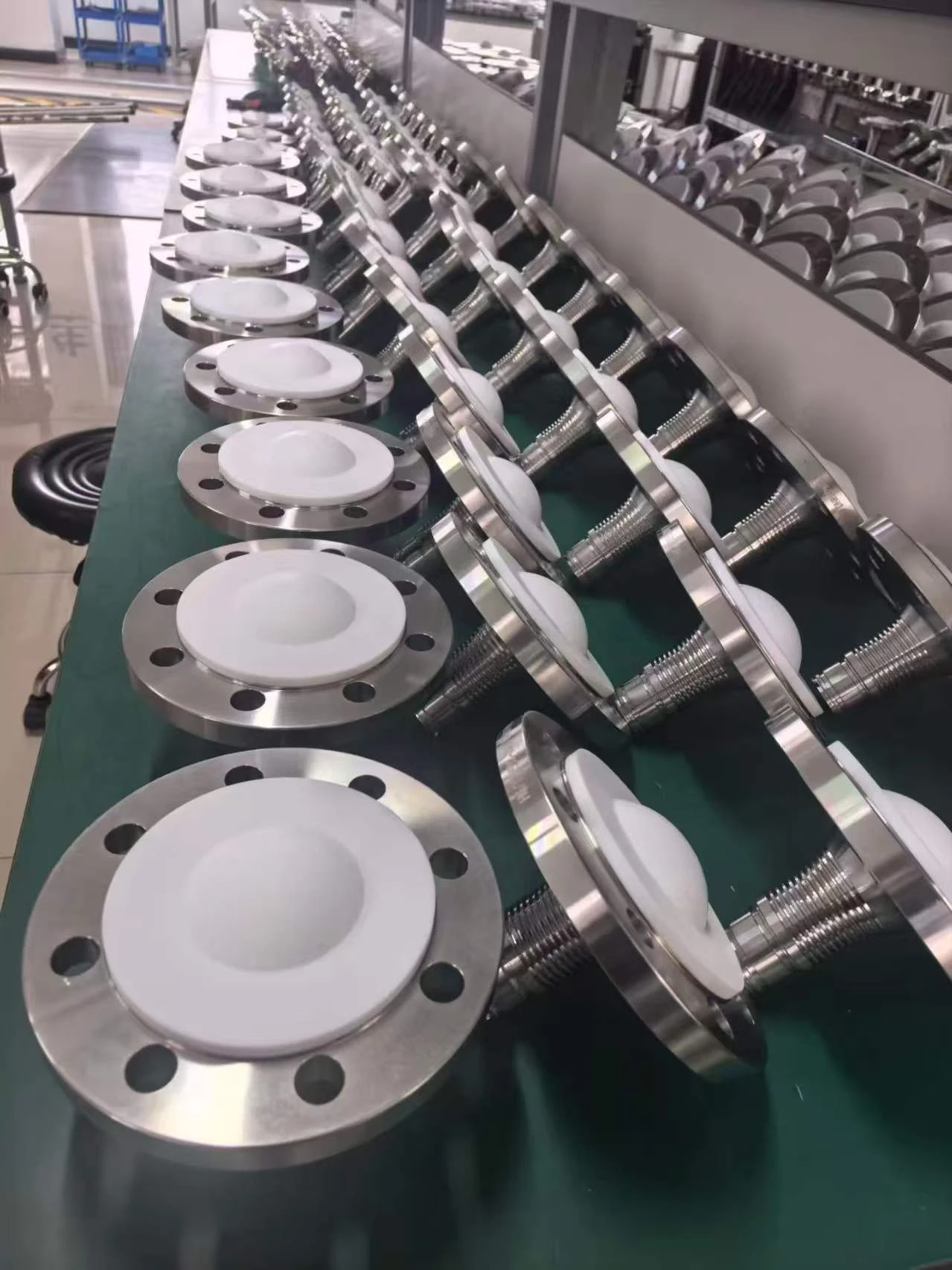
Hardware Customization: Customizing antenna dimensions, housing materials, and process connection methods (e.g., threaded, flanged) based on the application scenario.
Software Customization: Adjusting measurement algorithms, output signal formats (e.g., HART, RS485/Modbus), and debugging interfaces.
Manufacturing and Processing: The manufacturer is responsible for component procurement, SMT assembly, final assembly, and testing and inspection, and assists in completing product certification.
OEM Product Selection Guide
We offer two distinct product lines of 80GHz radar level transmitters, both of which support OEM bulk supply. Customers can pick suitable models according to end-user site conditions, project budgets and performance requirements. These two lines differ in hardware platforms, mechanical layouts, performance specs and cost positioning, to serve diverse market demands.
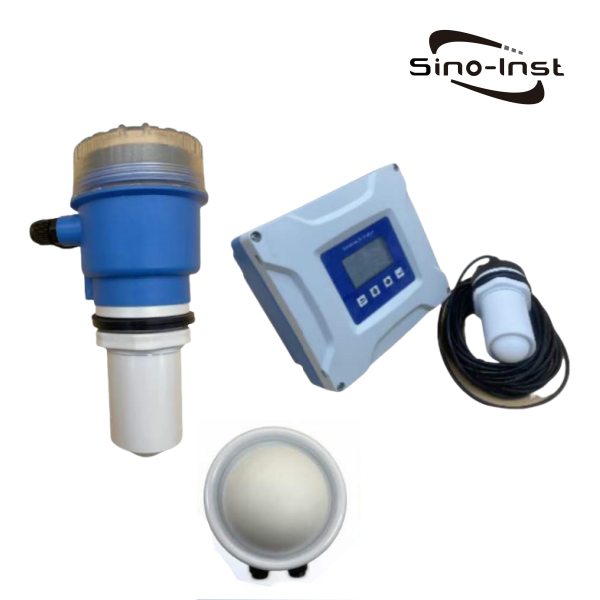
The TSL300 is built for high-volume, cost-sensitive applications. It targets liquid level measurement under stable site conditions without extreme harshness, and works well for OEM buyers chasing solid cost-performance and reliable mass-supply stability.
Typical Applications:Liquid level monitoring in sump pits, sewage tanks, clear water tanks, standard water tanks, and simple storage tanks.
Product Features:
80 GHz FMCW with a lens antenna design. Selectable beam angle. Simple installation and commissioning.
Standard 4–20 mA and RS485 Modbus outputs, compatible with mainstream PLCs and automation systems on the market.
Streamlined design and standardized BOM, suitable for high-volume production and offering competitive pricing.
Supports software calibration, output mapping, and false echo suppression. Meets standard pump control and liquid level data acquisition requirements.
Protection rating suitable for indoor and semi-underground humid environments.
Not suitable for extreme operating conditions such as high temperatures, high pressure, heavy dust, or severe corrosion.
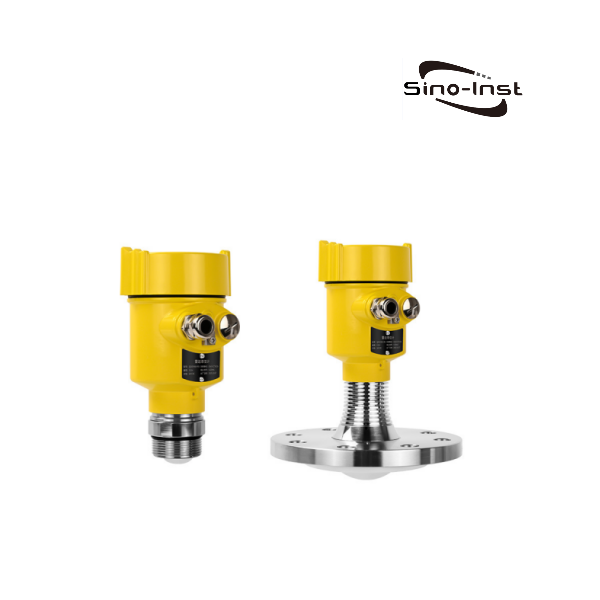
The FMCW series is our high-performance product line built for complicated industrial sites with tough measurement challenges. Improvements have been made on hardware layout, anti-interference performance and overall manufacturing standards. It is intended for industrial projects that set high bars for measurement stability and accuracy.
Typical Applications:High-temperature reactors, high-pressure sealed storage tanks, powder silos, environments with heavy dust, volatile media, intense steam, corrosive materials, and other operating conditions where conventional radar struggles to operate stably.
Product Features:
Optimized high-precision algorithms and enhanced echo signal processing capability. It can maintain reliable level readings even with interference from dust, steam and surface foam.
High-temp and high-pressure resistant variants can be selected, suitable for pressure vessels and media running at elevated temperatures.
Upgraded antenna, housing and sealing structures deliver better corrosion resistance and anti-condensation performance.
Rich protocol compatibility plus comprehensive diagnostic functions, including built-in signal self-check and fault alarm output.
Better measurement accuracy and repeatability compared with economical-grade models. It satisfies strict requirements from industrial process control, raw-material stockpile management and metering-related applications.
The two series complement each other; there is no hierarchy or substitution relationship between them. For budget-conscious applications with simple operating conditions, choose the TSL300. For complex operating conditions with high requirements for measurement stability and accuracy, choose the FMCW series.
Both product lines adhere to uniform OEM partnership guidelines: once the hardware design is finalized, no arbitrary changes will be made; customization is limited to calibration and branding materials to ensure consistency in bulk shipments.
Approaches to Mass Production Cost Control and Price Competitiveness
Volume-Price Linkage
Our price benchmark is calculated based on an annual buying quantity of 2,500 units. Stable, continuous orders following the agreed procurement rhythm will lock in the contracted unit price. If order volumes drop or orders become intermittent, supply-chain cost advantages will diminish, and unit pricing will need to be re-evaluated.
Avoiding Hidden Costs
All technical specs, calibration parameters, screen-printing content and packaging solutions should be finalized ahead of time. Sample confirmation must get completed in the prototype phase. Random ad-hoc modifications after mass production kicks off will trigger extra charges for production-line changeover, rework and leftover inventory. Such extra expenses are billed separately and are not covered in the base quotation.
Cost Fluctuation Linkage Mechanism
For bulk raw materials such as chips and metal housings, we set out price-adjust trigger clauses. When price swings of key components pass the agreed threshold, both sides will negotiate supply-price revisions, with advance notification provided beforehand.
Proactive Quality Control to Reduce Post-Sales Losses
Every unit undergoes full factory inspection together with batch sampling checks. Defective items are filtered out before shipment. This helps cut logistics and labour costs caused by product repair, return and replacement, and lays a solid foundation for sustained and stable supply pricing over long-term cooperation.
Scope of Customization: Calibration, Nameplate, Packaging, and Documentation (OEM Labeling Limits)
Based on fixed hardware, factory calibration parameters can be preset according to customer requirements. Examples include measurement range settings, upper and lower limits for the 4–20 mA signal, filter strength, signal output mode, and fault alarm thresholds.
Custom Nameplates and Screen Printing
The nameplate on the housing and laser-screen-printed content can be customized to include the customer’s brand logo, product model, measurement range parameters, power supply specifications, and explosion-proof/protection ratings.
The nameplate dimensions, mounting location, and housing mold remain unchanged. We do not support creating new molds, altering the housing shape, or adding special embossed patterns. Mold creation incurs high one-time costs.
Custom Packaging
The base version features standard, neutral packaging. This can be replaced with a custom-branded color box and printed outer carton, including the customer’s logo, model number, and material barcode.
The external dimensions of the packaging remain unchanged; no new packaging molds will be created. The internal cushioning structure will retain the original design to avoid costs associated with redesign, mold creation, and trial production.
OEM Labeling of Supporting Documentation
Product manuals, certificates of conformity, test checklists, and factory test reports can be modified to include the customer’s company name. Specification tables must remain consistent with the hardware version.
The core technical principles, hardware performance parameters, and certificate numbers in the documentation remain unchanged. Certificates are issued under our company’s credentials; we can provide an authorization statement. We do not support directly changing the certificate holder to the customer.
Clarification of Non-Customizable Items
The RF mainboard, antenna lens, hardware circuitry, enclosure structure, and interface definitions are fixed. We do not support modifications to hardware interfaces, the addition or removal of hardware channels, special anti-corrosion coatings, or custom modifications to explosion-proof structures. Such requests fall under ODM development.
Selection Parameters to Confirm Before OEM Labeling
Antenna and Beam Angle: For narrow-diameter tanks, give priority to models with antenna diameter ≤44 mm and beam angle ≤4°. For instance, a 32-mm lens antenna delivers roughly 3° beam angle and fits small-diameter installation openings.
Dead Zone and Measurement Range: For tanks with total height below 2 m, dead zone performance better than 0.2 m is preferred; certain models can reach dead zone as low as 0.1 m. When selecting measuring range, reserve reasonable margin against real tank height.
Process Connection: Confirm dimensions of existing on-site openings. G1.5, 1.5-inch thread or DN40 flange are widely-adopted connection types for compact spaces. Adapters can be skipped if thread specifications match perfectly.
Output and Power Supply: 4–20 mA analog output with HART function is widely used; RS-485 Modbus is another common choice. Typical power supply options are 24 V DC or two-wire loop power supply.
Materials and Protection: PTFE antenna option is available for corrosion-resistant needs; stainless steel housing is standard configuration. For outdoor or consistently humid locations, IP68 or higher ingress protection grade is suggested.
Technical Support and After-Sales Service Policies
1. Technical Support for Preliminary Prototypes
We provide product selection guidance, performance evaluation, debugging utilities, register data and OEM label templates. Our team supports prototype testing, system integration verification and final sample sign-off work.
2. Technical Support During Mass Production
Batch-wise factory inspection documents are provided with each shipment. Remote fault analysis support is available to help tell apart failures caused by product itself, improper installation, harsh site conditions or host-side software issues.
We will revise calibration files, nameplate content and user manuals following agreed terms. Revisions beyond the free-of-charge quota will incur modification fees. On-site inspection and debugging count as value-added services and require separate quotation.
3. Warranty Terms
The warranty period begins on the date the product leaves the factory. The warranty covers only manufacturing defects in the product’s components and assembly processes. Defective units will be repaired or replaced.
4. Response and Troubleshooting Process
A dedicated contact person will be assigned to respond to routine issues within 2 hours. For faults that cannot be diagnosed remotely, the product may be returned for inspection, and a fault analysis report will be provided.
5. Post-Warranty Services
We provide paid repairs and supply original manufacturer spare parts. The accompanying debugging software and finalized firmware will remain available for long-term use. Upgrades for new features will be evaluated on a case-by-case basis.
6. Scope of Cooperation
This proposal applies to standard OEM bulk supply only, and does not include turn-key engineering services. If you need deep customisation or large-scale project-oriented solutions, please follow our formal ODM custom development workflow.
FAQ
The standard solution features fixed hardware and only supports customization of software calibration, nameplates, packaging, and the logos and headers in documentation.
Beam angle, signal output type, measuring range, mounting thread specs, calibration mapping rules, screen-print content for nameplates, packaging options and document templates. Once confirmed, the signed-off sample serves as reference benchmark for mass-production batches.
4–20 mA fits single-point measurement and supports long-distance signal transmission up to 500 metres or further. RS-485 enables multi-device networking (up to 32 instruments on one bus), with maximum transmission distance reaching 1,200 metres.
Explosion-proof level sensors work in hazardous locations with flammable gas, vapour or dust. During model selection, users need to clarify hazardous-area division (Zone 0/1/2) and explosive-substance grouping. Our engineers can assist you in picking suitable explosion-proof variants.
There is no minimum order quantity for samples. Standard-configuration prototypes are delivered within 3–7 business days after specifications are confirmed.
OEM Private Labeling: the economical TSL300 series has a minimum order quantity of 50 units, with standard lead time of 10-15 working days.
Minimum order quantity for high-performance FMCW series is also 50 units. If high-temperature, high-pressure or corrosion-resistant special components are selected, production lead time will extend to 15-20 working days.
Based on our two 80 GHz radar level measurement product lines—the TSL300 Economy Series and the FMCW High-Performance Series—we offer standardized OEM private-label services. From initial model selection and parameter confirmation, through sample validation and mass production, to after-sales technical support, the entire collaboration process follows clear guidelines and well-defined boundaries.
Sino-inst follows standardised OEM cooperation principles. Within defined customisation boundaries, we guarantee stable product consistency and competitive pricing. We are also capable of developing custom-tailored products according to special customer requirements.
Should you have purchasing demands for 80GHz radar level sensors or need relevant technical consultation, feel free to reach out to our engineering team.
In projects involving liquid level control in 12-foot-deep collection pits, float-type level switches are a common traditional solution. However, these contact-type devices are prone to becoming entangled with debris, silted…
For measurement sites such as wastewater facilities and small-size storage tanks, 80 GHz radar level sensors are widely adopted. Their narrow beam angle, short blind zone, plus good resistance against…
When monitoring the level of warm slurry in an open-top, circular tank approximately 3 meters high, the continuous rise of water vapor often leads to condensation on the sensor surface,…
What is a Radar Level Sensor? A radar level sensor is an instrument that uses microwave echo ranging to measure liquid levels non-contactly. It can measure both liquid and solid…
Radar level transmitters boast advanced technology and broad applicability. They have become the preferred solution for industrial liquid level monitoring. These devices are widely used in petrochemicals, water treatment, and…
Tank level monitoring is critical in industrial production. Radar level gauges provide real-time water level measurements with exceptional accuracy. Consequently, they have become the preferred choice for industrial-level monitoring. Radar level…
Zhang Wei, possesses 20 years of experience as an automation instrumentation engineer, specializing in the research, design, installation, commissioning, and maintenance of automation instruments.
Face to various instrument communication protocols (such as Modbus, Profibus, etc.), with solid hardware circuit design and software programming skills (proficient in C language and PLC programming). Has extensive project experience; projects he has led and participated in have all achieved outstanding results, improving product accuracy, reducing costs, and increasing production efficiency.
Possesses excellent communication and coordination skills and a strong team spirit, enabling him to quickly respond to customer needs and provide high-quality automation instrumentation solutions.
Want to see more of our engineering guides in Google Search? Add Sino-Inst as a preferred source.