Home > Blog > Gas Measurements: Normal Conditions vs Standard Conditions
Gas Measurements: Normal Conditions vs Standard Conditions
In gas flow measurement and control, it is crucial to distinguish between Normal Conditions and Standard Conditions. This is primarily because the volume of gas changes with temperature and pressure. Different standards will result in different measured gas values. This is somewhat similar to the difference between “SCFM (Standard CFM) and ACFM (Actual CFM)“.
Gases are compressible, and their parameters (pressure, temperature, density, volume) interact with each other. For example, the equation of state for a gas studies these relationships in detail.
Gas Temperature:
Temperature changes alter the physical properties of a gas, such as density and viscosity, thus affecting the measurement accuracy of the flow meter. For example, in thermal gas flow meters, temperature changes directly affect the sensor’s thermal conductivity, leading to measurement deviations. If the gas temperature increases, the density usually decreases; at the same volumetric flow rate, the mass flow rate may change, affecting measurement accuracy.
For some high-precision flow meters, temperature compensation devices are typically installed to reduce the impact of temperature changes on measurement accuracy. However, if temperature changes exceed the compensation range, measurement errors may still increase.
Gas Pressure:
Changes in gas pressure also affect gas density and viscosity, thus impacting the flow meter’s measurement results. For example, in high-pressure gas systems, gas density increases with pressure. If the flow meter lacks pressure compensation, the measured flow rate may deviate from the actual value.
Especially in applications with significant pressure fluctuations, such as pneumatic systems or compressed air pipelines, pressure changes can significantly affect the flow meter’s measurement accuracy. Therefore, it is necessary to select a flow meter with pressure compensation capabilities or use an external pressure sensor for compensation.
Therefore, when measuring and controlling gases, we must specify parameters such as gas pressure and temperature. That is, we must clearly define whether it is “standard conditions” or “Normal Conditions”.
What is Standard Conditions?
Standard Conditions: Flow rate under a unified standard.
To avoid fluctuations in gas flow rate caused by environmental changes, the scientific community has proposed a unified standard to quantify flow rate; this is the standard condition.
Standard conditions refer to the flow rate of a gas measured at standard atmospheric pressure (101.325 kPa) and standard temperature (usually 0°C or 25°C, varying depending on different industry standards).
Characteristics of Standard Condition Flow Rate:
Measured using standard atmospheric pressure and temperature; Under this environment, gas density and mass can be accurately calculated; Standard condition flow rate has clear standardization significance, helping users ignore temperature and pressure variations and focus on gas flow rate.
Advantages of Standard Condition Flow Rate:
Because gas flow rates measured under standard conditions are standardized, they can be easily used for comparison, calculation, and quality control in industrial applications. Especially in mass flow control, standard condition flow rate is one of the most commonly used parameters.
With standard condition flow rate, users can more accurately calculate gas mass and perform efficient gas mixing, reactions, and transportation. Suitable for applications requiring standardized data: For example, in chemical reactions, biopharmaceuticals, environmental monitoring, and other fields, gas mass flow rates require stable and standardized data, making standard condition flow rate a crucial reference.
What is Normal Conditions?
In practical applications, the volume of a gas is affected by environmental factors, especially temperature and pressure. Because the spaces between gas molecules are relatively large, changes in temperature and pressure cause changes in the movement of gas molecules, thus altering the gas volume.
Normal Conditions Flow (or Operating Conditions Flow) refers to the measured gas flow rate at a specific moment or under actual operating conditions. Specifically, the operating conditions are determined by the current ambient temperature and pressure.
Characteristics of Normal Conditions Flow:
Affected by real-time ambient temperature and pressure; Flow rate measured in actual applications; Corresponds to the volumetric flow rate of the gas under specific operating conditions.
Normal Conditions Flow primarily refers to the real-time measurement and control of gas flow rate in actual production environments. Operating condition flow rate directly reflects the actual gas usage in the production process. In certain specific application scenarios, users are more concerned with the actual performance of gas flow rate under actual operating conditions than with standardized measurement results.
Conversion between Normal Conditions and Standard Conditions
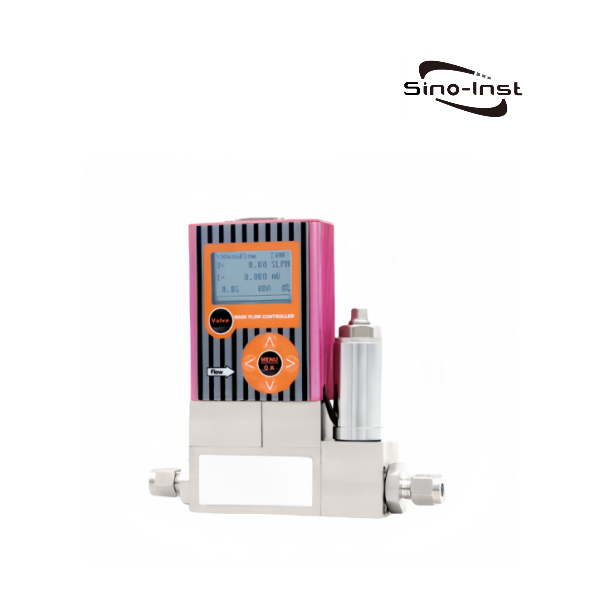
Some flow meters, such as our Sino-Inst thermal gas mass flow meters and mass flow controllers, can simultaneously display both operating and standard flow rates. However, most of the time, we need to convert between operating and standard flow rates.
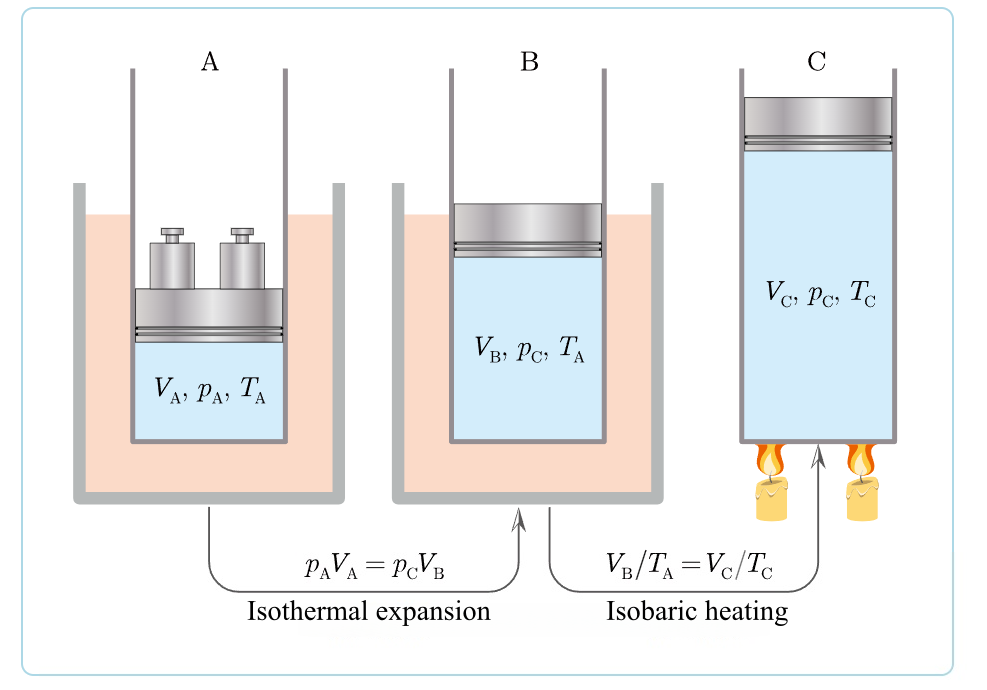
Based on the gas law: PV=nRT, the conversion formula between operating and standard flow rates is: P1×V1/T1=P2×V2/T2.
Or, you can directly use our converter below.
Gas Flow Rate Converter
Convert between Actual (Working) and Standard conditions using the Ideal Gas Law.
Analog gas flow meters specifically refer to a type of flow meter that outputs analog signals. The main function of a flow meter is to measure volumetric flow rate or mass flow rate and convert it into an electrical signal output, facilitating flow monitoring and control. There are four types of flow meter signal outputs: analog signal output, frequency signal…
A rotameter, also known as a variable area flow meter, is widely used to measure the flow rate of various gases, especially in situations where no power supply is available. Whether measuring air, oxygen, nitrogen, carbon dioxide (CO2), or other gases, rotameters provide reliable and accurate results. Of course, rotameters can also be configured as electronic smart devices, providing local…
Accurate measurement of flare gas flow presents a significant challenge in industrial process control. This is primarily due to the extreme variability of flare gas flow rates, the unpredictability of gas composition, and harsh operating environments. Thermal mass flow meters provide a reliable and compliant method for flare gas measurement, enabling industries to meet stringent environmental regulations and optimize process…
Why Natural Gas Flow Measurement is Pivotal? Natural gas is a vital energy source, providing electricity to industries, homes, and businesses worldwide. High-precision natural gas flow measurement is essential for ensuring fair trade, accurate trade measurement, and safe and efficient energy distribution. This article delves into the field of natural gas flow measurement, introducing various measurement technologies, the importance of…
Gas flow measurement is an essential technology in many industrial processes. For example, in the production of chemical products, accurate measurement of the flow of gases such as oxygen and nitrogen can ensure that the reactants are added to the reactor in the appropriate proportion to obtain high-quality products. Introduction: Why Gas Flow Measurement is Important The measurement of air…
Liquefied Petroleum Gas (LPG) is an indispensable commodity of domestic and industrial applications. It is increasingly used as an aerosol propellant and a refrigerant, replacing chlorofluorocarbons in an effort to reduce damage to the ozone layer. Choosing the right LPG Gas flow meter is crucial for optimal performance, safety, and efficiency of LPG systems. By understanding the importance of selecting…
Gas flow measurement under both Normal Conditions and Standard Conditions is important. Understanding their definitions, differences, and conversions can help us better measure and control gas flow. For example, when selecting a flow meter, standard gas flow meters use standard condition flow ranges, while users may only have access to their actual operating parameters. In this case, conversion is essential to select the most suitable gas flow meter.
If you still don’t know how to convert or select a gas flow meter, please feel free to contact our sales engineers!
Zhang Wei, possesses 20 years of experience as an automation instrumentation engineer, specializing in the research, design, installation, commissioning, and maintenance of automation instruments.
Face to various instrument communication protocols (such as Modbus, Profibus, etc.), with solid hardware circuit design and software programming skills (proficient in C language and PLC programming). Has extensive project experience; projects he has led and participated in have all achieved outstanding results, improving product accuracy, reducing costs, and increasing production efficiency.
Possesses excellent communication and coordination skills and a strong team spirit, enabling him to quickly respond to customer needs and provide high-quality automation instrumentation solutions.