Home > Blog > Thermal Mass Flow Meter Correction Factor Guide
Thermal Mass Flow Meter Correction Factor Guide
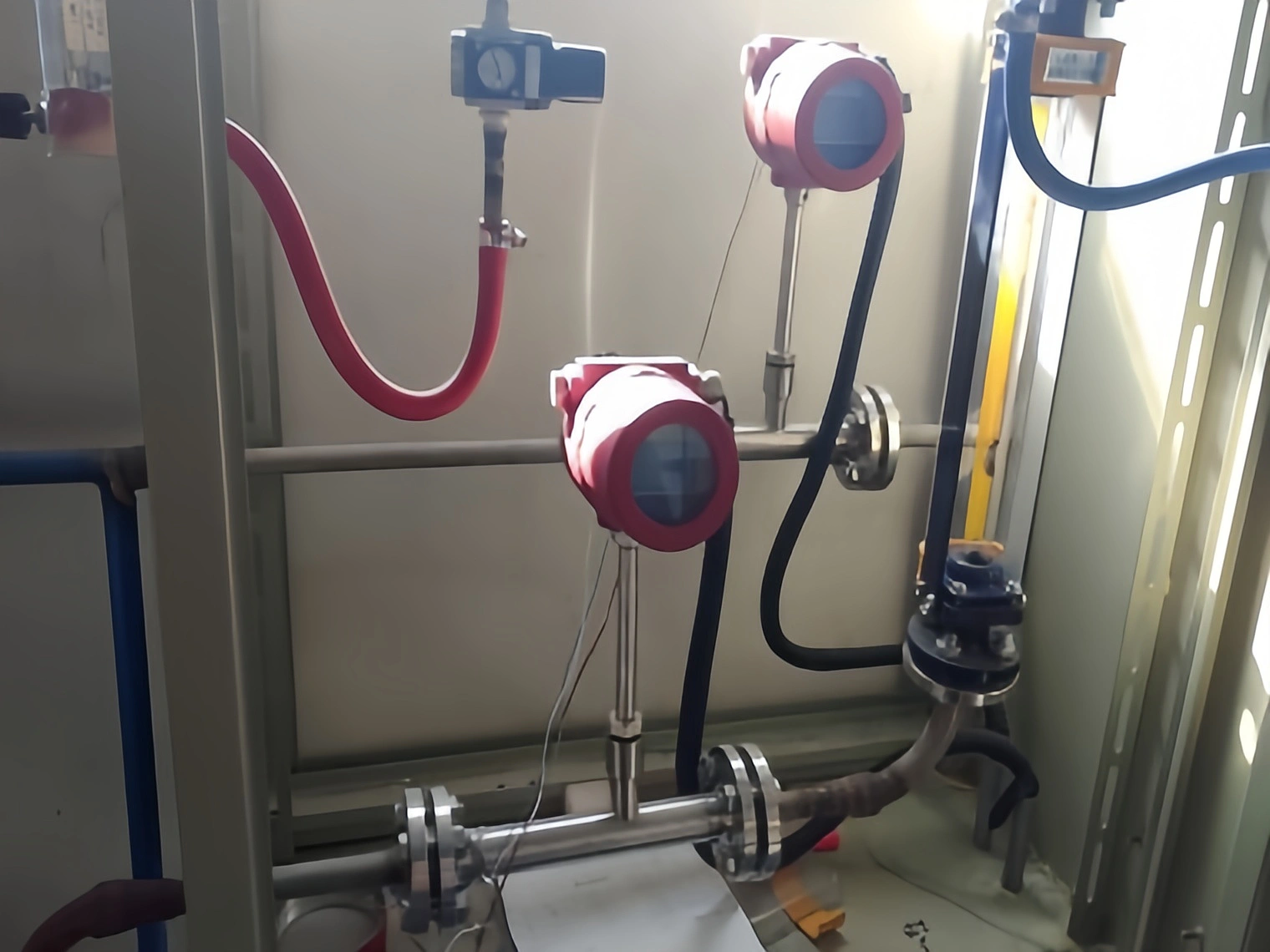
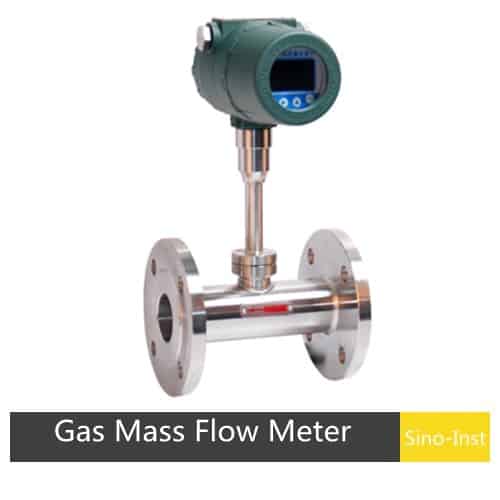
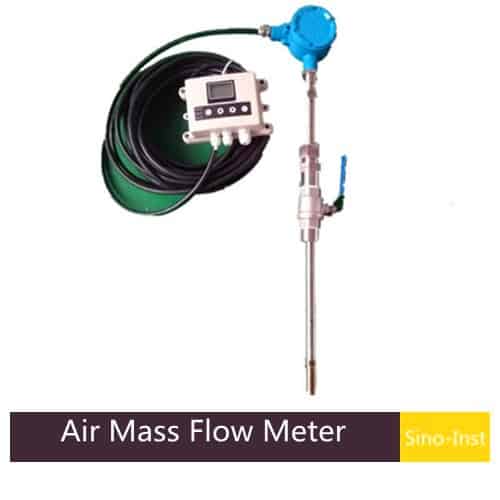
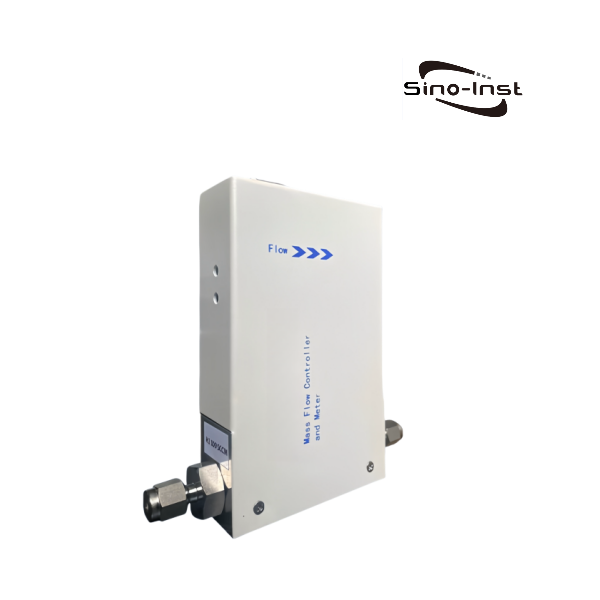
Thermal Mass Flow Meters and thermal mass flow controllers are suitable for most gaseous media. If a gas mass flow controller or thermal mass flow meter is factory-calibrated for one gas, but you want to switch to another, then a gas correction factor (GCF) is needed.
What is Thermal Mass Flow Meter Correction Factor?
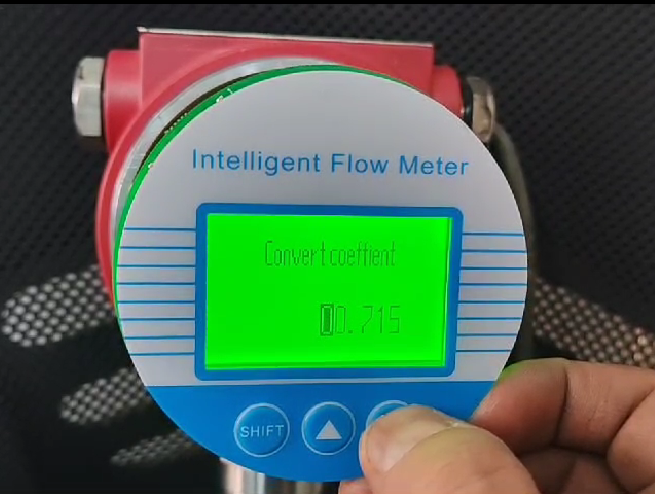
The gas conversion factor (GCF) of a thermal mass flow meter is a coefficient used to correct for the measurement of different gas flow rates. The GCF of a thermal gas mass flow meter is mainly related to the gas’s density, specific heat at constant pressure, and molecular composition. It is usually calibrated at the factory and can be used directly by the user.
Currently, most gas mass flow controllers and mass flow meters are calibrated with nitrogen or air at the factory. If the actual gas used is different, conversion using the gas conversion factor is required, even for flow controllers and mass flow meters from other brands (such as ABB, E+H, and Kobold). This is especially true for mixed gases, which are difficult to calibrate before leaving the factory, making the calculation of the conversion factor even more crucial.
As the manufacturer, our thermal mass flow meters have the relevant gas conversion factors pre-adjusted before leaving the factory, so you can use them directly. However, if you need to switch between different gases during use, you will need to manually input the corresponding gas conversion factor.
Thermal Mass Flow Meter Correction Factor Reference
Currently, most factories cannot calibrate mass flow rates according to the actual gas used by the user. Calibration is usually performed by converting the actual gas flow rate into the flow rate of air or nitrogen.
When you use it, the output display will directly show the mass flow rate or volumetric flow rate of the actual gas used.
Conversion between different gases is done using conversion factors. The conversion factors for single-component gases can be found in a table. The table below shows the densities and relative air conversion factors for common gases applicable to our company’s thermal flow meters.
No.
Gases
Specific heat (cal/g/℃)
Density (g/L 0℃)
Conversion factor
0
Air
0.24
1.2048
1.000
1
Argon (Ar)
0.125
1.6605
1.4066
2
Arsenane (AsH3)
0.1168
3.478
0.669
3
Borne tribromide (BBr3)
0.0647
11.18
0.3758
4
Borne trichloride (BCl3)
0.1217
5.227
0.4274
5
Borne trifluoride (BF3)
0.1779
3.025
0.4384
6
Boronane (B3H6)
0.502
1.235
0.505
7
Carbon tetrachloride (CCl4)
0.1297
6.86
0.3052
8
Carbon tetrafluoride (CF4)
0.1659
3.9636
0.4255
9
Methane (CH4)
0.5318
0.715
0.7147
10
Ethylene (C2H4)
0.3658
1.251
0.5944
11
Ethane (C2H6)
0.4241
1.342
0.4781
12
Propanyne (C3H4)
0.3633
1.787
0.4185
13
Propylene (C3H6)
0.3659
1.877
0.3956
14
Propane (C3H8)
0.399
1.967
0.3459
15
Butyne (C4H6)
0.3515
2.413
0.3201
16
Butene (C4H8)
0.3723
2.503
0.2923
17
Butane (C4H10)
0.413
2.593
0.2535
18
Pentane (C5H12)
0.3916
3.219
0.2157
19
Methanol (CH3OH)
0.3277
1.43
0.5805
20
Ethanol (C2H6O)
0.3398
2.055
0.3897
21
Trichloroethane (C3H2Cl3)
0.1654
5.95
0.2763
22
Carbon monoxide (CO)
0.2488
1.25
0.994
23
Carbon dioxide (CO2)
0.2017
1.964
0.7326
24
Oxygen (C2N2)
0.2608
2.322
0.4493
25
Chlorine (Cl2)
0.1145
3.163.
0.8529
26
Deuterium (D2)
1.7325
0.1798
0.9921
27
Fluorine (F2)
0.197
1.695
0.9255
28
Germanium tetrachloride (GeCl4)
0.1072
9.565
0.2654
29
Germanane (GeH4)
0.1405
3.418
0.5656
30
Hydrogen (H2)
3.4224
0.0899
1.004
31
Hydrogen bromide (HBr)
0.0861
3.61
0.994
32
Hydrogen chloride (HCl)
0.1911
1.627
0.994
33
Hydrogen fluoride (HF)
0.3482
0.893
0.994
34
Hydrogen iodide (HI)
0.0545
5.707
0.993
35
Hydrogen sulfide (H2S)
0.2278
1.52
0.839
36
Helium (He)
1.2418
0.1786
1.4066
37
Neon (Kr)
0.0593
3.739
1.4066
38
Nitrogen N2
0.2486
1.25
0.994
39
Neon
0.2464
0.9
1.4066
40
Ne
0.5005
0.76
0.7147
41
Ammonia
0.2378
1.339
0.9702
42
NH3
0.1923
2.052
0.7366
43
Nitric oxide
0.2098
1.964
0.7048
44
NO
0.2196
1.427
0.9861
45
Nitric oxide
0.1247
6.127
0.3559
46
NO2
0.261
1.517
0.6869
47
Dinitrogen monoxide
0.1611
5.62
0.3002
48
N2O
0.1324
6.845
0.3002
49
Oxygen
0.127
7.5847
0.2823
50
O2
0.1692
4.643
0.3817
51
Phosphorus trichloride
0.3189
1.433
0.5954
52
PCI3
0.1472
4.506
0.4095
53
Phosphine
0.1332
6.043
0.338
54
PH3
0.1588
6.516
0.2624
55
Phosphorus pentafluoride
0.1489
2.858
0.6829
56
PF5
0.1572
8.465
0.2048
57
Phosphorus oxychloride
0.0956
13.29
0.2137
58
POCl3
0.0379
5.858
1.4066
Calculation of Gas Correction Factor (GCF)
For thermal mass flow meters and flow controllers, the gas conversion factor is mainly related to the density, specific heat at constant pressure, and molecular composition of the gas (e.g., He is a monatomic gas, while N2 is a diatomic gas).
The table above shows single gases. For mixed gases, the proportion of each gas needs to be known. Then, a reasonable calculation is performed based on the gas conversion factor algorithm. If you are interested in the specific algorithm, please contact us.
Conversion for single gases is relatively simple. For the same flow meter, simply multiply the nitrogen flow rate by the corresponding gas conversion factor.
For example, if the nitrogen flow rate is 20 liters/minute and the argon conversion factor is 1.415, then the actual argon flow rate = 20 SLPM * 1.415 = 28.3 SLPM. However, most manufacturers now perform the conversion at the factory, so customers can use it directly without further conversion.
The machine is factory-calibrated for 20 SLPM of acetylene gas. If you actually want to use propane gas, the conversion method is: 20 ÷ 0.581 (acetylene gas conversion coefficient) x 0.348 (propane gas conversion coefficient) ≈ 12 liters/minute, which corresponds to the corresponding propane flow rate. It’s important to note that the full-scale setting must also be considered when converting between different gases.
Of course, we do not recommend frequent gas switching unnecessarily, as this may affect the measurement accuracy of the equipment.
Analog gas flow meters specifically refer to a type of flow meter that outputs analog signals. The main function of a flow meter is to measure volumetric flow rate or mass flow rate and convert it into an electrical signal…
A rotameter, also known as a variable area flow meter, is widely used to measure the flow rate of various gases, especially in situations where no power supply is available. Whether measuring air, oxygen, nitrogen, carbon dioxide (CO2), or other…
There are more than a dozen categories and hundreds of models of flow meters on the market, all claiming to have unique measurement advantages. So how do you choose the flow meter that meets your needs? Simply put, start with…
Cryogenic Flow Meter can be used to monitor the flow rate of cryogenic fluids. Liquid oxygen, liquid hydrogen, liquid nitrogen, liquid argon, liquid ammonia, and liquefied gas (LNG) are Common industrial cryogenic fluids. To handle fluid temperatures down to 328°F…
Although digital oil flow meters are constantly being innovated, Mechanical Oil Flow Meters still occupy a large proportion of industrial oil flow measurement, including flow measurement of crude oil, fuel oil, diesel, edible oil, and other oils. Positive displacement flow…
Mechanical flow meters measure water flow by measuring the movement of mechanical components such as gears, propellers, or rotors. They typically display the flow rate using a pointer or gear-based control panel. Generally, they do not require a power source…
Thermal mass flow meters and controllers have a wide range of applications. They offer advantages such as fast response, wide rangeability, high accuracy, and no moving parts (low maintenance costs), requiring no additional temperature or pressure compensation.
Sino-Inst has many years of experience in gas flow measurement and control. We supply various customized solutions for high-temperature, high-pressure, and low-flow-rate measurements. Please feel free to contact our application engineers if needed!
Zhang Wei, possesses 20 years of experience as an automation instrumentation engineer, specializing in the research, design, installation, commissioning, and maintenance of automation instruments.
Face to various instrument communication protocols (such as Modbus, Profibus, etc.), with solid hardware circuit design and software programming skills (proficient in C language and PLC programming). Has extensive project experience; projects he has led and participated in have all achieved outstanding results, improving product accuracy, reducing costs, and increasing production efficiency.
Possesses excellent communication and coordination skills and a strong team spirit, enabling him to quickly respond to customer needs and provide high-quality automation instrumentation solutions.