Split-Type Density Meter – Baumé Meter

Split-Type Density Meter - Baumé Meter

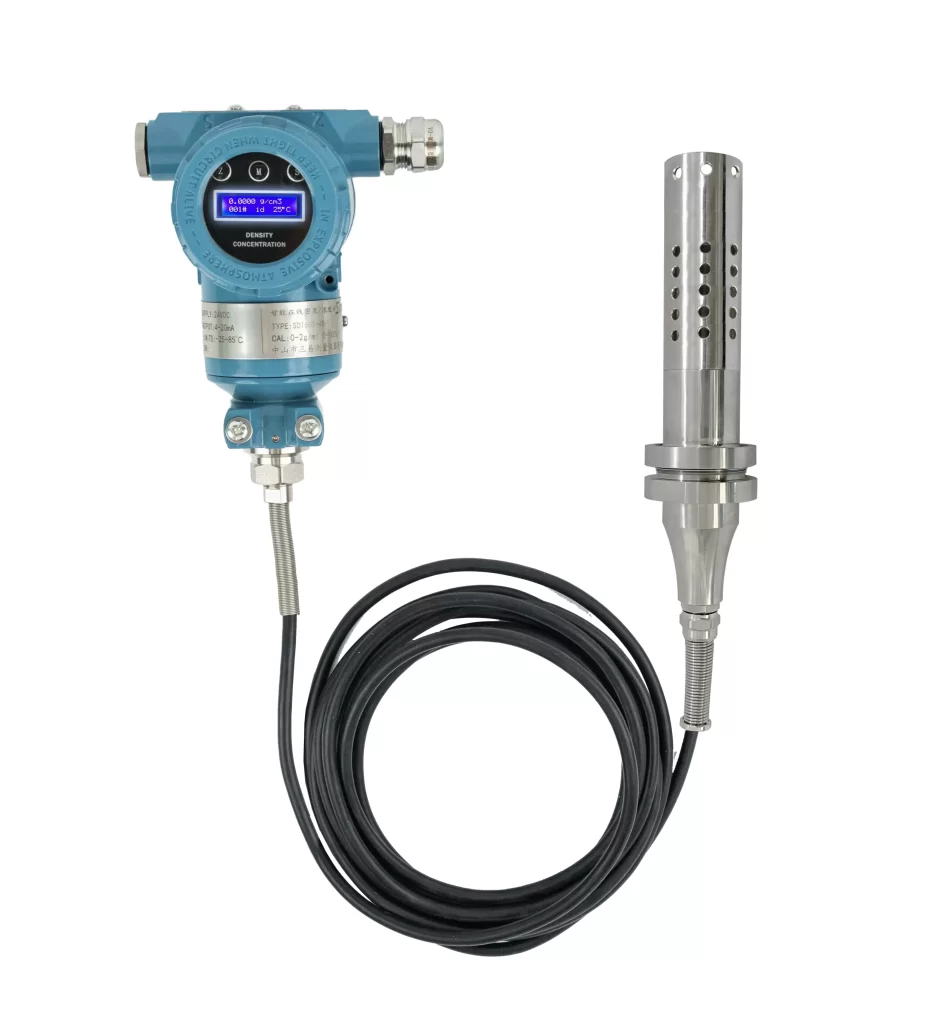
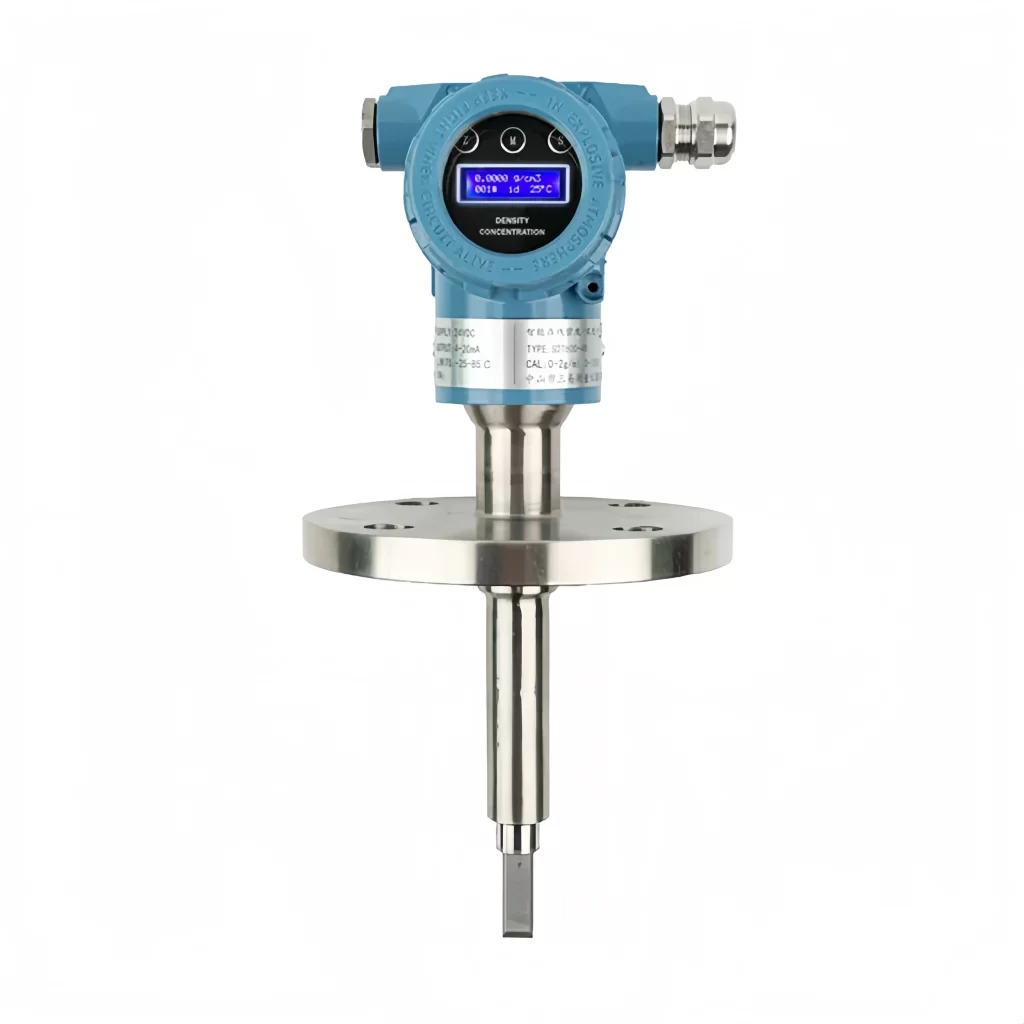
Split-Type Density Meter/Concentration Meter is equipped with an immersion density sensor and can be widely used in closed or open tanks, vessels, pipelines, diversion channels, and open channels. It is also widely used in sediment content detection at hydrological stations.

Concentration measurement is an important process control in product manufacturing. Tuning fork density meters can be used as indicators of solid content or concentration values ​​and other quality control parameters. They can meet various measurement requirements for density, concentration, and solid content. Depending on the industrial process, density can be expressed as: Brix, GL, Baume, Plato, and concentration percentage.

Features

  • Split-type immersion design for easy operation;
  • Continuous online monitoring;
  • Built-in temperature sensor provides accurate temperature compensation;
  • Integrated design requires no maintenance;
  • IP68 waterproof construction suitable for deep-water measurement;
  • Explosion-proof design facilitates use in hazardous industries;
  • Generates corresponding 4-20mA analog signals based on medium density changes. Simultaneously outputs digital signals via conversion for remote calibration and monitoring;
  • Direct density or concentration readings. Available engineering units include: g/cm³, kg/m³, specific gravity, °Brix, °Baume, °Plato, °GL, solid percentage content, etc.;
  • Suitable for flowing or stationary liquids;
  • Applicable for pipeline and tank density measurement;
  • Field recalibration: No standard reference source required, no laboratory calibration needed, no process interruption.

Specifications

Measurement Range0 – 3 g/cc (0 – 3000 kg/m³)
Calibration Range0.6 – 1.25 g/cc (600 – 1250 kg/m³)
Measurement Accuracy± 0.001 g/cc (± 1 kg/m³)
Repeatability± 0.0001 g/cc (± 0.1 kg/m³)
Operating Temperature Range-50°C to +200°C
Maximum Working Pressure20MPa
Fluid Viscosity Range0 – 20,000cP
Temperature Coefficient0.1 kg/m³/°C (after calibration)
Pressure InfluenceNegligible
Built-in Temperature SensorPT100
Wetted MaterialsStainless steel, Hastelloy C22, Manganin 400, titanium alloy, etc.
Fork Body CoatingStandard type, PTFE or electropolished
Power Supply20 – 28 VDC, 35 – 45 mA
Analog SignalOutput 4 – 20 mA, isolated, non-self-powered
Output Accuracy (20°C)± 0.1% of reading or ± 0.05% FS
Output Repeatability (-40 to +85°C)± 0.05% FS
Protection RatingIP65
EnclosureAluminum alloy

Applications of the Split-Type Density Meter:

This split-type tuning fork density meter is designed for precise monitoring of industrial fluid density. Constructed from 316 stainless steel, it boasts excellent corrosion resistance and is particularly suitable for industries with stringent density control requirements, such as chemical, petroleum, and pharmaceutical manufacturing.

  • Measurement of coal slurry density (concentration) during coal delivery;
  • Measurement of mineral slurry density (concentration) during mineral processing;
  • Measurement of sugar syrup density (concentration);
  • Measurement of starch emulsion density (concentration) (dry matter mass);
  • Measurement and alarm of lime slurry density (concentration) in desulfurization projects;
  • Measurement of ammonia water density (concentration) in denitrification projects;
  • Measurement of concentrated solution density (concentration) in the pharmaceutical industry;
  • Measurement of alcohol and water liquid level density (concentration);
  • Measurement of density (concentration) in various types of conveying pipelines or tanks;

FAQ

The Baumé degree (°Bé) is a method for expressing the concentration of a solution. Named after the French chemist Antoine Baume, it directly reflects the content of solute in a solution by measuring the density difference of the liquid under specific conditions. For example, the salinity of salt water, the sweetness of sugar solution, and the acidity of sulfuric acid can all be quickly determined using it.

The core is a “concentration index”: based on the comparison between the liquid’s density and the density of water, the concentration is converted into a directly readable numerical value.

Applications: From winemaking to salt production, from chemical industry to agriculture, it can be used to determine the concentration of any liquid.

A Baumé meter is used to measure the concentration and density of a solution, expressed in Baumé degrees. It is also known as a Baumé hydrometer or a Baumé scale (this name appears when measuring the concentration of honey and cheese).

The method for determining the Baumé degree of different solutions is similar; it involves measuring specific gravity and then converting the measured specific gravity to the concentration using a table. Different Baumé meters are specifically designed for different solutions, such as alcohol Baumé meters and saline Baumé meters. These meters have the corresponding concentration for the specific type of solution indicated on them, allowing for direct reading without consulting a table.

The main difference between a hydrometer and a Baumé hydrometer lies in their uses and measurement methods:

A Baumé meter is used to measure the relative density of liquids, especially those heavier or lighter than water. Its reading is usually expressed in Baumé degrees (°Bé), a method of expressing solution concentration.

A hydrometer, on the other hand, is a broader term, generally used to measure the relative density of liquids. In modern science, the term “specific gravity” has been replaced by “relative density” because specific gravity is relative, while density is absolute.

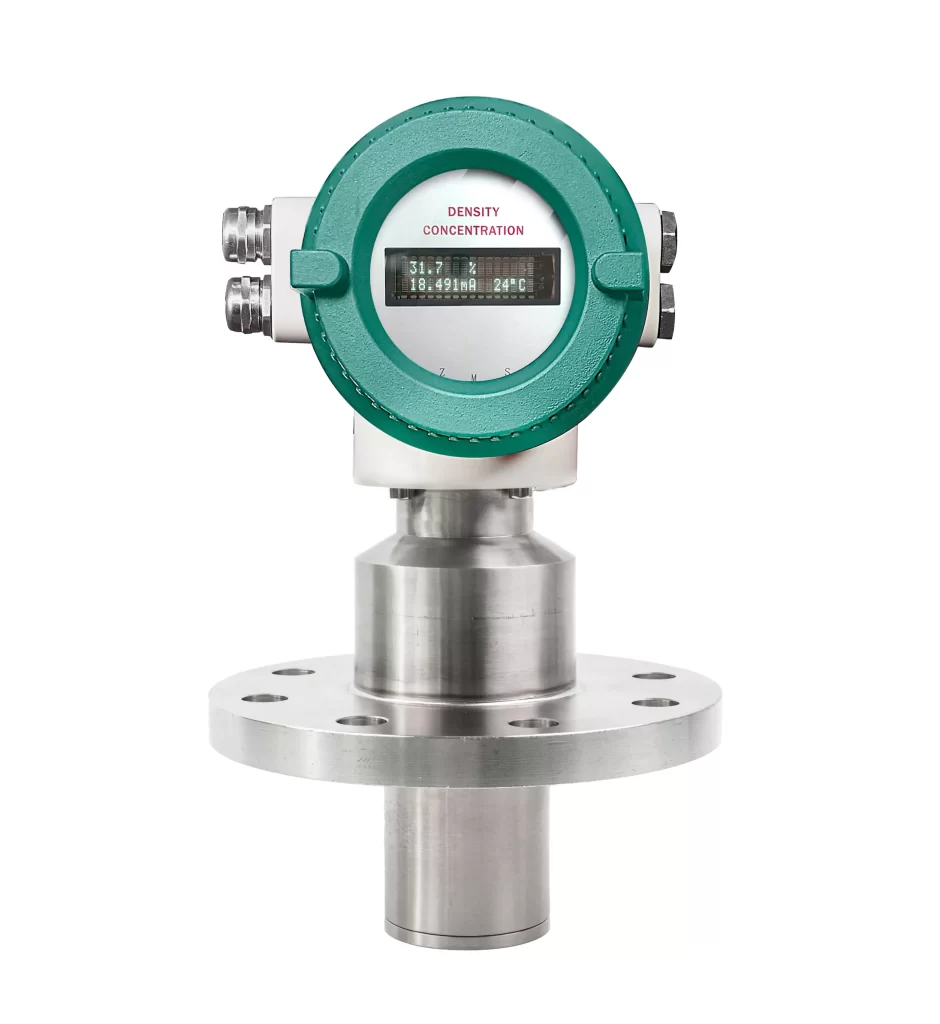
A digital density meter can measure the density of a medium in real time and display parameters such as density, concentration, and temperature locally. It also supports signal output, such as 4-20mA and RS485.

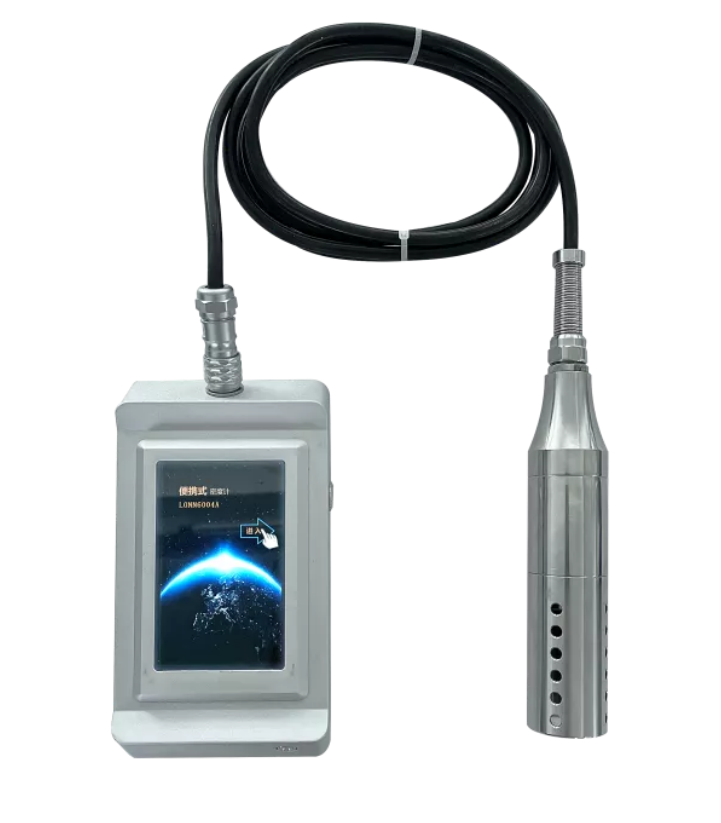
This portable density meter is designed for measuring the density or concentration of liquids in field or outdoor environments. It provides accurate density readings in real time and adapts to various testing scenarios. It can simultaneously measure density, concentration, temperature, and specific gravity.

More Density Measurement Tools

The Sino-Inst split-type density meter is a high-precision density meter developed based on vibration principles and practical operating conditions. It is primarily used for industrial process automation control. It generates a corresponding 4-20mA analog signal based on changes in medium density, and can also convert this signal to a digital signal for remote calibration and monitoring.

If you need density measurements, please feel free to contact us.

    Request For Quote


    Split-Type Density Meter: Density, Brix, GL, Baume, Plato

    Split-Type Density Meter/Concentration Meter is equipped with an immersion density sensor and can be widely used in closed or open tanks, vessels, pipelines, diversion channels, and open channels. It is also widely used in sediment content detection at hydrological stations.

    Product SKU: Split-Type Density Meter - Baumé Meter

    Product Brand: Sino-Inst

    Product In-Stock: InStock

    Editor's Rating:
    5