
TS360 Sanitary Flow Switch
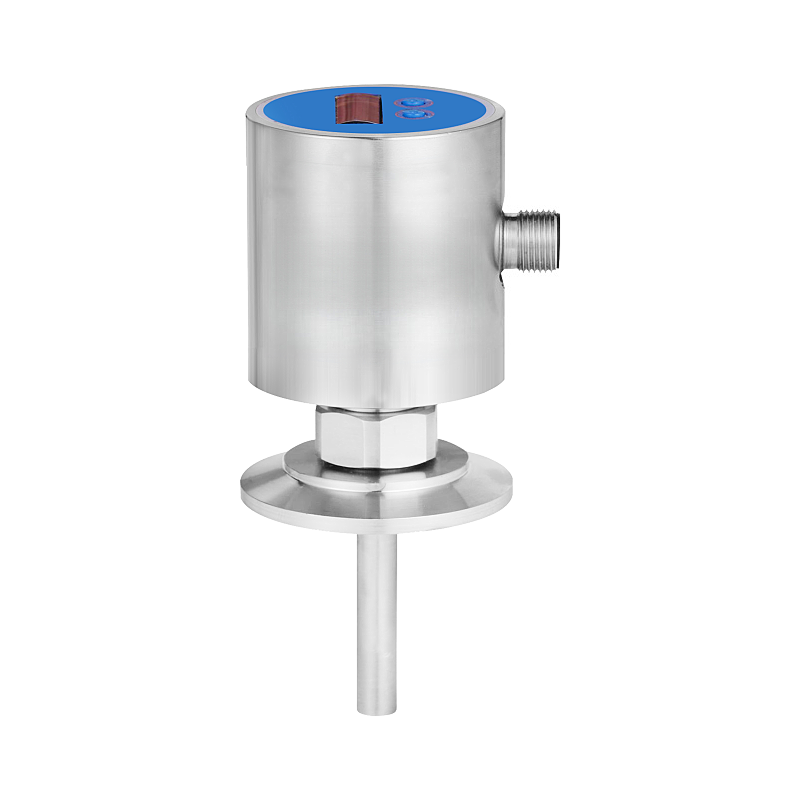
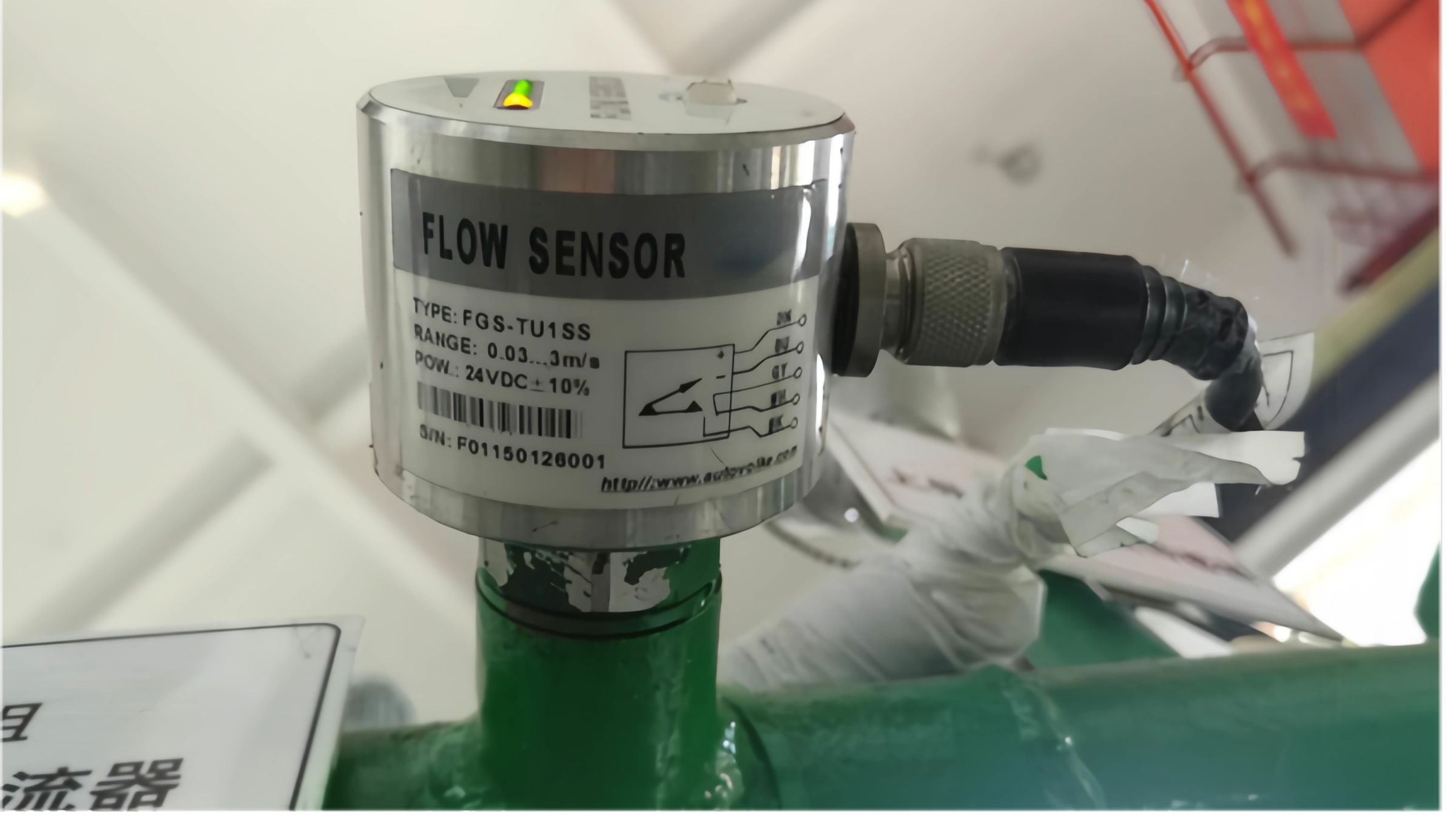
The TS360 Sanitary Flow Switch is a measuring instrument that provides real-time monitoring of fluid flow in pipelines, along with signal output and control capabilities. The product is constructed from sanitary-grade stainless steel and features a fully enclosed, laser-welded design. Its carefully engineered sanitary probe and collet connection allow for quick and easy disassembly, minimizing the risk of contamination during use and facilitating cleaning and maintenance. In field applications, the switch points can be set on-site based on actual changes in the flow velocity of the medium within the pipe, providing reliable assurance for customers’ process control.
Multiple LED indicators display the flow status and switch status in real time. It can be used to monitor fluid velocity within pipelines, detect flow interruptions, or prevent pumps from running dry. It is widely used in industries with high hygiene requirements, such as food, beverages, pharmaceuticals, hydropower, and industrial hydraulics.
From USD 250.00/pc. The final price depends on display type, process connection, output signal and temperature range.
Benefits
Featured Applications
Used to monitor fluid flow velocity in pipelines, detect flow interruptions, or prevent pumps from running dry.
Widely used in the hydropower industry, industrial hydraulics, and other applications requiring monitoring of fluid flow velocity in pipelines.
Technical Specifications
| Measuring range | 1–150 cm/s (water), 3–300 cm/s (oil), 20–2000 cm/s (air) |
| Supply voltage | 24 VDC ±20% |
| Output signal | PNP, NPN, relay, analog (4–20 mA); NO + NC (SPDT) |
| No-load current | Max. 80 mA |
| Pressure rating | 100 bar |
| Ambient temperature | –20°C to 80°C |
| Ingress protection rating | IP67 |
| Response time | 1–13 s (typical: 2 s) |
| Medium temperature | –20°C to 100°C (high-temperature version: –20°C to 120°C) |
| Inrush current | Max. 1 A, 48 VAC/DC (relay type) |
| Setting method | Potentiometer adjustment |
| Flow indication | LED array (6 LEDs), digital display |
| Housing material | 304 stainless steel |
| Wetted parts material | 304, 316. |
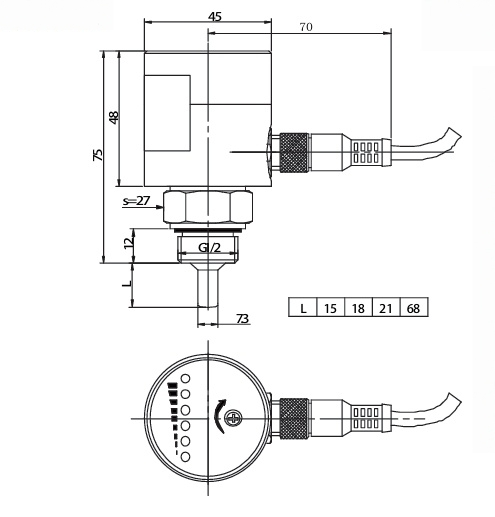
Order Guide
Code format: TS360 – [Display] [Process Connection] [Output] [Temperature] [Wetted Material]
| Item | Code | Description |
|---|---|---|
| Display Type | (blank) | Standard: LED bar indicator (6 LEDs) |
| M | LCD display | |
| Process Connection | L1 | Threaded, G1/2 male |
| L3 | Tri-clamp 1.5″ (3A), clamp OD 50.5 mm | |
| L5 | Tri-clamp 2.0″ (3A), clamp OD 64.0 mm | |
| LX | Custom connection (please specify) | |
| Output Signal | D1 | 4-20 mA analog output |
| D7 | Relay switch output | |
| D8 | PNP / NPN transistor output | |
| Temperature Range | W1 | -20 to 85 °C (-4 to 185 °F) |
| W2 | -20 to 120 °C (-4 to 248 °F) | |
| Wetted Material | SS | 304 stainless steel |
| LL | 316 stainless steel |
Ordering example:
LED bar display / 1.5″ tri-clamp (OD 50.5 mm) / relay output / standard temperature / 316 wetted parts
Order code: TS360-L3D7W1LL
Notes:
- All models are powered by 24 VDC.
- For non-standard process connections, add the size after the code, e.g. 25.2 mm clamp: LX (25.2 mm).
FAQ
More Flow Switch Guides
Thermal Dispersion Flow Switches: A Complete Guide
How a heated probe detects flow, how thermal flow switches differ from thermal mass flow meters, and how they protect pumps from dry running.
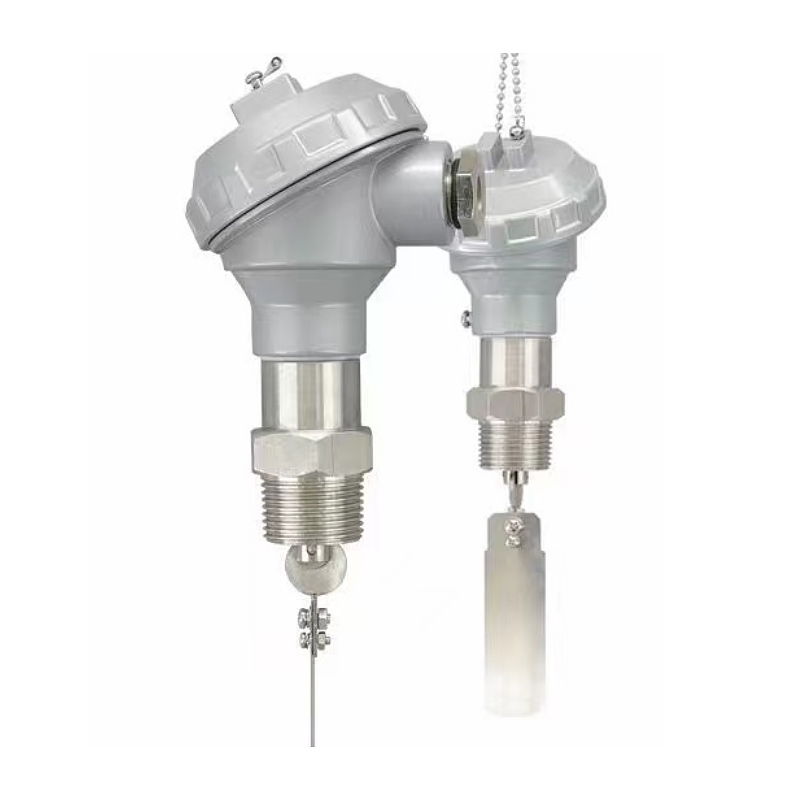
Paddle Flow Switch Technical and Selection Guide
Working principle, recommended models and selection tips for paddle flow switches, the mechanical alternative to thermal types.
Flow Switches for Industrial Applications
What a flow switch does, how it differs from a flow meter, the main types, and how to install, maintain and choose one.
Zhang Wei, possesses 20 years of experience as an automation instrumentation engineer, specializing in the research, design, installation, commissioning, and maintenance of automation instruments.
Face to various instrument communication protocols (such as Modbus, Profibus, etc.), with solid hardware circuit design and software programming skills (proficient in C language and PLC programming). Has extensive project experience; projects he has led and participated in have all achieved outstanding results, improving product accuracy, reducing costs, and increasing production efficiency.
Possesses excellent communication and coordination skills and a strong team spirit, enabling him to quickly respond to customer needs and provide high-quality automation instrumentation solutions.