Home > Blog > What is an IP rating? IP65-IP67-IP68
What is an IP rating? IP65-IP67-IP68
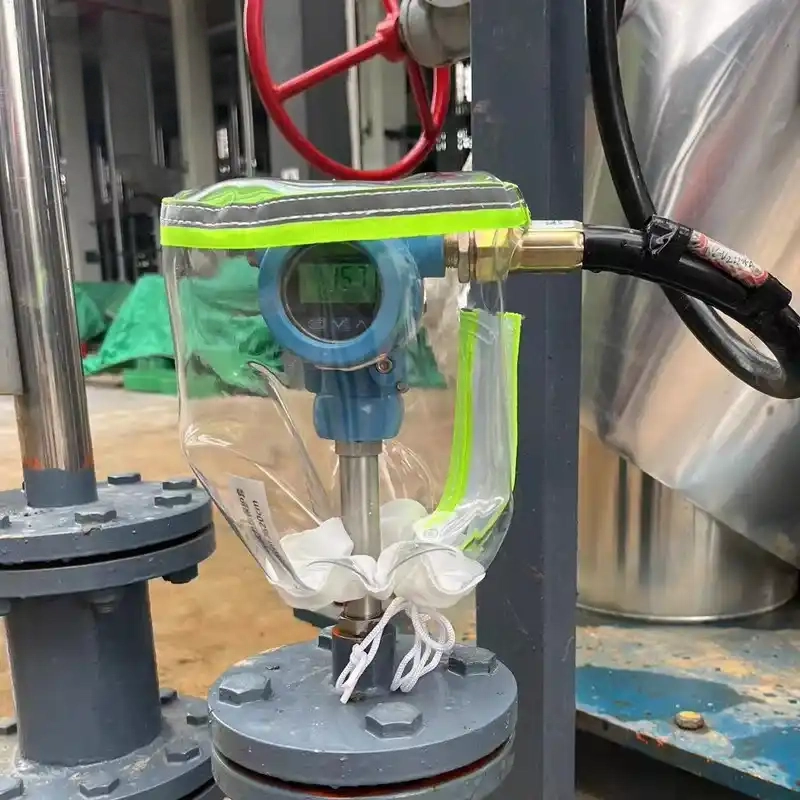
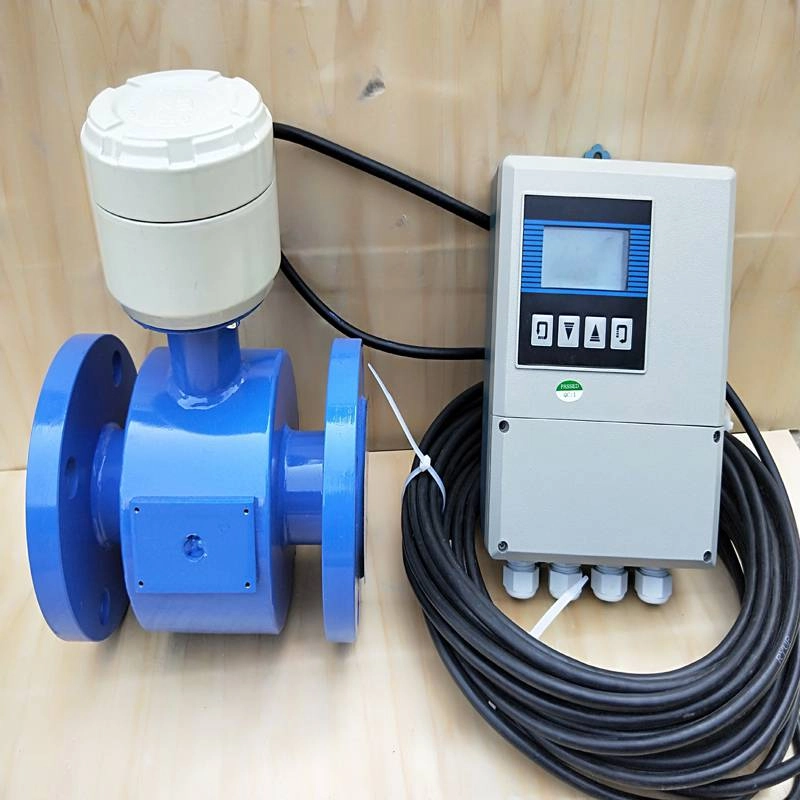
When purchasing pressure transmitters or flow meters, the sales engineer will usually confirm with you what IP rating you need: IP65, IP67, or IP68?
This explanation aims to help you understand the details of IP ratings. Next time you purchase electrical equipment, you’ll know which IP rating to choose.
First, we need to clarify the definition of an IP rating. IP protection rating (Ingress Protection) is an international standard established by the International Electrotechnical Commission (IEC), dating back to 1976, with the current international standard number IEC 60529:2013.
This standard aims to unify the global assessment methods for the protective capabilities of electrical equipment enclosures. It provides manufacturers, consumers, and regulatory agencies with a common language to describe the dust and water resistance of equipment.
In short, an IP rating measures the level of protection an enclosure provides against human access to hazardous parts and against the ingress of solid foreign objects or water.
IP Rating Coding Rules
The general coding format for IP protection ratings is “IPXX”, where “XX” is a two-digit Arabic numeral. In special cases, additional letters or supplementary letters may follow.
Each of the two digits has a specific function: the first digit indicates the level of protection against access to hazardous parts and the ingress of solid foreign objects; the second digit indicates the level of protection against water ingress. The higher the number, the stronger the protection.
Below is a detailed explanation of the numbers:
First digit:
Protection Class – Brief Description
Protection Rating – Definitions
0
No protection
—
1
Prevents the back of the hand from coming into contact with hazardous parts
A spherical test probe with a diameter of 50 mm shall have sufficient clearance from hazardous parts
2
Prevents fingers from coming into contact with hazardous parts
An articulated test finger with a diameter of 12 mm and a length of 80 mm shall have sufficient clearance from hazardous parts
3
Prevents tools from coming into contact with hazardous parts
A test probe with a diameter of 2.5 mm shall not enter the enclosure
4
Prevents metal wires from coming into contact with hazardous parts
A test probe with a diameter of 1.0 mm shall not enter the enclosure
5
Prevents metal wires from coming into contact with hazardous parts
A test probe with a diameter of 1.0 mm shall not enter the enclosure
6
Prevents metal wires from coming into contact with hazardous parts
A 1.0 mm diameter test probe must not enter the enclosure
First digit:
Protection Rating – Brief Description
Protection Rating – Definitions
0
No Protection
—
1
Protects solid foreign objects with a diameter of not less than 50 mm
A spherical test specimen with a diameter of 50 mm must not be able to enter the enclosure completely
2
Protects solid foreign objects with a diameter of not less than 12.5 mm
A spherical test specimen with a diameter of 12.5 mm must not be able to enter the enclosure completely
3
Protects solid foreign objects with a diameter of not less than 2.5 mm
A test specimen with a diameter of 2.5 mm must not be able to enter the enclosure at all
4
Protects solid foreign objects with a diameter of not less than 1.0 mm
A test specimen with a diameter of 1.0 mm must not be able to enter the enclosure at all
5
Dustproof
Dust ingress cannot be completely prevented, but the amount of dust entering must not affect the normal operation of the equipment or compromise safety
6
Dust-tight
No dust ingress
Second digit
Protection Rating – Brief Description
Protection Rating – Meaning
0
No protection
1
Protection against vertically falling water
— Vertical dripping water should have no harmful effects.
2
Protection against vertically falling water when the enclosure is tilted at 15°
When the vertical surfaces of the enclosure are tilted at 15°, vertical dripping water should have no harmful effects.
3
Protection against dripping water
When water is sprayed onto the vertical surfaces of the enclosure at angles of up to 60°, there should be no harmful effects.
4
Protection against splashing water
Splashing water onto the enclosure in all directions should have no harmful effects.
5
Protection against water jets
Spraying water onto the enclosure in all directions should have no harmful effects.
6
Protection against powerful water jets
Strong spraying water onto the enclosure in all directions should have no harmful effects.
7
Protection against the effects of brief immersion
After immersion in water at a specified pressure for a specified time, the amount of water entering the enclosure should not reach a harmful level.
8
Protection against the effects of prolonged immersion
After continuous submersion under conditions agreed upon by both the manufacturer and the user (more severe than characteristic number 7), the amount of water entering the enclosure should not reach a harmful level.
9
Protection against the effects of high-temperature/high-pressure water jets
High-temperature/high-pressure spraying water onto the enclosure in all directions should have no harmful effects.
In our pressure transmitters, flow meters, torque sensors, and other products, the most commonly used ratings are IP65, IP67, and IP68. Let’s take a look at them individually.
What is IP65?
The first digit “6” in IP65 represents the dust protection rating.
Completely dustproof: The equipment enclosure completely prevents dust from entering; even during vacuum testing, dust cannot penetrate.
This is the highest level of dust protection, suitable for dusty, sandy, or industrial environments.
The second digit “5” – Waterproof rating
Resistant to low-pressure water jets: The equipment can withstand being sprayed with a low-pressure water jet (nozzle diameter 6.3mm, flow rate 12.5L/min, distance 2.5–3 meters) from any direction for at least 3 minutes without harmful effects on the interior.
Not equivalent to waterproof immersion: IP65 equipment cannot be immersed in water, nor is it recommended to withstand direct rinsing from a high-pressure water gun (such as a fire hose).
What is IP67?
The first digit “6” in IP67 indicates complete dustproofing. The enclosure completely prevents the ingress of dust (solid particles ≥50μm in diameter). Even if a small amount of dust enters, it will not affect the normal operation of the equipment (no harmful deposits).
The second digit “7” in IP67 indicates short-term immersion waterproofing. Under normal temperature and pressure, the equipment can be immersed in water to a depth of no more than 1 meter for 30 minutes without liquid penetrating the interior of the enclosure or affecting the equipment’s function.
What is IP68?
IP68 is one of the highest levels of Ingress Protection (IP) standards established by the International Electrotechnical Commission (IEC).
The first digit, “6,” indicates the dust protection rating, reaching the highest level—complete dust protection. This means that after testing under specified conditions, no dust can enter the device.
The second digit, “8,” indicates the water protection rating, meaning the device can be submerged in water for extended periods under manufacturer-specified conditions without damage from water ingress.
In short: IP68 = Complete dust protection + Long-term underwater protection (as stated by the manufacturer).
Common Misconceptions about IP Protection Ratings
Misconception 1: The higher the IP rating, the better the product.
The IP protection rating needs to be matched to the usage scenario; higher is not always better. For example, for indoor desk lamps, IP20 is sufficient. Forcing an IP68 rating not only increases product cost but may also affect heat dissipation (a completely sealed design hinders heat dissipation). For outdoor equipment, a lower rating (such as IP44) makes it susceptible to rain and dust intrusion, leading to malfunctions.
Misconception 2: Dustproof and waterproof ratings must be tested simultaneously.
The two digits of the IP protection rating can be evaluated separately. If only waterproof testing is performed, the first characteristic digit can be represented by an “X,” such as IPX8 for a waterproof rating of 8.
Misconception 3: IP68 means absolute waterproofing.
IP protection rating tests the performance of a “prototype” under “laboratory conditions.” In actual use, dynamic pressure (such as the impact of water flow during swimming), temperature changes (causing seal shrinkage due to alternating hot and cold temperatures), and wear and tear can all lead to protection failure.
IP Rating Selection Guide
Based on the above introduction to IP ratings, when purchasing instruments, we must pay attention to the following:
Confirm the actual installation environment. Is it indoors or outdoors? A dusty environment? Or near the sea? 2. IP68 is not necessarily better than IP65. IP68 is generally more expensive. We only need to choose the applicable IP rating.
For industrial dust environments, such as cement plants and food processing workshops, we recommend choosing products with an IP65 rating.
Outdoor extreme scenarios: IP66 (passing a 100L/min water jet test) is preferred in coastal areas with heavy rain. For diving equipment, the IP68 parameters must be clearly defined.
Special hazardous scenarios: Explosion-proof areas require additional Ex d certification (e.g., IP66 + Ex d IIC T6); high-pressure washing areas (aquaculture farms) must have IP69K; traditional IP67 equipment will have a 60% shorter lifespan.
What is Absolute Pressure Transmitter? Absolute pressure transmitters are sensors that measure pressure using absolute vacuum (0 bar) as a reference. They convert the sensed physical pressure value into a standardized electrical signal, such as 4-20 mA or 0-10 V, for processing by control systems or monitoring equipment. For absolute…
In gas flow measurement and control, it is crucial to distinguish between Normal Conditions and Standard Conditions. This is primarily because the volume of gas changes with temperature and pressure. Different standards will result in different measured gas values. This is somewhat similar to the difference between “SCFM (Standard CFM)…
SCFM (Standard CFM) and ACFM (Actual CFM) are commonly used units for measuring gas flow rate. For example, in the air compressor industry, they are used to measure airflow and air consumption. So what are the differences between them? How should they be converted? Both SCFM and ACFM are based…
Thermal Mass Flow Meters and thermal mass flow controllers are suitable for most gaseous media. If a gas mass flow controller or thermal mass flow meter is factory-calibrated for one gas, but you want to switch to another, then a gas correction factor (GCF) is needed. What is Thermal Mass…
Analog gas flow meters specifically refer to a type of flow meter that outputs analog signals. The main function of a flow meter is to measure volumetric flow rate or mass flow rate and convert it into an electrical signal output, facilitating flow monitoring and control. There are four types…
The Magnetic Float Level Gauge continuously measures the liquid level in a tank based on the principles of buoyancy and magnetic coupling. It indicates changes in liquid level by utilizing the influence of a magnet on nearby magnets; this mechanical structure is simple yet highly effective. Its simple structure provides…
Understanding the coding rules and common misconceptions about IP protection ratings allows us to better select the IP rating for measurement and control instruments. For example, pressure sensors used for underwater pressure measurement must be configured with an IP68 rating. Our Sino-Inst products support customization from IP65 to IP68. You can clearly state your requirements when confirming parameters with us. Feel free to contact our sales engineers at any time!
Zhang Wei, possesses 20 years of experience as an automation instrumentation engineer, specializing in the research, design, installation, commissioning, and maintenance of automation instruments.
Face to various instrument communication protocols (such as Modbus, Profibus, etc.), with solid hardware circuit design and software programming skills (proficient in C language and PLC programming). Has extensive project experience; projects he has led and participated in have all achieved outstanding results, improving product accuracy, reducing costs, and increasing production efficiency.
Possesses excellent communication and coordination skills and a strong team spirit, enabling him to quickly respond to customer needs and provide high-quality automation instrumentation solutions.