Home > Densitometers > Ultrasonic Interface Detector for Phase Separation
Ultrasonic Interface Detector for Phase Separation
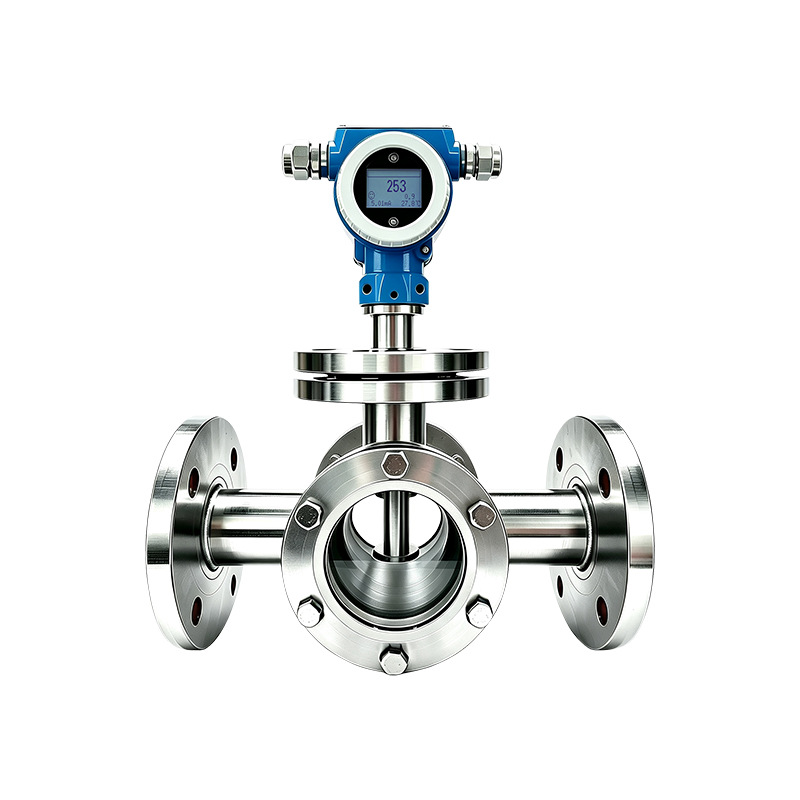
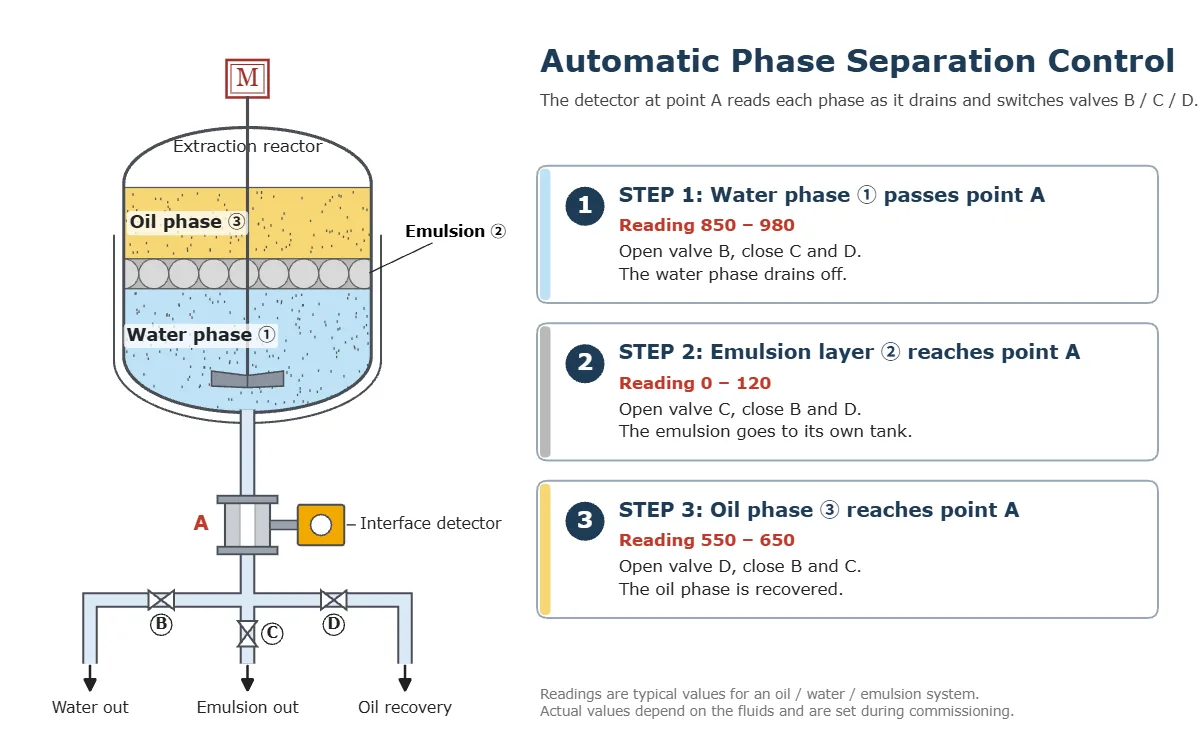
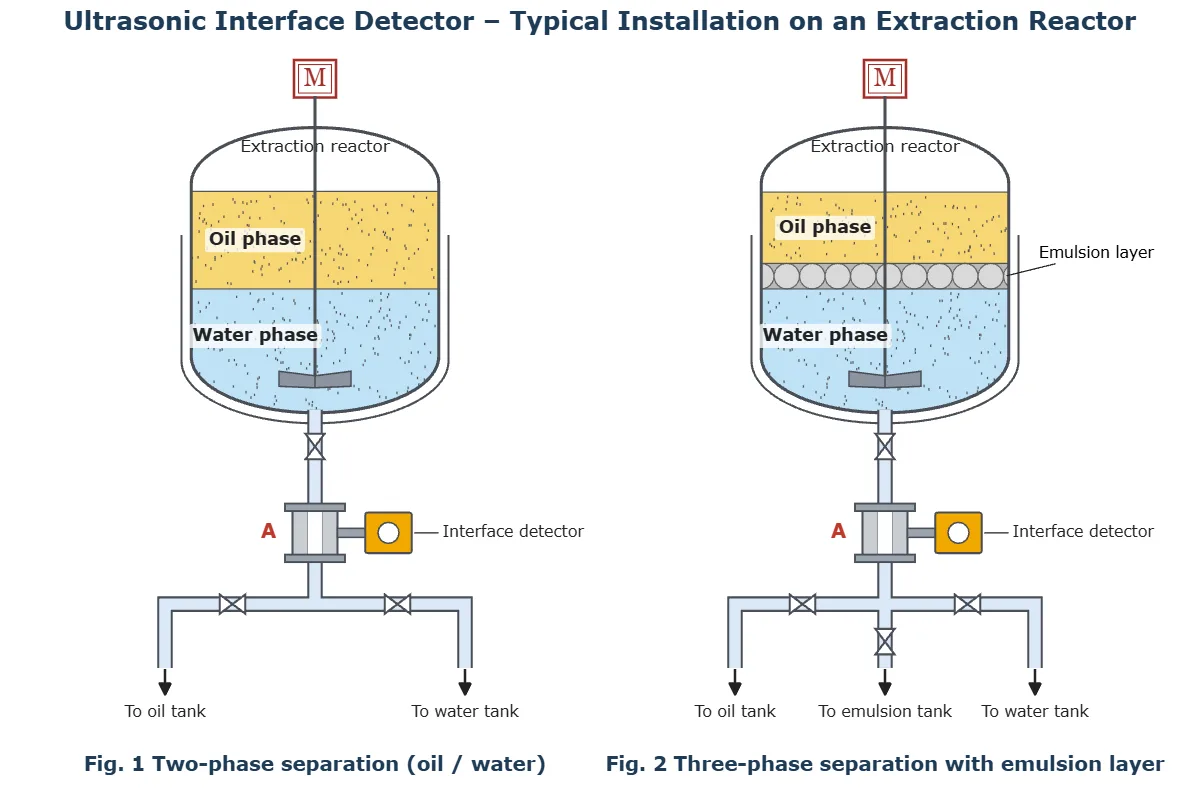
The Ultrasonic Interface Detector is an inline phase interface detection instrument used to identify the liquid phase (aqueous, emulsion, or oil/organic phase) flowing through a fixed point. It outputs a 4-20 mA or RS485 signal to enable automatic switching of valves and pumps. Typically, it is installed on the discharge piping of reaction vessels, extraction columns, or settling tanks, or mounted directly onto the tanks themselves. The Ultrasonic Interface Detector uses the differences in sound velocity, attenuation, and echo in different liquids to determine whether the liquid flowing through the detection point is an aqueous phase, an emulsion layer, an oil phase, or an organic phase. It outputs a 4-20mA / RS485 signal within 1 second to link valves and pumps, enabling automatic liquid separation, discharge, and material spillage prevention.
Non-contact measurement: The probe does not come into direct contact with the interface between layers, preventing contamination of the medium and corrosion of the probe;
Multi-layer interface detection: Simultaneously detects multiple interfaces, such as oil/water and oil/emulsion/water;
High-precision measurement: Interface measurement accuracy up to 0.1%, with a response time of less than 1 second;
Strong resistance to interference: Unaffected by medium color, turbidity, or suspended particles (avoid installing where gas bubbles collect);
Corrosion-resistant design: Wetted parts are made of 316L stainless steel lined with PTFE, among other materials, making them suitable for strong acid and strong alkali environments;
Explosion-proof certification: Ex d IIC T6 Gb, suitable for Zone 1 and Zone 2 hazardous areas;
Temperature range: -30°C to +80°C as standard, with high-temperature versions available on request;
Multiple signal outputs: 4–20 mA analog signal + RS485 Modbus, for seamless integration with automation systems;
≤ 1 MPa (145 psi) standard; higher pressure on request
Process connection
Thread, flange or 3/4″ NPT (others on request)
Installation
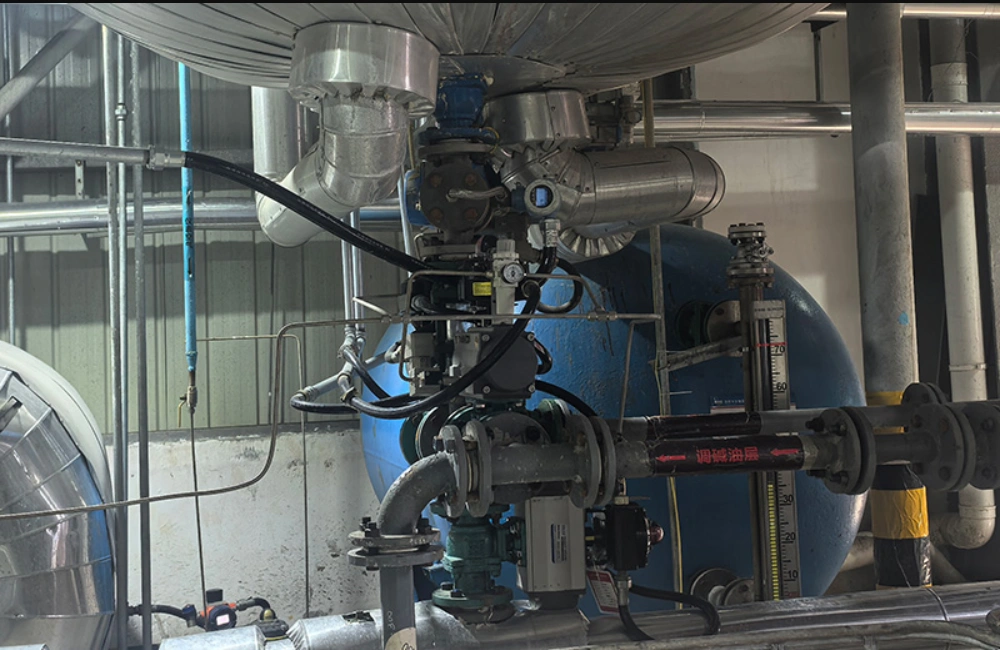
Inline spool, tank side-mounted or top-mounted; line size and installation length made to order
Output
3-wire 4–20 mA (load < 500 Ω) + RS485 Modbus
Response time
< 1 s
Operating temperature
-30 to 80 °C (-22 to 176 °F); high-temperature version on request
Ultrasonic emission
< 0.01 W/cm², < 0.1 mJ/cm²
Power supply
18–28 V DC (24 V DC nominal), 3 W
Intrinsic safety, 4–20 mA loop
Ui 28 V, Ii 93 mA, Pi 651 mW, Ci 0 µF, Li 0 µH
Intrinsic safety, RS485 port
Power: Ui 23.1 V, Ii 187 mA, Pi 1080 mW, Ci 0 µF, Li 0 µH Signal: Ui 7.6 V, Ii 77 mA, Pi 147 mW, Ci 0 µF, Li 0 µH
Ultrasonic Interface Detector Working Principle
The SI-063DZ utilizes ultrasonic sound velocity difference detection technology. There are significant differences in sound velocity and acoustic impedance between different liquids (such as oil and water). The instrument’s probe emits ultrasonic pulses into the liquid; these sound waves are reflected and transmitted at the interface between different media. By precisely measuring the propagation speed, attenuation, and reflection time of sound waves in different media—combined with a built-in temperature compensation model and calibration algorithms—the instrument can accurately determine the position of the liquid-liquid interface.
Additionally, the instrument can simultaneously output parameters such as interface position and temperature, and supports multiple signal output methods, enabling seamless integration with control systems such as DCS and PLC to achieve real-time monitoring and automatic control of stratified processes.
Featured Application
Ultrasonic Interface Detectors can be used in any application where two immiscible liquids form distinct layers in a container and need to be discharged sequentially. Typical scenarios include:
Fine Chemicals: Layered discharge following extraction, washing, and neutralization
After extraction, washing, or neutralization in a batch reactor, the aqueous phase and organic phase must be discharged sequentially through the bottom valve of the reactor. The detector is mounted on the discharge pipe and switches the discharge valve as soon as the interface is detected, eliminating the need for operators to monitor the sight glass. Separate discharge of the aqueous and organic phases in intermediate synthesis falls into this category.
Pharmaceuticals: Solvent Extraction
Chloroform and dichloromethane are commonly used to extract antibiotics and active plant compounds. Since these solvents are denser than water, the organic phase is discharged first from the bottom of the reactor. The analyzer sequentially identifies the solvent phase, the emulsified layer, and the aqueous phase, reducing losses of active ingredients in the emulsified layer and preventing inconsistencies in phase-switching judgments among different operators.
Chlor-Alkali and Methane Chlorides: Chloroform Water Washing
In methane chloride plants, crude chloroform must first undergo water washing before distillation. Implementing online interface control on the water-washing tower reduces water carryover in the organic phase, thereby lowering the load on the distillation process and reducing energy consumption.
Petroleum and Petrochemicals: Crude Oil Dehydration, Water Separation in Storage Tanks
When separating water from the bottom of crude oil dehydration tanks and storage tanks, the detector closes the drain valve as soon as oil reaches the outlet, preventing oil from being discharged into the wastewater system. In separators, it identifies the emulsified layer, allowing it to be recovered and treated separately.
Environmental Protection and Water Management: Oil-Contaminated Wastewater
In oil separators and waste oil tanks, the detector controls the switching between the oil collection port and the drain port, ensuring that discharged water is free of oil.
Hydrometallurgy: Extraction and Clarification Tanks
In solvent extraction processes for copper, nickel, and rare earth elements, the detector monitors the organic/aqueous phase interface at the outlet of the clarification tank, reducing carryover between the two phases.
Edible Oil Refining
After degumming and alkali refining, the oil and soapstock (or aqueous phase) separate into layers. The sensor controls the discharge of the heavy phase.
Coal Chemical Industry: Tar/Ammonia Water Separation
In coal gas condensate treatment, tar settles below the ammonia water. The sensor controls the discharge of tar to prevent ammonia water from being discharged along with the tar.
Three-Layer Separation in a Pesticide Plant’s Herbicide Reactor
One of our clients is a pesticide plant that produces herbicides. Before discharging the reactor, the contents must be allowed to settle and separate into layers: the top layer is the finished product, the middle layer is the emulsified layer, and the bottom layer is waste liquid. Previously, workers had to stand in front of the sight glass to monitor the color and open or close the valves; however, it was very difficult to accurately judge the emulsified layer, and they often ended up discharging the finished product into the waste liquid.
We installed an ultrasonic stratification sensor on the discharge pipe at the bottom of the reactor. As the three layers of liquid pass through, they generate distinct signals. The control system uses these signals to open the valves sequentially: first draining the waste liquid, then separately collecting the emulsified layer, and finally recovering the finished product. Calibration was completed in three days using the plant’s actual materials.
Now, unloading requires no manual supervision, and the stratification curves for each reactor are displayed directly in the central control room. According to customer feedback, finished product losses have decreased, and the daily production capacity per production line has increased by approximately 30%.
Comparison of Stratification Detection Technologies
When discharging a material from an extraction vessel, the following methods are commonly used to detect stratification. When selecting a system, three main factors are considered: whether the material is transparent or opaque, whether it is conductive, and whether material buildup occurs.
Method
Works well for
Limitations
Sight glass (manual)
Small batches, clear liquids, sharp interface
Emulsion layer is hard to judge; an operator must stay at the vessel
Oil/water and other pairs with very different dielectric constants
Sticky organics coat the probe and shift the reading
Optical (absorbance) sensor
Clear liquids; high resolution
Needs a sight window; not for dark, turbid or coking fluids; higher cost
Ultrasonic interface detector
Dark, turbid or non-conductive fluids; PTFE, tantalum, Hastelloy wetted parts
Must be calibrated on the actual process fluids; heavy gas bubbles affect the signal
Generally speaking, for transparent materials where there is a significant difference in electrical conductivity between the two phases, conductive or optical methods are sufficient. For dark-colored, turbid, or highly corrosive materials—or when an emulsified layer needs to be isolated—an ultrasonic interface detector is more suitable.
FAQ
Our Sino-Inst Ultrasonic Interface Detector can detect a variety of liquid-liquid interfaces, including oil/water, oil/emulsion/water, solvent/water, and clear liquid/turbid liquid.
It uses non-contact measurement; the probe does not directly touch the interface, thereby preventing contamination and corrosion.
The Ultrasonic Interface Detector is not affected by the medium’s color, turbidity, or suspended particles; however, a large number of bubbles may interfere with sound wave propagation. It is recommended to avoid areas where bubbles accumulate during installation.
The standard model withstands temperatures from -30°C to +80°C and pressures up to 1 MPa. Custom solutions are available for higher temperatures and pressures.
The Ultrasonic Interface Detector comes standard with a 4–20 mA analog signal and RS485 Modbus communication, allowing direct integration into DCS/PLC systems.
Crude oil is unrefined oil extracted directly from the ground. Crude oil contains hydrocarbon fluids, water and various impurities. Unprocessed crude oil is mainly traded as a commodity. In oil production and trade measurement, it is important to choose a suitable crude oil flowmeter. Many forms of flowmeters can achieve crude oil measurement. Methods of … Read more
Guided Wave Radar (GWR) level transmitters are level-measuring devices based on the time travel principle. They are widely used in industrial settings for liquid and solid material level measurement. GWR Type Level Transmitters are appropriate for harsh environments such as high temperature, high pressure, vacuum, steam, high dust, and volatile gases. This blog post investigates … Read more
In different industrial processes, the measurement and control of fluid levels are crucial for ensuring creaseless operations. One effective way used for this intention is a level transmitter. A level transmitter, also known as a level sensor or level gauge, plays a critical role in accurately determining the level of liquids or bulk solids within … Read more
Level transmitters with a magnetic, high-resolution measuring principle are used for continuous level measurement of liquids and are based on determining the position of a magnetic float following the magnetostrictive principle. This blog looks into each of the magnetic level instruments, their working principles, advantages, applications, comparability to other types of level measurement practical applications. … Read more
Zhang Wei, possesses 20 years of experience as an automation instrumentation engineer, specializing in the research, design, installation, commissioning, and maintenance of automation instruments.
Face to various instrument communication protocols (such as Modbus, Profibus, etc.), with solid hardware circuit design and software programming skills (proficient in C language and PLC programming). Has extensive project experience; projects he has led and participated in have all achieved outstanding results, improving product accuracy, reducing costs, and increasing production efficiency.
Possesses excellent communication and coordination skills and a strong team spirit, enabling him to quickly respond to customer needs and provide high-quality automation instrumentation solutions.